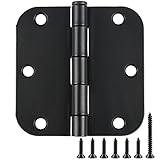
You’re standing in the hardware aisle, staring at a wall of hinges. They all look the same, right? Wrong. It dawned on me years ago, mid-project, when I was wrestling a door that just wouldn’t hang right. Turns out, not all hinges play nice with every door. The big question that started it all for me was: are hinges handed? It’s a detail so simple, yet so often overlooked, that it can turn a smooth DIY job into a frustrating mess. Forget the fancy marketing jargon; let’s get down to what actually matters.
The Sneaky Truth About Door Swing
Ever try to hang a door and feel like you’re fighting physics itself? I remember a bathroom renovation project where the new door just stubbornly refused to swing the way I wanted. It scraped the carpet, bumped into the vanity, and generally made me question my life choices. I’d bought what I thought were standard door hinges, but something was off.
It wasn’t until I was elbow-deep in frustration, staring at the hinge knuckles, that I realized the most common advice is often incomplete: the direction a door swings is absolutely dictated by how its hinges are installed, and yes, some hinges are definitely handed. It’s less about the hinge itself being ‘left’ or ‘right’ in a permanent sense, and more about how the pin and the leaf arrangement dictate the swing. A standard mortise hinge, the kind you see on most interior doors, can often be used on either side of the doorframe. But when you start talking about specialized hinges, or even how a standard hinge is oriented, things get interesting.
The ‘handedness’ comes into play when the pivot point, defined by the hinge pin, is designed to work best from one side to allow for a specific door swing. If you get this wrong, you’ll notice the door might not close flush, or it might bind when you try to open it fully.
It’s a subtle thing, but once you see it, you can’t unsee it. This is especially true for outward-swinging doors or doors that need to clear specific obstacles. The standard advice often assumes a simple in-swinging door, but life isn’t always that simple, is it?
How Hinges actually Work (the Simple Version)
At its core, a hinge is just a pivot. It has two leaves and a pin. One leaf attaches to the door, the other to the frame. The pin connects them, allowing rotation.
Simple enough. But the devil, as always, is in the details.
For most common interior doors, the hinges are what we call ‘plain bearing’ or ‘ball bearing’ hinges. They’re pretty forgiving. You can often swap them around, flip them over, or even use them on either side of the door opening and still get a functional door. The pin is typically removable, which is how you hang the door in the first place.
You put the pin in, and voilà, it swings. However, this is where the confusion about ‘handed’ hinges often starts. The assumption is that if it swings open one way, it must be ‘handed’. For a basic butt hinge, this isn’t usually the case in the way people fear.
The hinge itself isn’t manufactured with a permanent left or right orientation. Instead, the orientation matters in relation to the door’s swing and the frame.
If a door needs to swing outward from a room, the hinge setup might appear ‘handed’ compared to a door swinging inward. It’s about which side of the door the barrel (the part the pin goes through) sits on relative to the door’s travel. Think about it: if the barrel is on the outside of the swing path, the door can open 180 degrees.
If it’s on the inside, it’s limited. This is a key mechanical aspect that makes you think a hinge is handed when it’s really about its placement in the opening.
The common mistake is assuming all hinges are as flexible as the basic ones. When you move to specialty hinges, like continuous hinges or heavy-duty security hinges, the concept of ‘handedness’ becomes much more concrete and designed into the product.
My ‘oh Crap’ Moment: The Case of the Stick-Out Hinge
I was helping a buddy install a new shed door. This wasn’t some fancy internal door; it was a solid chunk of wood for a garden shed, meant to swing outwards. (See Also: A Box Without Hinges Key )
We got two sets of heavy-duty, strap-style hinges, the kind that look like they could hold up a bank vault. We bolted them on, feeling pretty smug about our progress.
The door went up, but it wouldn’t close properly. It was like it was hitting an invisible wall about an inch from the frame.
We fiddled, we adjusted, we checked the frame alignment a dozen times. Nothing.
Then, I looked closer at the hinges. They were identical. Or so we thought. I remembered seeing older shed doors where the hinges seemed to sit almost flush with the door face, but ours stuck out a bit.
We had them installed in what seemed like the most logical way. But it turns out, these specific strap hinges had a slight asymmetry. One side of the strap was designed to sit flatter against the door, and the other had a bit of a curve or offset to accommodate the swing direction.
We had installed them identically, but the orientation needed to be mirrored for the outward swing. Flipping one hinge set so the curved part faced outwards, away from the door, made all the difference.
The door then closed perfectly. It was a cheap lesson, costing me maybe $50 for the replacement hinges after we messed up the first set, but it taught me that ‘handedness’ isn’t always a label; sometimes it’s about how the physical design interacts with the intended movement.
You just have to look and think about the geometry of the swing.
When Hinges are Truly Handed: Beyond the Basics
So, if most basic hinges aren’t truly ‘handed’ in the way people worry about, when does it actually matter? It matters with specialized hardware. Think about security hinges, often used on exterior doors or high-security applications. These hinges have pins that are either non-removable or have a feature that prevents the door from being removed even when open.
For these, the manufacturing process often builds in a specific orientation for the pin and barrel assembly to make sure maximum security and proper swing clearance. If you buy a security hinge for a left-hand opening door and try to install it on a right-hand opening door, it simply won’t function correctly or might compromise the security feature. Another area where handedness is a real factor is with continuous hinges, sometimes called piano hinges.
These run the entire length of the door and frame. While they are often symmetrical enough to be used on either side, some variations are designed with a specific offset to provide a tighter seal or to prevent prying.
If you’re dealing with a door that needs to swing 180 degrees or more, you’ll likely be looking at specialized hinges, and these are almost always handed. The barrel’s position relative to the door and frame is important for achieving that full range of motion. For example, a hinge designed for a full 180-degree outward swing will have its barrel positioned so that the door leaf doesn’t interfere with the frame when fully open.
Trying to use a hinge meant for a 90-degree swing on a door that needs more will result in a binding issue, leading you to believe the hinge is handed when it’s just the wrong type for the job. It’s less about ‘left’ or ‘right’ and more about the mechanical limitations and capabilities designed into the hinge. (See Also: Are Integrated Washing Machine Door Hinges Standard )
Spotting the Difference: What to Look For
How do you avoid the sticky situations I’ve found myself in? It boils down to observation and understanding the basic mechanics of how your door needs to swing.
First, determine the swing direction of your door. Does it open towards you or away from you?
Which side of the frame does the door butt up against when closed? This is your starting point.
For standard interior doors, most common butt hinges are reversible. You can install them on either side, and they’ll work.
The pin is the key here; it’s usually removable. If you can remove the pin and reinstall it, and the door swings reasonably well, you’re probably fine. The real tell-tale sign of a potentially ‘handed’ hinge, or at least one that requires specific orientation, is the shape of the barrel and how the leaves are formed.
Look for any asymmetry. Does one leaf have a more pronounced curve or offset than the other? Does the barrel itself seem thicker or have a specific profile that suggests it should face one way or another?
For outward-swinging doors, especially exterior ones, you might see hinges where the barrel is designed to be on the outside of the swing arc, allowing the door to open flatter against the wall. If the barrel is on the inside, it will limit the swing. Another indicator is the presence of security features. If the hinge has a non-removable pin or a dogleg feature, it’s almost certainly handed, and you’ll need to buy the correct one for your specific door swing.
Manufacturers often label these clearly (e.g., ‘RH’ for Right Hand, ‘LH’ for Left Hand). If you’re unsure, always err on the side of caution and check the manufacturer’s installation guide, if available. Honestly, for most basic interior doors, the ‘handed’ concern is overblown. It’s the specialty hinges where you need to pay attention to the details.
Common Mistakes and Practical Tips
The biggest mistake I see people make, and one I’ve made myself, is assuming all hinges are interchangeable and forgiving. They’re not. Here are some hard-won tips:
- Check the Swing Direction First: Before you even buy hinges, know which way the door needs to swing. Is it an interior door that opens into a room, or an exterior door that opens outward?
This dictates everything.
- Understand ‘Reversible’ vs. ‘Handed’: Most standard interior door hinges are ‘reversible’ – they work fine on either side. Hinges with security features (like non-removable pins) or those designed for specific swing arcs (like 180-degree exterior doors) are often ‘handed’ and must be bought for the correct swing.
- Look at the Barrel: The ‘barrel’ is the cylindrical part the pin goes through.
On some hinges, the shape of this barrel or its attachment to the leaves will indicate its intended orientation for a specific swing. If it looks symmetrical, it’s likely reversible.
- Don’t Force It: If a door binds or doesn’t close flush, the first thing to check isn’t the door itself, but the hinges and their orientation.
A slight adjustment or flip of a hinge can often solve the problem.
- Consider Mortise Depth: This isn’t directly about handedness, but it’s a common hinge mistake. Make sure the mortise (the cutout in the door and frame) is the correct depth for the hinge leaf. Too deep, and the door won’t sit flush; too shallow, and it will bind.
- Buy from Reputable Sources: If you need specific, handed hinges for security or special applications, buy from a hardware store or manufacturer that clearly labels them and offers advice.
Here’s a quick rundown of how common hinge types generally fare: (See Also: Are Hinges Wheeels )
| Hinge Type | Generally Handed? | Verdict/Notes |
|---|---|---|
| Standard Butt Hinge (Interior) | No (usually reversible) | Most common. Pin removal makes them flexible.
Look for symmetry. |
| Ball Bearing Hinge | No (usually reversible) | Smoother action, often used on heavier doors. Generally reversible. |
| Security Hinge (Non-removable pin) | Yes | Designed for exterior doors. Requires specific left or right hand. |
| Continuous Hinge (Piano Hinge) | Sometimes | Basic ones are reversible, but some have offsets for specific applications. |
| Strap Hinge (Decorative/Barn Door) | Depends on design | Often symmetrical, but decorative elements or offsets can make them handed.
Check the physical shape. |
Paying attention to these details saves you time, frustration, and the cost of buying the wrong hardware. It’s the difference between a door that works and one that fights you every time you open it.
Faq: Your Hinge Handedness Questions Answered
Are All Door Hinges Reversible?
No, not all door hinges are reversible. While most standard interior butt hinges are designed to be reversible due to their symmetrical construction and removable pins, specialized hinges are often handed. This includes security hinges with non-removable pins or specific offsets, and hinges designed for unique swing angles. Always check the product description or manufacturer’s details if you’re unsure.
How Do I Know If a Hinge Is Left-Handed or Right-Handed?
You determine hinge handedness based on the door’s swing direction when viewed from outside the room it opens into. For a right-hand swing, the hinges are on the right. For a left-hand swing, they’re on the left. Some manufacturers will label hinges as ‘RH’ or ‘LH’. If a hinge has a visually asymmetrical design, the orientation that allows the door to swing freely and close properly is the correct one for that handedness.
What Happens If I Use the Wrong Handed Hinge?
If you install a handed hinge on the incorrect side, the door will likely not swing properly. It might bind, scrape the floor or frame, or not close flush. In the case of security hinges, using the wrong one could compromise its intended security features. For standard reversible hinges, the issue is usually just minor binding that can often be corrected by flipping the hinge or adjusting its placement.
Can I Make a Handed Hinge Reversible?
Generally, no. If a hinge is manufactured with a specific orientation due to its design for security, a particular swing arc, or its physical shape, you cannot easily convert it to be reversible. Attempting to force it would likely damage the hinge or prevent it from functioning correctly. It’s always best to purchase the correct handed hinge for your application.
Is Hinge ‘handedness’ the Same as Door ‘handedness’?
Yes, the terms are directly related. Door handedness describes which side the door opens from and which side the hinges are on. Hinge handedness refers to the specific type of hinge that is manufactured to work with that particular door handedness. A left-handed door requires left-handed hinges, and a right-handed door requires right-handed hinges, especially when dealing with non-reversible hinge types.
Final Thoughts
So, to finally answer the question that started all this: are hinges handed? The simple answer is: some are, some aren’t.
Most everyday interior door hinges are built to be forgiving and reversible, which is why you can usually swap them out without a second thought. But when you get into specialized hardware – security hinges, hinges for very specific swing arcs, or decorative styles with unique designs – handedness becomes a real factor. It’s not just a label; it’s about the physical design of the hinge and how it interacts with the door and frame to allow for a correct, smooth swing.
Don’t be the guy (or gal) who ends up fighting a door that won’t close right because of a simple hinge orientation mistake. Take a minute to look at the hinge, figure out your door’s swing, and if you’re dealing with anything beyond a basic interior door, check for labels or asymmetrical designs.
It’s easy to blow past these small details when you’re excited to get a project done, but those little things can cause big headaches. Next time you’re hanging a door, give those hinges a second look. A little observation now saves a lot of cursing later.