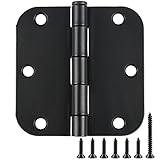
I remember standing in the hardware aisle, completely overwhelmed. I needed to replace a couple of cabinet hinges, simple enough, right? Wrong. Suddenly I was staring at a wall of metal, all looking vaguely similar but with tiny differences that felt like the deciding factor between a drawer that slams shut like a jail cell and one that glides like a dream. It got me thinking: are hinges standard at all, or is this just a giant conspiracy by Big Hardware to make us buy the wrong thing?
For anyone who’s ever wrestled with a door that just won’t hang right, or built something where the movement feels… off, this is a question that plagues you. It’s not just about aesthetics; it’s about function, longevity, and frankly, not wasting your hard-earned cash on parts that don’t fit.
The short answer, as with most things in life and DIY, is both yes and no. Let’s cut through the noise and figure out what actually matters.
The Illusion of ‘standard’ Hinges
When people ask ‘are hinges standard’, they’re usually picturing a single, universal hinge that fits every door, every cabinet, every gate. If only it were that simple. In reality, ‘standard’ is a slippery concept here. What feels standard to me, after years of fumbling around my workshop, is that most residential door hinges (the kind on your interior and exterior doors) follow a set of common dimensions and pin styles.
These are often referred to as ‘standard door hinges’. Think about the three-screw-hole pattern, the typical thickness of the leaf, and the diameter of the pin.
If you’re replacing a hinge on a standard interior door, chances are you can grab a pack of basic butt hinges from any hardware store, and they’ll work fine. I’ve done it countless times. Grab a door, measure the rough opening (though that’s for the frame, not the hinge itself), and then eyeball the old hinge. If it’s got three holes per leaf and looks like every other hinge you’ve ever seen, you’re probably safe.
However, that’s where the ‘standard’ story starts to get complicated. The real world of hinges is a wild, varied beast. Cabinet hinges are a whole different ballgame, and they come in dozens of styles – overlay, inset, European concealed hinges, and more. Each has its own mounting system and specific measurements.
I once tried to save a few bucks by buying generic cabinet hinges for a custom vanity I was building. Big mistake. The ‘standard’ I thought I was buying was actually a slightly different spec, and the doors ended up with a gap that looked like a cat had tried to claw its way through.
It cost me an extra afternoon and a fresh pack of the correct hinges to fix it. So, while there are common dimensions for door hinges, don’t assume that applies to all hinges.
Then you have specialty hinges: heavy-duty gate hinges, continuous hinges (piano hinges), strap hinges for rustic furniture, concealed hinges for ultra-modern looks, and even hinges designed for specific materials like glass or aluminum. These are definitely not ‘standard’ in the way most people mean it. They’re engineered for specific loads, movements, and aesthetics. A strap hinge for a barn door, for instance, needs to support a lot of weight and might have a completely different mounting plate and pin configuration than a simple butt hinge.
The ‘standard’ for a heavy-duty gate hinge is entirely different from one intended for a small jewelry box. So, when you’re in the hardware store, and you see that wall of hinges, remember: standard for a bedroom door is not standard for a cabinet, a gate, or a custom project.
What Makes a Hinge ‘standard’? The Anatomy of Commonality
When we talk about ‘standard’ hinges, we’re usually referring to the most common types found in residential construction, primarily for interior and exterior doors. The key factors that contribute to this sense of standardization are dimensions, material, and the basic mechanism. For a typical interior or exterior door hinge, you’re generally looking at what’s called a ‘butt hinge’. (See Also: A Box Without Hinges Key )
These are the most prevalent because they’re relatively simple to install and effective for most common applications. The leaves of the hinge are usually the same thickness, and the pin that connects them is removable, allowing for easy door removal or installation.
The dimensions that are most likely to be ‘standard’ are the width and length of the hinge leaf when closed, and the diameter of the barrel (the part that houses the pin).
A very common size for residential door hinges is 3.5 inches tall by 3.5 inches wide (when open, the leaves are 3.5 inches long and the barrel is typically about 3.5 inches wide). You’ll also see 4-inch hinges frequently, especially for larger or heavier doors. The thickness of the hinge leaf is another factor; standard interior doors usually use hinges that are around 1.5mm thick, while exterior or heavier doors might require thicker, 2.5mm or 3mm hinges. The pin itself is also often of a standard diameter for a given hinge size, which is important if you ever need to replace just a pin or if you’re using a security stud. The number of screw holes is also generally consistent – usually three per leaf for standard residential applications, providing adequate stability.
The material is another aspect where ‘standard’ applies. Most common door hinges are made from steel, often with a plating like brass, nickel, or a corrosion-resistant coating for exterior use. Stainless steel is also common, especially in high-humidity environments or for exterior applications where rust is a concern. The pin is typically made of steel as well.
However, even within these material ‘standards’, there are variations. You might find a steel hinge with a satin nickel finish, or a solid brass hinge, or a black oxide finish on steel. These finishes are primarily aesthetic but can also affect durability and corrosion resistance.
The underlying mechanism – two leaves joined by a barrel with a pin – is what defines the ‘standard’ butt hinge. So, while the exact size and finish might vary, the fundamental design and common dimensions for residential doors create a de facto standard that makes replacement and installation relatively straightforward for the average homeowner.
When ‘standard’ Goes Out the Window: The Pitfalls of Assuming
My biggest blunder with hinges wasn’t about them not being standard, but about me assuming they were when they clearly weren’t. I was renovating an old Victorian house, and the original doors were beautiful but had these ornate, slightly thicker hinges. I figured, ‘how different can they be?’
So, I bought a set of brand-new, shiny brass 3.5-inch hinges, thinking they’d be a direct swap. Wrong. The barrel on the old hinges was slightly wider, and the screw holes, while in the same pattern, were spaced just a hair differently. When I tried to fit the new ones, they sat proud of the door jamb, leaving a noticeable gap.
It looked awful. More importantly, the door didn’t swing freely. It rubbed against the frame because the mortise (the cut-out in the wood) wasn’t perfectly matched.
This experience taught me a brutal lesson: always measure and compare. The ‘standard’ you encounter in big box stores is often for modern construction. Older homes, custom builds, or even just different manufacturers can have slight variations. For cabinet hinges, this is even more pronounced.
Take European concealed hinges, for instance. These are designed to be almost invisible, with complex mounting systems that attach to the cabinet box and the door in specific ways. There are different types of overlay (full, half, inset) and different mounting plates, each requiring precise measurements and often specific drilling patterns. (See Also: Are Integrated Washing Machine Door Hinges Standard )
If you buy the wrong type, or the wrong size overlay, your cabinet doors might not close properly, they might not open far enough, or they might hit each other.
Another area where ‘standard’ is a trap is with load-bearing. You might have a heavy solid wood door, or a large gate. A standard residential hinge might be rated for a certain weight, but if you exceed that, the hinge will wear out prematurely, sag, or even fail.
This is where you need to look at specialized, heavy-duty hinges. These often have thicker leaves, more solid pins, and sometimes even ball bearings or specialized bushings to handle the extra stress. So, when you’re looking at hinges, don’t just ask if they’re standard. Ask: what are they standard for?
What weight are they designed to carry? What type of door or cabinet are they intended for?
And most importantly, always take the old hinge with you to the store, or at least take detailed measurements and photos. It’s saved me a lot of headaches and embarrassment.
A Practical Comparison: Common Hinge Types & What I Look For
When I’m out shopping for hinges, or even just trying to identify what I’ve got, I tend to categorize them mentally. It helps cut through the confusion. Here’s how I break it down, and what I look for:
| Hinge Type | Common Use | My Verdict/What to Look For |
|---|---|---|
| Standard Butt Hinge | Interior/Exterior Doors | The workhorse. Look for thickness (1.5mm for interior, 2.5mm+ for exterior/heavy doors) and material. Steel with good plating (nickel, oil-rubbed bronze) is a safe bet. Three screw holes per leaf are typical. |
| Ball Bearing Hinge | Heavy Doors, High Traffic Areas | Smoother operation, less squeak, better for weight. The ball bearings are visible between the knuckles. If a door feels heavy or you expect a lot of use, these are worth the extra couple of bucks. |
| Ball Finial Hinge | Decorative, Interior Doors | Looks pretty, often seen on older homes or for style. Functionally, they’re usually just standard butt hinges with fancy tops. Check the underlying construction for quality. |
| Continuous (Piano) Hinge | Cabinet Doors, Tool Boxes, Long Doors | Distributes weight evenly along the entire length. Great for applications needing smooth, continuous support. Make sure the length is correct and it’s the right gauge for the material. |
| Concealed (European) Hinge | Cabinet Doors (Modern) | Invisible from the outside. Complex mechanisms requiring precise installation. Different types for overlay (full, half, inset). Always check the manufacturer’s specs for your cabinet door thickness and desired overlay. A pain if you get the wrong one. |
| Gate Hinge (e.g., Strap, Barn Door) | Gates, Large Doors, Rustic Aesthetics | Built for strength and weight. Strap hinges wrap around the gate/door. Barn door hinges are often external and decorative. Look for solid construction, corrosion resistance (especially for outdoor use), and appropriate load rating. |
For standard residential doors, I usually stick to reputable brands. You can often feel the difference in quality – the hinges move smoothly, the metal feels solid, and the finish is consistent. I’ve had cheap hinges where the barrel felt rough, the pin was loose, or the finish started flaking off after a few months, especially in humid bathrooms. It’s a false economy.
For cabinets, especially if you’re going for a modern look, I’d strongly recommend sticking with a known brand of concealed hinges. The precision required means that generic, unbranded options are often a recipe for frustration. If you’re building something custom or working with older hardware, taking the old hinge with you or getting very detailed measurements is a must. Don’t just guess.
Installation and Maintenance: Keeping Hinges Working Smoothly
Even the best hinges, whether they’re ‘standard’ or specialized, won’t perform if they’re installed poorly or neglected. Installation is often the most overlooked part of the hinge puzzle. For standard door hinges, the first step is always to make sure the mortise (the cutout in the door and jamb that the hinge leaf sits in) is the correct depth. If it’s too shallow, the hinge leaf will sit proud, making the door bind.
Too deep, and the hinge will be recessed too far, leading to wobbling and potential damage. I’ve seen people try to compensate for a poorly cut mortise with shims or by over-tightening screws, which is just asking for trouble. The goal is for the hinge leaf to sit flush with the surface of the wood.
When it comes to screws, use the right length. For standard interior doors, the screws that come with the hinges are usually adequate, but if you’re hanging a heavier door or want extra security, consider using longer screws that go into the stud behind the jamb. This provides a much more solid anchor. (See Also: Are Hinges Wheeels )
For cabinet hinges, especially concealed ones, the installation is even more important. Precise alignment of the mounting plates and the hinge arms is key for the doors to hang straight, close properly, and have an even gap between them. Many concealed hinge systems require specific pilot hole depths and positions, so following the manufacturer’s instructions to the letter is important.
I learned this the hard way when I got impatient with a set of cabinet hinges and ended up with doors that were slightly crooked, requiring a lot of fiddling to adjust.
Maintenance is generally pretty simple for most standard hinges. The most common issue is squeaking. This is usually caused by friction between the pin and the barrel, often due to a lack of lubrication or dirt buildup.
The easiest fix is to remove the pin (you might need a nail set and hammer to tap it up from the bottom), wipe it clean, lubricate it with a bit of household oil, graphite powder, or even WD-40 (though oil is better for long-term lubrication), and then reinsert it. If the hinge is heavily rusted, you might need to clean it more thoroughly or consider replacement. For exterior hinges, regular checks for rust and corrosion are important.
A quick wipe-down with a rust-inhibiting spray or a bit of oil can help prevent deterioration. Hinges on gates or heavy doors that are under constant stress might need their screws checked periodically to make sure they remain tight. Don’t wait for a hinge to fail before you pay attention to it; a little preventative care goes a long way.
Faq: Common Questions About Hinges
Are Door Hinges Interchangeable?
For standard residential interior and exterior doors, yes, many are interchangeable if they share the same dimensions (height, width, leaf thickness) and screw hole pattern. However, this is not universal. Cabinet hinges, specialty hinges, and hinges from older constructions or different manufacturers can have variations that make them non-interchangeable. Always measure and compare before assuming.
What Is the Standard Size for Door Hinges?
The most common standard size for residential interior and exterior door hinges is 3.5 inches in height and width (when the leaves are open). 4-inch hinges are also very common, especially for taller or heavier doors. The thickness of the hinge leaf is also a consideration, with 1.5mm being standard for interior doors and thicker gauges for exterior or heavier applications.
How Do I Know What Kind of Hinge I Need?
Identify the application: Is it a standard interior door, an exterior door, a cabinet door, a gate, or something else? Then, measure the existing hinge carefully (height, width, barrel diameter) and note the number of screw holes. Look at the type of door or cabinet it’s for (e.g., overlay vs. inset for cabinets, weight for doors). Taking the old hinge with you to the hardware store is the best way to make sure you get the correct replacement.
Can I Use Cabinet Hinges on a Door?
Generally, no. Cabinet hinges are designed for a different type of application, often with specific mounting systems (like concealed hinges) and for lighter loads. Standard door hinges are built to support the weight and movement of a door within a frame. Using the wrong type of hinge will likely result in poor performance, binding, or even failure.
Conclusion
So, to circle back to the big question: are hinges standard? Yes, to a degree, especially for the common residential door hinges you see in every home. But that ‘standard’ is really a range of common dimensions and designs that make life easier for most of us. Stepping outside that common usage – whether it’s to custom cabinets, antique doors, or heavy gates – means you’re entering a world where ‘standard’ flies out the window.
My advice? Always assume you might need something more specific than the generic pack. Measure twice, buy once. If you’re unsure, take pictures and measurements, or even the old part with you. It’s a small step that saves a lot of frustration and potentially a lot of money down the line.
Next time you’re replacing a hinge, take a moment to really look at it, understand its function, and consider if the ‘standard’ option is truly the right fit for your specific job. It’s the difference between a door that swings like a dream and one that constantly reminds you of your DIY woes.