I remember staring at a pile of new door hinges, ready to swap out my creaky old bedroom door. The packaging claimed they were ‘universal,’ but my gut was screaming, ‘universal for what?’ I spent way too long fumbling, trying to figure out which way was up, which side was left, and why the darn things wouldn’t just sit flush. It turns out, the question ‘are door hinges reversible?’ isn’t as simple as a yes or no, and frankly, the marketing often leaves you guessing.
This whole hinge situation can be a real head-scratcher if you’re not just swapping one identical hinge for another. Understanding how they’re made and what to look for can save you a ton of frustration, and maybe a few trips back to the hardware store.
Why Some Hinges Are a Pain in the Butt to Reverse
Let’s get down to brass tacks: not all door hinges are created equal when it comes to being reversible. Most of the standard, run-of-the-mill butt hinges you see everywhere? Yeah, those are usually designed to be reversible. Think about the common interior doors in your house – the ones that swing open and closed a million times a day. The hinges on those are typically built with a bit of smart design that allows you to flip them if needed.
The key to a reversible hinge lies in its construction, specifically the pin and the barrel. A standard reversible hinge has a barrel that’s basically the same on both sides, and the pin is usually removable and symmetrical. When you install it, you can position the hinge so that the door swings open from either the left or the right. This is super handy for builders and DIYers because it means they don’t have to stock two different types of hinges for left-swinging and right-swinging doors. They can just grab a box of reversible hinges and adapt them on the fly.
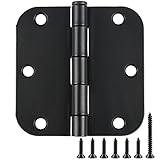
The other thing to consider is the corner radius. Many standard hinges have what’s called a ‘square corner.’
These are almost always reversible. If you’ve ever seen a hinge with rounded corners, that’s a different story. While some rounded corner hinges can be reversible, it’s not a guarantee.
It depends on how the manufacturer designed the barrel and whether the round-over is consistent on both sides. I once bought a set of sleek, modern-looking hinges with nicely rounded corners for a custom cabinet. They looked great, but then I realized I’d installed one upside down, and there was no way to just ‘flip’ it. The rounded corner on one side meant it wouldn’t seat properly in the mortise if I tried to reverse it.
It was a rookie mistake, and it cost me an extra trip back to the store for the correct hinge.
The good news is that for most standard interior doors, the hinges you’ll find at your local hardware store are designed with reversibility in mind. It’s the default for a reason – it simplifies installation and reduces waste. So, when you’re buying hinges for a standard door, you can usually assume they’re reversible unless there’s a very specific design feature that clearly indicates otherwise. It’s the specialty hinges, or those with very particular aesthetic choices, where you might run into trouble.
What to Look for on Your Hinge: The Devil’s in the Details
So, how do you actually know if a hinge is reversible without just guessing? It’s not always obvious from a quick glance, but there are a few tell-tale signs. First off, look at the barrel of the hinge. If it looks identical on both the top and the bottom, and there are no distinct shapes or notches that would only allow it to fit one way, that’s a good sign. The barrel is the part where the pin goes through, and if it’s symmetrical, it means you can orient it in either direction.
Next, check out the pin. Most reversible hinges have a pin that can be removed by tapping it out from the bottom. Some pins have a small, rounded head on one end and a flat tip on the other.
For a truly reversible hinge, the pin should be the same on both ends, or at least designed so that either end can sit securely in the hinge barrel. If one end of the pin is significantly different, it might be designed for a specific orientation. I had a set of antique cabinet hinges once, and the pin had a decorative finial on one end. It looked cool, but it definitely wouldn’t let me flip the hinge around. (See Also: A Box Without Hinges Key )
It was meant to be installed with the finial facing outwards, and that was that.
The corner radius, as I mentioned before, is another big clue. Hinges with square corners are almost always reversible. If the corners are rounded, you need to look more closely. Some rounded-corner hinges are reversible, but others are not. It depends on how the rounding is done. If the curve is consistent and doesn’t interfere with how the hinge leaf sits in the door or frame mortise, it might be reversible. However, if the rounding creates a specific profile that only fits one way, you’re out of luck.
You can also often tell by the way the hinge leaves are cut. On a reversible hinge, the edges of the hinge leaves where they meet the frame and the door should be uniform. There shouldn’t be any odd angles or shapes that suggest a specific ‘up’ or ‘down’ or ‘left’ or ‘right’ orientation. Think of it like this: if you could hold the hinge up and it looked the same from either side, top to bottom, it’s probably reversible. It’s the subtle differences in manufacturing that often dictate whether a hinge can be flipped or not. When in doubt, check the packaging or the manufacturer’s website. They’ll usually specify if a hinge is non-handed or reversible.
Common Hinge Types and Their Reversibility
Here’s a quick rundown of common hinge types you’ll encounter and how reversible they generally are:
| Hinge Type | Typical Reversibility | Notes |
|---|---|---|
| Standard Butt Hinge (Square Corner) | Yes | Most common for interior doors, designed for easy reversal. |
| Standard Butt Hinge (Radius Corner) | Often, but not always | Depends on the specific design of the barrel and corner rounding. Check carefully. |
| Ball Bearing Hinge | Usually Yes | These are typically solid and designed for smooth operation, often reversible. |
| Continuous Hinge (Piano Hinge) | Yes | Designed to run the full length of the door, they are inherently reversible. |
| Gate Hinges (Strap, T-Hinges) | Rarely | Often designed for specific mounting points and directional load bearing, not typically reversible. |
| Concealed Hinges (European Style) | Depends on model | Many are adjustable and can be mounted for left or right swing, but the hinge body itself might not be ‘reversible’ in the traditional sense. |
| Mortise Hinges | Depends on design | If it’s a standard butt hinge mortise type, it’s likely reversible. Specialty mortise hinges might not be. |
My Verdict: For standard interior doors, go with square-cornered butt hinges. They’re the most forgiving and almost always reversible. If you’re going for a modern look with rounded corners or a specialty hinge, do your homework before you buy. I learned that the hard way.
The Case of the Non-Reversible Hinge: When Things Go Wrong
I’ve had my share of DIY disasters, and wrestling with non-reversible hinges is definitely a chapter in my ‘learning as I go’ book. The most common scenario? You’re hanging a new door, or maybe replacing a damaged one, and you just grab what looks like a standard hinge. You screw it in, hang the door, and then you realize it swings the wrong way, or worse, the hinge barrel is sitting proud of the frame because it was installed backwards.
This happened to me when I was helping a friend renovate her old Victorian house. She wanted to keep as much of the original charm as possible, which meant using older-style hardware. We found some beautiful, ornate hinges at an architectural salvage yard.
They looked perfect, and I assumed they’d be like any other butt hinge – reversible. Big mistake.
These hinges had a very specific, almost hand-forged look to the barrel, and the pin was shaped oddly. When we tried to flip one, it just wouldn’t seat correctly. The door would sag, or the hinge would bind.
We spent a good hour trying to force it, convinced we were just missing something obvious. Turns out, the craftsmanship, while beautiful, meant they were designed for a specific orientation.
Another time, I was installing a closet door with a slightly thicker frame. I bought what I thought were standard hinges, but when I went to install them, the hinge leaves didn’t sit flush in the mortises. (See Also: Are Integrated Washing Machine Door Hinges Standard )
I double-checked the door and the frame, and everything seemed square. Then I noticed the hinge had a very subtle bevel on one edge of the leaf. This bevel was supposed to mate with a corresponding slight chamfer in the mortise. I’d installed them with the bevel facing the wrong way, meaning the hinge wasn’t sitting flush.
Reversing it meant I had to chisel out the mortise a bit differently, which was a pain. It wasn’t that the hinge itself was non-reversible in terms of its pin and barrel, but its specific manufacturing for a particular mortise meant it had a ‘correct’ orientation.
The real kicker is when you realize this after you’ve painted the door and frame. Now you’ve got to carefully tape everything off, remove the door, and re-mortise or adjust. It’s the kind of thing that makes you want to throw your hammer across the room. The lesson learned? Always, always, always check the hinge design for specific orientations before you start cutting or screwing. If it’s not a simple, symmetrical barrel, assume it might not be reversible until proven otherwise. And for goodness sake, don’t paint until the door is hanging perfectly. That’s another lesson I learned the hard way.
Can You Make a Non-Reversible Hinge Reversible?
This is where things get a bit dicey. Generally speaking, if a hinge is designed to be non-reversible due to its unique barrel shape, pin design, or specific manufacturing tolerances for a particular mortise, trying to force it to be reversible is usually a bad idea. You’re unlikely to get a secure, flush fit, and you could end up damaging the hinge or the door itself.
However, there are some situations where you might be able to adapt a hinge, or where the ‘non-reversible’ aspect is more about installation convenience than fundamental design. For example, if a hinge has a slightly different radius on the corners and one corner sits better in the frame mortise than the other, you might be able to carefully chisel out the mortise on the door to accommodate the other corner.
This is basically modifying the opening to fit the hinge, rather than modifying the hinge itself. I’ve done this a couple of times when I was stuck with a non-reversible rounded corner hinge and couldn’t get another one easily.
It involves a lot of careful measuring, a sharp chisel, and a lot of patience. You have to make sure the mortise is deep and clean enough for the hinge leaf to sit perfectly flush.
Another common scenario is with certain types of security hinges or heavy-duty hinges. These might have a fixed pin or a barrel design that makes them non-reversible for security reasons or to make sure they can handle a significant load in a specific direction. In these cases, attempting to reverse them would compromise their intended function and safety. So, if you’re dealing with something like a security door or a very heavy gate, definitely stick to the manufacturer’s instructions and don’t try to get clever.
What about those hinges where the pin is just slightly different on one end? Sometimes, if the difference is minimal, you might be able to get away with reversing it. But if the pin doesn’t sit securely or if it causes the hinge to bind, it’s not worth the risk.
The goal is a smooth, silent swing. If you have to fight the hinge, something’s wrong. My general rule of thumb is this: if it’s a standard, inexpensive butt hinge, and it looks like it should be reversible but isn’t obvious, try it carefully.
If it’s a specialty hinge, a high-security hinge, or something expensive, play it safe and get the correct hinge for the desired swing direction. It’s cheaper than fixing a damaged door or frame. (See Also: Are Hinges Wheeels )
Practical Tips for Hinge Installation and Reversal
When you’re tackling a door project, whether it’s hanging a new door, replacing an old one, or even just adjusting a squeaky hinge, here are a few tips that have saved my bacon more than once. First, and this is huge: always decide on your door swing before you buy hinges. Does the door need to swing into the room or out? To the left or to the right? This seems obvious, but in the heat of the moment, it’s easy to overlook. A quick sketch of your room layout can save a lot of headaches.
Second, if you’re unsure about a hinge’s reversibility, buy one hinge and test it. Seriously. Go to the hardware store, grab a single hinge that looks like what you need, take it home, and try fitting it into a scrap piece of wood or even just hold it up to where it would go. See if it seats flush and if the pin goes in smoothly both ways. This might cost you a couple of bucks, but it’s way cheaper than buying a whole box of the wrong hinges and having to return them.
Third, always mortise for your hinges before installing them. This means creating the shallow recess in the door and frame where the hinge leaves will sit. You can use a sharp chisel for this. Make sure the mortise is deep enough for the hinge leaf to sit perfectly flush with the surface. If you’re trying to reverse a hinge that has a specific corner radius, you might need to adjust your mortise slightly to accommodate the other side. Take your time here; a sloppy mortise will result in a sloppy-looking door.
Fourth, when installing the pin, tap it in gently from the bottom. If it’s a reversible hinge, the pin should slide in smoothly. If it’s catching or binding, don’t force it. Double-check that you have the hinge oriented correctly and that the pin is straight. For interior doors, a little bit of light machine oil or even WD-40 on the pin can help prevent squeaks and make future adjustments easier. You can also consider using ball-bearing hinges for heavier doors or doors that get a lot of use; they offer smoother operation and often last longer.
Finally, if you’re installing new hinges on an existing door and frame, bring one of the old hinges with you to the hardware store. This way, you can directly compare the size, screw hole pattern, and corner radius. It’s the best way to make sure you get a direct replacement that will fit perfectly without needing to re-cut mortises. It’s saved me from buying the wrong size hinges more times than I care to admit.
Faq: Hinge Reversibility Questions Answered
Are All Door Hinges Reversible?
No, not all door hinges are reversible. Standard interior butt hinges, especially those with square corners, are typically designed to be reversible. However, specialty hinges, hinges with unique barrel designs, rounded corners that aren’t symmetrical, or those made for specific mounting applications may not be reversible. Always check the hinge design or packaging for confirmation.
How Can I Tell If My Door Hinge Is Reversible?
Look at the hinge barrel; if it’s symmetrical and looks the same on both sides, it’s likely reversible. Check the pin; if it’s symmetrical or can be inserted from either end without issue, that’s another good sign. Hinges with square corners are generally reversible, while rounded corners can sometimes indicate a non-reversible design. If in doubt, test a single hinge before buying a set.
What Happens If I Install a Non-Reversible Hinge Backward?
If you install a non-reversible hinge backward, it likely won’t sit flush in the mortise, leading to a gap between the hinge and the door or frame. This can cause the door to bind, sag, or not close properly. You might also find that the pin doesn’t seat correctly, compromising the hinge’s stability and function. In some cases, forcing it can damage the hinge or the surrounding wood.
Can I Modify a Non-Reversible Hinge to Make It Reversible?
Generally, it’s not recommended to modify a hinge that is fundamentally designed to be non-reversible. Attempting to do so can compromise its structural integrity and function. However, you might be able to slightly adjust the mortise in the door or frame to accommodate a hinge with a slightly different corner radius if it’s otherwise reversible. For most cases, it’s best to purchase the correct hinge for your desired door swing.
Conclusion
So, to boil it down, the answer to ‘are door hinges reversible?’ is a qualified ‘usually, but not always.’ For most common interior doors, you’re probably in the clear with standard butt hinges. But if you’re dealing with something a bit fancier, or a hinge that looks like it has a specific shape or purpose, take a moment to check. Don’t be like me and end up fighting with a stubborn hinge after you’ve already painted the door. A few minutes of investigation upfront can save you hours of frustration and a whole lot of cursing.
My advice? Whenever possible, stick to square-cornered butt hinges for interior doors. They’re the workhorses of the hinge world for a reason – reliable and adaptable. If you’re going for aesthetics or specific functionality, do your due diligence. Check the packaging, look at the barrel and pin carefully, and when in doubt, buy one to test. It’s the practical, honest approach to getting the job done right the first time.
Next time you’re at the hardware store, take a closer look at the hinge selection. You’ll start to spot the subtle differences that tell you whether it’s a flip-any-which-way kind of hinge or one that’s meant for a specific job. It’s a small detail, but it makes a big difference when you’re the one holding the screwdriver.