I remember the first time I tried to hang a solid oak door by myself. It felt like wrestling a bear. I spent an hour fumbling with these metal things, trying to get them to just… work. My neighbor strolled over, took one look, and asked if I was building a time machine. He then pointed out I was holding the hinge the wrong way. Some days, I swear I’m still learning the absolute basics of a workshop. This whole debate about whether hinges on a door are wheels is, frankly, ridiculous, but it pops up enough that someone’s clearly confused.
Look, are hinges on a door wheels? No. Not by a long shot. They serve a completely different purpose, even if both involve some sort of movement.
Let’s clear this up so you don’t end up holding a door hinge upside down for an hour.
The Real Job of a Door Hinge
Alright, let’s get down to brass tacks. The question, are hinges on a door wheels, is fundamentally flawed because it misunderstands what each component actually does. A hinge’s job is to connect two solid objects and allow them to pivot relative to each other. In the case of a door, it connects the door slab to the door frame. It’s about rotation around a fixed axis. Think of it like your elbow joint – it lets your forearm move up and down, but it’s not rolling anywhere.
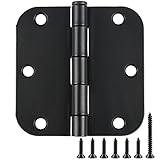
The primary components of a standard door hinge are two flat plates, called leaves, and a pin that runs through them, creating a barrel. One leaf is usually attached to the door edge, and the other to the door frame.
When you open or close the door, the barrel allows the pin to rotate, enabling the door to swing. It’s a simple but solid mechanical connection designed for durability and repeated movement. There’s no rolling involved, no independent spinning of separate components that carry the load across a surface. It’s pure, unadulterated pivot.
I’ve spent more time than I care to admit sanding down doors that were sticking because the hinges weren’t installed perfectly plumb, or the wood swelled. That’s the kind of ‘movement’ we’re talking about – adjustment and alignment, not propulsion.
Contrast this with wheels. Wheels are designed to reduce friction by rolling over a surface. They’re circular, and their primary function is to enable movement across distance with minimal effort. Think about a shopping cart. Those little casters are wheels. They roll. They make it easy to push the cart laden with groceries. If your car’s wheels didn’t roll, you wouldn’t be going anywhere, you’d just be dragging a metal box. The physics are entirely different. Hinges are about angular displacement; wheels are about linear displacement via rolling friction.
It’s a bit like asking if a screwdriver is a hammer. Both are tools, both involve manual dexterity to use, but their core functions and the way they achieve their results are worlds apart. Hinges are about controlled rotation; wheels are about effortless linear motion. The confusion might stem from the fact that both involve some form of ‘turning’ or ‘movement,’ but that’s where any similarity ends. I once tried to use a screwdriver to hammer in a nail – it bent the screwdriver and barely dented the nail. Lesson learned: use the right tool for the job. And a hinge is decidedly not a wheel.
Some might argue that a hinge allows movement, and wheels allow movement, so there’s a connection. That’s like saying a book and a brick are similar because they are both objects you can hold. The functionality, the underlying principles, and the practical application are completely distinct. The metal pin in a hinge spins inside the barrel, yes, but it’s a controlled spin within a fixed assembly, not independent rolling across a plane. It’s a subtle but vital difference.
What Hinges Actually Do (and Why They Aren’t Wheels)
Let’s hammer this point home: hinges are designed for articulation, not locomotion. When you install a door hinge, you’re creating a pivot point. The two parts of the hinge move relative to each other, but the hinge itself doesn’t travel. It stays firmly attached to the door and the frame. The door swings on the hinge, but the hinge isn’t rolling anywhere. The pin inside the hinge barrel spins, sure, but that’s a rotation within a fixed axle, not a wheel rolling across a surface.
Think about the materials and construction. Door hinges are typically made of steel, brass, or stainless steel. They are designed to withstand the weight of the door and the forces applied during opening and closing. They need to be strong and durable. Wheels, on the other hand, can be made of rubber, plastic, metal, or composites, and their design prioritizes low friction and the ability to absorb shock. A wheel’s core feature is its circumference allowing it to roll, minimizing the contact area with the ground. A hinge has flat plates that press against each other, creating friction that needs to be managed, often with lubrication, but the design isn’t about overcoming that friction through rolling.
I once had a set of cheap cabinet hinges that squeaked like a banshee. It wasn’t because they were trying to be wheels; it was because the metal-on-metal contact was poor, and the tolerances were wide. A quick shot of lithium grease, and they were quiet as a mouse. That’s about managing friction in a pivoting system. If I had a wheel that squeaked like that, I’d be looking for debris or a worn bearing, not just reaching for the WD-40.
The engineering behind a wheel is all about reducing the coefficient of friction between the object and the surface it’s moving on. This is achieved by changing the point of contact from a large area (like the bottom of a static object) to a single point (the circumference of a rolling wheel). This is why a heavy box is much easier to move when it’s on wheels than when you try to drag it. (See Also: Are All Door Hinges The Same )
A hinge doesn’t have this characteristic. Its leaves are designed to mate together, and the pin rotates within the barrel formed by those leaves.
The movement is rotational, not linear, and the contact points are designed for bearing weight and allowing controlled angular movement, not for rolling friction reduction.
The common advice for dealing with stiff hinges is lubrication or adjustment, not replacement with something that rolls. If your door feels like it’s not opening smoothly, you’re likely dealing with issues like paint buildup, misaligned screws, or a warped door – all things addressed by adjusting or maintaining the hinge’s pivot function, not by trying to make it a wheel. The concept of a hinge being a wheel is like saying a crankshaft in an engine is a wheel. Both rotate, but a crankshaft’s function is to convert linear motion into rotational motion (or vice versa) within a closed system, not to help movement across a surface.
What Kind of Movement Do Hinges Allow?
Hinges allow for rotational or pivoting movement around a fixed axis. They connect two objects, enabling one to swing or turn relative to the other, without the hinge itself moving from its mounting point.
Common Misconceptions and Why They’re Wrong
The most glaring misconception is the premise itself: that hinges on a door are wheels. It’s like confusing a propeller with a jet engine. Both get an aircraft moving, but the mechanism and the physics are entirely different. People might get confused because both involve rotation. The pin in a hinge rotates within the barrel, and a wheel rotates on its axle. But the purpose and context of that rotation are what matter.
A wheel’s purpose is to help linear travel by rolling. A hinge’s purpose is to allow two objects to pivot relative to each other, typically for access or to provide a closure. You don’t roll a door open; you swing it.
If doors moved on wheels that were attached directly to the door’s edge and the frame, it would be a sliding door system, not a hinged one. And even then, those wheels are distinct components from the tracks they roll on. The misconception likely arises from a superficial understanding of ‘movement’ without dissecting the specific type of mechanical action involved.
It’s an analogy that just doesn’t hold water. I’ve seen some incredibly elaborate door mechanisms, but none that legitimately tried to pass off a hinge as a wheel.
Another angle of confusion might come from decorative hinges that have a rounded or barrel-like appearance, similar to the hub of a wheel. However, this is purely aesthetic; the functional part of the hinge still operates on the principle of a pin rotating within leaves. It’s like a car with spoked wheels – the spokes look like spokes, but the wheel still rolls. The visual similarity doesn’t equate to functional equivalence.
There’s also the idea that because a hinge allows something to ‘turn,’ and wheels help turning (like a car turning a corner), they’re somehow related. But the turning of a car’s wheels is about directional change of its linear path, enabled by friction with the road. The turning of a door on its hinge is about changing its angular position relative to a fixed point. The mechanics are fundamentally distinct. I once tried to ‘turn’ a loose hinge like a steering wheel, and it just flopped around. It’s not designed for that kind of manipulation.
Contrarian opinion time: Some might argue that any component that helps movement is akin to a wheel in a broader sense, as wheels are the most common facilitators of movement. I disagree vehemently. This is like saying a lever is a wheel because both help you move heavy things. They are both mechanical advantages, but they operate on entirely different principles. A wheel uses rolling friction to reduce effort for linear motion. A lever uses a fulcrum and use to amplify force for linear or rotational motion. Calling a hinge a wheel is like calling a pulley a lever – they both help lift things, but their core mechanisms are distinct. It’s a lazy comparison that ignores the engineering.
I’ve seen DIY enthusiasts try to get creative, and sometimes that leads to weird questions. But the fundamental physics of how a hinge works and how a wheel works are so different that they can’t be equated, no matter how you slice it. It’s not a matter of interpretation; it’s a matter of mechanics.
Are Hinges a Type of Bearing?
Yes, in a broad sense, hinges can be considered a type of plain bearing. The pin rotates within the barrel of the hinge leaves, and this interface supports the load and allows for low-friction rotation, much like a sleeve bearing. However, they are specifically designed for the application of swinging doors or lids, rather than the general-purpose rotational support provided by many other bearing types. (See Also: Are Exposed Hinges Outdated )
How Hinges Work: The Mechanics of Pivot
So, how do these things actually work, and why is it so far removed from a wheel? A door hinge is a simple machine, typically consisting of three main parts: two leaves and a pin. The leaves are flat metal plates.
One leaf is mortised (cut into) the edge of the door, and the other is mortised into the door frame. The edges of these leaves are formed into a barrel, which wraps around the pin.
When the hinge is assembled, the pin passes through the aligned barrels of both leaves, creating a unified pivot point. This pin is usually removable, often held in place by a cap at the top and sometimes a nail driven up from the bottom to prevent it from falling out accidentally.
The magic (and it’s not really magic, just good engineering) is in the rotation. When you push or pull the door, the door slab rotates on this fixed pin. The leaves of the hinge move relative to each other, but the hinge assembly as a whole remains stationary, anchored to the door and the frame. This allows for the door to open and close smoothly. The friction generated between the pin and the barrel is what needs to be managed. Too much friction, and the door will be hard to open or will squeak. Too little, and the door might swing too freely or not stay put.
Compare this to a wheel. A wheel is designed to rotate around an axle, but its primary function is to roll along a surface. The point of contact between the wheel and the surface is constantly changing as the wheel rotates. This rolling motion drastically reduces friction compared to sliding something across a surface. The entire purpose of a wheel is to allow an object to travel distance with minimal resistance. A hinge doesn’t travel; it stays put. The door travels, but it travels on the hinge’s pivot, not by the hinge rolling.
I remember building a custom workbench. I needed a heavy lid to access the storage underneath. I used heavy-duty strap hinges, which have a long, decorative strap that attaches to the surface. They pivot beautifully, allowing the lid to lift up. If I had tried to use wheels in that scenario, it would have been incredibly awkward. I would have needed tracks, and the lid would have had to slide, which wouldn’t have given me the full access I needed. The pivot of the hinge was the perfect solution, and it certainly wasn’t trying to roll anywhere.
I’ve spent hours troubleshooting squeaky hinges by applying different types of lubricants – graphite powder, 3-in-1 oil, even paraffin wax. Each time, the goal is to reduce friction within the pivot mechanism, not to make it roll. If it were a wheel, I’d be looking for flat spots, worn bearings, or dirt jamming the rotation, and the solution would involve cleaning or replacing the wheel itself, not just greasing the axle.
What Are the Main Types of Door Hinges?
Door hinges can be broadly categorized by their application and design. Common types include butt hinges (the most standard type, with two leaves), ball-bearing hinges (which have ball bearings to reduce friction and support heavier doors), security hinges (with non-removable pins or other tamper-proof features), strap hinges (long, decorative hinges often used on gates or chests), and pivot hinges (which mount to the top and bottom of the door and frame, allowing for a different swing action and heavier loads). Each type serves the fundamental purpose of allowing a door to pivot, but with variations for specific needs.
| Component | Function | Analogy | Verdict |
|---|---|---|---|
| Door Hinge | Allows two objects to pivot relative to each other. | An elbow joint. | Helps controlled rotation. NOT a wheel. |
| Wheel | Reduces friction to allow an object to roll along a surface. | A shopping cart caster. | Helps linear motion via rolling. NOT a hinge. |
Practical Tips for Working with Hinges
Since we’ve established that hinges aren’t wheels, let’s talk about what actually matters when you’re dealing with them. First off, buying decent hinges makes a world of difference. I once cheaped out on cabinet hinges for a built-in bookshelf, and within a year, they were sagging, the doors wouldn’t close right, and I had to replace the whole lot. They cost me about $80 for the set, and then another $150 for good ones plus my time re-drilling.
Lesson learned: for anything bearing significant weight or that you open frequently, invest in quality hinges. Brands like Baldwin or Schlage for door hardware, or even reputable cabinet hardware brands like Blum or Salice, are worth the extra cash. They’re not flashy, but they work reliably.
When installing hinges, especially on a new door or frame, precision is key. Use a good quality carpenter’s square and a sharp pencil. Mark your mortises carefully. If you’re installing them on an existing door, check the old mortises. Sometimes, doors sag because the hinges weren’t set deep enough initially, or the screws have loosened over time. Tighten screws first. If they just spin, you might need to fill the hole with wood glue and toothpicks (or a wooden dowel) and then re-drill for the screw. It’s a bit of a pain, but it’s better than having a wobbly door.
For painting doors and frames, always remember to either remove the hinges entirely or protect them well. Paint buildup in the hinge barrel or on the knuckles can cause them to stick or seize up. If you remove them, keep track of which hinge goes where, especially if they’re slightly different sizes or shapes. I once painted a door with the hinges on, only to find it wouldn’t close properly afterward because of a thin film of paint. Took me an hour of careful scraping with a utility knife to fix it. Removing them is cleaner and faster in the long run.
If your doors are squeaking, the fix is usually simple. Remove the pin (you might need a nail set and hammer to tap it up from the bottom). Clean the pin and the inside of the barrel with a rag. Apply a bit of lubricant – I prefer graphite powder or a silicone-based spray for most applications, as they don’t attract as much dust as oil. Reinsert the pin, and work the door back and forth a few times. This usually solves squeaks instantly. If it persists, check the hinge leaves for any damage or warping, but most of the time, it’s just a need for a little lubrication. (See Also: Are Hinges That Be Glued )
Finally, understand the load capacity. A standard interior door usually uses three 3.5-inch butt hinges. For heavier doors like solid core interiors or exterior doors, you might need larger or heavier-duty hinges, or even ball-bearing hinges to help distribute the weight and reduce stress on the pivot. Trying to hang a 100-pound solid oak door on flimsy cabinet hinges is just asking for trouble. It’s like trying to carry a piano with kite strings.
What’s the Best Way to Lubricate a Squeaky Hinge?
The most effective way to lubricate a squeaky hinge is to first remove the hinge pin. Clean both the pin and the inside of the hinge barrel with a dry cloth to remove any debris or old lubricant. Then, apply a lubricant directly to the pin and inside the barrel. Graphite powder, silicone spray, or a light machine oil like 3-in-1 oil are good options. Avoid heavy greases that can attract too much dust. After reinserting the pin, swing the door back and forth several times to distribute the lubricant evenly.
When to Upgrade or Replace Hinges
Sometimes, no amount of lubrication or adjustment will fix a bad hinge. If you notice visible wear, like the metal being ground down in the barrel, or if the hinge leaves are bent or warped, it’s time for a replacement. I had a set of bi-fold closet door hinges that just wouldn’t align anymore. No amount of fiddling made them work. Turns out, one of the pivot points was completely worn out. Replacing them with a new set of matching hinges was the only solution, and it took less time than I’d spent trying to fix the old ones. It cost me about $40 for a pair of decent replacements.
Sagging doors are a classic sign of worn-out hinges or loose mounting screws. If tightening the screws doesn’t help, and the hinges themselves look physically damaged or excessively loose where the pin connects the leaves, then replacement is your best bet. Trying to prop up a sagging door with shims or other makeshift solutions is a temporary fix at best and can lead to more significant structural issues over time. A properly functioning hinge system is vital for the longevity and usability of any door.
Another indicator is if the door binds or scrapes against the frame or floor even after you’ve checked for warping or settling of the house. This often means the pivot point itself is compromised, and the hinge is no longer holding the door in the correct plane. For instance, if the barrel of the hinge has elongated due to wear, the door will naturally droop lower than it should. This is where the ‘are hinges on a door wheels’ question really falls apart – a wheel that’s worn out will still roll, albeit poorly, but a worn hinge won’t pivot correctly.
Consider upgrading for better functionality. If you have a heavy exterior door, upgrading to ball-bearing hinges can make a significant difference in how smoothly it operates and how much stress is placed on the frame. For security-conscious situations, specialized security hinges that prevent the door from being lifted off its pins are a worthwhile investment. These aren’t about making the door roll, but about enhancing its security and stability.
I once installed a set of heavy-duty, self-closing hinges on a workshop door. They weren’t cheap, costing me around $100 for three, but they made a huge difference in keeping the workshop climate controlled without me having to remember to shut the door every time. That’s functional upgrade, not a wheel replacement.
When you replace hinges, try to get the same size and type if possible. This minimizes the need for extensive chiseling or re-drilling. Measure the old hinge carefully – height, width of the leaves, and the radius of the corner (square or rounded). If you can’t find an exact match, you might need to chisel out the mortise to accommodate a slightly larger hinge. Always use good quality screws, and if the old screw holes are stripped, use the wood glue and dowel trick mentioned earlier.
| Problem | Symptom | Solution | Opinion |
|---|---|---|---|
| Hinge Issues & Solutions | |||
| Squeaking | High-pitched noise when opening/closing. | Lubricate pin and barrel. | Usually an easy fix; don’t replace unless necessary. |
| Sagging Door | Door scrapes frame, won’t close properly. | Tighten screws; if worn, replace hinges. | Worn hinges are common; replacement is often best. |
| Binding | Door difficult to open/close, rubs excessively. | Check for frame issues, hinge wear, or paint buildup. | Can indicate hinge failure or installation errors. |
| Visible Wear/Damage | Bent leaves, worn barrel, loose pin. | Replace hinge. | Don’t mess with compromised hardware; safety first. |
People Also Ask
What Makes a Door Hinge Move?
A door hinge moves because of the pivot action created by its pin and leaves. When force is applied to the door, the pin rotates within the barrel formed by the hinge leaves. This controlled rotation allows the door to swing open or closed relative to the fixed frame, without the hinge itself traveling or rolling.
Can a Hinge Be Used as a Wheel?
No, a hinge cannot be used as a wheel. Hinges are designed for pivoting motion around a fixed axis, while wheels are designed for rolling motion to reduce friction and help linear travel across a surface. Their fundamental mechanics and purposes are entirely different.
What Is the Difference Between a Hinge and a Wheel?
The primary difference lies in their function: hinges allow controlled rotation or pivoting, connecting two objects that move relative to each other. Wheels, on the other hand, are designed to roll along a surface, reducing friction and enabling linear movement. A hinge stays stationary relative to its mounting points, while a wheel moves with the object it’s attached to across a surface.
Why Do Hinges Need to Be Lubricated?
Hinges need lubrication to reduce friction between the pin and the barrel. This friction can cause them to squeak, become stiff, or wear out prematurely. Lubrication makes sure smooth operation, prolongs the life of the hinge, and prevents annoying noises.
Conclusion
So, to put it bluntly, are hinges on a door wheels? Absolutely not. They are distinct mechanical components with entirely different jobs. One helps smooth, controlled rotation; the other enables effortless linear movement through rolling. Confusing them is like saying a light switch is a faucet just because they both turn. I’ve seen my share of over-engineered solutions and confusing DIY advice, but this particular comparison just doesn’t hold water.
If you’re wrestling with a door that’s sticking or squeaking, focus on maintaining that pivot point. Clean it, lubricate it, check your screws. Don’t go looking for ball bearings or trying to make it roll. That’s a problem for a wheel, not a hinge. Stick to the right tool for the job, and that means understanding the fundamental difference between these two common hardware pieces.
Next time you’re working on a door, take a moment to appreciate the simple, effective engineering of the hinge. It’s a testament to functional design, not a roundabout attempt to reinvent the wheel.