I remember the first time I tried to hang a door. It was a simple interior bedroom door, and I figured, ‘How hard can it be?’ I grabbed a pack of hinges from the hardware store, slapped them on, and expected perfection. What I got was a door that sagged, scraped the floor, and felt… cheap. It was then I realized, no, are all door hinges the same? Absolutely not. This seemingly simple piece of hardware is far more nuanced than you might think, and getting it wrong can lead to a lot of frustration.
There’s a universe of difference between a flimsy, basic hinge and a heavy-duty one designed for a solid wood entry. Understanding these differences isn’t just for pros; it’s for anyone who’s ever wrestled with a sticking door or wants to upgrade their home without shelling out for a whole new door.
More Than Just Swivels: How Hinges Actually Work
At its core, a door hinge is a mechanical device that allows a surface to pivot on a fixed point. For doors, this means connecting the door slab to the door frame, enabling it to swing open and closed. Most common door hinges, especially the ones you’ll find on interior doors, are butt hinges.
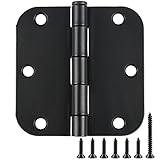
These consist of two rectangular leaves, each with a series of holes for screws. One leaf attaches to the edge of the door, and the other attaches to the jamb of the door frame. Between these two leaves is a pin, which passes through the barrel (the cylindrical part where the leaves meet and overlap). This pin is the key to the hinge’s function; it’s the axis around which the door rotates.
The material and construction of the hinge play a massive role in its durability and performance. Basic steel hinges are common because they’re affordable, but they can rust if exposed to moisture, especially if they aren’t coated. Stainless steel is a better option for humid environments or exterior doors, as it’s far more resistant to corrosion. Brass hinges are often chosen for their aesthetic appeal and corrosion resistance, but they can be softer and more expensive. Solid brass is definitely a step up from plated brass.
The thickness of the hinge material also matters. Thicker metal means a stronger hinge, better able to support the weight of a heavy door without bending or warping. You’ll often see a designation like ‘full mortise’ or ‘half mortise,’ which refers to how much of the hinge is recessed into the door and frame. Full mortise means both leaves are mortised (cut into) the door and frame, creating a very clean look and a strong connection. Half mortise means one leaf is mortised and the other is surface-mounted, which is sometimes used for utility or utility doors where aesthetics aren’t most important.
Beyond the basic butt hinge, there are other types. For example, security hinges have a non-removable pin or a stud that fits into the frame when the door is closed, making it harder to pry open. Concealed hinges, like European-style cabinet hinges, are almost invisible when the door is closed, offering a sleek, modern look. Pivot hinges, often seen on large or very heavy doors, are mounted at the top and bottom of the door and frame, allowing the door to swing in either direction and supporting weight more evenly. So, while the basic concept of a pivot point is the same, the execution and suitability for different applications vary wildly.
When Appearances (and Load Capacity) Matter: Choosing the Right Hinge
This is where things get personal, and where I’ve made my own blunders. You can’t just grab any old hinge and expect it to look good and perform flawlessly on every door. The most obvious differentiator is the finish. From polished brass and brushed nickel to oil-rubbed bronze and matte black, the finish needs to complement your door hardware and the overall style of your room. A cheap, plated finish might look okay for a year or two, but it’ll start to flake or wear off, looking terrible. Solid brass or a good quality plated finish over solid metal is what you want for longevity.
Then there’s the size and weight. Hinges are rated for the weight of the door they can support. (See Also: A Box Without Hinges Key )
A standard interior door (usually hollow-core) might only need two or three 3-inch hinges with a relatively light gauge metal. But a solid wood interior door, or especially an exterior entry door, needs much beefier hinges. I once tried to put standard 3-inch hinges on a heavy, solid oak interior door that had been replaced.
Within weeks, the door started to sag on the latch side, and the hinges looked like they were about to give up the ghost. I ended up having to replace them with 4-inch, heavier-gauge hinges with ball bearings, which made a world of difference. It cost me extra time and money because I didn’t do my homework.
The number of hinges is also important. For most standard interior doors, two or three hinges are sufficient. However, for heavier doors, or doors that need to withstand more frequent and forceful use, three hinges are almost always better. Sometimes, for very heavy doors like grand entryways or commercial applications, four hinges might even be specified. The placement of the hinges also matters. Typically, the top hinge is placed about 7 inches from the top of the door, and the bottom hinge is about 11 inches from the bottom. The middle hinge, if you have one, is usually centered. This placement distributes the weight evenly.
Here’s a little table I put together based on my experiences and what I’ve seen work. It’s not exhaustive, but it covers the basics for common residential doors:
| Door Type | Typical Hinge Size | Number of Hinges | Recommended Material/Finish | My Verdict |
|---|---|---|---|---|
| Hollow-core Interior | 3-inch | 2 or 3 | Steel (coated for corrosion resistance) | Basic, functional, but don’t expect miracles. |
| Solid wood Interior (standard) | 3.5-inch or 4-inch | 3 | Steel (heavier gauge), or solid brass. Finishes like brushed nickel, oil-rubbed bronze. | Worth the extra $ per hinge for durability. |
| Exterior (light to medium weight) | 4-inch or 4.5-inch | 3 | Stainless steel or heavy-duty steel with excellent coating. Ball bearings recommended. | Exterior means weather exposure; don’t skimp on rust resistance. |
| Heavy Exterior/Solid Wood Entry | 4.5-inch or 5-inch | 3 or 4 | Heavy-gauge steel, solid brass, or stainless steel. Ball bearings are a must. Decorative finials are a bonus. | This is your home’s first impression; go for quality and strength. |
Common Mistakes That Make You Look Like a Beginner
The biggest mistake I see, and one I’ve certainly made, is assuming all hinges are interchangeable. People often replace an old door and just buy the cheapest hinges they can find, or they buy hinges that look similar but aren’t the same thickness or weight. This leads to doors that sag, don’t close properly, or even bind against the frame. Another common error is not buying enough hinges. For a standard interior door, two might technically work, but three provides much better support and distributes the stress more evenly, leading to a longer lifespan for both the door and the hinges.
Then there’s the issue of the pin. Most standard hinges have a removable pin that allows you to take the door off the frame without unscrewing the hinge leaves. This is great for moving furniture or painting. However, for security, this is a weak point. If the pin can be easily removed, so can the door. This is why security hinges often have a stud on the hinge knuckle that fits into a corresponding hole on the frame when the door is closed. If the pin is removed, the door still can’t be lifted off the frame. This is a small detail, but for exterior doors or even interior doors to sensitive areas, it’s worth considering.
People also often overlook the importance of the screw size. Hinges come with holes for specific screw sizes. Using screws that are too short or too thin means the hinge won’t be securely attached to the door or frame.
This is especially problematic with hollow-core doors, where the screws only have the thin wood veneer and honeycomb interior to bite into. For those, longer screws are almost always necessary, often going into the frame studs for a more solid hold. I once had a hollow-core door where the original hinges were put in with tiny screws. (See Also: Are Integrated Washing Machine Door Hinges Standard )
When I went to hang a new door, I used standard screws and the hinge ripped right out of the door because the wood was so weak. I had to do some serious wood filler and reinforcement work to get it to hold.
Finally, there’s the matter of corner radius. Hinges come with either a square corner or a rounded corner. The corner of the hinge leaf needs to match the corner of the mortise cut into the door and frame. If you don’t have a mortise, you might be using surface-mount hinges, which usually have square corners. Mismatched corners mean the hinge won’t sit flush, leading to gaps and a poor fit. It’s a small detail, but it shows a lack of attention that can make an otherwise decent job look amateurish.
Real-World Performance: When Hinges Fail (and Why)
I’ve had hinges squeak like a chorus of terrified mice after just a few months. This is usually due to a lack of lubrication, or the metal itself being a lower quality that wears down quickly. A good quality hinge, especially one with a ball bearing or a barrel and pin made of a harder alloy, should remain silent for years. If you get squeaks, sometimes a little graphite lubricant or a dab of grease can fix it, but if it’s a persistent problem, it’s a sign of a cheap hinge that’s likely to fail prematurely.
The most dramatic failure I’ve seen is a hinge actually breaking. This isn’t common with standard interior doors unless they’re abused, but for heavy exterior doors or doors subjected to strong winds or heavy traffic, it can happen. The metal fatigues and cracks, or the barrel can deform. This usually points to a hinge that was undersized for the application, or made from very poor-quality metal. I had a garage door where one of the hinges snapped clean off the door. Luckily, it was a smaller, lighter door, but it could have been a serious safety hazard. The replacement was a heavy-duty steel hinge designed specifically for that type of door, and it’s been solid ever since.
Another issue is hinges that just get loose over time. This is almost always due to the screws backing out. In wood, especially softer woods or if the pilot holes were drilled too large, screws can lose their grip. This is why, as I mentioned, using the correct screw size and sometimes longer screws is vital. For very problematic screw holes, wood dowels and new pilot holes, or even specialized wood repair epoxies, can be used to create a solid anchor point again. It’s a pain, but it beats having a door that doesn’t hang straight.
The common advice is often to just replace a failing hinge with another of the same type. While sometimes true, it’s often wrong. If a hinge failed because it was the wrong type or size for the door, simply replacing it with an identical one will just lead to the same problem down the line. You need to assess why it failed. Was it too weak? Did it rust? Did the screws pull out? Answering that question dictates the type of replacement you need. Sometimes, a slight upgrade in size, material, or type of hinge is the only way to truly fix the issue and prevent future headaches.
The Contrarian View: When Simplicity Beats Over-Engineering
Everyone talks about ball-bearing hinges, heavy-gauge steel, and exotic finishes. And for exterior doors or very heavy interior doors, they’re absolutely right. But for the average, lightweight, hollow-core interior bedroom door? I think a lot of people over-engineer it. I’ve seen DIYers agonize over whether to get 2.5-inch or 3-inch hinges, or whether a certain finish will clash with their doorknob. For those doors, the cheapest, most basic set of three 3-inch steel hinges you can find will likely last the lifetime of the door, assuming it’s not being slammed open and shut by a toddler on a sugar rush.
The reality is, the vast majority of interior doors in a typical home don’t bear a lot of weight or face harsh conditions. The door itself is light, and it’s protected from the elements. Spending an extra $5-$10 per hinge on something with ball bearings or a fancy finish for a door that leads to your linen closet is often just throwing money away. A basic, properly installed set of three hinges is perfectly adequate. The key is proper installation: using the right number of hinges, making sure they’re screwed in securely, and making sure the door is properly hung in the first place. (See Also: Are Hinges Wheeels )
My contrarian opinion: unless the door is unusually heavy (solid wood, glass inserts, etc.), is an exterior door, or you’re going for a specific high-end aesthetic where the hinge itself is a design element, stick to the basics for interior doors. The fancy, expensive hinges are often overkill and don’t provide a noticeable functional benefit for the majority of everyday interior doors. Focus your budget and attention on the doors that actually need the solid hardware – the exterior ones, or the solid wood statement pieces.
Faq: Are All Door Hinges the Same?
What Is the Difference Between a 3-Inch and a 3.5-Inch Hinge?
The ‘inch’ measurement typically refers to the length of the hinge leaf. A 3-inch hinge has leaves that are approximately 3 inches long, while a 3.5-inch hinge has leaves that are about 3.5 inches long. Longer hinges, like 3.5-inch or 4-inch, generally provide better support and are recommended for heavier doors, solid wood doors, or exterior doors to prevent sagging and make sure durability.
Can I Use Exterior Hinges on Interior Doors?
Yes, you generally can use exterior hinges on interior doors, especially if you want the added durability, corrosion resistance, or a specific aesthetic. However, exterior hinges are often more solid and can be more expensive than necessary for lightweight interior doors. For most interior applications, standard interior hinges are perfectly adequate and more cost-effective. Make sure the screw hole pattern and mortise size match if replacing existing hinges.
What Does ‘ball Bearing’ Mean on a Hinge?
Ball bearing hinges have small ball bearings placed between the barrel of the hinge and the pin. These bearings reduce friction significantly, allowing the door to swing more smoothly and quietly, and also handle heavier loads with less wear and tear. They are highly recommended for heavier doors, such as solid wood entry doors or commercial doors, to make sure smooth operation and longevity.
How Do I Know If I Need Security Hinges?
You should consider security hinges for exterior doors, or interior doors where added security is a concern (like a home office door). Standard hinges have removable pins, which means if the door is forced open and the hinge pins are removed, the door can be taken off the frame. Security hinges have features like a non-removable stud or an offset pivot pin that prevent the door from being removed even if the pins are tampered with.
Do Hinge Finishes Matter for Functionality?
For interior doors, the primary purpose of the finish is aesthetic, to match other hardware like doorknobs and handles. For exterior doors, however, the finish is important for functionality as it provides a protective layer against rust and corrosion. Finishes like stainless steel, solid brass, or high-quality plated finishes are key for exterior hinges to withstand the elements and prevent premature failure due to rust.
Final Thoughts
So, are all door hinges the same? Definitely not. The seemingly small differences in size, material, construction, and even finish can have a huge impact on how a door performs, how long it lasts, and how it looks. It’s easy to get this wrong, and I’ve certainly paid the price in time and frustration with doors that sagged or looked just plain cheap because I didn’t choose the right hinge.
When you’re choosing hinges, think about the door’s weight, its location (interior vs. exterior), the style of your home, and the level of security you need. Don’t be afraid to spend a little extra on better quality, especially for exterior doors or solid wood interior ones. It’s a small investment that pays off in smooth operation and a polished look for years to come.
Next time you’re staring at a row of hinges, take a moment. Consider the door you’re hanging. It might just save you a headache and make your next project go a whole lot smoother.