I remember staring at a wall of paint brushes, completely bewildered. It was my first real attempt at tackling a DIY project that involved more than just slapping on a coat of primer. The labels seemed to mock me: ‘1 inch,’ ‘2 inch,’ ‘1/2 inch.’ My brain immediately went to measuring the handle, or maybe the whole darn thing from tip to tail. This whole sizing thing for paint brushes felt like a secret handshake I hadn’t been invited to. So, are paint brushes referred to by width or length? Let me tell you, it’s not as straightforward as you might think, and frankly, it’s a bit of a mess.
For years, I just grabbed whatever looked right, usually ending up with brushes that were too big for detail work or too small to cover any real surface area efficiently. It’s a classic case of buying gear based on what someone told you or what looked good on the shelf, rather than understanding what actually makes a difference when the paint is wet and the clock is ticking.
The Real Story Behind Brush Sizing: It’s All About the Width, Mostly
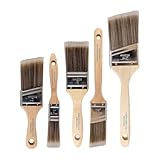
Okay, let’s cut to the chase. When people talk about paint brush sizes, they are overwhelmingly referring to the width of the ferrule, which is that metal band holding the bristles. This is the standard way manufacturers and professionals communicate. You’ll see numbers like 1 inch, 2 inches, 1/2 inch, 3/4 inch, and so on. This measurement dictates how much surface area the brush can cover in a single pass. A wider brush, say a 3-inch sash brush, is fantastic for big, flat areas like walls or doors where you want to lay down a lot of paint quickly. A smaller brush, like a 1-inch angle brush, is your go-to for trim, cutting in edges, or smaller details.
Now, does the length of the bristles matter? Absolutely. Bristle length plays a significant role in how much paint a brush can hold and how it releases that paint onto the surface. Longer bristles generally hold more paint and can create a smoother finish, especially with thicker paints like oils. Shorter bristles are stiffer and offer more control, which is great for precise work or when you need to push paint into a surface. However, you rarely see brushes advertised by their bristle length. It’s assumed knowledge, or at least, it’s secondary to the width.
Think about it this way: if you’re painting a fence, you want a brush that can span a good chunk of a picket at once. That’s dictated by width. If you’re trying to get a really fine line of paint along the edge of a window frame, you need a brush with a narrow profile. Again, width is the primary identifier. The length of the bristles on that narrow brush will affect how smoothly it glides and how much paint it delivers, but the initial choice is based on the width needed to fit the job.
I learned this the hard way. I once bought a fancy, expensive brush that had ridiculously long bristles, thinking it would be amazing for smooth finishes. What I got was a brush that sputtered and splattered, holding way too much paint and offering zero control. It was a nightmare for the detailed furniture restoration I was attempting. I should have paid attention to the width of that particular brush – it was a 2-inch behemoth when I needed something closer to a 1-inch or even a 3/4-inch for the delicate work. The long bristles were the secondary problem; the primary problem was the width being all wrong for the task.
The common advice to just “buy good brushes” is often true, but it’s not specific enough. You need to understand why a certain brush is good for a certain job. It’s not just about bristles or ferrule material; it’s about dimensions. The width is the first dimension you need to grasp, and then you can start to consider bristle length and material as finer tuning points.
Bristle Material and Shape: The Unsung Heroes of Brush Performance
While width is the primary way brushes are sized, the material and shape of the bristles are just as, if not more, important for how a brush actually performs. Ignoring this is a recipe for frustration and wasted paint. Seriously, I’ve spent more money than I care to admit on brushes that looked the part but performed like something you’d find in a dollar store because I didn’t understand the bristle difference.
For latex or water-based paints, synthetic bristles (nylon, polyester) are generally your best bet. They hold up well to the water in the paint and are easier to clean. They tend to have a bit more spring to them, which helps with consistent laydown. Natural bristles (hog hair, badger hair) are usually reserved for oil-based paints and varnishes. They have a natural affinity for these types of coatings, absorbing and releasing them beautifully. Trying to use natural bristles with latex can lead to a clumpy, streaky mess, and the bristles can get ruined. (See Also: Can Acrylic Paint Go In An Air Brush )
Then there’s the shape. You’ve got your flats, your rounds, your angles, and your fans. Flats are broad and good for covering large areas. Rounds are good for smaller details and creating lines. Angles are a hybrid, fantastic for cutting in corners and edges because the angled bristles hug the line. Fan brushes are designed for blending and creating soft effects.
The combination of width, bristle material, and shape is what truly defines a brush’s purpose. A 2-inch flat synthetic brush is for walls. A 1/2-inch angle natural bristle brush is for oil-based trim. A 1/4-inch round synthetic brush is for fine detail work on a craft project. It’s not just about the 2 inches or the 1/2 inch; it’s what those dimensions are made of and how they are cut.
I remember a project where I was painting some intricate wooden picture frames with a dark oil-based stain. I grabbed what I thought was a good detail brush – it was narrow, maybe 3/8 inch, and looked decent. But it was synthetic, and the stain just wouldn’t adhere properly. It kept beading up.
After about an hour of fighting with it, I went back to the store and got a tiny, natural bristle round brush. The difference was night and day.
The stain flowed like silk, and I could get those crisp, clean lines I was after. That experience solidified for me that while width is the first number you see, material and shape are the silent partners that make or break the job.
Common Brush Mistake: Buying One Brush to Rule Them All
This is the biggest trap I see people fall into. They buy one decent-sized brush, maybe a 1.5-inch synthetic flat, and try to use it for everything. Trying to paint the entire exterior of a house with that brush? Good luck. Trying to do delicate touch-ups on a piece of furniture with it? You’ll end up with more paint on the surrounding areas than on the target. There’s no single brush that’s good for every job. You need a small arsenal. It doesn’t mean you need dozens, but having a few key sizes and types for different tasks will save you so much grief.
| Brush Type | Typical Widths | Bristle Material | Best For | My Verdict |
|---|---|---|---|---|
| Flat/Wall Brush | 2-4 inches | Synthetic (Nylon/Polyester) | Walls, large flat surfaces, primer | Absolute workhorse for big jobs. Don’t skimp here. |
| Sash Brush (Angled) | 1-3 inches | Synthetic or Natural (depending on paint type) | Trim, cutting in edges, windows | Indispensable for clean lines. Angle is key. |
| Detail Brush | 1/4 – 3/4 inch | Synthetic or Natural (depending on paint type) | Fine lines, small objects, touch-ups | You need at least one small one. Seriously. |
| Round Brush | 1/4 – 1 inch | Synthetic or Natural | Curves, lettering, fine detail | Great for artistic work or very specific lines. |
| Chip Brush | 1-4 inches | Natural (often Hog Bristle) | Applying finishes, glue, messy jobs | Cheap and cheerful for tasks where brush quality isn’t most important. Disposable. |
When Width Isn’t the Only Number That Matters: Bristle Length and Taper
So, we’ve established that width is king when it comes to how brushes are generally categorized. But, and this is a big ‘but,’ the length of those bristles and how they are tapered can make a surprisingly huge difference in how a brush behaves. If you’ve ever used a brush that felt ‘scratchy’ or ‘wispy,’ it’s often down to these factors, not just the width.
Bristle length is key to paint loading and laydown. Longer bristles have more surface area, meaning they can hold more paint. This is great for covering large areas with fewer dips into the paint can, leading to a more uniform finish. Think of painting a long hallway – you want a brush that can carry a decent amount of paint to keep your strokes consistent. A shorter-bristled brush, on the other hand, will hold less paint and often feel stiffer. This stiffness gives you more control, which is vital for detailed work where you can’t afford to have paint bleeding everywhere. It’s about control versus capacity. (See Also: Can Acrylic Paints Be Used In An Aqua Brush )
Then there’s tapering. Tapered bristles are thinner at the tip than at the ferrule. This is a sign of a higher-quality brush. Why? Because tapered bristles are softer and more flexible at the very end, allowing them to fan out more effectively and lay down paint smoothly. They create finer lines and a more delicate touch. Non-tapered bristles, often found in cheaper brushes, are the same thickness all the way up. They tend to be stiffer, can leave brush marks more easily, and don’t hold paint quite as gracefully. It’s like the difference between a sharp pencil and a blunt crayon – both make marks, but the quality and precision are worlds apart.
I learned this distinction when I was trying to paint a very smooth, glossy finish on a piece of furniture. I had a decent 2-inch synthetic flat brush, but every time I painted, I could see the faint lines from the bristles.
It looked… well, like it had been painted with a brush. Annoying.
I complained to a painter friend, and he handed me one of his higher-end brushes. It was the same width, same material, but the bristles were noticeably finer and tapered. When I used it, the paint just flowed. It was like the brush knew what to do.
The finish was significantly smoother, with hardly any visible brush marks. The extra few bucks I paid for that tapered brush was worth its weight in gold for that project. It taught me that while width is the primary identifier, the quality of the bristles—their length, their taper, their feel—is what separates a decent brush from a truly great one.
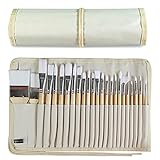
Brush sets are tempting. They promise a variety of sizes and shapes all in one package, often at what looks like a bargain price. And sometimes, they can be a decent way to get a few basic brushes for occasional use. But for anyone who’s serious about painting, or even just wants a less frustrating experience, brush sets can be a minefield. I bought one of those massive sets once, thinking I was set for life. I think I used maybe three brushes out of the twenty or so in the pack. The rest were just… garbage.
The problem is that to keep the price down, manufacturers often cut corners on quality. The bristles might be uneven, poorly anchored, or made of cheap synthetic material that doesn’t hold paint well or clean up easily. The ferrules might be thin and flimsy, prone to bending or separating from the handle. And the handles themselves can feel awkward and unbalanced in your hand.
When you buy individual brushes, especially from a reputable art supply store or hardware store that caters to professionals, you can inspect them. You can feel the weight, check the heft of the handle, see how the bristles are packed, and gauge the taper. With a set, you’re often buying a pig in a poke. You might get a couple of decent brushes mixed in with a bunch of duds. It’s like buying a box of chocolates where half of them are stale. (See Also: A Brushes Digital Painting )
I’ll give you a contrarian opinion here: Everyone says brush sets are good for beginners. I disagree. I think beginners are most likely to be discouraged by a bad brush set. They’ll assume all brushes are this bad, and they’ll give up on a project or just do a really poor job because their tools are actively working against them. It’s far better, in my opinion, to buy one or two good quality individual brushes for the specific tasks you need them for. You can build your collection slowly, learning what works for you as you go. That 1.5-inch sash brush you buy individually, even if it costs $10-$15, will likely outperform five brushes from a $20 set.
The key takeaway is to be important. If a set seems too cheap to be true, it probably is. Focus on getting a few quality pieces rather than a quantity of mediocre ones. Your sanity and the quality of your paint job will thank you for it.
People Also Ask Faq
How Do I Know If a Paintbrush Is Good Quality?
A good quality paintbrush will feel balanced and sturdy in your hand. The bristles should be densely packed and have a good snap or spring to them – they shouldn’t feel floppy. Look for tapered bristles, which indicate finer quality and better paint laydown. The ferrule (the metal part) should be smooth and firmly attached to the handle. When you bend the bristles, they should spring back into shape without splaying out permanently.
What Is the Difference Between a Synthetic and Natural Bristle Brush?
Synthetic brushes (nylon, polyester) are best for water-based paints like latex and acrylics. They are durable, easy to clean, and hold their shape well. Natural bristle brushes (hog hair) are ideal for oil-based paints, stains, and varnishes. They absorb and release these thicker coatings more effectively but can be damaged by water-based paints and are harder to clean thoroughly.
Should I Use a Wide or Narrow Brush for Detail Work?
For detail work, you will almost always want a narrower brush. The width of the brush dictates how much surface area it covers. For fine lines, intricate patterns, or small touch-ups, a brush with a width of 1/4 inch to 3/4 inch is typically appropriate. The length and taper of the bristles on these narrow brushes will then determine the precision and smoothness of your detail work.
Are Expensive Paintbrushes Worth It?
Yes, generally speaking, expensive paintbrushes are worth it if you paint regularly or require a high-quality finish. They use better materials, have superior construction (like tapered bristles and secure ferrules), and hold paint more effectively. This leads to smoother application, fewer brush marks, easier cleanup, and a much less frustrating painting experience. For occasional DIY tasks, a mid-range brush might suffice, but for professionals or serious hobbyists, the investment pays off.
What Does the Number on a Paintbrush Mean?
The number on a paintbrush typically refers to its width in inches. So, a ‘1 inch’ brush is one inch wide across the ferrule where the bristles are held. This measurement is the primary way brushes are sized and indicates how much surface area the brush can cover in a single stroke. While other factors like bristle length and material are important for performance, the number primarily denotes the width.
Final Thoughts
So, to bring it all back around: are paint brushes referred to by width or length? The short, blunt answer is that the number you see on a brush almost always refers to its width, specifically the width of the ferrule. This is the most common and practical way the industry communicates brush size. However, it’s important to remember that width is only one piece of the puzzle. Bristle material, length, taper, and the overall shape of the brush head play massive roles in how it performs.
Don’t get caught just looking at the number. Understand what that width means for the job at hand, and then consider the other characteristics that will make the difference between a smooth, professional finish and a frustrating, streaky mess. It took me years and a few too many dollars wasted to really internalize this, so hopefully, you can learn from my mistakes.
My final piece of advice? Next time you’re at the paint store, pick up a few different brushes. Feel them. Bend the bristles. Imagine using them. Pay attention to the width, but also the feel of the bristles and the balance of the handle. Your paint projects will thank you.