I remember the first time I tried to paint a sky that wasn’t just a flat blue smudge. I was maybe ten years old, armed with a cheap kid’s brush set and a can of tempera paint. The result? A muddy, streaky mess that looked more like a dirty windowpane than a serene afternoon. It made me wonder, from that early age, are paint brushes important in the art? It felt like the tool itself was holding me back, but I didn’t know why.
Years later, after countless hours spent fiddling with brushes, spending way too much money on fancy ones only to have them fall apart, and learning the hard way what actually makes a difference, I can tell you with absolute certainty: Yes. But it’s not as simple as ‘more expensive is better.’ It’s about understanding the tool.
This isn’t about some high-falutin’ art theory. This is about getting paint where you want it to go, making marks that look like you intended, and not fighting your materials every step of the way. Let’s get real about brushes.
The Humble Bristle: More Than Just a Stick and Some Hair
Look, most people think of paint brushes as just… brushes. You dip ’em, you dab ’em, you get paint on the canvas. Easy. But that’s like saying a car is just four wheels and an engine. The devil, or in this case, the magic, is in the details. The quality of the bristles, the way they’re set into the ferrule, the balance of the handle – it all adds up to how that brush behaves under your hand.
When I was starting out, I bought the cheapest multipacks I could find. They were stiff, they shed like a wet dog, and they’d splay out after a single use. Trying to get a clean line or a delicate blend was a joke. I’d end up with fuzzy edges and paint that looked like it had been applied with a whisk. It was frustrating, and I almost quit painting entirely because I thought I just didn’t have ‘the talent.’ Turns out, I just didn’t have the right tools.
Think about it: The bristles are your direct connection to the paint and the surface. They determine how much paint the brush holds, how smoothly it releases that paint, and the kind of mark it leaves. A good brush feels like an extension of your hand; a bad one feels like an enemy. The common advice to ‘just use what you have’ is often terrible advice, especially for beginners. It sets you up for failure and a whole lot of wasted paint and time.
I had this one experience, maybe five years ago, trying to paint a detailed portrait. I was using these synthetic brushes I’d picked up for about $5 each. They were supposed to be good for acrylics. Every stroke felt scratchy. The paint wouldn’t load properly, and then it would just dump off in blobs. I spent more time trying to fix the mess the brush made than actually painting. It was infuriating. I finally broke down and bought a single, decent-quality sable brush for about $30. The difference was night and day. It was like going from a tractor to a sports car. The control, the flow, the ability to make subtle shifts in tone – it was all there.
Synthetic vs. Natural Fibers: What’s Really Going on?
This is where a lot of the confusion and bad advice comes in. You hear ‘natural fibers are best’ or ‘synthetics are for beginners.’ Honestly, it’s not that black and white. Both have their pros and cons, and what’s ‘best’ depends heavily on the medium you’re using and the effect you’re trying to achieve.
Natural bristles, typically from animals like sable, hog, or badger, have microscopic scales on their surface. These scales help them hold a lot of paint and release it smoothly. Sable, for example, is incredibly soft and springy, making it fantastic for watercolor and fine detail work where you need precise control and a delicate touch. Hog bristles are stiffer and more durable, great for oils and thicker acrylics where you need to push paint around and create texture. The downside? Natural brushes can be expensive, they can be sensitive to certain solvents, and their performance can vary batch to batch.
Synthetic bristles, on the other hand, are man-made, usually from nylon or polyester. They’ve come a long way. Modern synthetics are designed to mimic the properties of natural fibers. They’re generally more durable, easier to clean, and less affected by water or solvents. They’re also often more affordable. For acrylics, especially heavier body ones, good quality synthetics are often my go-to. They can have great snap (that springy return after you bend them) and can hold up to vigorous brushwork. For watercolors, some synthetics are designed to be very absorbent, mimicking the feel of sable. However, some cheaper synthetics can feel too stiff, too ‘plastic-y,’ and won’t hold as much pigment, leading to streaky applications.
My personal journey has involved a lot of trial and error here. I used to be a staunch defender of natural fibers for ‘serious’ art.
Then I discovered some really high-quality synthetic rounds that are phenomenal for detail work with oils. They don’t absorb oil like natural fibers can, which means they clean up easier and last longer when I’m working with thinner mediums. Conversely, for large washes in watercolor, a cheap synthetic brush can feel like trying to paint with a broom made of plastic straws – just no flow, no control. So, the medium matters.
Acrylics? Synthetics are often your friend. (See Also: Can Acrylic Paint Go In An Air Brush )
Oils? Both can work, but hog bristle is classic for a reason. Watercolors? Sable is king, but some advanced synthetics are worth a look.
What to Look for When Buying Brushes
Okay, so you’re convinced you need better brushes. What do you actually look for? Don’t just grab the prettiest ones on the shelf. Here’s a quick rundown:
- Bristle Type: As we discussed, know if you need synthetic (durable, good for acrylics, often cheaper) or natural (sable for watercolors, hog for oils – can be more expensive, better paint load).
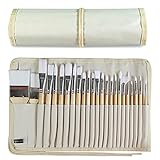
- Brush Shape: Rounds are for lines and details. Flats and brights are for broad strokes and filling areas. Filberts are a hybrid, good for blending. Fan brushes are for textures and blending.
- Bristle Quality/Feel: Does the brush have a good ‘snap’? When you bend the bristles, do they spring back to their original shape? Does it feel too stiff, too soft, or just right for your intended use? Run your fingers gently through the bristles – do they feel smooth or scratchy?
- Ferrule Integrity: The ferrule is the metal band that holds the bristles to the handle. Is it securely crimped? Is it made of brass or nickel-plated brass (good)? Cheap aluminum ferrules can corrode or bend easily.
- Handle Balance: Does the brush feel comfortable in your hand? Does it have a good weight distribution? A brush that feels awkward will make painting a chore.
I once bought a set of brushes that looked amazing online – sleek black handles, silver ferrules, all bundled up for a ‘great price.’ When they arrived, the ferrules were loose, the bristles felt like horsehair from a cheap broom, and the ‘snap’ was nonexistent. Total waste of about $60. Lesson learned: read reviews, buy from reputable art suppliers, and if possible, feel them in person.
Common Brushes Every Artist Needs (and Why)
You don’t need a hundred brushes to make good art, but a few well-chosen ones will change your life. For most painters, especially those working with acrylics or oils, having a small selection of shapes and sizes across both synthetic and natural fibers (if your budget allows) is key. I’ve found a few shapes and sizes consistently prove their worth, no matter what I’m working on.
First up, a good quality synthetic round brush. I recommend having at least two: one small (size 2 or 4) for fine details, tight lines, and signing your work, and one medium (size 8 or 10) for slightly bolder lines, filling in small areas, and creating consistent strokes. These are my workhorses for acrylics because they hold their shape and deliver paint precisely. When you need to create sharp edges or delicate cross-hatching, a good round is indispensable.
Next, a synthetic flat brush. Again, I’d suggest a couple of sizes. A 1/2 inch flat is incredibly versatile for blocking in larger areas, creating sharp horizontal or vertical lines, and even for some subtle blending. A 1-inch or larger flat is fantastic for laying down broad washes of color, creating smooth gradients, or for impasto techniques where you’re applying thick paint. The flat edge allows for clean, crisp strokes, and the wider surface area lets you cover ground quickly. These are great for backgrounds or establishing the foundational layers of a painting.
A filbert brush is often overlooked but is a secret weapon for blending. It’s like a flat brush with rounded corners. This shape allows for both broad strokes and softer, more rounded marks. It’s perfect for softening edges, creating subtle transitions between colors, and rendering organic shapes like petals or figures. I have a medium-sized filbert (say, size 6 or 8) that I reach for constantly when I want a softer look without resorting to a fan brush.
Finally, for watercolorists or those who love to use thin washes of color with oils or acrylics, a high-quality natural sable round brush is a dream. Even a small one (size 0 or 2) will hold a surprising amount of water and pigment and allow for the most exquisite control. You can achieve delicate gradients, fine wispy lines, and nuanced touches that are difficult with synthetics. If you’re serious about watercolor, investing in one or two good sable rounds is a must.
I’ve seen artists try to paint delicate floral details with a stiff, wide flat brush, and it’s just painful to watch. You end up with chunky, awkward petals. Conversely, trying to block in a vast sky with a tiny detail brush will take forever and result in an uneven texture. The right tool makes the job exponentially easier and the results far more professional. Don’t be afraid to experiment, but start with these workhorse shapes.
The Table of Truth: Brush Types and What They’re Good For
| Brush Type | Bristle Material (Common) | Best For | My Verdict |
|---|---|---|---|
| Round | Synthetic, Sable | Detail, lines, filling small areas, lettering | Indispensable. Size matters for control. My go-to for sharp edges. |
| Flat | Synthetic, Hog Bristle | Broad strokes, filling large areas, sharp edges, texture | Great for blocking in and creating structure. A true workhorse. |
| Bright | Synthetic, Hog Bristle | Short, stiff strokes, thick paint application, texture | Similar to flat but shorter bristles. Good for choppy, textured marks. Less versatile for me. |
| Filbert | Synthetic, Sable, Hog Bristle | Blending, softening edges, organic shapes, versatile strokes | My secret weapon for smooth transitions. Bridges the gap between round and flat. |
| Fan | Synthetic, Natural | Blending, softening large areas, texture (grass, hair, fur) | Can be tricky. Great for specific effects, but easy to overdo. |
| Liner/Rigger | Synthetic, Sable | Extremely fine lines, long continuous strokes (water, hair) | Only if you need super-fine, long lines. Otherwise, a small round will do. |
This table is a generalization, of course. Within each type, there are variations in size, stiffness, and bristle length. But it gives you a solid starting point. The ‘My Verdict’ column is pure opinion, based on years of wrestling with different brushes. For me, the round and filbert are the most forgiving and versatile. The flat is key for structure. Fan brushes are more specialized.
The ‘contrarian’ View: When Fancy Brushes Aren’t the Answer
Here’s a hot take: you don’t always need the most expensive brush. Everyone talks about how you must have Kolinsky sable for watercolor or the finest hog bristle for oils. And yes, those are fantastic. They perform beautifully. But they also cost a fortune, and they can be intimidating. I’ve seen beginners get so paralyzed by the fear of ruining an $80 brush that they barely use it.
My contrarian opinion is this: For learning fundamental techniques, especially with acrylics, a good quality synthetic brush set can be more than enough and much more forgiving. They’re durable, easy to clean, and you won’t cry if you accidentally leave them in a jar of water overnight (which you absolutely should not do with natural brushes, by the way). I’ve taught workshops where we used mid-range synthetics, and the results were just as good as when I’ve used pricier natural brushes because the focus was on the technique, not the tool’s ego. (See Also: Can Acrylic Paints Be Used In An Aqua Brush )
When I first started painting seriously, I spent a small fortune on what I thought were the ‘best’ brushes. I bought an expensive sable watercolor set, a set of fancy hog bristle oils, and a bunch of intermediate acrylic brushes. Over time, I realized that many of them were wasted on me because I didn’t yet have the skills to use their unique properties. I was still struggling with basic color mixing and composition.
The most important thing is to understand what you want the brush to do. Do you need to lay down a smooth, even coat of color?
A flat or large round will do. Do you need to create texture?
A stiff hog bristle or even a palette knife might be better. Do you need delicate lines?
A small round or rigger. Trying to force a stiff brush to do delicate work, or a soft brush to lay down thick texture, will always be a struggle, no matter how expensive it is. Focus on the mark you want to make, and then find a brush that helps it. Sometimes, that’s a $5 synthetic; other times, it’s an $80 sable.
But the skill of knowing which to choose is most important.
When Brushes Go Bad: Common Mistakes and How to Avoid Them
Mistakes with paint brushes happen, and they’re usually born out of ignorance or laziness. I’ve made them all. The biggest one? Cleaning. Oh, the cleaning. Or rather, the lack of it. Leaving paint to dry in the bristles is like cement. It ruins the brush’s shape, makes it stiff, and renders it useless for anything other than thick, textural marks (and even then, it’s not ideal).
Mistake #1: Improper Cleaning. For acrylics, wash brushes thoroughly with soap and water immediately after use. For oils, use a solvent (like turpentine or mineral spirits) to break down the paint, then follow with soap and water. Don’t let paint dry on them. Ever. I once accidentally left a brush with oil paint in a jar of solvent for a week because I was out of town. It was ruined – the solvent basically dissolved the glue holding the bristles in the ferrule. Total loss, and a costly lesson. You need to rinse thoroughly until the water runs clear.
Mistake #2: Storing Brushes Incorrectly. Storing brushes with the bristles down in a jar means they’ll bend and lose their shape permanently. Always store them bristles-up in a container, or lay them flat. Some artists even use brush holders that keep them suspended in the air, bristle-free. I’ve seen brushes that were perfectly good looking like sad, matted mops because they were just shoved into a cup.
Mistake #3: Using the Wrong Brush for the Job. This ties back to what we discussed earlier. Using a stiff synthetic for delicate watercolor washes, or a soft sable for scrubbing thick oil paint, is a recipe for disaster. You’ll damage the bristles and get poor results. Pay attention to the shape and material recommendations for different mediums and techniques.
Mistake #4: Over-Working the Brush. Especially with softer, more delicate brushes, being too aggressive can damage them. Scrubbing too hard, prying with the ferrule, or over-bending the bristles will shorten their lifespan. Treat your tools with a bit of respect, and they’ll serve you well.
Mistake #5: Buying Only Cheap Sets. While I said you don’t always need the most expensive, buying only the absolute cheapest multipacks is a false economy. They’ll fall apart quickly, shed bristles into your paint (which you’ll then have to painstakingly pick out), and offer poor performance. Invest in a few good quality brushes rather than a dozen duds. For example, a good quality synthetic round brush for detail might cost $8-15, while a truly cheap one might be $2-3 but will be frustrating to use and won’t last long. (See Also: A Brushes Digital Painting )
Learning to care for your brushes is as important as learning to use them. A clean, well-maintained brush is a joy to paint with. A neglected one is a constant source of frustration. It’s not rocket science, just a bit of mindful effort.
Putting It All Together: The Practical Art of Brush Selection
So, we’ve covered a lot of ground, from the microscopic scales on bristles to the frustration of a splayed-out fan brush. The core question, ‘are paint brushes important in the art,’ has a resounding yes as an answer, but with a significant asterisk: it’s about understanding which brushes are important for what you want to do.
For beginners, I often recommend starting with a small selection of good quality synthetic brushes. A size 6 or 8 round, a 1/2 inch flat, and maybe a medium filbert. These will handle most acrylic painting tasks effectively and won’t break the bank. You can learn a huge amount about brushwork, color application, and mark-making with these basic tools. As you progress and explore different mediums like oils or watercolors, you can then invest in more specialized brushes, like natural bristle or sable, knowing what you’re looking for and why.
Don’t be afraid to get your hands dirty and experiment. Try different brands, different shapes, and different materials. What works for one artist might not work for another. I’ve seen artists create incredible photorealistic detail with incredibly stiff hog bristle brushes, which is something I’d never attempt. My own preference leans towards smoother application, so I favor synthetics and softer natural fibers when the medium allows.
Ultimately, your brushes are your voice on the canvas. They are the conduits through which your ideas flow. Choosing the right ones, caring for them, and understanding their capabilities will not only make your painting process more enjoyable but will also significantly improve the quality and expressiveness of your finished artwork. It’s an ongoing learning process, and one that’s well worth the effort. The investment in decent tools pays dividends in both your artistic output and your creative satisfaction.
Frequently Asked Questions About Art Brushes
Do I Need Expensive Brushes to Be a Good Artist?
No, you absolutely do not need expensive brushes to be a good artist. While high-quality brushes can offer better performance, control, and longevity, many accomplished artists use a mix of affordable and high-end tools. The most important thing is understanding how a brush works and choosing one that suits your medium and technique. Learning to control and care for your brushes is more important than their price tag.
How Often Should I Replace My Paint Brushes?
The lifespan of a paint brush depends heavily on its quality, how often you use it, and how well you care for it. Cheap brushes might only last a few months of regular use before they splay or shed. High-quality brushes, with proper cleaning and storage, can last for years. If a brush is shedding bristles, has lost its shape, or the bristles are permanently bent, it’s likely time for a replacement.
Can I Use the Same Brushes for Oil and Acrylic Paint?
While you can use the same brushes for both oil and acrylic paint in a pinch, it’s generally not recommended for optimal results and brush longevity. Acrylics are water-based and dry quickly, requiring thorough cleaning with soap and water. Oils are oil-based and require solvents for cleaning, which can degrade the glues used in some brush ferrules. Also, the stiff scrubbing needed for some acrylic techniques might damage delicate oil brushes. It’s best to have separate sets for each medium.
What Is the Best Brush for Beginners?
For beginners, especially those working with acrylics, a good quality synthetic round brush (size 6 or 8) and a synthetic flat brush (1/2 inch) are excellent starting points. These versatile shapes allow you to practice a wide range of techniques, from blocking in areas to creating finer lines. They are also durable and relatively easy to clean, making them forgiving for those new to brush care.
Verdict
So, to circle back to that initial question: are paint brushes important in the art? My answer remains a resounding yes. They are not just tools; they are your collaborators, your translators, the very extensions of your creative intent. Wasting money on cheap, poorly made brushes is a common pitfall, but so is believing that only the most expensive tools can produce great art. It’s about finding that sweet spot of quality, suitability for your medium, and understanding how to wield them.
Don’t let the sheer variety overwhelm you. Start with a few solid, versatile brushes and learn them inside and out. Pay attention to how they feel, how they load with paint, and the marks they make. Treat them well, clean them diligently, and store them properly, and they will reward you with years of faithful service.
The next time you’re in an art supply store, or browsing online, instead of just grabbing what’s on sale, try to think about what you want to do with that brush. Consider its shape, its bristle type, and how it feels in your hand. That thoughtful approach is the first step to truly harnessing their power.