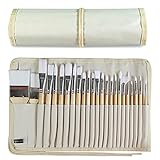
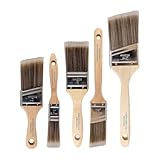
I remember staring at the art store aisle, overwhelmed. So many brushes, so many promises of ‘perfect strokes’ and ‘unrivaled coverage.’ Then I saw them: a pack of bright, synthetic-looking brushes labeled ‘Taklon.’ Cheap. Way too cheap. I figured, what’s the harm? Fast forward a few weeks, and my canvases were a mess of streaky, shedding disasters. So, let’s cut to the chase: are taklon brushes good for acrylic paint? The short answer is… complicated.
For beginners, or those on a shoestring budget, they can be a starting point. But if you’re serious about your art, or just want to avoid the frustration I went through, you need to know the real story behind these synthetic wonders. It’s not just about the bristles; it’s about how they handle acrylics specifically.
The Truth About Taklon Bristles
Look, nobody likes throwing money away. I’ve been there, buying fancy art supplies that turned out to be glorified dust collectors. When I first started dabbling in acrylics, the sheer variety of brushes was mind-boggling. I saw natural hog bristle, synthetic sable, nylon, and then, the budget-friendly taklon. The allure of a multi-pack for less than the price of a decent lunch was too strong to resist. I pictured myself effortlessly creating smooth gradients and sharp lines, just like the glossy product photos suggested.
My first attempt with a taklon brush on a thick acrylic medium was… humbling. The paint just wouldn’t load properly.
It felt like trying to spread peanut butter with a toothpick. What little paint I did manage to get on the canvas came out in patchy, uneven strokes, and the bristles themselves felt stiff and awkward, like little plastic straws.
I kept having to go back over areas, which just made the paint muddy. The worst part?
Tiny, almost invisible fibers started shedding onto the wet paint. Pulling those out with tweezers while the paint was still tacky was an exercise in pure, unadulterated rage.
I swear, one little white fiber looked like a giant, misplaced hair on my carefully painted sky. It was a mess, and I blamed myself, thinking I just wasn’t good enough.
The thing about taklon is that it’s a type of synthetic fiber, often polyester. It’s designed to mimic the properties of natural hair brushes, but it’s manufactured. This means consistency in production, which is great for the manufacturer, but it doesn’t always translate to superior performance for the artist. Depending on the quality, taklon can range from incredibly stiff and plasticky to surprisingly soft. The key difference lies in how they are processed and tipped. Cheaper taklon brushes often have blunt ends, which leads to that streaky, uneven application you get with acrylics. They don’t have the natural taper and porosity of animal hair or higher-end synthetics that allow paint to flow more smoothly and evenly.
Acrylic paint itself is a bit of a beast. It’s water-soluble when wet but dries to a durable, plastic-like film. This means it can be quite thick and viscous, especially heavier body acrylics. Brushes need to have a certain resilience and capacity to hold and release that paint effectively. While some taklon brushes can manage thinner acrylics or washes, they often struggle with the thicker mediums that many artists prefer for texture and opacity. The fibers can bend and hold too much paint, leading to globs, or not enough, resulting in frustrating skips and gaps. It’s a constant battle to get a consistent line, and that’s not what art should feel like. It should be a joy, not a fight.
I eventually learned that not all synthetics are created equal. There are much better synthetic options out there that offer excellent performance with acrylics without breaking the bank. But those initial cheap taklon packs? They were a hard lesson learned. They’re often marketed as an all-around solution, but for the specific demands of acrylic painting, they usually fall short. My advice? Steer clear of the ultra-cheap, multi-packs of generic taklon if you’re serious about acrylics. You’ll save yourself time, money, and a whole lot of frustration in the long run. The real value is in brushes that work with your medium, not against it.
What to Look for When Choosing Acrylic Brushes
Okay, so you’ve probably gathered that not all taklon brushes are created equal, and maybe you’re wondering what is worth your hard-earned cash. When I’m looking for brushes specifically for acrylics, I’m basically looking for a few key things. First off, the shape. This is huge. For broad strokes, covering large areas, or laying down a base coat, I reach for flats or brights. Flats have shorter, stiffer bristles and a flat ferrule, while brights have longer bristles and are great for thicker paint application and shorter, more controlled strokes. Filberts are a nice in-between, offering the versatility of both round and flat brushes, great for blending and softer edges.
Then there are rounds. These are your detail workhorses. They’re great for fine lines, outlining, and adding small highlights. The tip is important here – a good round brush should come to a nice, sharp point when wet, allowing for precise control.
For really tiny details, like eyelashes or individual leaves, I’ll go for a liner or rigger brush, which has very long, thin bristles. The shape of the brush dictates the type of mark you can make, and with acrylics, you often need a variety of marks.
You don’t want to be stuck trying to do a delicate detail with a brush designed for big, bold strokes, or vice versa. It’s like trying to hammer a nail with a screwdriver – it’s just not the right tool for the job, and you’ll end up making a mess.
Material is another big one. While this whole article is about taklon, it’s important to know what else is out there.
For acrylics, synthetic brushes are generally the way to go. Natural hair brushes, like hog bristle, can be great for oil paints, as they hold thicker paint and create texture. But acrylics can be harsh on natural fibers, drying them out and making them brittle over time. High-quality synthetics, including certain types of taklon and other synthetic blends, are designed to withstand the rigors of acrylics.
They are more durable, easier to clean, and generally hold their shape better. When I say high-quality synthetics, I mean brushes where the fibers are shaped and treated to mimic natural hair’s ability to hold and release paint. Look for brushes that feel springy, not stiff and plasticky. They should have a good ‘snap’ – when you bend the bristles, they should spring back to their original shape without bending permanently. (See Also: Can Acrylic Paint Go In An Air Brush )
The ferrule, the metal part that holds the bristles to the handle, should be smooth and strong. A cheap ferrule will corrode or loosen over time, which is just annoying. Brass is a good material for ferrules, often nickel-plated. It’s durable and won’t rust.
The handle should feel comfortable in your hand. Weight distribution is also a factor; a brush that feels balanced is easier to control for longer periods. Honestly, I’ve spent a bit of money over the years on brush sets, and I can tell you that investing in just a few really good quality brushes rather than a huge pack of cheap ones makes a world of difference.
You’ll feel it in every stroke. It’s not just about the material, but the craftsmanship that goes into making a brush that performs well with acrylics.
Common Mistakes Artists Make with Acrylic Brushes
I’ve seen so many artists, myself included early on, make the same dumb mistakes with their brushes. It’s usually a combination of using the wrong brush for the job and not taking care of them properly.
One of the biggest blunders is using a brush that’s too soft for thick acrylics. Imagine trying to move thick, gooey paint with something as flimsy as a feather duster. It just doesn’t work.
The paint doesn’t load onto the brush properly, and you end up with those frustrating, patchy strokes. Or, the brush fibers bend and splay out, and you lose all control.
You end up pushing the paint around rather than applying it with intent. This is where those cheaper taklon brushes often fail spectacularly. They might have a decent shape, but the fibers just don’t have the backbone to handle the viscosity of acrylics.
Another common mistake is using a brush that’s too small for a large area. Trying to paint a whole sky with a tiny round brush is like trying to paint a mural with a Q-tip. It’s mind-numbingly slow and incredibly inefficient.
You’ll end up with a canvas that looks like it was painstakingly stippled, not painted. Conversely, using a massive flat brush for tiny details is equally disastrous. You can’t get the precision you need, and you’ll likely end up with smudges and unintended broad strokes. It’s all about matching the brush to the task.
Think about what kind of mark you want to make – a thin line, a broad wash, a textured stroke – and pick the brush that’s designed for that. It’s not rocket science, but it’s amazing how many people overlook this basic principle.
Then there’s the absolute cardinal sin: not cleaning your brushes properly. Acrylic paint dries fast and hard. If you leave paint on your brushes, even just a little bit, it will build up in the ferrule, stiffen the bristles, and ruin the brush’s shape. I learned this the hard way after leaving a brush loaded with deep blue paint overnight. The next day, it was a stiff, unbendable mess. I tried everything – soaking, scrubbing, even gentle persuasion with pliers (don’t do that). It was a goner. The paint had worked its way up into the ferrule, hardening everything into a solid block. It looked like a sad, deformed blue hedgehog.
The correct way to clean them involves rinsing out as much paint as possible under cool running water until the water runs clear, then gently working in a bit of brush soap or mild dish soap. Work the lather into the bristles, making sure to get it deep into the ferrule. Rinse thoroughly. Then, reshape the bristles with your fingers and lay the brush flat or hang it bristles-down to dry.
Never, ever let your brushes sit in water for extended periods. This softens the glue in the ferrule and can damage the bristles. Storing them bristles-up in a jar is another no-no, as it can cause the bristles to bend permanently.
Treat your brushes well, and they’ll last you a long time. Neglect them, and you’ll be constantly buying replacements, which is where those cheap taklon packs can actually end up costing you more in the long run.
My Real-World Experience with Taklon and Acrylics
I’ll be honest, my initial foray into taklon brushes for acrylics was a disaster. I was so drawn to the sheer quantity you got for the price. I bought a pack of about twenty assorted brushes – flats, rounds, fan brushes, the works – for maybe $15. I thought I was getting a steal. My thinking was, ‘Even if only a few are good, I’m still ahead!’ Wrong. So, so wrong. When I first started using them with my heavy body acrylics, the paint just clung to the bristles in a weird, gummy way. It was like trying to paint with a sticky mop.
The biggest issue was the paint release. It would either come off in thick, uneven blobs or not at all, leaving frustrating gaps and streaks.
I’d spend ages trying to get a smooth blend, only to end up with a muddy mess because the brush wasn’t laying down the paint evenly. The fibers themselves felt like stiff plastic, lacking any real spring or responsiveness. They didn’t have that satisfying ‘snap’ you get from good quality synthetic brushes. Instead, they’d bend and stay bent, splaying out and making any attempt at detail work an exercise in futility. (See Also: Can Acrylic Paints Be Used In An Aqua Brush )
Trying to get a fine line with a round taklon brush often resulted in a wobbly, thick mess, or worse, a broken, scratchy line as the blunt fibers struggled to maintain contact.
Then there was the shedding. Oh, the shedding. Little white and sometimes colored fibers would detach themselves from the brush and embed themselves in my wet paint. I’d be meticulously working on a portrait, only to find a stray bristle marring the cheekbone.
Pulling them out was a nightmare. It felt like every single brush in that cheap pack was determined to sabotage my artwork. I remember one specific incident where I was trying to paint a smooth gradient on a sunset.
The taklon brush kept leaving these harsh, visible lines, and on top of that, it kept shedding these tiny fibers. By the time I was done, the gradient looked less like a sunset and more like a muddy road with bits of lint stuck to it. It was infuriating.
It took me a while to realize that the problem wasn’t me; it was the tools. I was trying to use tools that were fundamentally not suited for the job. It’s like trying to cut wood with a butter knife. You might eventually get through it, but it’ll be messy, inefficient, and you’ll likely damage the ‘knife’ in the process.
I eventually tossed that entire pack and invested in a few decent synthetic brushes from a reputable brand. The difference was immediate and dramatic.
Paint flowed smoothly, control was restored, and the shedding stopped. It was a revelation. My takeaway from this whole ordeal is simple: for acrylics, invest in good quality synthetic brushes. Those cheap taklon packs are an illusion of value.
They’re a false economy that will ultimately cost you more in frustration and ruined paintings than a few well-chosen brushes ever would.
Taklon vs. Other Brush Types for Acrylics
When you’re navigating the world of paintbrushes for acrylics, it’s easy to get lost in the jargon. Let’s break down how taklon stacks up against some of the other common options you’ll encounter, and why certain choices are generally better for acrylic paint. The primary comparison point for taklon is often other synthetic fibers, and then natural hair brushes.
Synthetics (including Taklon): Taklon is a general term for a synthetic fiber. High-quality synthetics, which might include premium taklon blends, are designed to mimic the best qualities of natural hair. They are durable, hold their shape well, and are resistant to the harshness of acrylic mediums.
They also tend to be more affordable than natural hair brushes. However, the quality can vary wildly. Cheap taklon, as I’ve detailed, can be stiff, lack snap, and shed excessively, leading to poor paint control and a streaky finish. Good synthetics, on the other hand, have fibers that are shaped and treated to hold and release paint smoothly, offering excellent spring and precision.
They are often the preferred choice for acrylics because they are resilient and easy to clean.
Natural Bristle Brushes (e.g., Hog Bristle): These are traditional brushes, often made from hog hair. They are known for their stiffness and ability to hold a lot of thick paint, making them excellent for creating texture and impasto effects with oil paints. For acrylics, they can be used, especially for very thick, textural work. However, acrylics can dry out and damage natural bristles over time, making them brittle.
They are also harder to clean thoroughly once acrylics dry in them, and they can lose their shape more readily than synthetics when exposed to water for cleaning. So, while they have their place for specific acrylic techniques, they are generally not the go-to for most acrylic artists due to durability and maintenance concerns.
Synthetic Sable/Squirrel Hair Brushes: These are premium synthetic brushes designed to mimic the softness and absorbency of natural sable or squirrel hair. They are exceptionally soft, have a great point, and hold a lot of liquid. They are fantastic for watercolor and inks, and can be used for acrylics for very fine details, smooth glazes, or when working with thinned acrylics. However, their extreme softness means they have less ‘snap’ or spring. For thicker acrylic paints, they might not have the backbone to push the paint around effectively, and the softer fibers can be more prone to damage if you’re not careful with cleaning and handling.
Here’s a quick rundown comparing them for acrylic use:
| Brush Type | Best For Acrylics? | Pros | Cons | Verdict |
|---|---|---|---|---|
| Cheap Taklon | No, generally | Inexpensive, widely available | Poor paint control, sheds, lacks snap, can be streaky | Avoid for serious work; okay for crafting if you have low expectations. |
| High-Quality Synthetics | Yes, highly recommended | Excellent paint control, durable, holds shape, good snap, easy to clean, varied options | Can be more expensive than cheap taklon | The workhorse for most acrylic painters. |
| Natural Bristle | Sometimes, for specific effects | Good for texture and thick paint application, holds lots of paint | Can be damaged by acrylics, harder to clean, can lose shape | Use cautiously, best for heavy impasto if you’re prepared for maintenance. |
| Synthetic Sable/Squirrel | Yes, for detail/thin paint | Very soft, excellent point, great for fine detail and glazes | Less snap for thick paint, softer fibers can be delicate | Great for detail work and washes, but not for heavy body acrylics. |
Ultimately, while taklon is a synthetic, the term is often used to describe a wide range of quality. If you see a pack of brushes labeled simply ‘Taklon’ for a few dollars, proceed with extreme caution. If a higher-end synthetic brush specifies ‘taklon’ as part of its material composition, it’s likely a much better quality product designed for performance. (See Also: A Brushes Digital Painting )
Practical Tips for Using Taklon Brushes with Acrylics
So, we’ve established that the ultra-cheap, generic taklon brushes are usually not your best friends when it comes to acrylic painting. But what if you’ve already got a pack of them, or you’re really, really on a tight budget and they’re your only option? Can you make them work at all? Well, yes, with some serious caveats and by adjusting your expectations. Think of it as making the best of a less-than-ideal situation. It’s not going to give you the results of high-end brushes, but you can salvage some usability.
First, temper your expectations. You’re not going to achieve smooth blends or razor-sharp, consistent lines with these. Accept that. The goal here is to get paint onto the canvas without too much fuss, rather than aiming for gallery-level precision. If you’re working on a background layer, or a very abstract piece where texture and visible strokes are desired, these brushes might be passable. For detailed work or smooth finishes, you’re going to struggle immensely.
If you’re using thicker acrylics, try thinning them down slightly with water or a glazing medium. This will make the paint more fluid and easier for the blunt taklon bristles to pick up and release. Don’t thin them too much, though, or you’ll lose opacity and pigment saturation, which is a hallmark of acrylics. Experiment with the amount of paint you load onto the brush. Don’t overload it, as this will lead to thick, clumpy application. Try loading just enough to cover the tip and the sides of the bristles.
When applying the paint, use a lighter touch. Instead of pressing down hard, which can cause the stiff fibers to bend and splay, try using more of a gliding or dabbing motion. For broad strokes, use the side of the brush rather than the chisel edge. This can help create a more even coverage, even if it’s not perfectly smooth. If you’re trying to get a more blended look, work quickly while the paint is still wet, and try using a clean, slightly damp brush to feather the edges together. You might need to do this multiple times.
To combat shedding, give your brushes a good rinse and gentle shake before you start painting. Sometimes loose fibers can be removed this way.
Also, pay attention to how you’re holding the brush. If you grip it too tightly or apply too much pressure, you might be stressing the fibers and encouraging them to break.
Consider using a brush extender or grip if you have one, to change the angle and pressure you apply. After painting, clean them thoroughly.
As mentioned before, acrylics harden quickly. Use brush soap and cool water, and be diligent. If the bristles get stiff and splayed, try soaking them briefly in fabric softener (yes, really – a tiny bit can help soften stiff synthetics) and then reshaping them.
Rinse extremely well after this. It’s a bit of a hack, but it can sometimes revive a brush that’s gone stiff. Remember, these are budget brushes, so while you can try to make them work, don’t expect miracles.
They’re best suited for practice, large background washes, or abstract experimentation.
Faq: Are Taklon Brushes Good for Acrylic Paint?
Are Taklon Brushes Good for Acrylic Paint?
Generally, cheap taklon brushes are not ideal for serious acrylic painting. Their blunt, stiff fibers often lead to streaky application, poor paint control, and shedding. While they can be used for basic crafting or practice if thinned down, they lack the snap, paint-holding capacity, and smooth release needed for most acrylic techniques. Higher-quality synthetic brushes, which may include some taklon blends, are a much better choice.
Can I Use Taklon Brushes for Beginners with Acrylics?
For absolute beginners who are just experimenting and on a very tight budget, a pack of taklon brushes can be a starting point. However, it’s important to understand their limitations. They can lead to frustration due to poor performance, potentially discouraging a new artist. It’s often better to invest in a few good quality synthetic brushes rather than a large set of low-quality taklon brushes, even as a beginner.
Do Taklon Brushes Shed a Lot with Acrylic Paint?
Yes, cheaper taklon brushes are notorious for shedding. The fibers are not as securely bonded to the ferrule, and their stiffness can cause them to break off more easily. This shedding can embed fibers into your wet paint, ruining your finish and requiring tedious removal.
What Are the Best Brushes for Acrylic Paint?
The best brushes for acrylic paint are typically high-quality synthetic brushes. These come in various shapes (rounds, flats, filberts, liners) and are designed to be durable, hold their shape, have good ‘snap’ (springiness), and release paint smoothly. Brands specializing in artist-grade synthetics often offer excellent performance for acrylics.
Can I Use Natural Hair Brushes for Acrylic Paint?
While possible, natural hair brushes (like hog bristle or sable) are generally not recommended as the primary choice for acrylics. Acrylics are water-based and can dry out and damage natural fibers, making them brittle and prone to breakage. Synthetic brushes are more durable and easier to clean when working with acrylics.
Conclusion
So, to circle back to the big question: are taklon brushes good for acrylic paint? My honest, hard-won opinion is that the super cheap, generic packs you find everywhere are mostly a waste of money for anyone serious about acrylics. They can lead to frustration, poor results, and a whole lot of shedding. You’re better off saving up for a few decent synthetic brushes that are actually designed to handle the unique properties of acrylic paint.
If you do end up with some taklon brushes, use them for what they’re best suited for: practicing techniques with thinned paints, large background washes on less important projects, or pure abstract experimentation where perfect strokes aren’t the goal. Treat them gently, clean them meticulously, and accept their limitations.
Ultimately, your tools should help you create, not hinder you. Investing in the right brushes, even if it means starting with just one or two, will make a monumental difference in your acrylic painting journey. Don’t let cheap brushes become a barrier to your artistic expression.