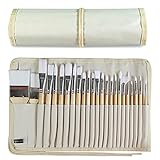
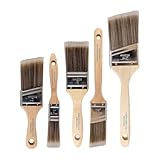
I remember the first time I saw a set of taklon brushes advertised for oil painting. The packaging promised smooth application, incredible detail, and a durability that would make my wallet sing. I was young, impressionable, and desperately searching for a shortcut to professional-looking results. So, I bought a whole set. Big mistake. Huge. They felt…wrong. Plasticky. Like painting with tiny plastic brooms. It made me question everything I thought I knew about brushes. So, let’s get straight to it: are taklon brushes good for oil painting? The short answer, in my opinion, is usually no, but with a couple of very specific exceptions.
For years, the advice has been to use natural bristles for oils. Hog hair, sable – that’s the traditional wisdom. And for good reason. But the synthetic world has gotten a lot more sophisticated. Still, when you’re talking about the thick, viscous nature of oil paint, you need something that can handle it. You need a brush that can load properly, lay down paint with control, and stand up to the solvents used for cleaning. That’s where taklon often falls short for serious oil work.
Why Everyone’s Obsessed with Synthetics (and Why They’re Often Wrong for Oils)
Look, I get the appeal of synthetic brushes. They’re often cheaper, easier to clean, and they don’t shed like a cheap wool sweater in July. When I first started dabbling in acrylics, synthetics like nylon and taklon were a revelation. They held water well, were forgiving with cleanup, and you could get some really fine lines with them. The marketing machine, bless its heart, decided to push these same benefits onto the oil painting world, and that’s where things went sideways for a lot of us.
The fundamental difference between oil paint and acrylics is viscosity and the solvents used to thin and clean them. Oil paint is thicker, oilier. It needs a brush with some ‘bite’ to it, something that can grab the paint and push it around without the bristles splaying out like a startled cat. Traditional hog bristle brushes have a natural stiffness and texture that oil paint just loves to cling to.
They have a sort of ‘spring’ that allows for varied brushstrokes, from thick impasto to delicate glazes. Taklon, on the other hand, is a polyester fiber. It’s smooth, often slick, and can feel too ‘slippery’ when working with oil mediums and pigments.
It doesn’t have that natural resistance that helps you control the paint flow.
I’ve wasted a good $150 over the years on various synthetic brush sets marketed for oils, only to find them useless after a few sessions. One particularly egregious set, bought online for about $40, claimed to be ‘artist-grade taklon for all media.’
They were advertised as being great for detail work. The reality? The bristles bent over almost immediately when I tried to load them with a decent amount of oil paint. They just couldn’t handle the pressure.
It felt like I was trying to sculpt with a wet noodle. It made me appreciate the old hog bristle brushes I’d inherited from my uncle even more. They might be a pain to clean sometimes, but they actually work with oil paint.
Now, don’t get me wrong. Synthetics have their place. If you’re doing very thin washes with a lot of solvent, or if you’re primarily working with alkyds, a synthetic brush might perform adequately. But for traditional oil painting, especially if you’re building up layers or working with thicker paint, you’re going to run into issues. The common advice to just ‘use what you like’ is fine for acrylics, but for oils, the material of the brush matters a whole lot more. People often recommend taklon for its smoothness, but that smoothness is precisely what makes it a poor choice for the demands of oil paint. (See Also: Can Acrylic Paint Go In An Air Brush )
What to Look for When Buying Oil Brushes (and What to Avoid)
So, if taklon isn’t usually the answer, what should you be looking for? My go-to brushes for oil painting are almost exclusively natural bristles, primarily hog hair for flats and filberts, and soft natural hair like sable or squirrel for rounds and detail work. You’ll hear a lot about ‘flats,’ ‘filberts,’ ’rounds,’ and ‘brights’ – these refer to the shape of the brush head. Flats are good for broad strokes and filling areas. Filberts are a hybrid, great for blending and softening edges. Rounds are for lines and details. Brights are like flats but with shorter bristles, giving more spring and control for choppy strokes.
When you’re examining a brush for oil painting, here’s what I’d tell you to check:
| Feature | What to Look For (Good for Oils) | What to Avoid (Often Taklon Issues) | My Verdict |
|---|---|---|---|
| Bristle Material | Hog Bristle (stiff, textured), Sable, Squirrel, Kolinsky (soft, fine hair) | Smooth, slick polyester (often labeled Taklon, Nylon) for heavy oils | Hog bristle is king for most oil work. Soft hairs for detail. |
| Bristle Stiffness/Spring | Firm with good ‘snap’ back. Bristles shouldn’t bend too easily. | Too flexible, bends easily, feels ‘floppy’ under pressure. | You need resistance to control thick paint. |
| Shape Retention | Holds its shape when wet and dry. Bristles don’t splay out wildly. | Bristles splay or ‘flare’ easily when loaded with paint. | A brush that loses its shape is a lost cause for control. |
| Ferrule Strength | Securely crimped metal band holding bristles to handle. No wobbling. | Loose ferrule, or one that looks like it might rust. | A weak ferrule means a brush that will fall apart. |
| Handle Feel | Comfortable to hold for long periods. Good balance. | Too light, too heavy, or an uncomfortable grip. | You’ll be holding these for hours; comfort matters. |
The biggest mistake I see people make is assuming all brushes are created equal, especially when they see ‘artist quality’ plastered all over synthetic sets. For oils, you need a brush that can take a beating and still perform. Hog bristles have a natural flagginess (split ends) that helps them hold and release paint effectively. Sable and other soft hairs are excellent for fine detail because they can be shaped to a very fine point and are less likely to leave harsh marks.
When you go to buy brushes, if you can, go in person. Feel them. Press them into your palm. See how they spring back. If you’re buying online, look for descriptions that mention ‘hog bristle’ or specific types of soft natural hair. Be wary of vague terms like ‘synthetic’ or ‘for all media’ if you’re specifically looking for oil painting tools. The price can be a clue, too. While you don’t need to break the bank, truly professional-grade hog bristle brushes will cost more than a cheap taklon set. And trust me, it’s money well spent.
What Does ‘taklon’ Mean?
Taklon is a type of synthetic fiber, specifically a polyester, that’s manufactured to mimic the properties of natural hair. It’s known for being smooth, durable, and easy to clean, which makes it a popular choice for acrylics and watercolors. However, its smoothness and lack of natural texture can make it less ideal for the thicker consistency and solvent-based nature of oil paints, where grip and a bit of bristle ‘tooth’ are often desired.
The Rare Cases Where Taklon might Work for Oils
Okay, so I’ve been pretty harsh on taklon for oils. And for the most part, I stand by it. But there are a couple of niche situations where a synthetic brush, including some types of taklon, could be a workable option. These are exceptions, not the rule, and they usually involve specific techniques or paint consistencies.
First, consider very fluid applications. If you’re doing extremely thin washes, almost like a stain, with a high solvent-to-paint ratio, a synthetic brush might perform acceptably. In these cases, the paint is so thin that the brush’s ability to hold a lot of pigment isn’t as important. The smoothness of taklon can actually help achieve a very even, streak-free application of these diluted layers. It’s not my preferred method, but I’ve seen artists use it successfully for underpaintings or glazes where precision in thinness is key.
Second, some artists use synthetic brushes for applying mediums or varnishes. These liquids are generally much thinner than paint and don’t require the same level of pigment load or bristle resistance. A good quality synthetic brush can provide a smooth, even coat without leaving bristle marks. I’ve used a flat synthetic brush for applying varnish on finished pieces, and it worked like a charm. It washed out cleanly and didn’t shed, which is what you want when you’re finishing a piece.
The other scenario is with certain types of alkyd paints or modern oil-like mediums that have a faster drying time and a different viscosity than traditional oils. Some of these formulations behave more like acrylics, and therefore, a synthetic brush might handle them better. It’s always worth experimenting with the specific medium you’re using. A brand might also engineer a specific synthetic fiber that has more texture or grip than standard taklon, making it a better performer for oils. But again, these are usually specialized products, not your run-of-the-mill taklon set. (See Also: Can Acrylic Paints Be Used In An Aqua Brush )
My personal experience with taklon for oils has been overwhelmingly negative for traditional techniques. I tried using a taklon fan brush for blending out edges in a landscape, and it just smeared the paint around without any control. It felt like I was trying to blend with a damp sponge. The bristles just didn’t have the body to lift and move the paint; they just got coated and made a mess. It took me twice as long to fix the muddy areas than it would have with a proper hog bristle fan brush. So, while there are fringe cases, for the bulk of oil painting techniques, especially those involving thicker paint, I’d strongly advise looking elsewhere.
When Might Taklon Brushes Be Good for Oil Painting?
Taklon brushes might be considered for oil painting in very specific, fluid applications where the paint is highly diluted with solvents, allowing for smooth, thin washes. They can also be useful for applying mediums or varnishes, as these liquids are less viscous than paint. Some artists may find them suitable for certain alkyd paints or modern oil-like formulations that behave differently from traditional oils. However, for most common oil painting techniques involving thicker paint, traditional hog bristle or soft natural hair brushes are generally superior.
The ‘contrarian’ View: Why Some Artists Stick with Synthetics (and When It Makes Sense)
Now, here’s where I might ruffle some feathers. Everyone and their dog will tell you natural bristles are the only way to go for oils. And for 90% of people, they’re probably right. But there’s a small contingent of artists who swear by synthetics, even for oil painting. I’ve heard arguments that modern synthetic fibers are so advanced, they can rival natural bristles in performance. And while I’m skeptical, I have to admit I’ve seen some impressive work done with them.
The main reason these artists give is consistency and durability. Natural bristles, especially hog hair, can degrade over time, especially with aggressive solvent use. They can become splayed, lose their spring, or even start to shed. Synthetics, on the other hand, are engineered to be consistent. They don’t absorb water or oil the way natural fibers do, meaning they might resist swelling and maintain their shape longer under certain conditions. For artists who have a very specific, controlled application style, and who are meticulous about their brush care, a high-quality synthetic might offer a more predictable tool over a longer period.
I had a chat with an artist at a gallery opening once who primarily used a particular brand of synthetic filberts for all her oil work. She said she’d spent years trying different natural brushes and was frustrated by their inconsistency from one brush to another, even within the same brand. She found that her chosen synthetic filberts, when bought in bulk, all felt and performed almost identically. This allowed her to develop a very precise technique where she knew exactly how the brush would behave. She also cleaned them rigorously with odorless mineral spirits and a gentle soap, which seemed to keep them in good shape.
This is the key, though: meticulous care and specific techniques. If you’re attacking the canvas with thick, buttery impasto, a synthetic is likely to fail you. But if you’re working with thin layers, scumbling, or blending with minimal pressure, and you are absolutely religious about cleaning them immediately and thoroughly after each session, then perhaps a high-quality synthetic could work for you. It’s a risk, and in my experience, a gamble that usually doesn’t pay off for the average painter. But for those who have found that one magical synthetic that clicks with their style, I can see the appeal. It’s about finding the tool that lets you do your thing, even if it goes against the grain.
Can Synthetic Brushes Be Used for Oil Paint?
Yes, synthetic brushes, including taklon, can be used for oil paint, but they are generally better suited for specific techniques or paint consistencies. They perform best with very fluid paint applications, thin washes, or when applying mediums and varnishes. Some artists also find them suitable for certain alkyd paints. However, for traditional oil painting techniques involving thicker paint, natural bristles like hog hair or soft hairs like sable are usually preferred due to their better paint-holding capacity and control.
A Real-World Mistake: My Taklon ‘detail’ Brush Debacle
Let me tell you about a time I got completely burned by marketing. I was working on a portrait, and I needed to add some really fine details around the eyes and hair. The set of taklon brushes I’d bought advertised ‘precision detail’ brushes. They had fine tips, looked quite sharp, and I thought, ‘Great! This is what I spent my money on!’ I dipped one of these so-called detail brushes into my oil paint – a nice, creamy mix of Titanium White and a touch of Cadmium Yellow. The moment I touched the canvas, the bristles didn’t come to a sharp point; they splayed out like a dandelion puff in a hurricane.
Instead of a crisp line for an eyelash, I got a fuzzy smudge. Trying to correct it just made it worse, pushing the paint around unevenly. I tried reloading the brush, thinking maybe I hadn’t picked up enough paint. Nope. Same result. It was like the paint just didn’t want to adhere to the slick fibers in a controlled way. The brush felt too soft and limp to push the paint where I wanted it. The whole point of a detail brush is to have control over the smallest marks, and this taklon brush had zero control. It was a complete disaster. (See Also: A Brushes Digital Painting )
I ended up digging out my old, worn-down sable round brush, which, despite its age and abuse, performed a hundred times better. It held its point, allowed me to make those delicate strokes, and didn’t turn into a splayed mess. The taklon brushes from that set? They ended up in the trash.
It was a hard lesson, but it solidified my belief that for oil painting, especially for detail work, you need brushes with the right kind of bristle. The feel and performance are just fundamentally different from what synthetics can offer for this medium. It wasn’t just a bad brush; it was a bad type of brush for the job. The money I spent on that set was a total write-off, and it taught me to be much more important of brush claims.
Practical Tips for Choosing and Using Brushes for Oil Painting
So, you want to paint with oils and you’re wondering about brushes. Here’s my no-nonsense advice:
- Start with Hog Bristle Flats and Filberts. If you’re just starting out with oils, get a few good quality hog bristle brushes in flat and filbert shapes. These are your workhorses. They’ll handle the bulk of your painting and teach you about controlling oil paint. Brands like Princeton, Rosemary & Co. (which I have no affiliation with, but they’re solid), or even decent student grades from Utrecht can be good starting points. Don’t buy the cheapest ones you can find, but you also don’t need the absolute top-tier sable for your first set.
- Invest in a Sable or Synthetic Round for Detail. Once you’ve got your basic hog bristles, get one or two really good, fine-tipped round brushes for details. A good synthetic might work here if it’s specifically designed for detail and holds a fine point exceptionally well, but a sable round is still the gold standard for many. Look for brushes that retain their shape after you bend them.
- Clean Your Brushes Properly. This is HUGE. After every painting session, clean your brushes thoroughly. Use odorless mineral spirits or turpentine to get the paint out, then wash them with mild soap and water. Get all the pigment out from the ferrule. Reshape them and let them dry lying flat or hanging bristles-down. Good cleaning extends the life of your brushes, no matter the material.
- Experiment, But Be Smart. While I’m down on taklon for oils, there are always exceptions. If you’re curious, buy one taklon brush marketed for oils (not a whole set!) and test it with your specific mediums and paint consistency. See how it holds up. But don’t go in expecting miracles. My experience is that it’s usually a disappointment for anything beyond very diluted washes.
- Don’t Fall for Marketing Hype. ‘Artist grade,’ ‘professional,’ ‘for all media’ – these can be buzzwords. Look at the materials, the construction, and read reviews (from actual painters, not just affiliate marketers). Feel the brush in your hand if you can. The best brush is the one that works for you and your style, but for oils, that usually means natural bristles.
I’ve seen countless beginners get frustrated with oil painting, and often the tools are part of the problem. A brush that doesn’t load properly, splays out, or feels like it’s fighting you can make the entire process feel impossible. So, choose wisely. Your brush is your hand on the canvas, and you want it to be a capable extension of your will, not a source of frustration.
Are Taklon Brushes Good for Oil Painting?
Generally, taklon brushes are not considered ideal for most oil painting techniques. Their smooth, synthetic fibers can be too slick and lack the necessary stiffness or texture to effectively pick up, hold, and lay down thick oil paint. This can lead to poor control, splayed bristles, and difficulty in achieving desired brushstrokes or details. While they might work for very diluted washes or applying mediums and varnishes, traditional hog bristle brushes or soft natural hair brushes are typically preferred for their superior performance with oil paints.
The common advice for oil painting is to use natural bristles, primarily hog hair for general application and softer hairs like sable for detail work. These materials offer the right kind of ‘bite,’ spring, and paint-holding capacity that oil paint requires. Taklon’s smooth surface and tendency to lack stiffness make it a poor substitute when working with the viscous nature of oils. My own numerous experiments have confirmed this, leading to wasted money and frustration.
However, there can be very niche situations where a taklon brush might be useful. If you’re working with extremely thin, fluid paint, almost like a stain, or if you’re applying mediums or varnishes, a synthetic brush might do an acceptable job. Some modern alkyd paints also behave differently and might be more forgiving with synthetics. But for anyone serious about traditional oil painting, investing in good quality natural bristle brushes will save you a lot of headaches and yield much better results.
Verdict
So, let’s circle back to the main question: are taklon brushes good for oil painting? My honest, hard-won experience says that for most oil painting scenarios, they are simply not up to the task. The slickness and lack of stiffness that make them great for acrylics or watercolors often work against you when dealing with the rich, thick consistency of oil paints.
You’ll likely find yourself fighting the brush, trying to get it to load and lay down paint properly, only to have the bristles splay out and leave an uneven mess. It’s a frustration that can easily derail your creative flow and make you question your abilities. Stick to hog bristle for your main work and a good sable or high-quality synthetic round for detail, and you’ll be much happier.
Ultimately, the best brush is one that works for your hands and your style, but for the unique demands of oil paint, natural bristles have earned their reputation for a reason. Don’t be tempted by the ‘all-media’ claims on synthetic sets if oils are your main focus; it’s usually a false economy.