
I remember the first time a screw fell out of my favorite pair of reading glasses. Panic. I rummaged through my junk drawer, hoping for a miracle. What I found was a jumbled mess of tiny screws, none of which fit. It was a frustrating, time-consuming ordeal that taught me a hard lesson about those minuscule bits of metal. So, are glasses screws standard? The short answer is both yes and no, and that’s the problem.
You’d think something so common would have a universal size, but the reality is far more chaotic. If you’ve ever tried to replace a lost screw or tighten up a wobbly frame, you’ve likely encountered this confusion.
The Illusion of Standardization in Eyeglass Screws
Let’s get this straight right off the bat: there isn’t a single, universally adopted standard for every single screw used in every pair of glasses on the planet. If you’re hoping for a magic number like ‘all glasses screws are M1.2 x 3mm,’ you’re going to be disappointed. That’s not how it works, and frankly, it’s a minor miracle that most of us can get them fixed at all.
The eyewear industry is a wild west of sorts when it comes to these tiny fasteners. Different manufacturers, different frame materials, and even different styles of glasses all contribute to a bewildering array of screw sizes and types. You’ve got your standard threaded screws, your ‘snap-in’ or ‘rivet’ style screws, and even some weird proprietary systems that seem designed to make you buy a whole new pair of glasses if you lose one tiny screw. It’s enough to make you want to wear one of those chunky chain things, and honestly, I’ve been tempted.
The ‘standard’ you’ll hear about most often relates to the screw head type and the thread pitch. Most commonly, you’ll find Phillips head screws, but Torx (star-shaped) and even flathead screws pop up, though less frequently. The threads themselves are usually very fine, designed for the delicate materials of spectacle frames.
However, the diameter of the screw shaft and its length can vary wildly. A chunky acetate frame might use a slightly beefier screw than a super-thin titanium rimless model.
Even within the same brand, different models can have different screw requirements. I once tried to fix a pair of sunglasses that belonged to my brother – he swore they were identical to mine, just a different color. Nope. The hinge screws were completely different lengths, and trying to force the wrong one made a mess of the threading.
It was a $10 lesson in humility and a testament to the fact that ‘standard’ is a very loose term here.
The confusion is compounded by the fact that many cheaper glasses, especially those from fast-fashion retailers or online bulk packs, often use non-replaceable screws or very cheap, soft metal ones that strip easily. When these go, your options are limited. You might be able to salvage a screw from another equally cheap pair, but it’s a gamble. This is where the idea of standardization really breaks down. If the manufacturer doesn’t care about longevity or repairability, why would they use anything remotely standard?
What to Look for When You Need a Tiny Screw
Alright, so we’ve established it’s not a simple case of ‘one size fits all.’ When you inevitably lose a screw from your glasses, or if one starts to loosen itself into oblivion, what are you actually looking for?
The most common screws are small, typically in the M1.0 to M2.0 millimeter diameter range for the shaft, with lengths that can vary from a few millimeters up to perhaps 10-12mm for thicker frames or the temple arm hinge. The head type is usually Phillips, but keep an eye out for flatheads or even those tiny Torx screws. The most important thing is to try and match the original as closely as possible. If you have the screw, even if it’s damaged, take it to a place that sells eyeglass repair kits.
They usually have a selection of common sizes and can help you find a match by comparing it visually or with a small gauge. (See Also: How To Fix Eyeglasses Arm Without Screw )
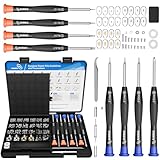
When you’re buying an eyeglass repair kit, don’t just grab the cheapest one you see. Look for kits that explicitly mention a variety of sizes. Some kits are better than others. I’ve seen kits with maybe five tiny screws of one size and a tiny screwdriver.
Useless. A good kit will have a decent assortment, maybe 20-30 screws in various lengths and head types, and importantly, a few different sizes of tiny screwdrivers. You’ll often find kits bundled with nose pads and those little clear plastic sleeves for the arms. That’s fine, but focus on the screws and the tools.
A decent kit might set you back between $10 and $20, and honestly, it’s worth every penny if it saves you a trip to the optician for a simple fix.
If you can’t get the original screw out to measure it, or if you lost it entirely, try to remember the type of frame. Is it thick plastic? Thin metal? Rimless?
This gives you a clue. Rimless glasses, for instance, often use very specific, sometimes machine-screw-like threads that pass through the lens itself. These are a different beast entirely and often require specialized tools and screws from the manufacturer.
For standard hinged frames, your best bet is to err on the side of caution. If you’re unsure between two sizes, try the slightly shorter one first. Jamming a screw that’s too long can damage the hinge mechanism or even poke through the other side of the frame, which is a nightmare scenario.
The goal is a snug fit that holds without forcing anything.
Eyeglass Screw Sizes and Types – a General Guide
| Screw Type | Common Shaft Diameter (mm) | Common Length (mm) | Typical Use Case | My Verdict |
|---|---|---|---|---|
| Phillips Head Threaded | 1.0 – 1.6 | 3 – 8 | Most common for hinge and temple attachment on plastic and metal frames. | The workhorse. Most likely what you need. |
| Flathead Threaded | 1.0 – 1.4 | 2 – 6 | Less common, sometimes found on older or specific European designs. | A bit trickier to find if you lose one. |
| Torx Head Threaded | 1.0 – 1.4 | 3 – 7 | Used by some brands for a more secure fit, less prone to stripping. | Good for durability, but you need the right driver. |
| Snap-in / Rivet | N/A (Non-threaded) | N/A | Often used in hinge mechanisms where a post is inserted and then ‘crimped’. | Usually not repairable by the average person. If one fails, you likely need new glasses or a professional repair. |
| Rimless Lens Screws | 1.0 – 2.0 (special threads) | 3 – 6 | Pass through drilled holes in lenses for mounting. | Very specific. Need exact match or specialized kit. |
This table is a rough guide. I’ve seen variations, and what works for one brand might not work for another. The key is observation and careful selection. Don’t just guess.
The Common Mistakes People Make (and I’ve Made)
The biggest mistake, hands down, is trying to force a screw that doesn’t fit. I can’t stress this enough. When you’re wrestling with a tiny screw, it’s tempting to just crank down on it, thinking you’ll get it to catch the threads. Don’t. You’re far more likely to strip the screw head, making it impossible to remove later, or worse, damage the threading in the frame itself. I’ve done this more times than I care to admit, ending up with a wobbly hinge and a screw that’s fused into place like a bad dental filling. The frame is then practically useless, or you’re looking at a costly repair at an optician.
Another common blunder is using the wrong screwdriver. Those tiny screws require precision. If you use a screwdriver that’s too big, you’ll strip the head instantly. If it’s too small or doesn’t have a good fit, you’ll also strip it.
Eyeglass repair kits come with specific micro-screwdrivers for a reason. Invest in a kit with multiple driver sizes. If you’re tempted to use a knife tip or a coin, just stop. (See Also: How Measure Metric Computer Screws )
Seriously. Save yourself the headache.
I once tried to tighten a loose screw on a pair of metal frames with a coin, thinking it was a flathead. It was a disaster. The coin slipped, gouged the frame, and completely rounded off the screw head.
That pair never got fixed properly.
People also make the mistake of thinking all repair kits are created equal. As I mentioned, some are practically useless.
Buying a generic, unbranded kit from a discount store might seem like a good idea at the time, but you might end up with low-quality screws that are too soft, or screwdrivers that are made of butter. When in doubt, look for kits from reputable eyeglass accessory brands or those with good reviews that specifically mention the variety of screws and the quality of the tools. Sometimes, paying a few extra bucks for a kit that actually works is the cheapest option in the long run. I learned this the hard way when a cheap kit’s screwdriver broke off inside a screw head, leaving me with a bigger problem than I started with.
Finally, there’s the ‘wait too long’ mistake. You notice a screw is loose, or missing, but you put off fixing it. You keep wearing the glasses, hoping it won’t get worse. Bad idea. That loose screw puts extra stress on the hinge and the surrounding frame material. The hole can widen, the hinge can bend, and the whole structure can weaken. What started as a simple screw replacement can turn into a situation where the frame is permanently damaged. It’s like ignoring a small leak in your roof; it only gets worse and more expensive to fix.
Real-World Use: When Repair Kits Save the Day
Let’s talk about the actual utility of these little repair kits. I’ve found them to be invaluable, despite the initial frustration with the lack of true standardization. For everyday glasses – my reading glasses, my computer glasses, even most of my sunglasses – a good repair kit has saved me countless trips to the optician and, more importantly, saved me money.
I remember needing to replace a screw on a pair of prescription sunglasses I’d paid a small fortune for. The optician quoted me $25 just to look at it and replace the screw, plus whatever the screw itself cost. I went home, dug out my trusty $15 repair kit, and had it fixed in under five minutes. That’s a pretty solid return on investment.
The key is having a kit that’s not just functional but also stocked with a decent variety. I keep a small kit in my desk drawer, another in my car’s glove compartment, and a mini-version in my travel bag. This has been a lifesaver. I can’t tell you how many times a friend has frantically asked if I have a tiny screwdriver because a screw fell out of their glasses mid-conversation or during an outing. Being the hero with the eyeglass repair kit is a surprisingly good feeling. It’s a small thing, but it makes a difference when you’re dealing with something you rely on every day.
There are also those DIY projects where you might need to attach small components. While not strictly for glasses, the principle of needing tiny, specific fasteners is the same. For example, I was building a miniature model, and a tiny hinge screw came loose. My glasses repair kit was the only thing I had that fit the bill. So, the usefulness extends beyond just eyewear. It’s about having the right tiny tool for the right tiny job. I’ve also used them to tighten up the screws on my camera equipment – the little grip panels or battery covers that often use these minuscule screws.
The one area where I’ve found repair kits often fall short is with very high-end, designer frames or specialized technical eyewear. These often use proprietary screw systems or materials that are very delicate. For example, some very thin, flexible titanium frames might have unique screw heads or require specific torque settings that a basic kit just can’t handle. In those cases, you’re usually better off going back to the manufacturer or a highly specialized optician. But for the vast majority of us wearing standard plastic or metal-framed glasses, a good quality repair kit is a genuine lifesaver. It’s about being prepared and having the right tools, even for the smallest problems. (See Also: How To Adjust Eyeglass Screw )
The “standard” Screw Sizes You’ll Encounter Most Often
Okay, so we’ve hammered home that there’s no single universal standard. But that doesn’t mean there aren’t common sizes that pop up over and over again. If you’re going to buy a repair kit or just want to know what to keep an eye out for, focus on these general ranges. For the vast majority of plastic and metal-framed eyeglasses and sunglasses with traditional hinges, the screws typically have a shaft diameter between 1.0mm and 1.6mm. This is the ‘meat’ of the screw that goes through the hinge plates.
The length of the screw is highly variable and depends entirely on the thickness of the frame at the hinge point. You might find screws as short as 3mm for very thin metal frames, or as long as 8mm or even 10mm for thicker acetate frames. A good repair kit will include a range of lengths within the common diameter sizes. The head of the screw is most commonly a Phillips (+) shape, but you’ll also see flathead (-) and, increasingly, Torx (star-shaped) heads. The Torx heads are great because they’re less prone to stripping than Phillips, but you need the correct driver.
For rimless glasses, the situation is more complex. These glasses don’t have traditional hinges or frames; the lenses are drilled, and tiny screws pass through the lens and into a small post attached to the temple arm or bridge. The screw heads here are often very small, sometimes domed, and the threads are different – they’re more like small machine screws. The diameters can still be in the 1.0-2.0mm range, but the thread pitch and style are unique. If you have rimless glasses, it’s best to get a repair kit specifically designed for them, or consult your optician. Trying to force the wrong screw into a rimless lens mount can easily crack the lens.
I’ve found that a kit offering a good selection of Phillips head screws in diameters of 1.2mm and 1.4mm, with lengths ranging from 4mm to 8mm, covers about 70-80% of my personal repairs. Adding in a few Torx options and some very small flatheads rounds out the kit nicely. It’s not about knowing every single obscure size; it’s about having a good general assortment that covers the most common scenarios. And always, always have a pair of fine-tipped tweezers handy. Sometimes the screw falls inside the hinge, and you need those to extract it before you can even think about replacing it.
Frequently Asked Questions About Glasses Screws
-
Are All Eyeglass Screws the Same Size?
No, not all eyeglass screws are the same size. While there are common diameters and thread types used by many manufacturers, variations exist due to different frame materials, styles, and brand designs. You’ll find a range of screw diameters, lengths, and head types (Phillips, flathead, Torx) across different pairs of glasses.
-
Where Can I Buy Replacement Glasses Screws?
You can buy replacement glasses screws in various places. Eyeglass repair kits are widely available online (Amazon, eBay) and in physical stores like drugstores, supermarkets, and sometimes craft or hardware stores. Many opticians also sell individual screws or small repair kits.
-
What Size Screwdriver Do I Need for Glasses?
You need a very small, precision screwdriver. Most eyeglass screws require micro-screwdrivers, typically with Phillips or Torx heads. Eyeglass repair kits usually come with the appropriate sizes, often in the 1.0mm to 2.0mm range for the shaft diameter. Using the wrong size screwdriver will strip the screw head.
-
Can I Use Any Tiny Screw for My Glasses?
No, you generally cannot use just any tiny screw for your glasses. While you might find a screw that physically fits, it might be too long, too short, or have the wrong thread pitch, which can damage the frame. It’s best to use screws specifically designed for eyeglasses or from a well-stocked eyeglass repair kit to make sure a proper and safe fit.
Verdict
So, after all that, are glasses screws standard? Well, they’re ‘standard-ish’ in that there are common types and sizes that pop up far more often than others. But the lack of a true, rigid international standard is why you can’t just grab any old tiny screw from your toolbox and expect it to work. It’s a bit of a gamble every time one goes missing.
My advice? Don’t wait until you’ve lost a screw to think about this. Invest in a decent eyeglass repair kit and keep it handy. Learn to recognize the common screw types and sizes for your own glasses if you can. It’s a small step, but it will save you a massive amount of hassle and money down the line. When that inevitable day comes, you’ll be prepared, and that’s always a win in my book.
![AXTH 25-in-1 Small Precision Screwdriver Set, Professional Magnetic Mini Repair Tool Kit for Phone, Computer, Watch, Laptop, Macbook, Ring Doorbell, Eyeglass, Electronic, [Bearing Steel] Screw Driver](https://m.media-amazon.com/images/I/518YlLmPTcL._SL160_.jpg)
