
You know the feeling. One minute you’re reading a book, the next, one arm of your glasses is dangling precariously, the tiny screw nowhere to be found. It’s infuriating, right? Especially when it happens at the worst possible moment. I’ve been there, fumbling around on a dusty workshop floor, searching for a screw smaller than a flea. Learning how to fix eye glasses lost screw isn’t just about saving a buck; it’s about reclaiming your vision and your sanity.
Forget those fancy optical shops that charge an arm and a leg for a five-minute job. Most of the time, this is something you can handle yourself with a bit of patience and the right tiny tools.
This isn’t rocket science, but it’s also not something you want to rush into with just any old piece of wire or a dab of glue. We’re talking precision here. Let’s get those specs back in one piece.
The Tiny Culprit: Understanding Eyeglass Screws and Why They Vanish
Eyeglass screws are, frankly, ridiculous. They’re miniscule metal wizards, holding together the delicate balance of your vision. Most are made of steel or brass, often with a microscopic threading that barely grabs onto the metal hinge of your frames.
The problem is, they’re subjected to constant torque. Every time you put your glasses on, take them off, or even just adjust them, that little screw gets nudged.
Over time, vibration, sweat, and just plain wear and tear cause them to loosen and, inevitably, disappear. I once lost a screw while walking my dog in the park. Spent a good twenty minutes on my hands and knees, convinced I was going to have to buy a whole new pair of expensive frames.
Turns out, it had just rolled under a park bench. Lucky me.
The hinges themselves are usually the culprits for the screw’s departure. There’s a barrel on one side (part of the frame arm) and a threaded post on the other (part of the hinge piece attached to the lens rim). The screw goes through the barrel and into the threaded post.
If the threading on the post gets worn, or if the screw isn’t tight enough, it can back itself out. Sometimes, the hole in the frame barrel can also get a little too large, especially if the frames are older or made of a softer plastic. It’s a constant battle against entropy, really. The common advice is to just tighten them, but if the threads are stripped or the hole is too big, tightening won’t do squat.
It’s like trying to screw a bolt into a hole that’s lost its threads – pointless.
When I first started dabbling in DIY eyewear fixes, I figured any tiny screw would do. Big mistake. I used a screw from an old electronics project, and while it looked similar, the threading was slightly off. It wouldn’t tighten properly, and worse, it started to corrode the hinge because it wasn’t made of the right material. That’s a lesson learned the hard way, costing me about $50 for a replacement screw set and a few days of blurry vision. You need screws designed for eyeglasses, or at least something with a very fine, precise thread pitch and made from a compatible metal, typically stainless steel or titanium, to avoid skin irritation or further corrosion. (See Also: How To Fix Eyeglasses Arm Without Screw )
What to Look for in a Replacement Screw
When you’re shopping for replacement screws, you’ll notice they come in various lengths and diameters. This is where it gets a bit fiddly. Most modern eyeglasses use screws that are less than 2mm in diameter, and often around 1.5mm.
The length can vary from about 4mm up to 8mm or more, depending on the thickness of your frame hinge. It’s always best to measure the screw you lost, if you can find it, or measure the depth of the hinge hole. A good rule of thumb is to buy a variety pack if you’re unsure.
These kits are relatively cheap and give you options. I keep a small one in my tool drawer and another in my travel bag.
Seriously, it’s saved me more than once. You’ll also want to check the type of screw head.
The most common are flat-head (slotted) screws, but Phillips head screws are also used on some frames.
The Key Toolkit for Eyeglass Screw Surgery
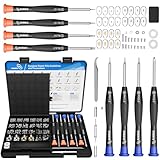
Okay, so you’ve accepted that the tiny screw is gone, and you need to replace it. What do you actually need to get this done without making things worse? First off, forget those clunky pliers you use for general repairs. You need precision. The absolute a must tool is a jeweler’s or precision screwdriver set. These sets have tiny, often interchangeable bits designed for intricate work. You’ll want a set that includes very small flat-head and Phillips-head screwdrivers, typically in the 1.0mm to 2.5mm range. I personally prefer a set with a comfortable grip that allows for fine control. I spent about $25 on a decent set a few years back, and it’s paid for itself a hundred times over.
Beyond the screwdriver, you’ll need a pair of fine-tipped tweezers. These are important for picking up and manipulating the minuscule screw. Without them, you’ll be trying to place a grain of rice with your fingers, and it’s just not going to work. Having a good light source is also surprisingly important. A desk lamp with a flexible arm or even a headlamp can make all the difference when you’re trying to see what you’re doing. I learned this the hard way when I tried to do a repair in dim lighting and ended up scratching the lens. Ugh.
Many people overlook the value of a small container or tray for holding parts. When you’re working with tiny screws, losing them is far too easy. A small magnetic parts tray (often used for electronics repair) is perfect for this.
It keeps the screws from rolling away. Alternatively, a small, shallow bowl or even the lid of a jar will do in a pinch.
Some eyeglass repair kits come with these handy trays, which is a big plus. If you’re getting a kit, look for one that includes a few different sizes of screws and maybe even some spare nose pads, because those tend to fall off too. I once bought a kit for $15 that had about 50 different screws and nuts, plus the necessary tools. (See Also: How Measure Metric Computer Screws )
It felt like overkill at first, but I’ve used almost every size since.
Common Mistakes to Avoid When Fixing Eyeglass Screws
One of the biggest blunders I see people make is using the wrong kind of adhesive. Super glue or any strong household glue is a terrible idea for eyeglass screws.
It’s messy, it can damage the frame material (especially plastic), and it makes future repairs nearly impossible. If you ever need to replace the screw again, you’ll be fighting hardened glue. Trust me, I’ve seen frames ruined by this. Another mistake is over-tightening.
You want the screw snug, not cranked down with all your might. Over-tightening can strip the threads in the hinge post, crack the frame, or even damage the lens if it’s under pressure. You’re aiming for a gentle resistance that keeps the arm from flopping around, not for it to be fused shut.
People also tend to force things. If a screw isn’t going in smoothly, don’t jam it. This usually means the threading is off, or you’re cross-threading it (trying to screw it in at an angle).
Take a breath, back it out, and try again. If it’s still not cooperating, you likely have the wrong size screw, or the hinge itself is damaged. Trying to force it will only lead to more damage, potentially to the screw, the hinge, or the frame itself. I once tried to force a screw on a pair of vintage Ray-Bans, and I ended up bending the hinge arm.
Took me ages to gently bend it back without making it obvious. So, patience is key. If it feels like you’re wrestling with it, you’re doing it wrong.
Finally, some folks try to use things like tape or even chewing gum in a desperate attempt to hold the arm on. While it might work for a few minutes, it’s a temporary fix that looks terrible and can attract dirt and grime. It’s far better to either get the right screw or live with slightly wobbly glasses until you can get them properly fixed. The aesthetic damage from a botched DIY job is often worse than a slightly loose arm. My friend tried to use nail polish to secure a screw once. It worked for about a day, then the screw just fell out, leaving a sticky, ugly mess.
The Step-by-Step Process: How to Fix Eye Glasses Lost Screw
Alright, let’s get down to business. This is how you actually do it, assuming you’ve got your replacement screw and your precision screwdriver set.
- Prepare Your Workspace: Find a well-lit, clean, and flat surface. Lay out your tools and your replacement screws. Place your eyeglasses on a soft cloth so they don’t get scratched. If you have a magnetic tray, put your new screw in it.
- Identify the Hinge and Hole: Look at the hinge where the arm attaches to the frame. You’ll see a small hole on the side of the hinge barrel where the screw goes in.
- Insert the Screw: Using your tweezers, carefully pick up the correct-sized replacement screw. Position the tip of the screw directly over the hole in the hinge.
- Start Threading: Gently place the screw into the hole. Using your precision screwdriver, carefully turn the screw clockwise. You should feel it start to catch the threads. If it doesn’t feel right, stop. The screw should turn smoothly. If it’s resistant, you might have the wrong size or be cross-threading.
- Tighten Snugly, Not Tightly: Continue turning the screw until it feels snug. The arm of your glasses should move freely but without excessive wobble. Do NOT force it. You don’t want to strip the threads or crack the frame.
- Check the Arm Movement: Gently open and close the glasses arm a few times to make sure it moves smoothly and stays in place. If it feels too tight and stiff, loosen it slightly. If it’s still too loose, tighten it just a tiny bit more.
- Clean Up: Put away your tools and dispose of any packaging. Give your glasses a quick wipe-down to remove any fingerprints.
It sounds simple, and it mostly is, but the devil is in the details with these tiny components. It often takes a couple of tries to get the tension just right. I remember the first time I did this on my own, I tightened it a bit too much, and the hinge felt really stiff. Had to back it out a quarter turn. Another time, I didn’t tighten it enough, and the arm fell off again the next day. It’s a delicate balance, like tuning a guitar string. But once you get it, it feels incredibly satisfying. (See Also: How To Adjust Eyeglass Screw )
When to Call in the Professionals (or Just Buy New Glasses)
Look, I’m all for DIY, but there are definitely times when you should just take your glasses to an optician or a reputable eyewear shop. If you’ve tried fixing the screw multiple times and it keeps falling out, the hinge itself is probably damaged or stripped beyond repair. This is common on cheaper metal frames where the threading can wear out quickly. In these cases, the hinge might need to be replaced entirely, which is a job best left to someone with specialized tools and experience. Trying to force a fix on a damaged hinge can often make it worse, leading to more expensive repairs or the need for new glasses anyway.
Another situation where you might want to surrender is if the frame material itself is cracked or broken near the hinge. This is especially true for plastic frames, which can be brittle. While some very skilled technicians can repair cracks, it’s often a temporary fix, and the stress on the frame can cause it to break again. If you have a particularly expensive or cherished pair of glasses, it’s almost always worth getting a professional opinion before attempting a repair yourself. The cost of a professional repair is usually much lower than buying a new pair, and they can often do it while you wait.
For those truly awful moments, like when you accidentally step on your glasses and the entire frame is bent out of shape or a lens pops out and cracks, it’s usually time to face the music. While some basic straightening might be possible with the right tools and a lot of care, a severely damaged frame is often a lost cause. And if a lens is shattered?
That’s a clear sign you’re beyond a simple screw fix. I’ve seen people try to glue lenses back together, and it looks atrocious and impairs vision. Ultimately, knowing when to fold ’em is part of the DIY wisdom. Sometimes, the most honest fix is admitting it’s time for a new pair, especially if your current ones are old, worn out, or just not fitting right anymore.
| Repair Method | Effort Level | Cost | Verdict |
|---|---|---|---|
| DIY Screw Replacement | Low to Medium | $5 – $20 (for a kit) | Excellent for simple lost screws. Satisfying and saves money. |
| Professional Repair at Optician | Very Low (for you) | $15 – $50+ (depending on issue) | Best for damaged hinges or complex issues. Reliable. |
| Temporary Fix (e.g., tape, glue) | Low | Negligible | Avoid at all costs. Looks bad, causes more damage. |
| Buying New Glasses | N/A | $100 – $1000+ | The ultimate solution for severely damaged frames or lenses. |
Frequently Asked Questions About Eyeglass Screws
Can I Use Super Glue to Fix a Lost Eyeglass Screw?
No, absolutely not. Super glue or any strong household adhesive is a terrible choice for eyeglass repairs. It’s messy, can damage frame materials, and makes future repairs incredibly difficult or impossible. It’s far better to use a proper replacement screw and screwdriver.
How Do I Know What Size Screw I Need for My Glasses?
The best way is to measure the screw you lost if you can find it, or to measure the depth of the hinge hole. Most eyeglass screws are very small, typically less than 2mm in diameter and ranging from 4mm to 8mm in length. Buying a variety pack of eyeglass screws is often the most practical solution if you’re unsure.
My Eyeglass Screw Keeps Falling Out, What Can I Do?
If a screw repeatedly falls out, it likely means the threads in the hinge post are stripped or worn. You can try a slightly larger screw if one is available, or a tiny drop of removable thread locker (like Loctite Blue 242, used very sparingly) might help, but professional assessment is often needed for stripped threads.
Can I Fix a Cracked Eyeglass Frame Myself?
Minor cracks might be temporarily fixed with specialized epoxy, but it’s usually not a durable solution, especially on plastic frames. Significant cracks or breaks are best handled by an optician who has the tools and materials to properly repair or replace the damaged part of the frame.
Final Thoughts
So there you have it. Learning how to fix eye glasses lost screw is a skill that’ll serve you well. It’s about being prepared and knowing when a simple fix is within your grasp. Most of the time, a lost screw isn’t the end of the world, just a minor annoyance that a few minutes and the right tools can solve.
Don’t let a tiny piece of metal dictate your day. Keep a basic eyeglass repair kit handy – they’re cheap and small enough to tuck away anywhere. You’ll thank yourself the next time those hinges start to feel loose.
Next time that little screw decides to go on an adventure, you’ll be ready. And if the problem is bigger than a screw, don’t hesitate to find a good local optician. Sometimes, even a blunt friend knows when to call in the experts.
![AXTH 25-in-1 Small Precision Screwdriver Set, Professional Magnetic Mini Repair Tool Kit for Phone, Computer, Watch, Laptop, Macbook, Ring Doorbell, Eyeglass, Electronic, [Bearing Steel] Screw Driver](https://m.media-amazon.com/images/I/518YlLmPTcL._SL160_.jpg)
