
My wife’s favorite reading glasses suddenly decided to take a dive, literally. One of the arms just detached, hanging by a thread… well, by a screw so microscopic I could barely see it. I rummaged through my workshop, the place where I usually find a fix for anything with a bolt or screw. Big mistake.
Turns out, asking ‘are glasses screws standard’ is like asking if all tiny metal things are interchangeable. They are not. Not even close. That little screw, the one holding a important piece of your vision together, is a whole different beast compared to the tiny screws holding my drone together, or the ones that fall out of my kid’s toys. It’s a whole niche world, and one I learned about the hard way.
Those Tiny Screws: More Complicated Than They Look
Okay, let’s cut to the chase. Are glasses screws standard? The honest, blunt answer is: NO. Not in the way you’re probably hoping. You can’t just grab any tiny screw from your miscellaneous collection and expect it to work. I’ve been there, faced with a wobbly spectacle arm and a drawer full of what looked like identical screws. I tried a few, thinking ‘how different can they be?’ Turns out, very. The thread pitch might be off, the head might be too large or too small, or the metal itself might be too soft and strip instantly. It’s a recipe for frustration and potentially more damage to your expensive frames.
The problem is, ‘glasses screws’ isn’t a single, universally defined size or type. It’s more of a category. Think of it like asking if ‘car parts’ are standard. Well, a spark plug isn’t interchangeable with a brake pad, even though both are car parts. Eyeglass screws vary significantly in diameter, length, thread pitch, and head type. The most common ones you’ll encounter are typically very small, often around the M1.0 to M1.6 millimeter range for diameter. Lengths can vary from less than 4mm up to 8mm or more, depending on where they’re used on the frame.
What really throws people off is that many of them LOOK the same. They’re made of metal, they have a little head, and they’re tiny. If you’re used to working with, say, electronics screws or watch screws, you might assume some overlap. Some overlap exists, especially with watch screws, but even then, precision is key.
A screw that’s just a hair too wide can damage the threads in the frame’s hinge, or a screw that’s too long can poke through and irritate your skin. I once tried a screw from an old pair of reading glasses on a newer, more expensive pair.
It fit, but the arm was a little looser than before. Turns out, the thread on the new frames was slightly finer.
It held for a while, but it was never quite right, and I ended up getting the proper replacement later.
The material is another factor. Most eyeglass screws are made of stainless steel to resist corrosion from sweat and skin oils. Some higher-end frames might use titanium or other alloys, and these can require specific types of screws. You’ll also see screws with different head types: slotted, Phillips, and sometimes even tiny hex or Torx heads. The slotted type is probably the most common and the easiest to strip if you’re not careful or using the right tool. I’ve learned to appreciate the simplicity of a well-fitting slotted screw, but also the added security of a Phillips head when it’s available.
Why Those Tiny Threads Are So Finicky
So, why the fuss? Why can’t they just make them all the same? It boils down to the delicate nature of eyeglass frames and the need for precise, secure connections without damaging the materials. Think about it: your frames are often made of plastic, acetate, metal, or a combination. These materials have varying tolerances, and a screw that’s too forceful or the wrong size can crack plastic, strip metal threads, or warp the hinge mechanism. The tiny screw is a precision component designed for a very specific job.
The thread pitch is the most important element. This refers to the distance between the threads. If the pitch is too fine, the screw won’t engage with the existing threads in the frame. If it’s too coarse, it might strip them out. Imagine trying to screw a coarse-thread wood screw into a fine-thread metal insert – it’s not going to end well. For eyeglass screws, especially those used in the hinge mechanism, the threads are usually very fine. This allows for a snug fit and easy adjustment without requiring excessive force. (See Also: How To Fix Eyeglasses Arm Without Screw )
I remember a friend of mine, bless his heart, tried to fix his own sunglasses with a tiny screw he found in a craft kit. He managed to get it in, but the whole hinge became stiff and creaky. When he brought them to me, I saw the problem immediately. The screw he used was a bit too long, and the threads were clearly designed for a different material. It had basically mangled the original threads in the plastic hinge. It wasn’t an expensive pair, but it was annoying to see how easily a small mistake could ruin something. It took a bit of delicate work with a thread repair kit (which is another whole story) to salvage them.
The head size and type are also important. The head needs to sit flush or slightly proud, depending on the design, without interfering with the movement of the arm. A screw head that’s too big will prevent the arm from folding properly. A head that’s too small might not provide enough surface area to keep the arm secure. And the type of driver needed – slotted, Phillips, etc. – matters for applying the right torque. You don’t want to be using a driver that’s too large, which can damage the screw head or the surrounding frame material. It’s all about that fine balance of form and function in a very small package.
How to Find the Right Eyeglass Screw
Okay, so you’ve got a loose screw or a lost one. What do you do? Don’t panic. First, try to identify the type of screw you need. Look at the remaining screw (if you have one) or the hole it came out of. What’s the head type? Slotted is common. What’s the approximate diameter and length? You’re looking for very small measurements here.
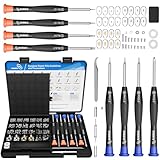
The best course of action is almost always to get a dedicated eyeglass repair kit. I know, I know, you wanted a quick fix from your toolbox. But trust me, these kits are worth their weight in gold. They typically come with a variety of the most common eyeglass screw sizes and head types, along with the necessary small screwdrivers. They’re inexpensive, usually under $15, and save you a massive headache. I keep a couple of these kits scattered around – one in the car, one in my primary toolkit, and even a tiny one in my travel bag. It’s cheap insurance against a tiny problem.
When you buy a kit, look for one that specifies it contains screws for spectacles or eyeglasses. These are the ones designed with the correct thread pitches and head sizes. Some generic ‘miniature screw sets’ might have screws that look similar, but they’re often not precise enough for eyeglass frames. The kits are usually organized by size, often in small compartments, making it easier to find a match. Most kits will include the common M1.0, M1.2, M1.4, and M1.6 sizes, which cover the vast majority of glasses out there. The length will vary, so having a range is helpful.
If you have a particularly high-end or designer pair of glasses, you might need to contact the manufacturer directly or visit an optician. They may have proprietary screws or can order the exact replacement part. Trying to force a generic screw into a high-end frame could void warranties or cause irreparable damage. An optician also has specialized tools and expertise for handling delicate frame repairs, including replacing lost screws without damaging the hinges.
Common Eyeglass Screw Mistakes (and How to Avoid Them)
My biggest mistake, as you’ve heard, was assuming my existing screw collection was sufficient. This is probably the most common blunder. People see a tiny screw, they think ‘screw.’ They don’t think ‘specialized, precision-engineered tiny screw for delicate optical frames.’ That’s mistake number one: using the wrong screw.
Mistake number two is using the wrong tool. Trying to force a Phillips head screwdriver into a slotted screw, or using a screwdriver that’s too big for the screw head. This almost guarantees you’ll strip the screw head, making it impossible to remove or tighten later. It can also scratch or gouge the frame material around the screw hole. I’ve seen people try to use the tip of a knife or even a coin in a pinch. It’s a bad idea. You need a set of very small, precision screwdrivers that fit the screw head properly. Those little eyeglass repair kits usually come with them, but if you’re buying them separately, look for sets specifically labeled ‘precision’ or ‘electronics’ screwdrivers.
Mistake number three is over-tightening. Because these screws are small and often go into plastic or delicate metal, you don’t need to crank them down. Just tighten them until they feel snug and the arm moves freely but without excessive play. Over-tightening can strip the threads in the frame itself, which is a much harder problem to fix. I learned this lesson with a pair of metal-framed glasses where I was a bit too enthusiastic with the screwdriver. The arm ended up wobbly because the threads in the hinge were toast. It required a professional repair, costing me about $60, which was way more than a simple screw replacement should have been.
Finally, mistake number four is not having the right kit on hand before you need it. This is the ‘prepare for battle’ approach. Most of us wait until a screw is lost or broken, and then we’re in a bind. Having a small, inexpensive eyeglass repair kit readily available – in your desk drawer, car, or bag – means you can fix the problem in minutes. It’s the difference between a minor annoyance and a trip to the optician. (See Also: How Measure Metric Computer Screws )
Real-World Use: When a Generic Screw Just Won’t Cut It
I’ve been elbow-deep in DIY projects for decades. I’ve built decks, rewired lamps, assembled more flat-pack furniture than I care to admit, and I’ve got a toolbox that would make a professional envious. I’ve got metric and imperial sets, Torx bits, security bits, you name it. So, when the arm of my son’s $200 athletic glasses came loose during a soccer game, my initial thought was pure confidence. ‘No problem, I’ve got this.’
I grabbed what I thought was the right screw from my ‘tiny screws’ organizer. It looked identical.
Same length, same slotted head. I tried to screw it in. It wouldn’t catch.
I tried forcing it a little, and that’s when I heard it – a faint cracking sound from the plastic hinge. Panic set in. This wasn’t just any pair of glasses; they were specialized for sports, with a flexible, impact-resistant frame.
The screw I used, while seemingly similar, had a slightly different thread pitch and was just a tad too thick. It had started to strip the internal threads of the hinge mechanism. The original screw was likely a specialized M1.2 x 4mm with a very specific thread profile. The one I grabbed was probably an M1.4 or had a coarser thread.
The result? A loose arm that wouldn’t stay put and a slightly damaged hinge. It wasn’t a complete disaster, but it was far from a perfect fix. I ended up having to order an official replacement screw and hinge kit directly from the manufacturer. It cost me about $30 and took over a week to arrive. If I had just bought a proper eyeglass repair kit for $10 initially, I would have had the correct screw, saved myself the stress, and avoided potentially damaging the frame further. That experience taught me a valuable lesson: for eyeglass screws, generic just doesn’t cut it. Precision matters, and specialized kits are the way to go.
This is why you see specialized eyeglass repair kits. They don’t just throw random tiny screws in a box. They’re hand-picked with the most common sizes and thread types used by frame manufacturers. For example, the most common screw sizes for eyeglasses are typically in the M1.0 to M1.6 diameter range, with lengths varying from 4mm to 8mm. The thread pitch is often very fine, sometimes around 60-80 threads per inch (TPI) for metric equivalents. Trying to match this with a screw from a general electronics kit is a gamble, and as I found out, a gamble that can cost you.
The Eyeglass Screw Ecosystem: A Mini-Guide
Let’s break down the ‘ecosystem’ of eyeglass screws so you know what you’re dealing with. It’s not a vast, sprawling industry, but it’s got its own nuances. The primary players are the frame manufacturers, the screw manufacturers (who often supply the frame makers or aftermarket kit companies), and then us, the consumers trying to keep our vision aids intact.
Eyeglass Screw Types & Common Uses
| Screw Type | Head Style | Common Material | Typical Use | Verdict |
|---|---|---|---|---|
| Hinge Screw | Slotted, Phillips | Stainless Steel, Titanium | Attaching the temple arm to the frame front. The most common type to need replacing. | Needs precise fit; generic often fails. |
| Nose Pad Screw | Phillips, Slotted | Stainless Steel | Securing adjustable nose pads to metal frames. Can be slightly larger than hinge screws. | Often replaceable with slightly larger generic if needed, but proper fit is best. |
| Bridge Screw | Slotted | Stainless Steel | Connecting parts of the bridge on certain frame styles. Less common to fail. | Very specific to frame design. |
As you can see from the table, the hinge screw is the workhorse and the one you’ll most likely encounter. Its precision is most important. You’ll often find that different parts of the same frame might use slightly different screws. The screw holding the arm to the front might be different from the tiny screw holding a decorative element onto the arm. (See Also: How To Adjust Eyeglass Screw )
Now, about those tiny screwdrivers. The ones that come in eyeglass repair kits are usually jewelers’ screwdrivers. They’re small, lightweight, and designed for low torque applications. You might find slotted, Phillips, and sometimes hex (Allen) heads. It’s important to use the correct driver that fits the screw head snugly. A poorly fitting driver is the fastest way to damage that tiny screw head, rendering it useless for future adjustments.
For anyone who tinkers, like myself, it’s tempting to think you can just buy a bulk pack of ‘mini screws.’ I’ve done it. I have a container of tiny screws, probably hundreds of them. Most of them are for electronics, toys, or other gadgets. While some might coincidentally be the right size for a very basic pair of reading glasses, they’re rarely the exact thread pitch and length needed for better quality frames. It’s the difference between a screw that ‘fits’ and a screw that works perfectly and doesn’t cause long-term issues. I learned this the hard way; I ended up with a drawer full of tiny screws that are almost, but not quite, right for anything important.
Frequently Asked Questions About Eyeglass Screws
Can I Use a Screw From My Computer Repair Kit for My Glasses?
Generally, no. Computer repair kits often contain screws that are too large or have different thread pitches than those used in eyeglass frames. While some might look similar, the precision required for eyeglass screws means that generic electronics screws are a risky substitute and can damage your frames.
How Do I Know What Size Eyeglass Screw I Need?
You typically need to measure the diameter and length of the existing screw. However, most eyeglass repair kits come with a variety of common sizes (M1.0 to M1.6 for diameter) and the correct drivers, making it easier to find a match without precise measurement.
What Happens If I Use the Wrong Size Screw in My Glasses?
Using the wrong screw can lead to several problems: the arm may not stay tightened, the screw could strip the threads in the frame, damage the hinge mechanism, or even crack plastic components. It’s best to use the correct, specifically designed eyeglass screws.
Are Titanium Glasses Screws Different From Stainless Steel Ones?
Yes, while they serve the same function, titanium screws are lighter and stronger than stainless steel. They are typically used in higher-end titanium frames and may have slightly different threading or require specific tools for installation to avoid damaging the frame material.
Final Verdict
So, to circle back to the main point: are glasses screws standard? The short answer remains a resounding no. They are a specialized component, and trying to treat them like any other tiny screw is a path fraught with potential frustration and damage. I’ve learned to respect the micro-engineering that goes into these seemingly insignificant parts. They are designed for a purpose, and that purpose demands specificity.
My advice? Don’t be like me, initially. Don’t reach for that generic jar of tiny screws. Invest in a good quality eyeglass repair kit. They’re cheap, they’re effective, and they contain exactly what you need. It’s a small price to pay to keep your vision clear and your frames in good working order. Save yourself the headache and the potential for costly mistakes.
The next time one of those tiny devils goes missing, you’ll know exactly what to do. Grab that kit, find the right screw, and get your glasses back in working order without compromising the integrity of your frames. It’s the practical, no-nonsense approach that saves you time and money in the long run.
![AXTH 25-in-1 Small Precision Screwdriver Set, Professional Magnetic Mini Repair Tool Kit for Phone, Computer, Watch, Laptop, Macbook, Ring Doorbell, Eyeglass, Electronic, [Bearing Steel] Screw Driver](https://m.media-amazon.com/images/I/518YlLmPTcL._SL160_.jpg)
