
I remember the first time I tried to replace my iPhone battery. Armed with a shiny new toolkit and an even shinier sense of confidence, I whipped out the tiny screwdriver. It looked… different. Not like the Phillips head screws I was used to. After fumbling for what felt like an eternity, I realized the specialized bit I’d bought was the wrong damn size. So, are all iPhone pentalobe screws the same? The short answer, as with most things Apple, is a frustrating ‘it depends’.
This whole pentalobe screw situation is one of those little annoyances that Apple seems to love. They’re not just there to make your life difficult; there’s a reason behind them. But that reason doesn’t stop them from being a pain in the backside when you just want to fix your own damn phone.
My initial foray into DIY iPhone repair was a comedy of errors, mostly involving me staring at a screw head and wondering if I was going crazy. Eventually, I learned a thing or two, and I’m here to tell you exactly what’s what, so you don’t waste your money on the wrong bits like I did.
The Mystery of the Pentalobe: What Even Are They?
Alright, let’s get down to brass tacks. If you’ve ever peered into the bottom of an iPhone, you’ve seen them: those little star-shaped screw heads that look like a tiny medieval torture device. Those are pentalobe screws. The name itself sounds fancy, doesn’t it?
Pentalobe. It’s just a brand name for a type of screw head with five lobes, designed by Apple.
Why did they do it? Well, the official line is usually about security and preventing unauthorized access.
It’s their way of saying, ‘Hey, this is our fancy gadget, and we don’t want just anyone poking around inside.’ Honestly, it feels more like a way to control the repair market and push you towards their own (expensive) service or authorized repair shops. It’s a classic Apple move, really.
The key thing to understand is that not all pentalobe screws are created equal, even though they might look similar at first glance. Apple has used different sizes and specifications over the years, across different iPhone models. This is where things get tricky. You might think a P2 bit will fit every iPhone, but nope. For instance, the P2 bit is commonly associated with the iPhone 7 through iPhone 11 Pro Max, but then Apple decided to switch things up for newer models.
So, when you’re buying a repair kit online, and it says ‘pentalobe screwdriver,’ you need to dig deeper. Does it mention the specific iPhone models it’s compatible with? If it’s a generic kit, it might include a few different pentalobe sizes, which is a good sign.
But if it just says ‘iPhone pentalobe,’ you’re taking a gamble. I once bought a cheap kit that claimed to be for iPhones, and the P2 bit was just a hair too small. It would sort of grip, but then it would strip the screw head.
That’s a rookie mistake, and it cost me a perfectly good screw and a lot of frustration. The screw head itself is designed with five rounded indentations, hence the ‘penta’ (five) and ‘lobe’ (rounded projection) in the name.
The complexity doesn’t stop at just the size. The depth of the recess and the angle of the lobes can also vary slightly, meaning even if a bit seems to fit, it might not engage properly, leading to slippage and damage. This is why getting the exact right bit for your specific iPhone model is most important. It’s not just about having a pentalobe bit; it’s about having the correct pentalobe bit.
Decoding the Pentalobe Sizes: P2, P5, P6 and Beyond
This is where the real confusion kicks in for most people trying to fix their own devices. Apple hasn’t been consistent. The most common pentalobe screw sizes you’ll encounter on iPhones are P2, P5, and P6. Let’s break them down, because knowing these numbers is the difference between a smooth repair and a stripped-screw nightmare.
The P2 bit is probably the most famous (or infamous) of the bunch. It’s typically used on the bottom of the iPhone for the two screws that flank the charging port. This bit is usually 0.8mm. You’ll find this size on a whole range of iPhones, from the iPhone 4 all the way up to models like the iPhone 11 Pro Max. So, if you’re working on older iPhones, or even some of the slightly older Pro models, the P2 is likely what you’re after. (See Also: How To Fix Eyeglasses Arm Without Screw )
Then there’s the P5 bit. This one is a bit larger, typically 1.2mm, and it’s often found on the exterior casing screws of MacBooks. While it’s not as common on iPhones as the P2, it’s important to be aware of. Some sources might lump it in with iPhone repair kits, and while it’s a pentalobe screw, it’s usually for a different Apple product altogether.
The P6 bit is another one to watch out for. This one is also 1.2mm, but it’s used on some external screws of iPhones, specifically around the display assembly on certain models, or on the casing of some older Apple devices like the original MacBook Air. It’s similar to the P5 but can have slightly different lobe geometry or depth. So, while they share the same 1.2mm measurement, they aren’t always interchangeable.
The real kicker is that Apple doesn’t just stick to these. For newer models, like the iPhone 12 and beyond, Apple has continued to evolve.
Some of these newer iPhones might use slightly different internal screw types or even variations on the pentalobe standard that aren’t as widely documented in generic repair kits. This is why checking compatibility charts for your specific iPhone model is a must.
My first impulse was to buy a “universal” iPhone repair kit, which felt like a good deal at $15. It came with a P2 bit and a generic Phillips bit. When I opened up my iPhone 13, neither of those bits could even get a purchase on the tiny, almost flush screws at the bottom. I ended up having to order a specific kit for that model, which felt like a complete waste of time and money.
It’s a classic case of saving a few bucks upfront costing you double down the line.
| Bit Size (mm) | Commonly Used On | Verdict |
|---|---|---|
| 0.8mm (P2) | iPhone Bottom Screws (Most Models: 4 – 11 Pro Max) | Key for most older iPhones. Be sure it fits securely. |
| 1.2mm (P5) | MacBook Exterior Screws | Rarely for iPhones. Primarily for laptops. |
| 1.2mm (P6) | Some iPhone Casing/Display Screws (Specific Models) | Check your model. Can be confused with P5. |
| Proprietary/Other | Newer iPhone Models (12 onwards) | Often require specialized bits not in generic kits. Always verify. |
Why the Difference? Apple’s Design Philosophy (and Your Wallet)
Let’s face it, Apple isn’t exactly known for making things easy for the DIY crowd. Their use of proprietary screws like the pentalobe is a deliberate choice. It’s a part of their broader strategy to maintain control over their ecosystem, from hardware design to software updates, and yes, even repairs. When you can’t easily open a device with standard tools, you’re far more likely to seek out an official repair service or an Apple Authorized Service Provider.
And as anyone who’s ever had to get an iPhone screen replaced by Apple knows, that can get expensive, fast. I learned this the hard way when I cracked my iPhone X screen.
The quote from Apple was eye-watering, easily north of $200. I figured, ‘How hard can it be?’ Famous last words.
The pentalobe screw, while seemingly a small detail, is part of a larger puzzle designed to make your iPhone feel like a sealed unit. This design choice, in theory, enhances water and dust resistance. By using non-standard screws, Apple makes it harder for generic tools to create gaps that could compromise those seals. However, it also makes it harder for you to perform simple maintenance, like battery replacement, which is a wear-and-tear item that should realistically be user-serviceable.
The shift in screw sizes across different iPhone generations also plays into this. It’s not just about making one size fit all. Different models have different internal layouts and component placements. Apple engineers the internal structure of each iPhone to be as compact as possible. This often means using screws of varying lengths and types to secure different components without interfering with others. For example, a screw holding down a tiny flex cable might be significantly shorter and have a different thread pitch than a screw securing the main logic board or the battery. So, while they might all look like pentalobe screws from the outside, the internal ones can have subtle, yet important, differences.
My own experience with a slightly older iPhone 8 battery replacement was a good lesson. I bought a kit that had the P2 bit.
It worked for the bottom screws, but then I ran into a different type of screw inside that was a Torx. The kit only had a P2 and a Phillips. So, I had to go back online and order a more complete kit that included Torx bits. It’s a classic bait-and-switch, or at least a ‘buy the basic kit, then realize you need the deluxe version’ scenario. (See Also: How Measure Metric Computer Screws )
The common advice online is often ‘just get a pentalobe kit,’ but that advice is incomplete. It’s like telling someone to buy a ‘wrench’ without specifying the socket size. The common advice is wrong because it’s too general.
Common Mistakes and What to Watch Out For
Let’s talk about the mistakes I’ve made so you don’t have to. The biggest one, hands down, is assuming all pentalobe bits are the same.
I’ve already confessed to this multiple times, but it bears repeating. You must know your iPhone model. A P2 bit for an iPhone 7 will not necessarily work perfectly on an iPhone 13 Pro. Even if it looks like it fits, a slightly off-size bit can easily strip the head of the screw.
When that happens, you’re in for a world of pain. A stripped screw means you might not be able to open your phone at all, or you’ll have to resort to some pretty drastic measures, which could damage your device further. I once spent an hour trying to get a stripped screw out with a tiny dab of superglue on a cheap screwdriver tip.
It was messy, frustrating, and ultimately unsuccessful. It’s just not worth the risk.
Another common pitfall is buying the absolute cheapest toolkit you can find. These often come with poorly manufactured bits that are made of soft metal. They’ll either not fit correctly or they’ll bend and deform after the first few screws. You might get lucky, but you’re much more likely to end up with stripped screws or a damaged tool. I’ve learned that investing a bit more in a reputable brand for your screwdriver set is worthwhile. Brands like iFixit are pricey, but their tools are usually spot on. Cheaper alternatives exist, but you’ll want to read reviews carefully and see if they specify the exact bit sizes for different iPhone models.
Don’t just eyeball the screw heads either. While pentalobe screws have that distinctive star shape, the exact dimensions, including the diameter of the head and the depth of the recess, can vary. This is why using a kit that explicitly states compatibility with your iPhone model is important. Many kits will list which iPhone generations they cover. If you’re unsure, a quick search for “[Your iPhone Model] pentalobe screw size” should point you in the right direction. For example, searching for ‘iPhone 12 Pro pentalobe screw type’ will give you much more accurate information than just ‘iPhone screw type.’
Here’s a checklist of things to avoid:
- Buying a generic ‘iPhone screwdriver kit’ without checking model compatibility.
- Using a bit that feels loose or doesn’t quite engage the screw head.
- Forcing the screwdriver. If it’s not turning easily, something is wrong.
- Trying to use a P2 bit on a newer iPhone model that requires a different size.
- Ignoring the fact that internal screws might be different (e.g., Torx).
It’s also worth noting that sometimes the quality of the screw itself can be an issue. Over time, especially with repeated repairs, the metal can wear down. But your primary concern should be having the correct, high-quality tool to begin with.
So, Are All iPhone Pentalobe Screws the Same? The Reality Check
The blunt truth? No, absolutely not. While they all share the pentalobe design with five lobes, the specific size, diameter, and even the precise angle of those lobes can differ significantly between iPhone models. Apple has, over the years, used different specifications for these screws. This is why a pentalobe screwdriver bit that works for an iPhone 7 might not work for an iPhone 12, and definitely not for the latest models.
The most common sizes you’ll deal with are the P2 (0.8mm) and P6 (1.2mm), but even then, the specific application and exact dimensions can vary. For instance, the P2 is ubiquitous on the bottom of many iPhones, but if you’re working on internal components, you might encounter other types of screws altogether, like the tiny Torx screws (T2, T3, T5, etc.) which are important for securing internal cables and logic boards. These are not pentalobe screws at all.
My personal experience with an iPhone 11 Pro was a prime example. I had a basic pentalobe kit that worked fine for my older iPhone 6s. When I tried to open the 11 Pro, the P2 bit just spun uselessly. It was like trying to turn a lock with a key that was just slightly too small. I had to order a specific P2 bit that was advertised for the iPhone 11 series, and even then, it felt slightly different – a snugger fit, less wobble. It made me realize that Apple isn’t just using pentalobe screws to be difficult; they’re using different pentalobe screws and other proprietary fasteners depending on the model and the specific component being secured.
The common advice you’ll find online often simplifies this issue. People say, “just get a pentalobe kit,” and for older iPhones, this might be sufficient if the kit includes a P2 bit. But for newer models, especially from the iPhone 12 series onwards, Apple has continued to tinker with internal hardware and screw types. This means you often need highly specific bits that aren’t always included in generic multi-tool kits. The best approach is always to identify your exact iPhone model and then research the specific screw types used in that model for the repair you intend to do. (See Also: How To Adjust Eyeglass Screw )
Don’t be fooled by kits that claim to be universal. They rarely are. The tiny variations in screw head dimensions are enough to cause frustration and, worse, damage. It’s a small detail, but it’s a detail that matters immensely when you’re trying to get your device open without breaking it. So, to answer the question directly: No, they are not all the same, and you need to be diligent.
Practical Tips for Getting the Right Tools (and Not Wasting Money)
Okay, so you’re convinced you need the right tools and you don’t want to buy a dozen kits that only partially work. Here’s how to navigate the pentalobe minefield without losing your shirt or your sanity. First off, identify your exact iPhone model. Go to Settings > General > About, and look for the ‘Model Name’. If it’s not clear, you can often find the model number (e.g., A1778) on the back of the phone or in the SIM tray area, and then search for that online to confirm the model. This is the absolute first step.
Once you know your model, do a quick search for “iPhone [Your Model Name] repair guide” or “iPhone [Your Model Name] pentalobe screw size.” Reputable repair sites like iFixit are goldmines of information. They often detail exactly which screws are used where and what tools are needed. Look for kits that explicitly list compatibility with your specific iPhone generation. For example, a kit for the “iPhone 11 series” might be what you need if you have an iPhone 11, 11 Pro, or 11 Pro Max, but you still need to check if it specifies the P2 bit for the bottom screws.
If you’re doing a common repair like a battery or screen replacement, many kits will cater to these specific jobs. These are often better than a general ‘iPhone toolkit’ because they’ll include the exact bits required for that particular repair. For instance, you might find a kit that includes a P2 bit, a Phillips bit, and a Torx bit (often T3 or T5), which covers most of the common screws you’ll encounter in a battery swap on many iPhone models. When buying, check the product description very carefully. Does it mention the P2 (0.8mm) bit? Does it mention any Torx bits?
I’ve found that investing in a quality multi-bit driver set designed for electronics repair is usually the most cost-effective long-term solution. Look for sets that include a wide range of small Phillips, Torx, and pentalobe bits. iFixit’s kits are fantastic but can be pricey. However, there are other brands like Wiha, or even some well-reviewed generic sets on Amazon that can do the job. Just make sure to read reviews specifically about the pentalobe bits – do they strip easily? Do they fit snugly?
Here’s a quick process to follow:
- Identify your EXACT iPhone model.
- Determine the screws you need to remove. (Bottom pentalobe, internal Torx, etc.)
- Search for repair guides or tool requirements for your specific model.
- Look for repair kits or bit sets that explicitly list the necessary sizes (e.g., P2, T3, T5).
- Prioritize quality over the absolute cheapest option. A good set will last and prevent damage.
Avoid buying generic “iPhone repair kits” unless they provide a detailed list of included bits and specify compatibility with your model. It’s better to buy a specific pentalobe bit driver for your model if that’s all you need, rather than a large kit that contains mostly useless tools for your task.
What Does Pentalobe Mean?
Pentalobe is a brand name for a type of screw head that has five lobes, or rounded indentations, instead of the more common slots (like Phillips or flathead). Apple uses these screws to make it harder for unauthorized individuals to open their devices, contributing to their proprietary ecosystem.
Do All Iphones Use Pentalobe Screws?
No, not all iPhones use pentalobe screws for every external fastener. While many models use pentalobe screws on the bottom for easy access, internal components often use different types of screws, such as Phillips or Torx. Furthermore, the specific size and specification of the pentalobe screws themselves can vary between different iPhone models and generations.
Which iPhone Models Use Pentalobe Screws?
Pentalobe screws are most commonly found on the bottom exterior of iPhones starting from the iPhone 4 and continuing through many subsequent models, including the iPhone 6, 7, 8, X, XS, XR, 11, and some of the Pro versions. However, newer models, particularly from the iPhone 12 series onwards, may use different screw types or variations, and internal screws are almost always different.
Can I Use a P2 Screwdriver on Any iPhone?
No, you cannot use a P2 screwdriver on any iPhone. The P2 (0.8mm) is a specific size of pentalobe bit commonly used on many iPhones, but it is not universal. Newer iPhone models often require different sizes of pentalobe bits or entirely different screw types altogether. Using the wrong size bit can strip the screw head, making repair impossible without further damage.
What Is the Difference Between P5 and P6 Pentalobe Bits?
Both P5 and P6 pentalobe bits are typically 1.2mm in size, but they have slightly different lobe geometry and depth. The P5 bit is most commonly used on MacBooks, while the P6 is used on some external screws of certain iPhone models and other Apple devices. While they share the same nominal diameter, they are not always interchangeable and the specific application matters.
Conclusion
So, the next time you’re faced with those little star-shaped heads, remember this: are all iPhone pentalobe screws the same? Absolutely not. It’s a frustrating reality of owning Apple devices, but knowledge is power. Don’t be like me and waste money on the wrong tools. Take the extra five minutes to identify your exact iPhone model and research the specific screw types required for your repair.
Invest in a decent set of precision screwdrivers that explicitly states compatibility with your iPhone model, or at least a reputable brand known for quality. It might cost a few extra bucks upfront, but it’ll save you headaches, stripped screws, and potentially more expensive damage down the line. A little bit of due diligence goes a long way in the world of DIY tech repair.
Ultimately, whether you’re replacing a battery, a screen, or just curious, understanding these screw specifics is your first step to a successful repair. Happy tinkering, and may your screws turn smoothly.
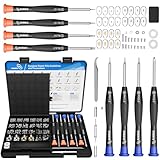
![AXTH 25-in-1 Small Precision Screwdriver Set, Professional Magnetic Mini Repair Tool Kit for Phone, Computer, Watch, Laptop, Macbook, Ring Doorbell, Eyeglass, Electronic, [Bearing Steel] Screw Driver](https://m.media-amazon.com/images/I/518YlLmPTcL._SL160_.jpg)
