
I remember the sheer frustration. My favorite pair of reading glasses, the ones that actually fit my face without pinching, had a screw pop out. Gone. Vanished into the abyss of my messy workshop. I figured, no biggie, right? They all use the same screws. Turns out, that was my first mistake in a long line of “DIY eyeglass repair” blunders.
So, are screws for glasses universal? The short answer, the one I wish someone had given me before I spent a small fortune on tiny, useless packs of assorted screws, is a resounding NO. Not even close.
It’s a common assumption, especially when you’re in a pinch and can’t make it to the optometrist. But the reality is a lot more complicated, and frankly, a bit of a rip-off if you’re not careful.
Why Your ‘universal’ Screw Kit Is Probably Useless
Look, I’ve tinkered with enough stuff over the years to know when something’s supposed to be standardized and when it’s a free-for-all. And eyeglass screws? Definitely the latter. When I first needed to replace a screw, I did what any DIYer would do: hit up Amazon. I bought a ‘universal’ eyeglass screw repair kit. It had about 500 tiny screws in it, all supposedly fitting everything. I’m telling you, it was a joke. I must have tried twenty different screws on my glasses, and none of them were quite right. Either too big, too small, or the thread just wouldn’t catch. It felt like trying to fit a square peg in a round hole, over and over.
The problem is, ‘universal’ in the world of eyeglass screws means ‘might fit some of the time, for some people, under specific astrological alignments.’ It’s marketing speak for ‘good luck, pal.’ The issue lies in a few key areas: thread pitch, screw length, and head type. Most frames, especially higher-end ones or those with specialized hinges, use proprietary screws. Think about it: a lightweight titanium frame is going to have different needs than a chunky acetate pair. The hinge mechanism itself dictates the screw’s dimensions. I’ve seen frames with screws so minuscule they look like they were made for a dollhouse, and others with screws that are noticeably chunkier, almost like a tiny machine screw.
One of the most common misunderstandings is that all screws are the same thread size. They’re not. Some use fine threads, others use coarser ones. Trying to force the wrong thread pitch will strip the threads in your frame’s hinge, and then you’ve got a much bigger, more expensive problem on your hands.
I learned this the hard way when I decided to ‘just try to jam it in there’ on a pair of expensive prescription sunglasses. That screw went in crooked, and when I tried to unscrew it, the entire hinge mechanism sort of… unraveled.
Felt like I’d broken a tiny, intricate watch. Took it to an optician, and they had to replace the whole hinge assembly.
Cost me fifty bucks I absolutely didn’t want to spend.
The materials matter too. Cheaper frames might use softer metal for the hinge, which is more forgiving with a slightly off screw. But better quality frames, especially metal ones, need precise fittings. Even the head of the screw – whether it’s a Phillips, flathead, or a tiny Torx – can vary, though Phillips seems to be the most common for DIYers attempting a fix.
What Actually Makes Eyeglass Screws Different
Let’s break down why ‘universal’ is a myth and what you actually need to consider. It boils down to the mechanics of your glasses. The screw isn’t just holding two pieces of plastic or metal together; it’s part of a miniature, precise hinge. This hinge needs to allow for smooth opening and closing without wobble or excessive friction. That’s where the dimensions of the screw become most important. I’ve got a couple of pairs of vintage glasses that use tiny, almost hair-like screws with a small, rounded head. Then I have my prescription safety glasses, which have a much sturdier, almost industrial-looking screw. They don’t look interchangeable at all, and they aren’t.
First up: Length. The screw needs to be long enough to pass through both parts of the hinge and engage with the nut or the threaded hole on the other side, but not so long that it pokes out and irritates your skin or catches on things. Too short, and the hinge will be loose. Too long, and you’ll have a sharp little protrusion that’s just asking for trouble.
I’ve seen people try to fix glasses by just shoving any old screw in there, and it ends up sticking out the side, looking ridiculous and feeling even worse. I once had a friend whose glasses would snag on his shirt collar because he’d used a screw that was just a millimeter too long. (See Also: How To Fix Eyeglasses Arm Without Screw )
Next, Diameter and Thread Pitch. This is where most DIYers really mess up.
The diameter of the screw shank needs to match the hole in the hinge. More importantly, the thread pitch – how many threads per inch, or how fine/coarse the threads are – has to be exact. If the threads don’t match, you either won’t be able to screw it in at all, or you’ll strip the threads in the frame itself. Stripped threads are a death sentence for a hinge unless you’ve got micro-welding skills or a very understanding optician.
I’ve opened up those ‘universal’ kits and found maybe three different thread types, but the sheer variety of thread pitches used in eyewear is way, way beyond that. It’s like a secret language only the frame manufacturers and specialized screw makers understand.
Finally, Head Type and Size. While Phillips heads are common, you’ll also find flatheads, and on some really tiny screws, you might need a special eyeglass screwdriver that has a tiny little notch. The head also needs to sit flush or be slightly countersunk so it doesn’t interfere with the glasses’ movement or comfort. A screw head that sticks out too far will make the hinge stiff, or worse, cause uneven pressure on the lens or frame, potentially leading to cracks over time. It’s a small detail, but it’s important for the long-term health of your eyewear.
The Real Deal: What to Look for (and What to Avoid)
So, if you’re staring at your glasses with a missing screw and that sinking feeling in your stomach, what’s the actual game plan? Forget those ‘universal’ kits. They’re mostly a waste of money and a source of further frustration. The best approach, hands down, is to get the specific screw your glasses need. This sounds obvious, but how do you do that?
First, check your frame. Many reputable eyewear brands will discreetly etch specifications onto the inside of the temple arm (the part that goes over your ear) or the bridge. You might find numbers like ’52-18-140′ (lens width, bridge width, temple length), but sometimes, if you’re lucky, you might find a model number or a hint about the hinge type. This is rare, but it’s worth looking. If you can find a model number or name, a quick online search might lead you to the manufacturer’s website, where they might offer spare parts or at least a product diagram that shows the hinge type.
Second, and this is what I do now, take it to an optician. Seriously. This is their bread and butter. Most opticians have a massive drawer or cabinet filled with hundreds of different types of eyeglass screws. They can usually identify the correct screw by sight and replace it for you in minutes. Some might charge a small fee, maybe $5 to $10, but it’s a guaranteed fix and saves you the headache of trying to match it yourself. I took a pair of expensive Italian frames in once, and the optician matched the screw perfectly. It wasn’t just the size; it was the exact color and finish of the screw head. That’s professionalism.
Third, if you’re determined to DIY and your optician isn’t an option (maybe you’re traveling, or it’s late at night), **your best bet is to buy a specialized, multi-size kit from an optical supplier, not a general hardware store or a cheap online marketplace.** These kits are usually more expensive, but they contain a wider variety of precise screws, often with different thread pitches and lengths that are actually used in eyewear. Even then, you’re still playing a guessing game to some extent. These kits often come with a small chart or diagram showing measurements, which can help if you can measure your old screw (if you have it) or the hinge hole accurately.
What to avoid? Anything labeled ‘universal’ that looks like it came from a dollar store. Also, avoid trying to repurpose screws from other electronics or toys. They might look similar, but the tolerances are completely different for eyewear. You risk damaging your frames permanently. I once saw someone try to use a tiny screw from an old laptop keyboard. It was a disaster. The thread was wrong, and it mangled the hinge threads instantly. Stick to what’s designed for glasses.
The Eyeglass Screw Comparison Table: My Verdict
Here’s a quick rundown of screw types and my take on their ‘universality’. Remember, this is based on my experience, not some official standard.
| Screw Type/Characteristic | Common Use Case | Likelihood of Being Universal | My Verdict |
|---|---|---|---|
| Micro-Fine Thread (e.g., 1.0mm pitch) | Ultra-lightweight metal frames, rimless glasses | Extremely Low | Don’t even think about it. These are specific. |
| Standard Thread (e.g., 1.2mm – 1.4mm pitch) | Most common acetate (plastic) frames, some metal frames | Moderate (for the right standard) | This is where ‘universal’ kits might have a few options, but matching the exact pitch is still key. |
| Coarse Thread | Cheaper, more solid plastic frames, often found in children’s eyewear | Low | Usually too chunky for quality frames. If it feels like you’re forcing it, stop. |
| Screw Length (variable) | All frame types | N/A (Length is always specific) | Important for comfort and hinge function. Too long or too short = bad. |
| Phillips Head | Most common for DIY | High (as a head type, not size) | Easy to work with, but the screw’s other dimensions matter more. |
| Specialty Heads (e.g., Torx, unique notches) | Designer frames, high-tech materials | Zero | You need the exact tool and screw. Try to get it from the manufacturer. |
As you can see, ‘universal’ is a dangerous word here. The only thing that’s truly universal is the need for a properly fitting screw for your specific frame. I’ve wasted probably $50 over the years on various assortments that ended up in a junk drawer, never to be used. The optician route costs a fraction of that and guarantees a fix. If you absolutely must DIY, invest in a kit that explicitly states it’s for optical use and includes a good range of measurements you can compare.
Common Mistakes and How to Avoid Them
Alright, let’s talk about the screw-ups I’ve seen and made myself. The biggest mistake, as we’ve established, is assuming universality. Beyond that, people get impatient. You’re trying to fix your glasses, probably because you need them to see, and you’re in a rush. This leads to forcing things, using the wrong tools, and generally making the problem worse. (See Also: How Measure Metric Computer Screws )
Mistake number two: Using the wrong screwdriver. You see a tiny screw, and you grab the smallest Phillips head screwdriver you own. Fair enough. But if the head of the screw is slightly worn, or if it’s a less common head type, you can easily strip the screw head.
Once that head is stripped, it’s incredibly difficult to get the screw out, let alone put a new one in. I learned this when trying to remove a stubborn screw. I ended up using a tiny flathead screwdriver that was almost the same size as the Phillips recess.
It worked, barely, but it chewed up the screw head pretty badly. A good set of eyeglass repair tools includes a variety of precisely sized drivers, often with magnetized tips. That magnetic tip is a lifesaver for those minuscule screws.
Mistake number three: Over-tightening. You finally get the right screw in, and you want to make sure it’s secure. So you crank on it. Big mistake.
Eyeglass screws and their corresponding threads in the frames are often made of relatively soft metals. Over-tightening can strip the threads in the frame, or even crack the plastic hinge if it’s made of acetate.
The screw should be snug, not vise-tight. It needs to hold the hinge together firmly enough that the glasses don’t flop open or closed, but still allow for smooth operation. I once tightened a screw so much on a pair of plastic frames that I heard a faint crack.
My heart sank. Thankfully, it was just the plastic creaking and it settled down, but it was a stark reminder to be gentle.
Mistake number four: Not addressing the root cause. Why did the screw fall out in the first place?
Was the hinge loose? Was the screw just worn out? Sometimes, a screw might fall out because the threads in the frame are already slightly stripped, and the screw just couldn’t grip anymore. If you replace it with a new screw and it immediately feels loose, you might have a deeper issue.
In these cases, the best solution is often to have the hinge repaired or replaced by an optician. They have specialized tools and adhesives that can sometimes salvage stripped threads, or they can fit a new hinge assembly.
My advice? If a screw keeps falling out, or if the hinge feels loose even with a new screw, it’s time to consult a professional.
What If I Lose a Screw While Traveling?
If you lose a screw while traveling and don’t have immediate access to an optician, your best bet is to visit a local pharmacy or a general store that might carry small travel-sized eyeglass repair kits. Look for kits that specifically state they are for eyeglasses and contain a variety of sizes. If you can, try to salvage the lost screw to get an idea of its size and type. Failing that, be prepared to buy a kit and experiment carefully, as universal kits are often a poor substitute for the real thing. Sometimes, a hotel concierge might be able to point you to a local optician or a store that sells them. (See Also: How To Adjust Eyeglass Screw )
Real-World Fixes and Practical Tips
So, you’ve decided you’re going to tackle this yourself, or at least try to get it right. Beyond avoiding the mistakes above, here are some practical tips that have saved me time and money.
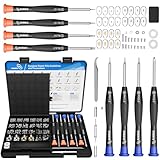
First off, invest in a decent eyeglass repair kit. I’m not talking about the 500-piece ‘universal’ kits from dubious online sellers. I’m talking about a kit from a reputable brand that specializes in optical tools.
Brands like SE, Generic Eyeglass Repair Kit, or even some larger tool manufacturers that make precision screwdrivers will have better quality kits. These usually contain about 50-100 screws in various common sizes, a few different types of drivers (Phillips, flathead), and sometimes tweezers. It’s still a gamble, but a much smaller one.
My personal favorite trick, if I can’t get to an optician and I’ve lost a screw, is to try and **match the look of the hinge**. I’ll carefully examine the existing screws on the glasses and try to find one in my (admittedly growing) collection of stray screws that has a similar head shape and a shank that looks about the right thickness. Then, I’ll try to gently thread it in. The key word here is gently. If it doesn’t go in smoothly with just a little finger-pressure to start, I stop. I don’t force it.
Another tip: Keep spares. If you do get a screw replaced by an optician, ask if they have a spare they can give you, or if they sell them individually. Some do! I’ve had them hand me a tiny little baggie with two identical screws, just in case. It’s a small gesture, but it speaks volumes. Also, when you buy new glasses, ask your optician about their repair policy and if they can source specific screws for your model. It’s always better to have a relationship with your eyewear provider.
Finally, consider your frame material. Metal frames are generally more forgiving with minor screw variations than acetate (plastic) frames. The plastic can be brittle and prone to cracking if the wrong screw is forced or overtightened. For rimless glasses, the screws are often tiny and part of a complex clamping system; these are almost never universal and require specialized attention. If you have rimless glasses and lose a screw, your only real option is the optician. Trying to DIY rimless glasses repair is like trying to perform open-heart surgery with a butter knife. It’s not going to end well.
How Do I Know What Size Screw I Need?
Determining the exact screw size usually requires comparison. If you have the original screw, you can try to measure its length and diameter with a caliper. The thread pitch is the trickiest part to measure without specialized tools; it often involves comparing it visually or by feel to known thread samples. The best way to ‘know’ the size is to bring the old screw or the glasses to an optician who can match it instantly. If you’re using a DIY kit, look for sizing charts that come with it and try to match based on visual cues and the measurements provided. Many kits will label screws by approximate diameter and length (e.g., ‘1.0mm x 3.5mm’).
Can I Use Super Glue to Fix a Loose Screw?
While tempting in a pinch, using super glue on a loose screw is generally a bad idea. Super glue is brittle and can quickly gum up the hinge mechanism, making it stiff or impossible to open and close properly. It can also permanently bond the screw to the frame, making future repairs incredibly difficult. If the screw is loose, it usually means the threads are stripped or worn. Super glue won’t fix the underlying problem and will likely create more issues down the line. It’s far better to try and find the correct replacement screw or consult an optician for a proper repair.
Verdict
So, to circle back to the million-dollar question: are screws for glasses universal? Nope. Not even a little bit. It’s a convenient myth that costs people time, money, and a lot of frustration. I’ve learned the hard way that when it comes to the tiny, intricate world of eyeglass hinges, precision matters. Those universal kits are mostly just a collection of parts that might work, but rarely do for your specific pair.
My advice? Save yourself the headache. If a screw pops out, your first call should be to an optician. They have the tools, the knowledge, and the parts to fix it properly in minutes. It’s usually a small fee, and you walk away with a perfectly functioning pair of glasses, not a half-fixed pair held together with hope and questionable hardware.
If you’re feeling brave and the optician isn’t an option, do your homework. Invest in a quality, optically-specific repair kit, and proceed with extreme caution. Remember, gentle is the name of the game. A little patience now can save you from a much bigger repair bill later. So, the next time a screw goes missing, remember this: there’s no magic ‘universal’ screw, only the right one for your frames.
![AXTH 25-in-1 Small Precision Screwdriver Set, Professional Magnetic Mini Repair Tool Kit for Phone, Computer, Watch, Laptop, Macbook, Ring Doorbell, Eyeglass, Electronic, [Bearing Steel] Screw Driver](https://m.media-amazon.com/images/I/518YlLmPTcL._SL160_.jpg)
