
I remember the first time I wrestled with the guts of a laptop. It was a clunky old thing, and the screws were so small I swear they were designed for ants with opposable thumbs. I ended up stripping one, then another, and before I knew it, I was staring at a pile of useless tiny metal bits and a very dead machine. That’s when I learned the hard way that the answer to ‘are laptop screw ph00’ is a resounding ‘yes, they are incredibly tiny, and you need the right tools.’
These aren’t your standard household screws. They’re miniature marvels of engineering, meant to hold together delicate electronics without adding weight or bulk. But their size also makes them a nightmare if you don’t have the proper equipment. Let’s cut to the chase: you can’t just grab any old screwdriver and expect to get the job done without causing damage.
The world of tiny screws is vast and often frustrating, but understanding the specific needs for laptop repair is half the battle. If you’ve ever found yourself staring at a minuscule screw head and wondering what the heck size it is, you’re in the right place. We’re going to talk about the infamous ph00 screw and why it’s become such a common point of confusion.
The Tiny Tyrants: Understanding the Ph00 Screw
So, you’ve cracked open your laptop or a similar piece of tech, and you’re met with a sea of tiny screws. Some are Philips head, some are Torx, and then there are the ones that look like a tiny plus sign. This is where things get confusing, especially when you’re trying to figure out if laptop screws are ph00. The ‘PH’ stands for Philips, and the ’00’ is a size designation. In the Philips screw world, ’00’ is the smallest standard size you’ll commonly encounter for electronics. Think of it as the microscopic version of the screws you’d use on a toy car, only even smaller.
Why are they so small? Simple: space. Laptops are packed tighter than a sardine can. Every millimeter counts. These tiny screws need to secure components like the motherboard, hard drive, SSD, RAM modules, and the casing itself without creating stress points or taking up valuable real estate. A standard household Philips screw would simply be too large, too heavy, and potentially too damaging to the delicate plastic or metal components they’re meant to fasten.
The ’00’ Philips head means the cross-shaped slot is very shallow and narrow. This is where most DIYers trip up.
If your screwdriver tip isn’t precisely the right size and shape, you’ll either not be able to get a grip, or worse, you’ll slip and strip the screw head. This is particularly infuriating because a stripped tiny screw is exponentially harder to remove than a stripped larger one. I once spent over an hour trying to extract a single stripped ph00 screw from an old smartphone using makeshift tools, all because I didn’t have the right bit to begin with.
It’s a lesson that sticks with you. The common advice is to just buy a cheap set, but that’s often where the problems start.
The confusion often arises because not all tiny screws are ph00, even if they look similar. Some might be a slightly different Philips size (like PH0 or PH1, though those are larger), or they could even be a JIS (Japanese Industrial Standard) screw, which looks like a Philips but has a slightly different angle and is common in Japanese electronics like Sony and Nintendo products. Using the wrong driver on a JIS screw, even if it’s the correct size, can still damage it. So, while the question ‘are laptop screw ph00’ is a good starting point, understanding the nuances of screw head types is most important for successful repairs.
The Right Tool for the Job: What to Look For
Okay, so you’ve accepted that you need specific tools. What makes a good set for tackling those minuscule laptop screws? It’s not just about having a ph00 bit; it’s about the quality of the bit and the driver itself. First off, the material. You want bits made from hardened steel, ideally S2 steel, which offers a good balance of hardness and toughness. Cheaper sets often use softer metals that will deform or strip after only a few uses, especially when dealing with those stubborn little ph00 screws that are often found in laptops.
The tip geometry is also important. A ph00 bit needs to have a sharp, well-defined cross shape that precisely matches the slot in the screw. Many cheap sets have bits with rounded-off edges or imprecise tips, which will cam out (slip out of the screw head) under minimal torque. I’ve seen bits that looked like they were molded from play-doh. For laptop repair, you’re not just looking for a ph00 bit, but a high-quality ph00 bit. (See Also: How To Fix Eyeglasses Arm Without Screw )
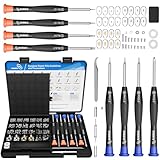
Beyond the bit, consider the driver. For very small screws like the ph00, a precision screwdriver handle is key. These are typically smaller than standard screwdrivers and often have a rotating cap on the end. This rotating cap allows you to apply downward pressure with your thumb or index finger while your other fingers twist the handle. This is important for maintaining stability and control, preventing slippage, and avoiding damage. Some high-end sets also feature magnetic tips, which are a lifesaver. Dropping a tiny screw inside a laptop is a special kind of hell, and a magnetic tip can help prevent that disaster by holding the screw securely to the driver.
When you’re shopping, look for sets that explicitly mention laptop repair or electronics repair. These are more likely to include the specific sizes and types of bits you’ll need, including ph00, ph0, and possibly even smaller Torx sizes (like T3, T4, T5) and Pentalobe (for Apple devices). A good set will also come with a decent case to keep everything organized. Trying to find a specific tiny bit in a jumbled drawer is a recipe for frustration and wasted time. A well-organized set makes sure you have what you need, when you need it.
I’ve found that a set with interchangeable bits is usually the most cost-effective and practical. You get one comfortable handle and a variety of tips. Just make sure the connection between the handle and the bit is secure. A wobbly connection is almost as bad as a poorly fitting bit.
Common Mistakes That Lead to Screw-Pocalypse
Let’s talk about the graveyard of stripped screws I’ve accumulated over the years. It’s a testament to the fact that most people, myself included initially, don’t approach these tiny fasteners with the respect they deserve. The most obvious mistake is using the wrong size or type of screwdriver. You see that tiny screw, you grab the closest-looking Philips head, and bam – you’ve just started its demise. Remember, if it’s a laptop screw, chances are it’s a ph00 or a similar micro-size. Trying to force a PH1 bit into a ph00 screw is like trying to fit a square peg into a round hole, only with more potential for damage.
Another massive blunder is applying too much force or the wrong kind of force. When you’re trying to loosen a screw, you want steady, even torque. This means making sure the screwdriver is fully seated in the screw head. If it feels like it’s wobbling or not getting a good grip, STOP. Don’t just muscle it. Instead, try wiggling it gently or applying a bit of upward pressure while turning. Conversely, when tightening, you want to snug it down, not crank it like you’re trying to seal a nuclear reactor. Overtightening can strip the threads in the plastic or metal casing, rendering the screw hole useless. This is especially true for the plastic screw bosses found in many laptop chassis.
A surprising number of people also neglect to organize their screws. When you disassemble a laptop, different screws are often used in different locations. They might have slightly different lengths, thread pitches, or even head types. If you mix them up, you’re asking for trouble.
Putting a longer screw into a port meant for a shorter one can puncture the motherboard or other internal components. I learned this the hard way when I reassembled a laptop and it wouldn’t boot. After much head-scratching, I realized I’d used a slightly longer screw near the WiFi card, and it was interfering with the connection. A small magnetic parts tray or even just labeling plastic bags for each screw location can save you hours of troubleshooting.
Finally, and this is a big one that most people overlook: not cleaning the screw head or the screwdriver tip. Dust, grime, or even a tiny bit of dried thermal paste can get lodged in the screw slot, preventing the screwdriver from seating properly. This is a prime cause of slipping and stripping. Before you even touch a screw, give the head and your driver tip a quick wipe. It takes seconds and can save you a world of pain. This is particularly true for screws that have been in place for a long time; they can accumulate all sorts of gunk.
What to Look for in a Precision Screwdriver Set
When you’re out hunting for a good precision screwdriver set, here’s what I’d prioritize:
- Bit Material: S2 steel is the gold standard for durability and hardness. Avoid sets that don’t specify the material or use generic ‘steel’.
- Bit Variety: Make sure it includes ph00, ph0, ph1, and common Torx sizes (T3-T8). If you work with specific brands, check for Pentalobe or other specialized bits.
- Driver Handle: Ergonomic, with a good grip and a free-spinning cap for fine control. A magnetic tip is a huge bonus.
- Organization: A sturdy case that keeps bits sorted and prevents them from getting lost is a must.
- Brand Reputation: While not always indicative, well-known tool brands often have better quality control.
Real-World Use: When Do You Actually Need Those Tiny Screws?
The question ‘are laptop screw ph00’ pops up most frequently when someone is trying to open their laptop. And that’s its primary domain. If you own any modern ultrabook, gaming laptop, or even some thicker standard laptops, you’ll find these tiny ph00 screws holding the bottom cover in place. They’re also commonly used to secure internal components like M.2 SSDs, smaller brackets, and sometimes even parts of the keyboard assembly on certain models. The trend towards thinner and lighter devices means manufacturers are using smaller and smaller fasteners to save space and weight. (See Also: How Measure Metric Computer Screws )
But it’s not just laptops. These screws are ubiquitous in the world of small electronics. Think about gaming consoles (like the PS4, PS5, Xbox One, Xbox Series X/S), smartphones (though often Pentalobe or other proprietary types, the principle of tiny screws remains), tablets, drones, RC cars, and even some high-end computer peripherals like mechanical keyboards. If it’s a portable electronic device that needs to be assembled and potentially serviced, there’s a good chance it uses ph00 or similarly sized screws.
I recently had to replace the battery in a Nintendo Switch. The main screws holding the casing together were ph00. If I hadn’t had a proper set, I would have been completely stuck. It wasn’t just about opening it; it was about reassembling it perfectly so that the new battery was secure and the device was properly sealed. The satisfaction of a successful repair, where everything goes back together smoothly and the device powers on, is immense. It’s a feeling that’s hard to replicate, and having the right tools, especially for those tiny ph00 screws, is the key to achieving it.
Another area where these screws are prevalent is in custom PC building, particularly for smaller form factor builds (like Mini-ITX cases). While larger PC components might use standard screws, many of the internal mounts, drive bays, and even some bracket assemblies in compact cases rely on these smaller fasteners. So, even if you’re not directly working on a laptop, the skills and tools needed for ph00 screws can easily translate to other tech projects.
It’s also worth noting that not all manufacturers are created equal. Some use solid, well-manufactured screws, while others use cheap, soft metal that strips at the slightest hint of pressure. This variability is why having a high-quality set of drivers is so important. You can’t always control the quality of the screws you encounter, but you can control the quality of the tool you use to interact with them. A good set of drivers can make the difference between a smooth repair and a frustrating mess.
The DIY vs. Professional Debate: When to Call It Quits
There’s a fine line between being a capable DIYer and blindly attempting a repair that’s beyond your skill set or tool inventory. For tasks involving ph00 screws, the DIY aspect is heavily dependent on having the right equipment. If you’re just trying to swap out RAM or an SSD in a laptop that’s designed for easy access (some are, bless them), and you have a good precision set, you’re probably golden. The process is usually straightforward: remove the bottom cover screws, pop off the cover, swap the component, and reassemble.
However, some modern laptops are designed to be incredibly difficult to open. They might have glued-together chassis, hidden clips, or a labyrinth of internal cabling that requires extreme care. In these cases, even with the right ph00 bits, you risk damaging delicate ribbon cables, breaking plastic clips, or causing other unintended consequences. This is where you have to ask yourself: what’s my time worth, and what’s the potential cost of a mistake?
I’ve personally reached that point a few times. For instance, trying to replace a keyboard on a very thin ultrabook can be a nightmare. It often involves removing dozens of tiny screws, some of which might be ph00, and then carefully prying apart a chassis that feels like it’s fused shut. If I’m not in the mood for that level of meticulousness, or if the laptop is particularly expensive, I’ll outsource it. The cost of professional repair, while sometimes steep, can be cheaper than buying a new device when you mess up.
Here’s a table that might help you decide:
| Task | Required Tools | DIY Difficulty | Recommendation |
|---|---|---|---|
| RAM/SSD Upgrade (easy access laptops) | Precision Screwdriver Set (incl. PH00) | Low | DIY is usually fine. |
| Battery Replacement (easy access laptops) | Precision Screwdriver Set (incl. PH00) | Medium | DIY possible, but check guides carefully. |
| Full Laptop Disassembly (e.g., motherboard repair) | Extensive Precision Screwdriver Set, Anti-static tools, Spudger, Opening picks | High | Consider professional if inexperienced. |
| Keyboard Replacement (thin/glued laptops) | Extensive Precision Screwdriver Set, Opening tools, Heat gun (sometimes) | Very High | Often best left to professionals. |
| Smartphone/Tablet Repair | Specialized Precision Screwdriver Set (incl. Pentalobe/JIS), Opening tools | High | High risk of damage; professional often better. |
Ultimately, the decision comes down to your comfort level, the value of the device, and the potential cost of errors. If the task involves only a few ph00 screws and straightforward access, go for it! You’ll save money and gain experience. But if you’re facing a complex tear-down or a device you can’t afford to break, don’t be ashamed to hand it over to someone who does this every day.
Are Ph00 Screws Common in All Laptops?
While PH00 screws are very common in modern laptops, especially for securing the bottom casing and internal components like SSDs, they aren’t present in every single laptop. Older or bulkier models might use slightly larger screws, and some manufacturers use proprietary screw types or even adhesive to hold things together. However, if you’re working on a thin and light ultrabook or a gaming laptop from the last decade, you will almost certainly encounter PH00 screws. (See Also: How To Adjust Eyeglass Screw )
Can I Use a Ph0 Screwdriver If I Don’t Have a Ph00?
It’s a terrible idea. A PH0 screwdriver is larger than a PH00. Trying to use it will likely strip the PH00 screw head, making it incredibly difficult, if not impossible, to remove without damaging the surrounding components. Always use the exact size screwdriver bit that matches the screw head. For PH00 screws, this means a dedicated PH00 bit.
What Happens If I Strip a Laptop Screw?
Stripping a laptop screw, especially a tiny PH00, is a major pain. It means the slot on the screw head is damaged, so your screwdriver can’t get a grip. You might be able to remove it with specialized screw extractors designed for electronics, superglueing a sacrificial bit to the screw head (risky!), or very carefully prying it out. However, the best approach is prevention by using the correct, high-quality tools in the first place. Often, a stripped screw means you’ll have to drill it out, which can damage the threaded hole.
How Do I Know If a Screw Is Ph00 or Jis?
JIS and Philips screws look very similar, but JIS screws have a slightly different angle on their slots and are designed to be driven by JIS drivers. Using a Philips driver on a JIS screw, even if it’s the correct size, can damage the screw head more easily. Visually, JIS screws often have a small ‘•’ mark near the cross, while Philips screws do not. If you’re unsure, especially with Japanese electronics, it’s safer to use a dedicated JIS driver set if available, or proceed with extreme caution if you only have Philips drivers.
The Future of Tiny Fasteners
Looking ahead, the trend towards even smaller, thinner, and more integrated electronics isn’t going to reverse. This means the demand for ultra-small fasteners like the ph00 screw is likely to continue, and we might even see new, even smaller sizes becoming standard. Manufacturers are constantly trying to shave off millimeters and grams, and screws are an easy target for miniaturization. This puts more pressure on consumers and repair technicians to have access to increasingly specialized tools.
We’re also seeing a rise in alternative fastening methods. Some devices are moving towards snap-fit designs, strong adhesives, or even unique locking mechanisms that eliminate screws altogether. This can make repairs more difficult as these methods often aren’t designed for user serviceability. However, for the foreseeable future, screws, including those tiny ph00 ones, will remain a staple in electronic device assembly. They offer a reliable, albeit sometimes fiddly, way to make sure components are securely fastened and can be disassembled for repair or recycling.
The quality of these fasteners is also a point of contention. While some manufacturers use solid screws, others clearly opt for the cheapest option. This leads to the stripping issues we discussed earlier. As repairability becomes a more vocal consumer demand, we might see a push for better-quality screws from manufacturers, or at least more standardized ones. For now, the best you can do is be prepared. Having a quality set of precision screwdrivers, including those indispensable ph00 bits, is an investment in your ability to maintain and repair the technology you rely on. It’s about being ready for whatever tiny challenge the next gadget throws your way.
Final Thoughts
So, to circle back to the original question: are laptop screw ph00? Yes, they absolutely are, and their minuscule size demands respect and the right equipment. Don’t be the person who finds out the hard way that using the wrong tool turns a simple fix into a costly disaster. I’ve been there, and I can tell you, the frustration is real.
Investing in a good quality precision screwdriver set that includes the ph00 size is not a luxury; it’s a necessity for anyone who plans on opening up their tech. It’s the difference between a smooth repair and a stripped-screw nightmare. Look for hardened steel bits, a comfortable handle, and good organization.
The world of electronics repair is only getting more intricate, and understanding the basics, like the common laptop screw sizes, is your first step to confidently tackling your own upgrades and fixes. Don’t let tiny screws intimidate you; be prepared, be patient, and you’ll be fine.
![AXTH 25-in-1 Small Precision Screwdriver Set, Professional Magnetic Mini Repair Tool Kit for Phone, Computer, Watch, Laptop, Macbook, Ring Doorbell, Eyeglass, Electronic, [Bearing Steel] Screw Driver](https://m.media-amazon.com/images/I/518YlLmPTcL._SL160_.jpg)
