
So, you’ve got a laptop that’s been sitting around, maybe you inherited it, maybe it’s an old workhorse you’re trying to give a second life. The screws are practically fused into the plastic, right? You’re staring at them, screwdriver in hand, and that little yellow can of WD-40 is practically begging you to use it. I’ve been there. I remember trying to pry open a dusty old desktop case once, feeling like I was wrestling a bear, and my brain immediately went to the magic spray.
But hold on a sec. Can you actually use WD-40 on laptop screws? It’s a question that pops up a lot when you’re trying to get into tight spots where things just don’t want to budge. It feels like the universal solvent for anything stuck, but when it comes to delicate electronics like your laptop, you need to be damn sure before you spray anything.
Why That Little Yellow Can Might Be a Bad Idea
Look, WD-40 is a fantastic product. I’ve got a can of it sitting within arm’s reach right now, and it’s saved my bacon on countless occasions – squeaky hinges, rusty garden tools, even a stubborn bolt on my bike that refused to budge. It works by displacing moisture and lubricating surfaces, which sounds great, right? It’s a water displacer, and that’s in the name. But here’s the kicker: while it’s great for metal-on-metal or freeing up rusty parts, your laptop is a whole different beast. It’s packed with sensitive electronics, plastics, and delicate thermal paste that do NOT appreciate a petroleum-based solvent.
The primary issue is that WD-40 isn’t designed as a precision lubricant for electronics. It’s more of a solvent and a degreaser. While it might loosen a stuck screw, it leaves behind a residue. This residue can attract dust and dirt like a magnet, creating a gummy mess that’s way harder to clean up than the original problem.
Worse, some of the ingredients in WD-40 can degrade plastics over time, which is definitely not something you want happening to your laptop’s casing or internal components. I once tried using a tiny bit on a sticky drawer slide in an old TV stand, and even then, the plastic around it seemed to get a bit hazy. Imagine that happening inside your laptop, next to the motherboard. No, thank you.
The common advice to just spray it on anything stuck is plain wrong when it comes to electronics.
Furthermore, a lot of laptop screws are tiny and often made of softer metals. Over-torquing them is easy, and if they get stripped, you’ve got a much bigger problem than a slightly stiff screw. WD-40 won’t magically fix a stripped screw head; it might just make the surrounding plastic gooier.
What should You Use When Screws Won’t Budge?
Alright, so WD-40 is out. What’s the actual solution when you’re facing those stubborn laptop screws? It’s usually a combination of the right tools and a bit of patience. First off, the screwdriver is king.
You need the exact right size and type of screwdriver. For most laptops, you’re looking at small Phillips head (often PH00 or PH000) or Torx (T5, T6) screws. Using the wrong size is a recipe for stripping the screw head, which is the bane of any repair job.
I learned this the hard way trying to fix an old tablet with a screwdriver that was just a hair too big. The screw head ended up looking like a chewed-up piece of gum. It took me another hour and some specialized extractors to get it out. (See Also: How To Fix Eyeglasses Arm Without Screw )
Lesson learned: get the right tool.
If a screw is genuinely stuck and not stripped, sometimes a tiny amount of penetrating oil specifically designed for electronics can help. These are formulated to be safe on plastics and circuit boards. Brands like iFixit offer specialized electronics penetrating oils that are much safer than general-purpose lubricants. You’d apply a minuscule amount directly to the screw threads, let it sit for a few minutes, and then try to unscrew it. The key word here is minuscule. We’re talking a tiny droplet, not a deluge.
Another trick, especially if the screw feels like it’s binding due to overtightening or a slight cross-threading, is to turn it in the opposite direction first – just a tiny bit. Sometimes, this is enough to break the seal or re-align the threads slightly, making it easier to unscrew afterward. It feels counter-intuitive, but it can work wonders. For really tough ones, I’ve had success with a gentle tapping motion on the screwdriver handle while applying turning pressure. It’s like a mini-shock that can help dislodge whatever is binding it. Think of it as a very, very gentle persuader.
Here’s a comparison of common “solutions” and why some are a no-go:
| Product/Method | Pros | Cons | Verdict |
|---|---|---|---|
| WD-40 | Might loosen the screw temporarily | Residue attracts dust, can degrade plastic, not designed for electronics | NO GO – Too risky |
| Electronics Penetrating Oil (e.g., iFixit) | Formulated for electronics, safe on plastics and boards | Still requires careful application, can be overkill for simple tasks | YES – Use sparingly and specifically |
| Isopropyl Alcohol (90%+) | Cleans residue, evaporates quickly | Not a lubricant, won’t loosen a truly stuck screw | OK for cleaning after, not for loosening |
| Tapping/Gentle Vibration | Can dislodge binding threads | Requires precision, risk of damage if too forceful | MAYBE – Use with extreme caution |
| Heat (Hairdryer) | Can expand metal slightly | High risk of heat damage to plastic and components | ABSOLUTELY NOT – Too dangerous |
The Stripped Screw Nightmare: What Now?
Okay, so you tried to be careful, but it happened. That screw head is now a mangled mess, and your screwdriver just spins uselessly. This is where things get serious, and honestly, where a lot of DIY repairs go south. You absolutely cannot use WD-40 here. It won’t fix a stripped screw; it’ll just make the surrounding area sticky and potentially ruin the plastic. The common advice you see online often glosses over the sheer difficulty of dealing with stripped screws in small electronics.
Your best bet is a specialized screw extractor kit for electronics. These kits usually have tiny bits that you drill into the stripped screw head to create a new grip.
Some are designed to bite into the metal, while others use a reverse thread to basically unscrew the damaged screw. You’ll need a very steady hand and a precision electric screwdriver or a very good manual one.
I bought a cheap set of these extractors for about $25 a few years back, and while they don’t work 100% of the time on truly mangled screws, they’ve saved me from tossing a perfectly good tablet that had one rogue screw holding it captive. It took me about forty-five minutes to get one particularly stubborn screw out with the extractor – a significant chunk of time that WD-40 would have only made worse.
If the screw head is completely rounded out and the extractor fails, your next options become more drastic. You might need to carefully use a Dremel tool with a very thin cutting disc to cut a new slot into the screw head, then use a flathead screwdriver. This is incredibly risky, though. You’re inches away from delicate plastic and internal components. One slip, and you’ve just turned a $50 repair into a $500 paperweight. I’ve seen people try to drill out the entire screw, but that’s an advanced technique that requires surgical precision. For most people, if the extractor fails, it’s time to consider professional help or carefully assessing if the laptop is still worth the repair effort. (See Also: How Measure Metric Computer Screws )
When screws are really, truly stuck, especially in older laptops where plastic components might have warped slightly, it’s often not the screw itself that’s the issue, but the surrounding material. WD-40 would only exacerbate this by adding more chemicals to the mix. Precision is key. Using a high-quality screwdriver that fits perfectly is the absolute first step. If that doesn’t work, a specialized electronics lubricant is the only liquid I’d even consider, and even then, sparingly. For stripped screws, extractors are your best friend, but be prepared for a fight.
The Real Use Case: When Wd-40 might Seem Tempting (but Still Isn’t)
Let’s be brutally honest. You’re probably thinking about WD-40 because you’ve seen it used on everything. And yes, in a pinch, if you were trying to get a screw out of, say, a metal garden bench, WD-40 would be my go-to. But a laptop is not a garden bench. It’s a complex piece of machinery with materials that are vastly different and far more sensitive. The temptation is strong, I get it. You see a stuck screw, you reach for the familiar yellow can, and you think, “What’s the worst that could happen?”
The worst that could happen is that the WD-40 seeps into places it shouldn’t. It could get onto your display cable, your keyboard membrane, or – and this is the big one – your motherboard. That petroleum-based residue can interfere with electrical conductivity and, over time, corrode delicate components. While it evaporates quickly, it leaves behind oily deposits. Imagine spraying this oily mist onto your CPU’s heatsink or fan. It’ll gunk up the blades, make the fan less efficient, and potentially cause overheating. It’s not a lubricant for rotating parts in a high-tech device.
Even if you only spray it on the screw head, there’s no guarantee it won’t creep. Plastic is porous, and screws are threaded. The liquid will find its way. I’ve heard stories, and I’ve seen friends make mistakes, where a little bit of something “harmless” turned into a much larger problem. Someone once sprayed a generic lubricant into a gaming console’s optical drive mechanism because a tray was sticking. The drive never worked properly again because the lubricant attracted dust into the laser assembly. It sounds minor, but it’s death by a thousand tiny cuts for electronics.
The only very, very, very remote scenario where you might be tempted is if you were trying to remove a screw from a purely mechanical, non-powered part of a laptop chassis that was corroded or seized, and you were absolutely certain no liquid would ever come near any electronic components. But even then, a specialized penetrating oil designed for metal would be a safer bet. It’s just not worth the risk when safer, more appropriate solutions exist. The thought process of “it’s just a screw” needs to be immediately overridden by “it’s a screw inside a laptop.”
The Right Tools for the Job: Investing in Your Tech Toolkit
If you’re the kind of person who likes to tinker, upgrade, or just keep your tech running smoothly, investing in a good set of electronics repair tools is a no-brainer. It’s not about having the fanciest gadgets; it’s about having the right ones that prevent you from making expensive mistakes. A basic electronics toolkit, often costing around $30-$50, will pay for itself the first time you successfully swap out an SSD, replace a dead battery, or clean out a dusty fan without stripping a single screw or damaging any plastic.
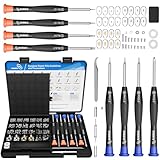
What should you look for? A set with a variety of small Phillips and Torx bits is most important. Magnetic tips are a godsend, especially for those tiny screws that love to play hide-and-seek. A good set of plastic spudgers and opening tools will help you pry open casings without leaving scratch marks. ESD (electrostatic discharge) protection is also important; a small wrist strap can save your components from a static shock. For the specific issue of stuck screws, having a small set of screw extractors, as mentioned earlier, is invaluable.
I’ve got my iFixit Pro Tech Toolkit, which set me back about $150 a few years ago, and it’s been worth every penny. It’s got everything from precision screwdrivers to anti-static bags. While you don’t need to spend that much, a $40 kit from Amazon or a reputable electronics supplier will get you most of the way there.
The key is quality over quantity. A few well-made bits are infinitely better than a huge collection of cheap ones that strip easily. Think about it: if you’re trying to repair a device worth hundreds, or even thousands, of dollars, spending an extra $20-$30 on the right tools to avoid damaging it is an incredibly sound investment. It’s like buying good tires for your car; it’s not an expense, it’s a necessity for safe operation. (See Also: How To Adjust Eyeglass Screw )
For everyday tasks, a quality magnetic screwdriver set is often enough. But when you hit a snag, like a screw that feels like it’s welded in place, you need more. That’s when those specialized tools, like the screw extractors or even a small set of jeweler’s files if you get really desperate and know what you’re doing, come into play. But always, always start with the highest quality, perfectly fitting screwdriver you have. That’s the first line of defense.
People Also Ask
Can You Spray Lubricant on Laptop Screws?
Generally, no. While lubricants can help with stuck screws in other contexts, the sensitive nature of laptop components makes most lubricants, including WD-40, unsuitable. They can leave residues that attract dust, degrade plastics, and potentially damage electronics. Only use lubricants specifically designed for electronics and apply them with extreme caution.
Will Wd-40 Damage My Laptop?
Yes, WD-40 can absolutely damage your laptop. Its petroleum-based solvents can degrade plastic components, leave a residue that attracts dust and interferes with electronics, and can even corrode sensitive parts over time. It’s not formulated for use on or near electronic devices.
What Can I Use If Wd-40 Is Not an Option for a Stuck Screw?
If a laptop screw is stuck, your best options are to use the correct size and type of screwdriver, try gently turning it the opposite direction first, or use a specialized electronics penetrating oil very sparingly. For stripped screws, a precision screw extractor kit is the recommended solution.
How Do I Loosen a Stripped Laptop Screw?
To loosen a stripped laptop screw, you’ll need a specialized screw extractor kit designed for electronics. These tools create a new grip on the damaged screw head. If that fails, more drastic measures like carefully cutting a new slot with a Dremel might be considered, but this carries significant risk of damaging the laptop.
Final Verdict
So, to finally put this to bed: can is use WD40 on laptop screws? The answer is a resounding, unequivocal NO. While the temptation to reach for that ubiquitous yellow can is strong, the risks far outweigh any minuscule potential benefit. WD-40 is a solvent and a general-purpose lubricant, not a precision tool for delicate electronics. You’re far more likely to cause damage than solve a problem.
Instead, focus on having the right tools. A precision screwdriver set, maybe a small amount of electronics-safe penetrating oil if absolutely necessary, and patience will get you much further. If you encounter a stripped screw, a specialized extractor kit is your next step. Don’t gamble with your laptop’s internals; choose the safe, correct method every time.
Your laptop’s delicate components deserve better than a blast of petroleum-based goo. Stick to tools and methods designed for the job, and you’ll save yourself a world of headaches and potential repair costs down the line.
![AXTH 25-in-1 Small Precision Screwdriver Set, Professional Magnetic Mini Repair Tool Kit for Phone, Computer, Watch, Laptop, Macbook, Ring Doorbell, Eyeglass, Electronic, [Bearing Steel] Screw Driver](https://m.media-amazon.com/images/I/518YlLmPTcL._SL160_.jpg)
