
Look, I’ve been elbow-deep in phone repairs for longer than I care to admit. I’ve seen folks try all sorts of wild things to get a stubborn screw out, and it got me thinking about this specific issue: can I cut screws for iPhone 6 LCD plate?
Honestly, the first time I encountered a stripped screw on a tiny iPhone component, my stomach did a flip. The fear of causing more damage than I fixed is real, especially when you’re dealing with something as delicate as an LCD plate on an older device.
This isn’t about fancy tools or magical solutions. It’s about practical reality and whether this particular ‘hack’ is worth the risk when you’re staring down a tiny, immovable metal nemesis.
When Tiny Screws Refuse to Budge: The Stripped Screw Dilemma
So, you’re working on an iPhone 6, you’ve popped the screen, and now you’re staring at the LCD plate. This little guy is held down by a few tiny screws, usually Phillips head. What happens when one of those heads gets chewed up, either from a worn-out screwdriver, too much torque, or just plain bad luck? You can’t get the driver to grip, and the plate won’t come off. This is where the question of modification, specifically ‘can I cut screws for iPhone 6 LCD plate?’, starts to bubble up.
The idea is simple: if you can’t grip the existing shape, make a new one. This usually means trying to cut a new slot into the stripped screw head with something like a Dremel tool or a very fine-toothed saw.
The goal is to create a new, deeper slot that a flathead screwdriver can then grab onto. I remember one time, I was replacing a battery on an older iPhone 5s – different model, but same principle – and one of the pentalobe screws on the bottom just wouldn’t budge. I tried everything: different drivers, rubber band tricks, even a bit of that superglue-and-lighter-fluid nonsense (don’t ask). In a moment of sheer frustration, I seriously considered grabbing a hacksaw blade and just… well, you know.
Luckily, cooler heads prevailed, but the temptation was there. The question you’re asking is a valid one born out of that same frustration.
The problem with cutting screws on something as small and delicate as an iPhone 6 LCD plate is the sheer lack of space and tolerance for error. These screws are minuscule. The components beneath are even more so. If your cutting tool slips, you’re not just damaging a screw; you’re risking slicing through a ribbon cable, nicking the logic board, or gouging the frame. The cost of such a mistake can easily outweigh the cost of the phone itself, or at least the cost of getting a professional repair done. It’s a high-stakes gamble where the house always wins, and the house is usually tiny, fragile electronics.
The Dremel Temptation: Why It’s Usually a Bad Idea
Let’s be blunt: using a Dremel or any rotary cutting tool to modify an iPhone 6 screw is, in 95% of cases, a terrible idea. Everyone thinks they’re a surgeon with a Dremel until they try to perform microsurgery on a phone. The sheer vibration, the heat generated, and the almost impossible precision required make this method fraught with peril. I’ve seen the aftermath of Dremel ‘fixes’ on electronics, and it’s rarely pretty. It’s like trying to perform brain surgery with a jackhammer.
The primary issue is control. These tiny screws sit in recessed holes. You need to cut a slot that’s deep enough to get a flathead driver in, but not so deep that you plunge through the screw head and damage whatever lies beneath.
The metal of these iPhone screws is also quite hard, meaning you’ll need a very fine, very sharp cutting wheel. Even then, the slightest tremor of your hand, a slight wobble in the tool, or an unexpected bounce can send that spinning disc off course. I once tried to shave down a slightly oversized screw on a custom PC build, and even with a much larger workspace and thicker components, I managed to send a shower of sparks onto a nearby capacitor. The thought of doing that inside an iPhone makes my eye twitch. (See Also: How To Fix Eyeglasses Arm Without Screw )
Heat is another enemy. As the cutting wheel grinds away at the metal, it generates significant heat. This heat can easily transfer to the surrounding plastic components or even the logic board itself, potentially causing damage that isn’t immediately visible but can lead to long-term failure.
For a component like the LCD plate, which is connected to delicate ribbon cables, excessive heat can be catastrophic. You’re not just cutting metal; you’re cooking sensitive electronics. The common advice you’ll find online, often from people who’ve never actually done it successfully on such a small scale, is to ‘take your time’ and ‘be precise’. That’s like telling someone learning to fly a plane to ‘just keep the wings level’.
It sounds simple, but the execution is a whole different ballgame.
Common Mistakes When Trying to Cut Screws
If you’re still stubbornly determined to try, here are the blunders you’re most likely to make:
- Going too deep: This is the big one. You cut through the screw head and into the underlying logic board or flex cable. Game over.
- Excessive heat: Melts plastic, damages nearby components, fries circuits.
- Tool slippage: Dremel goes flying, damaging the frame, screen, or other parts.
- Wrong tool for the job: Using a bit that’s too large or too coarse, making precision impossible.
- Not securing the device: The phone moves around while you’re trying to cut, leading to accidents.
Alternative Methods: What Actually Works
Okay, so the Dremel is mostly out. What are the real ways to deal with a stripped screw on an iPhone 6 LCD plate, or any other tiny device for that matter? You have options, and most of them are a lot safer and more effective than a power tool in a confined space. The first thing to remember is that prevention is key. Using the right size and type of screwdriver, applying consistent downward pressure, and not over-tightening screws in the first place will save you a world of pain.
When a screw head is already stripped, there are a few go-to methods. My personal favorite for slightly damaged heads is the rubber band trick. You place a wide, flat rubber band over the stripped screw head, then press your screwdriver firmly into it. The rubber band fills the gaps in the stripped head and can give your screwdriver just enough extra grip to turn the screw.
It’s surprisingly effective on heads that aren’t completely destroyed. Another method involves using a tiny drop of superglue to temporarily bond your screwdriver tip to the screw head. Let it cure fully, then slowly try to turn it. This is risky because you don’t want glue getting everywhere, and if it doesn’t work, you’ve got a stuck screwdriver too.
But it can work when the rubber band fails.
For screws that are really stubborn or have completely rounded heads, specialized screw extractor kits are the way to go. These kits come with tiny drill bits that are designed to drill a small pilot hole into the center of the stripped screw. Then, you use a reverse-threaded extractor bit that bites into that hole and unscrews the stripped screw. These are designed for precision and are far less likely to cause collateral damage than a Dremel. I invested in a decent set of micro screw extractors a few years back, and while they’re not cheap, they’ve saved me from many a repair disaster. It’s the difference between a surgical procedure and demolition.
My Own Stripped Screw Horror Story (almost!)
I was working on a customer’s iPhone 7 Plus, trying to replace a cracked screen. It was late, I was tired, and one of the tiny screws holding the bracket over the display connector just… stripped. (See Also: How Measure Metric Computer Screws )
Completely. The little Phillips head was just a smooth, frustrating circle.
My mind immediately went to the Dremel. I even had it out, with a tiny cutting wheel attached.
I hovered it over the phone, imagining the sparks flying. Then I pictured the worst-case scenario: the tool slipping, slicing through the flex cable, killing the display, and now I’ve not only failed to fix the phone but made it worse. I put the Dremel down, took a deep breath, and went for the rubber band trick. It took three tries, but it worked.
That customer never knew how close their phone was to a fiery, Dremel-induced demise.
Assessing the Risk: Is It Worth It?
Let’s cut to the chase: can I cut screws for iPhone 6 LCD plate? Technically, yes, you can. You can also try to juggle chainsaws. The question you should really be asking is, should I? My answer, based on years of fiddling with these devices, is a resounding and emphatic no, unless you have absolutely no other recourse and are prepared for a potentially disastrous outcome.
The iPhone 6 is an older model, and its components are no longer latest. However, they are still incredibly delicate. The LCD plate is secured by very small screws, and the space around them is incredibly cramped. The metal used in these screws is usually hardened, making them difficult to cut cleanly without specialized, micro-precision tools that most home repair enthusiasts don’t possess. Even with a Dremel, the vibration and heat generated are significant risks to the surrounding plastic and the sensitive electronic components, including ribbon cables that are easily damaged. A slip of the hand, a moment of lost concentration, and you could render your iPhone permanently unusable, far beyond a simple stripped screw.
Consider the alternatives. As I mentioned, there are safer, proven methods like the rubber band trick, superglue bonding, or using micro screw extractors. These tools and techniques are designed for delicate electronics and minimize the risk of collateral damage. If those fail, and you’re still hesitant about the risk of cutting, then perhaps it’s time to consider professional help. A reputable phone repair shop has the experience and the specialized tools to handle stripped screws without turning your device into a science experiment gone wrong. The cost of a professional repair, even for an older phone like the iPhone 6, is often far less than the cost of replacing damaged components due to a botched DIY attempt.
Opinion Table: DIY Screw Modification vs. Professional Repair
| Method | Effort Level | Risk Level | Potential Cost (if successful) | Likelihood of Success (for iPhone 6 LCD plate) | Verdict |
|---|---|---|---|---|---|
| Cutting Screw (Dremel/Saw) | High (requires precision) | Extremely High | Potentially Very High (if damage occurs) | Very Low | Avoid at all costs |
| Rubber Band Trick | Low | Very Low | Minimal (cost of rubber band) | Moderate (for slightly stripped heads) | Good first attempt |
| Superglue + Screwdriver | Medium | Medium (risk of gluing things you shouldn’t) | Minimal (cost of glue) | Moderate | Risky, but can work |
| Micro Screw Extractor Kit | Medium | Low | Moderate (cost of kit) | High | Recommended DIY option |
| Professional Repair | None (for you) | Very Low | Variable (depends on shop rates) | Very High | Safest bet |
Understanding the Components: Why Caution Is Key
When you’re looking at the inside of an iPhone 6, particularly around the LCD plate, you’re not just dealing with screws and metal. You’re dealing with a finely tuned ecosystem of delicate parts. Each screw, no matter how insignificant it seems, has a purpose and a specific place. The LCD plate itself is a sandwich of glass, digitizer, and backlight components, all connected by wafer-thin ribbon cables. These cables are the nervous system of the display, carrying signals for touch input and visual output. Damage one of these, and your screen becomes a useless, albeit expensive, piece of glass.
The screws holding the LCD plate in place are usually Phillips #000 or sometimes Pentalobe, depending on the specific bracket they’re securing. They are incredibly small, often less than a millimeter in diameter. The threads are fine, and they require very little torque to secure. Over-tightening is a common mistake, leading to stripped heads, but even if a screw isn’t stripped, trying to force it can damage the threads in the chassis or the screw itself. When you consider cutting a screw for an iPhone 6 LCD plate, you’re basically contemplating using a tool that generates significant force and potential for uncontrolled movement in an area where millimeters matter.
The logic board, the brain of the phone, is often located directly beneath or very near these components. Even a small nick from a slipping tool can sever a trace, a microscopic line of conductive material that carries electrical signals. The consequences of such damage can range from a non-functional component to a completely dead phone. It’s a stark reminder that these devices are assembled with extreme precision, and any attempt to modify or force components, especially with aggressive methods like cutting screws, must be approached with the utmost caution. It’s not just about getting the screw out; it’s about making sure the integrity of the entire device. (See Also: How To Adjust Eyeglass Screw )
Practical Tips and Final Thoughts Before You Try
If you’ve exhausted all other options and are still absolutely convinced that cutting a screw for your iPhone 6 LCD plate is your only path, then you need to prepare like you’re performing open-heart surgery on a hummingbird. First, get the absolute best magnification you can. A jeweler’s loupe or a microscope with good lighting is a must. You need to see exactly what you’re doing. Second, secure the phone immovably. Use a vise with padded jaws or a specialized phone repair jig. Any movement during the cutting process is an invitation to disaster.
Third, choose your tool wisely. If you’re going the rotary route, use the smallest, finest cutting wheel available, and attach it to a tool with very precise speed control. A variable speed Dremel set to its absolute lowest setting is better than a fixed-speed one. Alternatively, consider a manual approach: a jeweler’s saw blade with extremely fine teeth, held in a small frame. This gives you more direct control but requires steady hands and patience. Take extremely shallow passes, clearing away metal dust frequently. Have a can of compressed air ready to blow away debris, and be ready to stop instantly if you feel any resistance or see any sign of the tool going too deep or slipping.
Finally, and I cannot stress this enough: have a backup plan. If this is a phone you rely on, and you damage it further, what’s your next step? Do you have a replacement? Can you afford a professional repair?
The cost of a professional repair for a stripped screw issue or even minor collateral damage is almost always less than the cost of further DIY blunders. For most people, the best practical tip is to avoid cutting screws altogether. Save yourself the headache, the potential expense, and the frustration. Try the rubber band, the superglue, or invest in a micro screw extractor kit.
These are significantly less risky and far more likely to achieve the desired outcome without turning your iPhone into a paperweight.
People Also Ask:
Can You Cut iPhone Screws?
While it’s technically possible to cut iPhone screws, it’s generally a bad idea, especially for delicate internal components like the LCD plate. The risks of slipping, causing heat damage, or cutting into other parts of the phone are extremely high, often leading to more damage than the original problem.
What If an iPhone Screw Is Stripped?
If an iPhone screw is stripped, try less invasive methods first. Options include using a rubber band to fill the stripped head for better grip, a tiny drop of superglue to bond your screwdriver to the screw, or a specialized micro screw extractor kit designed for small electronics.
How Do You Remove a Stripped Tiny Screw?
For stripped tiny screws, begin with the rubber band method. If that fails, a tiny amount of superglue can work, but be careful. For more stubborn cases, a dedicated micro screw extractor set, which drills a small hole and then grips the screw, is often the most reliable and safest DIY solution.
Can You Use a Dremel on iPhone Screws?
Using a Dremel on iPhone screws is strongly discouraged. The vibration, heat, and lack of precise control make it highly likely to cause damage to surrounding components, ribbon cables, or the logic board. Safer, manual methods are always preferable.
Final Thoughts
So, to directly answer the question: can I cut screws for iPhone 6 LCD plate? The short, blunt answer is that you can, but you really, really shouldn’t. I’ve seen too many perfectly good devices ruined by someone’s overzealous attempt at a quick fix with power tools when a simpler, safer method was available.
The risk of permanent damage to your iPhone 6, whether it’s a torn ribbon cable, a damaged logic board, or a gouged chassis, far outweighs any perceived benefit of modifying a tiny screw. There are plenty of effective, albeit sometimes tedious, workarounds for stripped screws that don’t involve risking the integrity of your device.
My advice? Save yourself the stress and potential expense. Explore the alternative methods like the rubber band trick or invest in a micro screw extractor kit. If you’re not comfortable with those, or if the screw is truly impossible, a professional repair is a far more sensible option than reaching for a cutting tool.
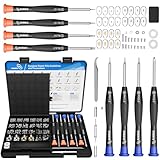
![AXTH 25-in-1 Small Precision Screwdriver Set, Professional Magnetic Mini Repair Tool Kit for Phone, Computer, Watch, Laptop, Macbook, Ring Doorbell, Eyeglass, Electronic, [Bearing Steel] Screw Driver](https://m.media-amazon.com/images/I/518YlLmPTcL._SL160_.jpg)
