
I remember the first time I tried to resize a metal watch bracelet myself. It looked simple enough on YouTube – a few tiny screws, a little push, and bam, perfect fit. Turns out, my watch bracelet had other ideas. Those screws were absolutely fused in place, like they’d been welded. I ended up scratching the bracelet, stripping a screw head, and almost throwing the whole damn thing across the room. If you’re staring at your watch right now thinking ‘I can’t take screws out of watch bracelet,’ trust me, I’ve been there, and it’s more common than you think.
Most people assume resizing is a breeze, but the reality can be a real pain in the wrist if you don’t have the right approach or tools. Those minuscule screws, often made of soft metal, can get jammed with gunk, corrosion, or just plain old manufacturing tight tolerances.
So, before you grab the nearest pliers and risk turning a $500 bracelet into a $5 one, let’s talk about what actually works.
When Tiny Screws Decide to Play Hardball
Look, I’ve spent more money than I care to admit on tools that promised the moon and delivered a slightly shiny rock. The same goes for watch resizing. You see those cheap little screwdriver sets online, often bundled with other tiny tools, and you think, ‘Great, this will do the trick.’
Nine times out of ten, it won’t. These cheap sets are often made of soft metal themselves. The tips bend or break almost immediately, especially on those stubborn watch bracelet screws. They can’t get a good grip, and before you know it, you’ve rounded off the screw head.
Then you’re not just dealing with a stuck screw; you’re dealing with a stripped screw, which is a whole new level of headache.
The real culprit is often a combination of factors. First, the screws themselves are usually tiny and made from materials that aren’t exactly bulletproof. They’re designed to be light and unobtrusive, not to withstand a decade of sweat and grime. Second, sometimes the threads get a bit of thread-locking compound applied from the factory. It’s not supposed to be permanent like on a car engine, but it’s enough to make things incredibly stiff. Then there’s corrosion. If your watch has seen water, especially salt water, or even just a lot of sweat, tiny bits of rust can form around the screw threads, effectively cementing them in place.
I had a stainless steel diver’s watch once, a decent mid-range model, where the bracelet felt like it was bolted together with superglue. I tried the standard little eyeglass repair kit screwdriver, and after about ten minutes of slipping and cussing, the slot on the screw head looked less like a slot and more like a faint impressionist painting. That’s when I learned that ‘good enough’ tools are a false economy. You need the right tool for the job, especially when dealing with delicate and potentially expensive items like a watch bracelet. The common advice to just ‘use a small screwdriver’ often fails because it doesn’t account for the forces and materials involved in a truly stuck screw.
The Right Tools Aren’t Rocket Science, but They Matter
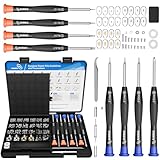
So, what should you be using if you’re having trouble? Forget the dollar-store eyeglass kits. You need proper watchmaker’s screwdrivers. These aren’t just small; they’re precision-engineered.
The tips are made of hardened steel, usually with a swivel handle that lets you apply consistent downward pressure while turning. This downward pressure is HUGE.
It keeps the tip seated in the screw slot, preventing slippage and further damage. Brands like Horotec or Bergeon are the gold standard here, but even good quality sets from reputable tool suppliers (think Brownells for gunsmithing tools, as they often have similar precision drivers) will make a world of difference. You’re looking for a set that offers a range of sizes, typically from 0.6mm up to 2mm, and importantly, the tips should be sharp and well-defined.
Another key piece of equipment, especially if you suspect corrosion or just really tight screws, is a set of screw extractors specifically designed for small electronics or jewelry. These aren’t your typical chunky metal screw extractors. They’re usually very fine, with a reverse spiral flute.
You carefully drill a tiny pilot hole into the stripped screw head (yes, sometimes you have to go there) and then use the extractor, which bites into the metal as you turn it counter-clockwise. I’ve only had to resort to this a couple of times, but when a screw is truly seized, it’s a lifesaver. I remember a vintage Seiko I was restoring; one of the bracelet screws was just refusing to budge, and I was about to give up. I found a tiny screw extractor set online for about $30, and it worked like a charm.
It felt like magic, but it was just the right tool. (See Also: How To Fix Eyeglasses Arm Without Screw )
A loupe or magnifying glass is also your best friend here. Those screws are minuscule. Trying to work on them without magnification is like trying to perform surgery with a blindfold on. You need to see exactly how the screwdriver tip is seated and if the screw is starting to turn or just slipping. Good lighting is also a must. A bright desk lamp or even a headlamp can make a huge difference.
What to Look for in a Watch Screwdriver Set
| Feature | Why it Matters | Verdict |
|---|---|---|
| Hardened Steel Tips | Prevents bending and stripping of the screw head. Key for durability. | Must Have |
| Swivel Handle | Allows for better control and consistent downward pressure. Reduces slippage. | Highly Recommended |
| Range of Sizes (0.6mm – 2.0mm) | Different watches use different screw sizes. You need options. | Must Have |
| Non-Magnetic Tips | Prevents accidentally losing tiny screws by sticking to the screwdriver. | Nice to Have |
| Ergonomic Grip | Comfortable to hold for extended periods, reducing hand fatigue. | Recommended |
The ‘heat and Beat’ Method (use with Extreme Caution!)
Okay, here’s where I go a little off the beaten path, because sometimes, the standard approach just doesn’t cut it. I’m talking about using heat. Now, before you grab a blowtorch, let’s be clear: this is for really stubborn screws, and you need to be incredibly careful. The idea is that a little bit of controlled heat can expand the metal slightly, breaking the bond of any thread-locking compound or corrosion. I’m talking about a quick, targeted application of heat, not turning your watch into a sauna. A small butane torch used very carefully, or even just the tip of a soldering iron held against the screw head for a few seconds, can sometimes do the trick.
The key is to heat the screw and the surrounding metal of the bracelet link. This differential expansion can work wonders. However, you have to be mindful of what’s around that screw. Leather straps will be ruined.
Rubber gaskets will melt. Many modern watches have glue or seals that can be damaged by excessive heat. So, this method is best reserved for all-metal bracelets where you’ve tried everything else and are willing to accept a small risk.
I had a vintage Omega bracelet once where the screws were completely seized. I tried penetrating oil, tapping, everything.
Finally, I used a small butane torch, just a brief puff of flame directly on the screw head for literally two seconds, then immediately applied my precision screwdriver. It popped loose. I was sweating bullets, but it worked.
Had I held the flame on too long, I’d have been looking at a melted end-link.
Another, less risky, variation is using a bit of penetrating oil. WD-40 is okay in a pinch, but something like Kroil or PB Blaster is much better for breaking down rust and old gunk. Apply a tiny drop directly to the screw threads (if you can get it there) and let it sit. Like, really sit. For hours, or even overnight. Then try again with your good screwdriver. Sometimes, patience is literally a tool.
The ‘common advice’ here is usually to just keep trying with the same tools, maybe apply more force. That’s how you strip screws. My contrarian view? If you’re finding yourself applying excessive force, STOP. You are doing it wrong, and you’re about to make it worse. Grab a better tool, or reconsider your approach entirely. Force is rarely the answer with delicate watch parts.
When to Avoid Force
Applying brute force to a tiny screw is a recipe for disaster. You’re likely to strip the screw head, damage the bracelet’s finish, or even crack a lug if you’re not careful. If a screw isn’t turning with moderate pressure and a good screwdriver, it means something is preventing it from moving – be it corrosion, thread locker, or debris. Forcing it will only mash the metal and make removal exponentially harder, potentially requiring specialized tools or even professional intervention.
Common Mistakes People Make (and How to Avoid Them)
I’ve seen people take a hammer to watch bracelets. A HAMMER. That’s just… wrong on so many levels. But aside from the obvious brutality, there are more subtle mistakes that cause the ‘can’t take screws out of watch bracelet’ problem to become a nightmare. The first, as I’ve hammered home (pun intended), is using the wrong tools. An eyeglass screwdriver, a knife tip, a bent paperclip – these are not tools for watch screws. They’re too soft, the wrong shape, and lack the precision needed. You end up camming out the screw head, which is the technical term for turning a perfectly good slot into a rounded mess.
Another common mistake is not cleaning the screw head and surrounding area properly. Debris, lint, or even dried oils can get into the screw slot, preventing the screwdriver from getting a proper purchase. Before you even attempt to turn a screw, take a small brush (an old toothbrush works if it’s clean) and some isopropyl alcohol to clean the area. Let it dry completely.
Then there’s the issue of trying to force it too early. You get frustrated, you apply more torque, you slip, and boom – you’ve stripped it. Patience is key. If a screw is tight, try applying a tiny bit of penetrating oil, let it soak, and then try again. (See Also: How Measure Metric Computer Screws )
Or, as I mentioned, a tiny bit of controlled heat can sometimes break the seal. Rushing the process is the fastest way to turn a minor inconvenience into a major repair job. People also forget that watch screws are often directional. Some are designed to be tighter on one side than the other, or they have specific threading.
Understanding this, or at least being aware that it exists, can save you trouble.
Finally, a big one: assuming all screws are the same. They’re not. Some have flat heads, some have slightly rounded heads, some are Phillips, some are slotted. You need to match your screwdriver exactly to the screw head. A slightly off-sized flathead screwdriver will slip. A Phillips head screwdriver in a slot will just make a mess. Always double-check your fit before applying any torque. It takes an extra 30 seconds, but it can save you hours of frustration and potential damage. I once ruined a perfectly good bracelet because I used a flathead that was a hair too narrow. It just kept slipping and chewing up the slot.
Common Watch Bracelet Screw Mistakes
- Using generic or low-quality screwdrivers.
- Not cleaning the screw head and surrounding area.
- Applying excessive force too soon.
- Using the wrong size or type of screwdriver.
- Not allowing penetrating oil or heat to work effectively.
Real-World Fixes: When Patience and Tools Aren’t Enough
So, you’ve tried the good screwdrivers, the penetrating oil, maybe even a touch of heat, and you’re still stuck. The screw head is still stubbornly refusing to budge, or worse, it’s starting to look a bit chewed up.
What now? This is where you might need to consider more advanced techniques or professional help.
For slightly stripped screw heads, a rubber band can sometimes help. Place a wide rubber band over the screw head, then press your screwdriver firmly into it. The rubber can fill in the damaged slot and provide just enough grip to turn the screw. It’s a surprisingly effective trick for minor damage.
Another trick is using a bit of valve grinding compound (a gritty paste used in automotive engine work) on your screwdriver tip. The grit can help it bite into the metal, providing more friction. Be warned, this can also scratch the screw head, so use it judiciously.
If the screw head is significantly damaged or completely rounded, you might need to resort to a screw extractor. As I mentioned earlier, these are specialized tools with a reverse spiral design.
You typically need to drill a small pilot hole into the center of the damaged screw head. This requires a very steady hand and a drill bit that’s smaller than the screw shank.
Then, you insert the extractor and turn it counter-clockwise. The extractor bites into the metal and, with luck, unscrews the damaged screw.
This is not for the faint of heart and requires precision. I’ve used these successfully on watch bracelets and on tiny electronic components, but if you’re not comfortable with fine drilling, it’s best left to a professional.
Sometimes, the problem isn’t the screw itself but the hole it’s going into. If the threading in the bracelet link is damaged or cross-threaded, it can feel like the screw is stuck. In such cases, you might need to have the threads repaired or re-tapped by a watchmaker. For truly irreparable damage to a screw or the bracelet link, the only option might be to carefully drill out the entire screw and then replace the damaged link. This is a last resort, as it permanently alters the bracelet and may not be feasible depending on the bracelet design.
For many people, especially with higher-end watches, the safest and often most cost-effective solution in the long run is to take it to a qualified watchmaker. They have specialized tools, years of experience, and know the nuances of different bracelet designs. The cost of a professional resizing or screw removal is usually far less than the cost of potentially damaging an expensive watch bracelet. (See Also: How To Adjust Eyeglass Screw )
When to Call a Professional
- When screw heads are significantly stripped or rounded.
- If you’ve tried multiple methods without success.
- For very expensive or delicate watch bracelets.
- If you’re not comfortable with precision tools or drilling.
- When the threading in the bracelet link appears damaged.
DIY vs. Professional: Making the Call
This is the million-dollar question, isn’t it? When do you keep fiddling with it yourself, and when do you just hand it over to someone who does this for a living? Honestly, for me, it comes down to a few factors. First, the value of the watch. If it’s a cheap fashion watch, you might be willing to take more risks. If it’s a several-hundred or thousand-dollar timepiece, the stakes are much higher. I’d much rather pay a watchmaker $50 to safely remove a stubborn screw than risk a $500 scratch on a bracelet.
Second, your own skill and confidence level. Are you someone who enjoys intricate work and has a steady hand? Or do you tend to get frustrated easily and then start applying more force than is wise? Be honest with yourself. If you find yourself sweating over a tiny screw and questioning your life choices, it’s probably time to stop. The tools I’ve recommended – good quality watchmaker’s screwdrivers, a loupe, good lighting – are relatively inexpensive and make a huge difference for most minor resizing jobs. If you’re just trying to remove a pin and sleeve or a standard link screw, and it’s not fighting you, then DIY is perfectly fine.
However, if you’ve encountered one of those screws that seems to be fused in place, if the screw head is starting to get damaged, or if you suspect corrosion is the culprit, you’re entering riskier territory. That’s when the cost-benefit analysis really kicks in. The cost of a professional watchmaker’s time is usually a fraction of the potential repair cost if you mess up. I’ve learned this the hard way more times than I care to admit.
My first decent automatic watch, I decided to swap the bracelet for a strap myself. I mangled one of the spring bars and put a tiny ding in the lug. It wasn’t the end of the world, but it stung.
For something like removing stubborn screws, especially on integrated bracelets or more complex designs, a professional is often the best bet.
The People Also Ask section often brings up questions like ‘How do I remove a stuck watch screw?’ or ‘Can a jeweler fix a stripped watch screw?’ The answer to both is usually ‘yes,’ but the complexity varies. A jeweler or watchmaker has specialized micro-tools, ultrasonic cleaners to dissolve gunk, and the experience to know when to apply heat, when to use extractors, and when to carefully drill. They can also often repair a stripped screw head or even replace the screw and repair the threading if necessary. For anything beyond a simple, non-resistant screw removal, consider their expertise.
DIY vs. Professional: Key Considerations
| Factor | DIY Approach | Professional Approach | Recommendation |
|---|---|---|---|
| Watch Value | Suitable for inexpensive watches; high risk for valuable ones. | Safest for all watch values, especially high-end. | Professional for valuable watches. |
| Screw Resistance | Works for loose or slightly tight screws. | Handles stuck, corroded, or stripped screws. | Professional for stubborn screws. |
| User Skill/Comfort | Requires patience, steady hands, and good tools. | Requires no special user skill; experts handle the work. | DIY if confident; Professional otherwise. |
| Risk of Damage | Higher risk of stripping screws, scratching, or damaging parts. | Minimal risk of damage when performed by a skilled technician. | Professional to avoid damage. |
Why Are Watch Bracelet Screws So Hard to Remove?
Watch bracelet screws are often tiny and made from relatively soft metals to keep weight down. They can also become seized due to accumulated dirt, sweat, corrosion, or even a small amount of factory-applied thread-locking compound. The small size also means less use and a higher chance of a screwdriver slipping and damaging the screw head if the wrong tools or technique are used.
How Can I Loosen a Stripped Watch Screw?
For a slightly stripped screw, try placing a wide rubber band over the screw head and pressing your screwdriver firmly into it; the rubber can fill the damaged slot and provide grip. If that doesn’t work, a specialized tiny screw extractor might be necessary, which often involves drilling a small pilot hole. If the screw is significantly stripped, it’s often best to consult a watchmaker who has micro-tools designed for such delicate repairs.
What Is the Best Tool to Remove Tiny Watch Screws?
The best tool is a high-quality watchmaker’s screwdriver set made from hardened steel. These screwdrivers have precision-machined tips that match the screw slot exactly and a swivel handle for better control and downward pressure. Using a magnifying loupe and making sure good lighting are also important for success, preventing slippage and damage to the screw head.
Can I Use Heat to Remove a Stuck Watch Bracelet Screw?
Yes, but with extreme caution. A very brief, targeted application of heat (like from a small butane torch or soldering iron tip) to the screw head can sometimes expand the metal and break corrosion or thread-locking compounds. However, excessive heat can damage gaskets, seals, leather, or plastics on or near the screw. This method should only be attempted on all-metal bracelets where other methods have failed, and only by someone comfortable with controlled heat application.
Verdict
So, if you’re wrestling with a watch bracelet right now and thinking ‘I can’t take screws out of watch bracelet,’ take a breath. It’s a common frustration. The good news is that it’s usually fixable. Start with the right tools – invest in a decent set of watchmaker’s screwdrivers; it’s the single biggest step you can take. Be patient, clean everything meticulously, and never, ever force it if it’s not moving with moderate effort and a perfectly seated screwdriver.
If you’ve tried the basics and you’re still stuck, or if the screw head is starting to look like a mashed potato, it’s time to consider the next step. For anything more than a simple resizing, especially on a valuable timepiece, a professional watchmaker has the specialized gear and expertise to get the job done without causing further damage.
Ultimately, the goal is to get that bracelet resized or that screw out without turning your watch into a paperweight. Sometimes that means a trip to the bench, and that’s perfectly okay. Don’t let a stubborn screw ruin your day, or your watch.
![AXTH 25-in-1 Small Precision Screwdriver Set, Professional Magnetic Mini Repair Tool Kit for Phone, Computer, Watch, Laptop, Macbook, Ring Doorbell, Eyeglass, Electronic, [Bearing Steel] Screw Driver](https://m.media-amazon.com/images/I/518YlLmPTcL._SL160_.jpg)
