
Look, we’ve all been there. You’re fumbling around, trying to fix those wobbly glasses, and you reach for that little tube of blue stuff. The same stuff you use on your car engine or that rattling bike chain. But then a little voice in your head, or maybe just your gut, pipes up: Can you use Loctite on glasses screws? It seems like a quick fix, right? But I’ve wasted enough cash on products that promise the moon and deliver dust to know that just because you can do something, doesn’t mean you should. So, let’s get real about whether Loctite is your glasses’ best friend or its worst nightmare.
I remember a time I was desperate. My favorite sunglasses had a screw that kept popping out, and I was on vacation. No time for an optician. I had a tiny tube of Loctite 242 in my bag, and I figured, ‘What’s the worst that could happen?’ Spoiler alert: it wasn’t pretty. So, before you go reaching for that familiar blue bottle, let’s break down what actually happens when you consider using Loctite on your glasses screws.
Can You Use Loctite on Glasses Screws? The Nitty-Gritty
Alright, let’s cut to the chase. The short answer to ‘can you use Loctite on glasses screws?’ is technically, yes, you can. Loctite is a brand of threadlocker, and its primary job is to prevent threaded fasteners from loosening due to vibration and shock.
It works by curing in the absence of air, forming a strong bond between the screw threads and the hole they’re screwed into. Most Loctite products are anaerobic adhesives, meaning they harden when deprived of oxygen.
For eyeglasses, the tiny screws holding the arms to the frame, or the hinges themselves, can definitely loosen up over time. Daily wear, putting them on and taking them off, even just the general jostling they endure, can all contribute to this. So, on a purely functional level, Loctite could stop those screws from backing out.
However, the real question isn’t whether it can work, but whether it should. And this is where my years of tinkering with everything from tiny watch components to hefty engine blocks come into play. The common advice you’ll find online often leans towards a simple ‘no,’ and honestly, most of the time, that’s good advice. Why?
Because the ‘strength’ of Loctite, which is its biggest selling point for larger applications, becomes its biggest downfall for delicate items like eyeglasses. The standard Loctite formulas, even the weaker ones like the blue 242 (medium strength), are designed to create a bond that requires a bit of effort to break. We’re talking about needing tools, use, and sometimes a bit of heat to get them apart again.
Imagine trying to do that on a screw that’s smaller than a grain of rice, embedded in plastic or thin metal that can easily crack or strip.
My own disastrous vacation incident with Loctite 242 on sunglasses comes to mind. I applied a minuscule drop, thinking I was being careful. The screw stopped loosening, sure. But a few weeks later, when I needed to get them adjusted slightly at an optician, they practically had to drill out the screw. The plastic frame around the screw hole got a little warped from the heat needed to break the bond, and it wasn’t a cheap fix to repair the damage. It cost me more than new sunglasses would have. That’s the gamble. You might solve a minor annoyance, but you risk creating a much bigger, more expensive problem.
There are different strengths of Loctite, of course. You have red (high strength, permanent), blue (medium strength, removable), and green (low strength, wicking).
While the blue is often cited as the ‘removable’ option, ‘removable’ in Loctite terms often means ‘requiring significant force or tools.’ The green, designed for small fasteners and wicking into tight spaces, seems like a tempting candidate because it’s weaker. However, even green Loctite can be surprisingly tenacious on tiny threads. The real issue isn’t just strength; it’s the nature of the bond.
It hardens, it’s chemical, and it’s not designed for the precise, adjustable nature of eyeglass hardware. You’re basically gluing your glasses together in a way that’s intended to be permanent or semi-permanent, and that’s usually the opposite of what you want for something you might need to adjust, repair, or replace parts on later.
When you’re dealing with screws that are often made of very soft metals or embedded in plastic, the risk of stripping them or cracking the frame is incredibly high if you ever need to remove them after Loctite has cured. Even the ‘removable’ blue Loctite can require a significant twist, and if that screw head is already a bit worn, you’re asking for trouble. I’ve seen more than one pair of glasses ruined by someone trying to force a Loctite-treated screw. It’s like using a sledgehammer to crack a nut – overkill and likely to cause collateral damage. So, while the chemistry might technically allow it, the practical application is fraught with peril for your eyewear.
What to Look for Instead of Loctite
Okay, so if Loctite is generally a bad idea, what’s the right way to keep those glasses screws from going rogue? This is where the simple, old-fashioned solutions often win out. First off, proper eyeglass repair kits are your best friend.
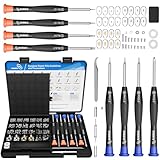
These kits usually come with a variety of tiny screws, and more importantly, the right kind of tiny screwdrivers. They’re designed for the scale of eyeglasses. Beyond that, there are specialized products that are much, much safer.
One option is a small dab of clear nail polish. I know, it sounds a bit DIY, and it is, but it’s a far less aggressive adhesive than Loctite.
You only need the tiniest amount on the threads. When it dries, it creates a bit of friction, just enough to keep the screw from vibrating loose. Importantly, nail polish is also much easier to break down if you ever need to remove the screw.
A little bit of acetone-based nail polish remover or even just warm water and a gentle nudge can usually loosen it without causing damage. (See Also: How To Fix Eyeglasses Arm Without Screw )
Another option, and one I’ve found surprisingly effective for years, is a product specifically designed for this purpose: eyeglass repair wax or silicone-based thread lockers. These are often sold in small tubes or pen-like applicators. They provide just enough grip to keep the screw in place but are designed to be non-permanent and easily removed if needed. They don’t harden into an industrial-strength bond like Loctite.
Think of it like a tiny, controlled amount of friction rather than a chemical weld. They’re formulated to be safe for plastics and metals commonly used in eyewear, and they won’t damage lens coatings either, which is a big plus. I used to keep a tiny tube of this stuff in my travel kit, and it saved my spectacles more than once. It’s a more elegant solution because it’s designed with the fragility of eyewear in mind.
When you’re shopping for these alternatives, look for phrases like ‘eyeglass repair adhesive,’ ‘thread locker for eyewear,’ or ‘screw tightener for glasses.’ Avoid anything that sounds like a permanent or industrial-grade adhesive. The key is ‘temporary’ and ‘removable.’ A lot of people, myself included, have tried the nail polish trick. It works, but it can sometimes leave a slightly visible residue if you’re not careful, and it’s not as elegant as a purpose-built product. The silicone-based options are generally clearer and more discreet. They also tend to be less brittle when dry, which is important because eyeglass frames flex.
One thing to remember with any of these solutions is moderation. You need a minuscule amount. If you can see it, you’ve likely used too much. The goal is to apply it to the threads of the screw itself, not to douse the entire screw or the surrounding area.
For the nail polish or silicone locker, a tiny drop on the tip of a toothpick, applied to the screw threads before you screw it back in, is usually sufficient. If the screw hole itself is stripped, then these tiny-thread solutions won’t help; you’ll need a more substantial repair, possibly professional.
But for screws that are just vibrating loose, these gentler methods are the way to go. I’ve found that a small tube of eyeglass repair wax can last for ages because you use so little each time.
It’s a cheap insurance policy against wobbly frames.
Here’s a quick comparison of common approaches:
| Method | Pros | Cons | Verdict |
|---|---|---|---|
| Loctite (Blue) | Strong bond, stops loosening effectively. | Difficult to remove, risk of frame damage, may warp plastic. | Avoid. Overkill and too risky for glasses. |
| Clear Nail Polish | Readily available, inexpensive, somewhat removable. | Can be messy, may leave residue, can be brittle. | Decent temporary fix if careful, but not ideal. |
| Eyeglass Repair Wax/Silicone | Specifically designed for eyewear, easy to apply, non-permanent, safe for materials. | Requires purchasing a specific product. | The best, safest option for most cases. Highly recommended. |
| Professional Repair | Guaranteed to be done correctly, expert tools and knowledge. | Cost involved, requires a visit to an optician. | Best for damaged frames or when DIY fails. |
Ultimately, when I look at my own toolkit and what I’ve learned from my mistakes, I always steer clear of anything like Loctite for my glasses. It’s just not worth the gamble. The tools and materials used in making eyeglasses are often delicate and precise. They aren’t engineered to withstand the brute force or chemical bonds that industrial threadlockers provide.
You’re better off investing a few bucks in a proper eyeglass repair kit or a specialized threadlocker designed for eyewear. This is one of those situations where the ‘easy’ fix can create major headaches down the line, literally and figuratively. My experience with that sunglasses incident taught me a hard lesson about respecting the materials and the intended use of products.
Loctite is for machines and metalwork; delicate eyewear needs a gentler touch.
Common Mistakes When Fixing Glasses Screws
Alright, let’s talk about what people mess up when they try to fix those pesky loose glasses screws. It’s not rocket science, but there are definitely pitfalls. The most common mistake, and the one I just hammered home, is using the wrong product.
People see ‘threadlocker’ and think Loctite is the go-to. They grab that familiar blue bottle and think they’re solving a problem. What they’re really doing is setting themselves up for a much bigger repair job later. They don’t realize that Loctite, even the ‘removable’ kind, is designed for mechanical assemblies that see vibration and stress, not for tiny, delicate screws in plastic or thin metal frames.
The bond it creates is often far too strong for eyeglass components, leading to stripped screw heads, cracked frames, or warped hinge areas when removal is attempted.
Another big mistake is using too much of any product. Even with nail polish or the specialized eyeglass repair waxes, people tend to get a bit heavy-handed.
You only need a tiny, tiny amount. Imagine a single speck of glitter.
That’s often more than enough to apply to the threads. Applying too much can squeeze out, get onto the lenses (leading to smudges that are hard to clean), or seep into the hinge mechanism, making it stiff. It’s about a controlled application, not a liberal dousing. (See Also: How Measure Metric Computer Screws )
I’ve seen friends try to fix a loose screw by just dripping a blob of clear nail polish onto the whole assembly, which is just asking for trouble. It’s overkill and makes future adjustments impossible.
Related to using too much product is not applying it correctly. The goal is to get the adhesive or wax onto the threads of the screw itself. This is best done by applying a tiny amount to the tip of a toothpick and then carefully touching it to the screw threads before you insert and tighten the screw. Some people try to apply it directly to the screw hole, which is less precise and more likely to result in excess product seeping where you don’t want it.
For wicking products like some silicone-based ones, you might apply a drop to the tip of the screw, but again, precision is key. You’re not trying to fill the entire cavity; you’re just trying to create a bit of grip on the moving parts.
Then there’s the issue of the screw itself. Sometimes, the reason a screw keeps coming loose isn’t just vibration; it’s because the screw head is damaged or the threads in the frame are stripped.
People often try to force a screw that’s already compromised. If you’re finding that a screw is really hard to tighten, or it just spins without engaging, a tiny bit of threadlocker isn’t going to fix a stripped hole. In fact, trying to force it will only make the stripping worse. This is a situation where you really need proper eyeglass repair tools, or you might need to take it to an optician.
Trying to jam a screw into a stripped hole with any kind of adhesive is just asking for a permanent problem.
Finally, there’s the mistake of not having the right tools to begin with. Eyeglass screws are incredibly small. Standard screwdrivers, even the small ones you might have for electronics, are often too big.
Using the wrong size screwdriver can easily strip the head of the screw, making it impossible to tighten or remove later. Investing in a small eyeglass repair kit that comes with the appropriate tiny screwdrivers (often Phillips head, but sometimes flathead or even tiny Torx) is important. These kits are inexpensive, usually under $10, and they make the entire process much smoother and less likely to cause damage.
I learned this the hard way when I tried to use a jeweler’s screwdriver that was just a hair too big and rounded off a screw head. It looked like a tiny silver mushroom cap after that. So, before you even think about an adhesive, make sure you have the right tools for the job.
When Is Loctite Actually Okay? (spoiler: Not Your Glasses)
Before we move on, let’s clarify where Loctite does shine. Because, believe me, it’s not useless. It’s just highly specialized.
Loctite is fantastic for applications where things are subject to vibration and shock and you absolutely need fasteners to stay put. Think about anything with an engine, whether it’s a car, a motorcycle, or even a lawnmower.
Engine components vibrate intensely. If a bolt on your engine block or a nut on your exhaust system comes loose, you’re looking at potentially catastrophic failure. That’s where Loctite’s medium-strength blue (242, 243) or high-strength red (262, 271) comes in. You apply it to the threads, tighten the fastener, and it cures into a rock-solid bond that the vibration can’t overcome.
The red is usually a permanent fix; you’ll likely need heat or significant force to remove it later. The blue is designed to be removable with standard tools, but it still requires more torque than a non-treated fastener.
Another great use is for things that are constantly getting bumped or jiggled. Bicycle components, for example. A loose pedal crank bolt or a bolt on your handlebar stem can be incredibly dangerous. Loctite makes sure these stay secure. I’ve used the blue Loctite on bicycle pedals that tend to unscrew themselves over time, and it’s worked like a charm. It gives you that peace of mind that important parts aren’t going to wiggle loose mid-ride. For smaller bicycle parts, like derailleur adjustments or brake lever clamps, the lower-strength green Loctite (222) is often the ticket. It provides just enough grip without being impossible to adjust later.
Outdoor power equipment is another prime candidate. Chainsaw chains, trimmer heads, bolts on a mower deck – these all experience vibrations and impacts. Using Loctite on these can prevent parts from loosening and potentially causing damage or injury. I once had a bolt holding a blade on my old push mower come loose. It didn’t fall off, but it was wobbling precariously. A quick application of blue Loctite when I replaced it has kept it secure through countless mowing sessions. It’s these kinds of applications, where metal threads are mating with metal or very solid plastic, and where the consequences of loosening are significant, that Loctite earns its keep.
The key differentiator is the environment and the materials. Metal-to-metal or metal-to-hard plastic threads that are subject to significant vibration or stress are Loctite’s happy place. Eyeglass frames, on the other hand, are often made of much softer plastics or thin metal alloys. The screws themselves are minuscule.
The hinge mechanisms are designed for smooth, precise movement, not for being chemically bonded. The forces involved in wearing glasses are minimal compared to a running engine. Trying to use Loctite on glasses is like using a industrial-grade sealant to stick a stamp on an envelope. (See Also: How To Adjust Eyeglass Screw )
It’s the wrong tool for the job, and it’s far more likely to cause damage than to provide a lasting, beneficial solution. So, keep Loctite for your tools, your bike, your car – anything that truly needs that industrial-strength hold. Leave your eyewear to the gentler, more specialized solutions.
A Real Use Case and Practical Tips
Let me paint you a picture. It’s a slightly chilly Tuesday morning, and I’m trying to get my reading glasses on to look at some tiny print on a new set of drill bits I just bought.
As I put them on, one arm feels… loose. Not falling off, but that tell-tale wobble. Annoying.
I could grab my specialized eyeglass repair kit, the one with the tiny screwdriver and a few spare screws. That’s always the first, best option. But for the sake of this article, and because I’m feeling a bit lazy and want a quick fix that won’t ruin my glasses, I remember I have a little pen-style applicator of eyeglass threadlocker. It’s a silicone-based product, clear and viscous, designed specifically for this exact problem.
Here’s how I handle it, step-by-step, using this purpose-made product. You can adapt this for clear nail polish if that’s all you have, but be even more careful with the amount.
- Assess the Situation: First, I check if the screw is actually missing or if the threads themselves are stripped. In this case, the screw is present, and it tightens, but it just loosens again too easily. No visible damage to the frame or the screw head.
- Clean the Area: I gently wipe around the hinge and screw with a soft microfiber cloth to remove any dust or oil. This is important so the threadlocker adheres properly and doesn’t just get smudged around.
- Prepare the Tool: I take the pen-style applicator and twist the end to dispense a tiny bead of the clear liquid onto the tip. And I mean a tiny bead, smaller than a pinhead. If you’re using nail polish, this is where you’d dip a toothpick into the bottle and get just a speck of polish on the tip.
- Apply to Threads: I carefully bring the applicator tip right up to the screw threads. I don’t try to get it into the hole; I aim to touch the liquid to the exposed threads of the screw. I just need enough to coat the threads lightly. I might gently turn the screw a tiny bit with my finger to help distribute it, but the goal is minimal.
- Reinsert and Tighten: I then take the correct-sized eyeglass screwdriver from my kit and carefully screw it back in. I tighten it until it feels snug but not overly tight. I don’t want to strip the screw head or crack the frame. The goal is just to create enough friction to stop it from backing out.
- Cure (if applicable): For most eyeglass threadlockers, curing is pretty fast. They don’t require air or heat like Loctite. Within a few minutes, it should be set enough. If I used nail polish, I’d give it a solid 10-15 minutes to dry completely.
The result? The arm is now perfectly stable. No wobble.
And I know that if, down the line, I need to adjust the hinge or replace the screw, I can do so with relative ease. A small screwdriver will easily break the light bond. It’s a quick, effective, and safe solution. This is the kind of practical application where specialized products truly win.
The cost of that little pen-applicator was maybe $8 a couple of years ago, and I’ve probably used it a dozen times. That’s a lot cheaper and less stressful than replacing a pair of glasses or trying to get a Loctite-bound screw out. It’s about understanding the specific needs of the item you’re repairing. Glasses are precision instruments for your eyes, not mechanical engines that need industrial-grade fixes.
Faqs About Using Loctite on Glasses
Can I Use Blue Loctite on My Glasses?
While you technically can apply blue Loctite, it is strongly advised against. Blue Loctite (medium strength) creates a bond that is often too strong for the delicate materials and tiny screws found in eyeglasses. Removing it can easily damage the frame, strip the screw head, or warp the hinge area, leading to more expensive repairs or the need to replace the glasses entirely.
Is There a Safe Alternative to Loctite for Glasses Screws?
Yes, there are much safer alternatives. Specialized eyeglass repair waxes or silicone-based thread lockers are available in small applicator pens or tubes. These products provide just enough friction to keep screws from loosening without creating a permanent or damaging bond. Clear nail polish can also be used as a temporary fix, applied in a minuscule amount to the screw threads.
How Do I Prevent My Glasses Screws From Loosening in the First Place?
Regularly check your glasses for tightness. If screws are consistently loosening, consider using a specialized eyeglass threadlocker (wax or silicone-based) on the threads. Making sure you have the correct-sized screwdriver from a proper eyeglass repair kit can also help prevent stripping screw heads, which can exacerbate loosening issues.
What Happens If Loctite Cures on My Glasses?
If Loctite cures on your glasses, especially the stronger red or even the blue formulas, removal becomes very difficult. It typically requires significant force, heat, or specialized tools. Attempting removal without proper knowledge can easily lead to cracked frames, stripped screws, damaged lenses, or a warped hinge mechanism, rendering the glasses unwearable and often unfixable without professional intervention.
Can I Use Loctite on Plastic Eyeglass Frames?
Using Loctite on plastic eyeglass frames is even more risky than on metal ones. The chemicals in Loctite can sometimes react with or degrade certain plastics over time. Furthermore, the force required to break a cured Loctite bond can easily crack or deform the softer plastic of the frame, causing irreparable damage. It’s best to avoid Loctite entirely for plastic frames.
Conclusion
So, there you have it. Can you use Loctite on glasses screws? Technically, yes. Should you? Absolutely not, unless you’re aiming for a costly repair or a whole new pair of glasses. I’ve seen too many people fall into that trap, thinking a strong bond is always a good bond. For your eyewear, it’s the opposite. You want a gentle hold, something that keeps things snug but allows for future adjustments. Invest in a cheap eyeglass repair kit or a specialized threadlocker designed for eyewear. It’s a small price to pay for peace of mind and the longevity of your spectacles.
My advice? Keep Loctite for the nuts and bolts of your life that actually need it – your car, your bike, your workshop projects. For the delicate mechanics of your glasses, opt for a solution that respects their fragility. It’s a lesson learned through experience, and one I’m happy to pass on so you don’t end up with a pair of expensive, glued-shut spectacles.
Next time you feel that tell-tale wobble, reach for the right tool, not the strongest one. Your eyes – and your wallet – will thank you.
![AXTH 25-in-1 Small Precision Screwdriver Set, Professional Magnetic Mini Repair Tool Kit for Phone, Computer, Watch, Laptop, Macbook, Ring Doorbell, Eyeglass, Electronic, [Bearing Steel] Screw Driver](https://m.media-amazon.com/images/I/518YlLmPTcL._SL160_.jpg)
