
The hinge on my favorite pair of glasses snapped right off this morning. Not a clean break, mind you, but a mangled mess of metal and plastic that made wearing them less about seeing and more about constant fidgeting. I needed a fix, and fast. My first thought, naturally, was to hit up the local hardware store. So, does Lowes sell glasses screws? It’s a question I’ve wrestled with before when a tiny screw disappears into the abyss of my carpet.
You’d think a place with aisles packed with every fastener imaginable would have tiny eyeglass screws. I mean, they’ve got bolts that could hold up a bridge. But the reality of these miniature marvels is often a bit more specialized.
Why I Never Trust the ‘little Parts’ Bin at Hardware Stores
Look, I’ve spent my fair share of time digging through those miscellaneous screw bins at hardware stores, hoping to find that one tiny Phillips head or a specific thread size that fits a delicate piece of equipment. It’s usually a fool’s errand, especially when you’re dealing with something as small and precise as eyeglass screws.
I remember one particularly frustrating afternoon trying to fix a wobbly arm on my reading glasses. I spent nearly an hour sifting through bins at a big box hardware store.
I found screws that were too long, too thick, or had the wrong head type. I ended up leaving with a handful of screws that were definitively not what I needed and a lighter wallet from the wasted time and gas.
The common advice is that you can find anything at a hardware store, but when it comes to the micro-mechanisms of eyewear, that’s often a myth.
The truth is, eyeglass screws are a breed apart. They’re tiny, often made of specific alloys to resist corrosion and allergic reactions, and their threads are incredibly fine.
The Phillips head, if it even has one, is minuscule. Most hardware store screw assortments start at a size that’s practically microscopic for a watchmaker, let alone someone trying to reattach a spectacle arm. You’re looking for something that’s often less than 2mm in diameter, and those aren’t typically stocked alongside your drywall screws and lag bolts. It’s like trying to find a specific grain of sand on a beach.
While I’ve seen some impressively varied fastener selections in places like Home Depot and Lowe’s, the dedicated eyeglass screw section is practically non-existent. You might get lucky and find a generic, slightly-too-large screw that might work in a pinch, but it’s a gamble, and often leads to stripped threads or a loose fit that will just fall out again.
I’ve learned the hard way that for these delicate repairs, it’s better to go where they actually understand the specialized nature of the parts. The sheer volume of different screw types and sizes a hardware store carries is impressive, but it’s geared towards construction, furniture, and general home repair. Eyewear is a different beast entirely. Their components are designed for extreme precision and lightness. So, before you spend your Saturday morning rummaging through bins, let’s talk about where you’re more likely to find success.
The Real Deal: Where to Find Eyeglass Screws (and What to Look For)
So, does Lowes sell glasses screws? The short answer is: probably not in the way you’re hoping. You won’t find a dedicated rack of tiny screws labeled ‘for glasses.’ However, this is where the nuance comes in. Sometimes, if you’re incredibly lucky, you might stumble upon a very generic, small screw assortment that happens to contain one or two screws that might fit. But relying on that is like playing the lottery. The odds are stacked against you.
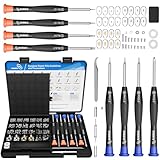
What you should be looking for are dedicated eyeglass repair kits. These kits are designed specifically for the task. They usually come with a variety of tiny screws, often with different head types (Phillips, flathead, sometimes even hex). Importantly, they also include the specialized micro-screwdrivers you’ll need, which are far too small for your standard toolkit. I bought my first one for about $15 online a few years back, and it’s paid for itself a dozen times over. It came in a little plastic case, no bigger than a credit card, with a few different sizes of screws and two tiny screwdrivers. It felt cheap, but it’s been my go-to for minor glasses emergencies.
When you’re buying a kit, or even just screws, here’s what to pay attention to: the screw diameter and the length. Eyeglass screws are typically measured in millimeters. (See Also: How To Fix Eyeglasses Arm Without Screw )
Common diameters are around 1.0mm, 1.2mm, and 1.4mm. The length can vary, but you’re usually looking for screws that are just long enough to thread through the hinge components without sticking out awkwardly.
The head style is also important; most are Phillips, but some might use a tiny flathead or even a tiny slotted screw. If you can, try to salvage the broken screw from your glasses.
Take it to an optician or a specialized eyewear store, and they can often tell you the exact size you need. They might even have a spare or two they can give you. That’s a level of service you’re unlikely to get from a hardware store employee who’s more accustomed to talking about lumber dimensions.
I once tried to use a tiny screw from a model airplane kit on my sunglasses. It looked similar enough, but the threads were slightly off. It stripped the hole in the hinge, and now that arm is permanently a little loose. Lesson learned. It’s worth the few extra bucks to get the right part the first time.
| Type | Availability at Big Box Hardware Stores (Lowe’s/Home Depot) | Availability at Specialty Eyewear Stores/Online | My Verdict |
|---|---|---|---|
| Standard Screws (Wood, Metal, Machine) | Excellent | N/A | Great for most DIY, useless for glasses. |
| Tiny Phillips/Flathead Screws (general electronics) | Fair (in electronics repair kits) | Good (in specialized kits) | Might work for some thicker frames, but not ideal. |
| Dedicated Eyeglass Screws (specific sizes/threads) | Extremely Rare / Almost Never | Excellent | The only reliable source for a proper repair. |
| Eyeglass Repair Kits (screws + tools) | Extremely Rare / Almost Never | Excellent | Best bang for your buck and convenience. |
The DIY Eyeglass Repair Process: Is It Worth the Hassle?
Alright, so you’ve got your tiny screws or your repair kit. Now what? Can you actually do this yourself, or are you just setting yourself up for more frustration? Honestly, for most minor eyeglass repairs, it’s totally doable. I’ve done it more times than I care to admit, usually in a moment of mild panic before a big meeting or a date.
The process itself is usually pretty straightforward. First, clean your workspace. Seriously, find a well-lit area and put down a clean cloth or a piece of paper. These tiny parts have a habit of vanishing into the ether. If you’ve got a broken screw, gently try to remove any remaining parts from the hinge with a pair of tweezers. If a screw is just loose, you might be able to tighten it with the right micro-screwdriver. If you’re replacing a screw, align the hinge pieces as best you can. Then, carefully insert the new screw. This is where having a steady hand comes in handy.
You’ll need to thread it gently. Don’t force it. If it feels like it’s grinding or not catching the threads, stop. You might be using the wrong size, or you might have damaged the hinge. Back it out and try again, or try a different screw from your kit. Once the screw is in place, tighten it just enough to secure the arm. Over-tightening is a common mistake. You don’t want to strip the threads or put too much pressure on the plastic or metal of the frame, which can cause it to crack or warp. The arm should move freely but without any wobble.
I messed this up once on a pair of expensive sunglasses. I was trying to get the arm super snug, and I ended up cracking the plastic around the hinge. The arm wouldn’t fold properly anymore, and it looked terrible. I had to buy a whole new pair. It was a $200 lesson in ‘just enough’ tightening. Another thing to watch out for is the type of material your glasses are made from. Metal frames might be more forgiving than acetate or plastic frames, which can be more brittle.
For more complex issues, like a bent frame or a significantly damaged hinge, a DIY repair might be beyond your skill set or the capabilities of a basic repair kit. In those cases, taking them to an optician is usually the smartest move. They have specialized tools and often the ability to repair or replace hinge components that are beyond a simple screw replacement. But for those everyday, annoying loose screws or snapped hinges, a decent repair kit and a bit of patience can save you a lot of money and hassle.
When to Just Go to the Optician
If your glasses are expensive, have complex hinges, or if the frame material itself is damaged (cracked plastic, bent metal), it might be time to swallow your pride and head to the optician. They have the expertise and tools to handle more delicate repairs, and sometimes, they can even replace entire hinge mechanisms. Trying to force a repair on a severely damaged frame could make it worse and more expensive to fix later.
Contrarian Opinion: Why That Eyeglass Repair Kit Might Be Overkill
Now, here’s where I go against the grain a bit. Everyone tells you to get a dedicated eyeglass repair kit. And yeah, they do work. But I think for a lot of people, especially those with simpler, mass-produced frames (think basic reading glasses or budget-friendly sunglasses), a kit is often overkill and can lead to more frustration than it’s worth.
My contrarian take is this: most people don’t need a fancy kit with fifty different micro-screws and a dozen tiny screwdrivers. Why? Because most common eyeglass screw failures involve either a screw that’s come loose and needs tightening, or a screw that’s fallen out entirely from a basic hinge. For these scenarios, a single, good-quality, multi-head precision screwdriver set is often enough. You can find sets online or at electronics stores for under $20 that have interchangeable bits, including those incredibly tiny Phillips and flathead sizes you need for glasses. (See Also: How Measure Metric Computer Screws )
I have a small set like that, and it’s been brilliant. It came with maybe ten different bits, including a few sizes of Phillips and flatheads that are perfect for eyeglasses. It also has tiny Torx bits and others you might need for electronics. The quality is decent, and the bits are magnetic, which is a lifesaver when you’re working with tiny screws. I’ve used it to fix my own glasses, my partner’s glasses, and even a loose screw on my laptop. Instead of a bulky kit with parts I’ll never use, I have one tool that handles a multitude of small tasks.
The argument for a kit is that it has the exact screw you need. And that’s true, if you know what you need or if the kit happens to have it. But if you lose a screw, often the easiest thing to do is take the glasses to an optician. They can often match the screw size and thread perfectly.
If you’re the type to lose screws frequently, then maybe a kit is for you. But if you’re just looking for a tool to tighten or replace the occasional lost screw from a standard frame, a good precision screwdriver set offers more versatility and less clutter.
It’s about having the right tool, not necessarily a specialized kit for one specific, infrequent problem. I’ve found that the generic electronic repair screwdriver sets are usually sufficient for 90% of common eyeglass screw issues, and they’re more useful for other household electronic repairs too.
The Unsung Heroes: Micro-Screwdrivers and Magnets
When you’re faced with a tiny screw that’s decided to take a vacation, two things become your best friends: a micro-screwdriver and a magnet. It sounds obvious, right? But the quality and type of these tools can make a world of difference between a quick fix and a prolonged wrestling match with your eyewear.
Let’s talk screwdrivers first. You need something designed for precision.
Forget your hefty toolbox Phillips heads; they’re like trying to paint a miniature portrait with a house brush. What you want are those slender, often pen-shaped screwdrivers with interchangeable bits.
Many generic electronics repair kits come with these, and they’re invaluable. The key is the size of the bits. You need ones that fit snugly into the tiny recess of the eyeglass screw head without slipping.
A loose bit will not only fail to turn the screw but will likely strip the head, turning a simple job into a nightmare. I picked up a set from an electronics store years ago for about $12, and it’s been a lifesaver.
It has about a dozen different bits, including those minuscule Phillips heads that are key for most glasses.
Then there’s the magnet. Oh, the magnet. If you’ve ever fumbled a tiny screw and watched it ping off into oblivion, you know the sheer panic that can set in. A magnetic tip on your screwdriver, or a small magnetic tray to hold your screws, is a revelation.
These tiny screws are so light that static electricity can sometimes make them cling to surfaces unexpectedly, or gravity just seems to work extra hard to pull them into dark corners. A magnetic tip grabs the screw and holds it securely, making it much easier to maneuver into the tiny screw hole on the hinge. It’s a simple physics principle, but it feels like a superpower when you’re working on something so small. (See Also: How To Adjust Eyeglass Screw )
I remember trying to fix my dad’s reading glasses once without a magnetic tip. The screw kept falling off the screwdriver. I ended up crawling around on the floor for twenty minutes, peering under furniture, convinced the screw had dematerialized. Finally, I found it stuck to the leg of my desk chair.
When I got a proper set of magnetic-tipped precision screwdrivers, those frantic floor-searching episodes became a thing of the past. It’s not just about having a tool; it’s about having the right tool that makes the job less frustrating and more successful. So, while Lowe’s might have the big stuff, these tiny heroes of the repair world are best sourced from places that cater to electronics or offer specialized toolkits.
Common Eyeglass Screw Mistakes
Stripping the Screw Head: Using the wrong size screwdriver or forcing a screw can damage the head, making it impossible to remove or tighten later. Always make sure the screwdriver bit fits perfectly.
Over-tightening: This can strip the threads in the frame or even crack plastic components. Tighten until snug, not until you feel resistance.
Using the Wrong Screw: A screw that’s too long or too thick can damage the hinge mechanism or protrude uncomfortably.
Losing Parts: Always work in a clean, well-lit area, ideally over a tray or cloth to catch dropped screws.
People Also Ask
Where Can I Get Tiny Screws for Glasses?
You can get tiny screws for glasses from several places. The best options are specialized eyeglass repair kits, which you can find online or in optometry shops. Many drugstores or department stores with a health and beauty section might also carry basic eyeglass repair kits. While less reliable, some general electronics repair kits might contain suitable screws and micro-screwdrivers.
Can I Buy Eyeglass Screws at Walmart?
Walmart typically carries basic eyeglass repair kits in their health and beauty or automotive sections. These kits usually include a small assortment of common eyeglass screws and micro-screwdrivers. You’re unlikely to find loose screws sold individually, but a kit is a good bet for a quick fix.
How Do I Know What Size Screw My Glasses Need?
The best way to know what size screw your glasses need is to remove the broken or loose screw and take it to an optician or an eyewear store. They can measure it precisely and often provide you with an exact replacement. Alternatively, if you have a caliper or micrometer, you can measure the diameter and length of the screw yourself. Eyeglass screws are typically measured in millimeters (e.g., 1.0mm, 1.2mm, 1.4mm diameter).
What Tool Do I Need to Fix Glasses?
For most eyeglass repairs, you’ll need a set of precision screwdrivers, specifically micro-Phillips and micro-flathead screwdrivers. Many eyeglass repair kits include these. A small pair of tweezers can also be helpful for handling tiny screws. For more advanced repairs, an optician has specialized tools.
Can an Optician Fix a Snapped Hinge?
Yes, an optician can often fix a snapped hinge. Depending on the type of frame and the extent of the damage, they may be able to solder metal frames, replace plastic hinge components, or even fit a new hinge altogether. For less severe hinge issues, they can certainly tighten loose screws or replace lost ones to secure the arm.
Conclusion
So, to circle back to the initial question: does Lowes sell glasses screws? The answer is a resounding ‘highly unlikely’ if you’re looking for the specific, tiny fasteners your eyewear needs. While you might find generic small screws, they’re rarely the right fit and often lead to more problems. Your best bet is to invest in a dedicated eyeglass repair kit or a good set of precision screwdrivers.
Don’t waste your Saturday digging through hardware store bins hoping for a miracle. The specialized nature of eyeglass components means you need specialized tools and parts. Whether you opt for a compact kit or a versatile precision screwdriver set, having the right gear on hand will save you time, money, and a whole lot of frustration down the road.
Next time a screw goes missing, you’ll know exactly where to turn. And hey, if you’re really in a bind and your glasses are unwearable, a quick trip to an optician is always a solid fallback.
![AXTH 25-in-1 Small Precision Screwdriver Set, Professional Magnetic Mini Repair Tool Kit for Phone, Computer, Watch, Laptop, Macbook, Ring Doorbell, Eyeglass, Electronic, [Bearing Steel] Screw Driver](https://m.media-amazon.com/images/I/518YlLmPTcL._SL160_.jpg)
