
I remember the first time I tried to size my own watch band. Felt like a genius, ready to save a fortune on jeweler fees. Turns out, I nearly annihilated a perfectly good bracelet. The culprit? Not knowing if my watch had screws or pins holding the links together. It’s a basic question, really, but one that trips up a surprising number of people, myself included, when they first start thinking about whether does my watch have screws or pins.
You might be staring at your wrist right now, wondering the same thing. Maybe you just bought a new timepiece, or maybe you’ve had one for ages and never bothered to look closely. Whatever the reason, getting this right means the difference between a simple DIY fix and a trip to the repair shop, or worse, damaging your watch.
Don’t let the small stuff get you down. Let’s break down how to tell the difference, why it matters, and what you can actually do with this knowledge.
The Tiny Bits That Hold Your Watch Together: Screws vs. Pins
Look, for years, I just assumed all watch bracelets were the same. You know, metal links, held together by… something. Then I bought this nice Seiko automatic, and the bracelet felt a bit loose. Off to the jeweler, I thought. But before I shelled out $20, I figured I’d take a peek myself. That’s when it hit me: some links had tiny little screw heads on one side, while others had… well, nothing obvious on one side and a little bump on the other. This was my first real lesson in the fundamental difference between screws and pins in watch bracelets.
Understanding this distinction is the first step to knowing if you can tackle bracelet resizing yourself. If your watch uses pins, you’re often dealing with a push-pin system, sometimes called split pins or spring bars (though spring bars are usually for straps, not metal bracelets). These are usually a small cylindrical rod, often with a tiny spring-loaded nub on one end, designed to pop out when pushed from the other side. They’re common on more affordable or older watch models. On the other hand, screws are, well, screws. They have a threaded shaft and a head with a slot (usually flathead or Phillips, though some high-end watches use proprietary heads) that you turn to remove the link.
The visual cue is usually the most telling. On a screw-link bracelet, you’ll see little screw heads on both sides of the bracelet link, or at least on one side, with the screw shaft running through. With pins, you typically see a small pin head on one side and the end of the pin protruding slightly from the other. Sometimes, the pins are the friction-fit type, meaning they just press in and stay put. The main difference in function is how they’re secured. Screws are tightened, providing a very secure connection. Pins rely on friction or a tight fit to stay in place.
Why does this matter so much? Because the tools and techniques are completely different. Trying to ‘screw’ a pin out will just mangle it. Trying to ‘push’ a screw out will do nothing but frustrate you. I learned this the hard way trying to resize a friend’s Timex. I kept pushing at these tiny metal rods, expecting them to pop out. They didn’t. Instead, I managed to bend one of the pins and scratch the lug. Eventually, I realized it was a screw-link design, and after digging out a microscopic flathead screwdriver from my toolkit, it came apart easily. Lesson learned: know your enemy, or in this case, your fastener.
How to Actually Tell: Your Guide to Spotting the Difference
Okay, so you’ve got your watch in hand, and you’re ready to figure out if you’re dealing with screws or pins. Don’t just guess. Get a decent light source – a desk lamp or even your phone’s flashlight will do – and a magnifying glass if you have one. Seriously, these things are tiny. I keep a cheap jeweller’s loupe in my toolkit specifically for this kind of fiddly work.
First, inspect the sides of the bracelet links. Look very closely at where the links connect. If you see a small, circular head with a slot in the middle – like a tiny screw head – you’ve got screws. These are usually on both sides of the link, meaning you’ll need to unscrew them from one side to push them out. Sometimes, one side might look like a screw head, and the other side will be the smooth end of the screw shaft. Pay attention to whether the slot looks like it’s meant to be turned. If it’s a clean, defined slot, it’s almost certainly a screw.
Now, if you don’t see those distinct screw heads, look for small protrusions or holes on the sides of the links. With pin-link systems, you’ll often see a little nub or the end of the pin sticking out on one side, and if you look at the opposite side of that same link, you might see a small hole where a tool can be inserted to push the pin out. These pins can be solid, or they might have a little spring-loaded mechanism inside them (though those are less common on bracelet links and more common for spring bars attaching straps). The key here is that you’re looking for something that seems designed to be pushed out, not turned out.
A common source of confusion for beginners is the spring bar. Spring bars are those little metal rods with spring-loaded ends that hold a watch bracelet or strap to the watch case lugs. While they are technically pins, they are a different beast and are usually removed by pressing inwards on the spring-loaded ends. Bracelet links, however, are typically held together by either screws or friction-fit pins.
Sometimes, a bracelet might use a combination – for instance, a primary pin secured by a tiny screw. Always examine the entire connection point. I once spent a frustrating hour trying to push out a pin that was actually a very small screw, simply because I only looked at one side of the link. Once I flipped it over and saw the minuscule flathead slot, it all made sense. (See Also: How To Fix Eyeglasses Arm Without Screw )
The visual difference is usually stark once you know what you’re looking for. Screws have that unmistakable threaded shaft and head design. Pins are simpler, often just a smooth cylinder or a rod designed to be pressed. Don’t be afraid to really get in there with good light and a magnifier. It’s the quickest and most reliable way to make the call.
When Pins Are a Pain (and When Screws Are Sweet)
Let’s be blunt: pin-link watch bracelets can be a bit of a gamble. The common push-pin system, where you insert a tool into a hole on one side to push the pin out the other, is often less secure than screws. I’ve had pins work their way loose over time, especially on watches I wore daily and that took a beating. One time, while hiking, I heard a faint tink and looked down to see my watch dangling by a single, barely-held-in pin. Freaked me out. I quickly found a piece of twig, managed to push the pin back in, and got it to a jeweler later that day for proper screws.
This experience cemented my preference for screw-link bracelets. They are, in my opinion, the superior design for metal watch bracelets that you might need to adjust. The threaded connection means that once you tighten them, they stay put. They provide a much more solid and reliable feel. When you’re adjusting the fit of a watch, especially if you’re doing it at home, the last thing you want is to be worried about a link spontaneously disassembling itself. I’ve seen people try to reinforce loose pin connections with super glue or tiny bits of paper, which is a recipe for disaster and looks terrible.
On the flip side, pins can be easier to work with if they are well-made and properly installed. Some pin systems are designed with slightly tapered pins that seat very firmly. For very frequent adjustments, a well-executed pin system might even be quicker than dealing with tiny screws. However, the prevalence of cheap, poorly-machined pins in the market means that, on average, screw links are the more reliable choice for longevity and security. When buying a new watch, if the bracelet quality is important to you, look for screw links. It’s a feature that often signifies a slightly higher tier of build quality, even on otherwise affordable pieces.
Here’s a little comparison table I’ve put together based on my own experiences:
| Feature | Screw Links | Pin Links | My Verdict |
|---|---|---|---|
| Security | Excellent | Variable (can loosen) | Screws win for long-term reliability. |
| Ease of Adjustment (DIY) | Requires small screwdrivers, can be fiddly | Often requires a pin-pushing tool, can be easier if well-designed | Screws are more predictable, pins can be faster if you’re lucky. |
| Durability | Generally very durable | Can be prone to bending or loosening | Screws are less likely to fail catastrophically. |
| Cost Association | Often found on mid-range to higher-end watches | Common on entry-level to mid-range watches | A good indicator of bracelet quality. |
| Risk of Damage (DIY) | Risk of stripping screw heads | Risk of bending pins or scratching lugs | Both have risks, but stripped screws are harder to fix. |
So, while pins might seem simpler, the long-term peace of mind that comes with screw links is, in my book, worth a lot. It’s one of those details that separates a casual accessory from a piece of well-engineered machinery on your wrist.
Tools of the Trade: What You’ll Need for the Job
Alright, so you’ve determined your watch uses screws. Great. Now what? You can’t just grab your workbench screwdriver. These are precision instruments, and their fasteners are accordingly small. My first attempt at this involved a chunky eyeglass repair kit. It was a disaster. The tiny flathead screwdriver was too soft and started to deform against the minuscule screw head on the watch link. Plus, the handle was too fat to get a good grip.
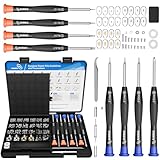
For screw-link bracelets, you absolutely need a good quality watch repair screwdriver set. These are small, sharp, and made of hardened steel. They come in a range of sizes, usually from 0.8mm up to 2.0mm or even larger for some specialized applications. You’ll want one that has a comfortable handle, ideally with a swiveling top so you can apply consistent pressure while turning. I paid about $30 for a decent set years ago, and it’s paid for itself a hundred times over. You can find cheaper ones, but be warned: a bad screwdriver can strip a screw head faster than you can say ‘oops’.
Beyond the screwdriver, you’ll need a way to hold the bracelet steady. Trying to unscrew a tiny fastener while the bracelet is sliding all over the place is a recipe for frustration and potential damage. A bracelet holder or a small vise with soft jaws can be helpful, but often, just using your other hand to gently brace the bracelet against a stable, non-marring surface works fine. A piece of soft cloth or a rubber mat can prevent scratches. Some people use a small block of wood with a slot cut in it, which is a clever DIY solution.
If you’re dealing with pins, the tool is often simpler but still requires care. You’ll need a pin-pushing tool, which looks like a tiny metal rod with a point on the end. You insert the point into the hole on the side of the link and push to eject the pin.
Alternatively, a very fine needle or a stiff paperclip can sometimes work in a pinch, but again, the risk of bending or slipping is higher. Some pin systems have a small collar on the pin; these are often friction-fit and might require a bit more force to get started. (See Also: How Measure Metric Computer Screws )
For spring bars (if you’re removing the whole bracelet), a spring bar tool is key. It has two forked ends designed to grab the spring bar ends and compress them.
Here’s a basic breakdown of what you might need:
- Watch Repair Screwdriver Set: For screw-link bracelets. Look for hardened steel and multiple sizes. Aim for something in the 0.8mm to 1.6mm range for most watches.
- Pin Pusher Tool: For pin-link bracelets. Make sure it’s fine enough for your bracelet’s pin holes.
- Magnifying Glass or Loupe: Absolutely vital for seeing what you’re doing.
- Good Lighting: A bright desk lamp or similar.
- Soft Cloth or Rubber Mat: To protect your watch and your work surface.
- Spring Bar Tool (Optional): If you plan to remove the bracelet itself.
- A Patient Attitude: This isn’t a race.
Honestly, investing in a decent watch repair kit isn’t just about saving money on resizing; it’s about having the right tool for the job. Using the wrong tool is how you turn a simple fix into an expensive mistake. I learned that lesson with a nearly stripped screw on a brand new Orient Mako bracelet. Took me ages to find a jeweler willing to try and fix it, and it cost me an extra $25 on top of the resizing fee. Never again.
Common Mistakes and How to Avoid Them
The most common mistake, hands down, is trying to force something that’s not meant to be forced. If you’re pushing on a link and nothing’s happening, stop. Don’t grab pliers. Don’t whack it with a hammer. Re-examine it. Are you sure it’s a pin system? Are you pushing from the correct side? With screws, if the screwdriver isn’t fitting properly or the screw isn’t turning, you might be using the wrong size screwdriver, or you might be trying to force a screw that’s already stripped. I’ve seen people take a Dremel to a stubborn screw, which is just… tragic.
Another big one is not properly identifying the pins or screws. Some pins are designed to be pushed from one side but have a small ‘collar’ on the other side. You need to push the pin through this collar. If you just push the pin head, you won’t get it out. Similarly, with screws, make sure you’re turning them in the right direction. Most screws loosen counter-clockwise, but it’s easy to get confused when you’re working with tiny, fiddly parts. Always try counter-clockwise first.
Stripping the screw head is a nightmare. This usually happens when the screwdriver bit doesn’t fit snugly into the slot, or when you apply too much force at an angle. You end up with a rounded-out slot that no screwdriver can grip. At that point, you’re looking at specialized tools like screw extractors or a professional jeweler who might be able to drill it out.
To avoid this, use the correct size screwdriver, make sure it’s seated firmly in the slot, and apply firm, steady pressure while turning. Don’t try to force it if it feels stuck; a little bit of penetrating oil (used very sparingly and carefully!)
might help, but often it just means the screw is jammed or cross-threaded.
For pin systems, bending the pin is a frequent error. This happens when the pin isn’t aligned properly with the hole, or when you’re trying to push a stuck pin with too much force. A bent pin is incredibly hard to remove and can make reassembly impossible. If a pin feels really stuck, try wiggling the bracelet links gently as you push, or apply a tiny amount of lubricant (like silicone oil).
Make sure you’re pushing straight and true. I once spent an hour trying to remove a pin that was clearly stuck. Turns out, the link itself was slightly bent, misaligning the hole. A gentle straightening of the link allowed the pin to slide out.
Always check the alignment of the links themselves. (See Also: How To Adjust Eyeglass Screw )
Finally, there’s the issue of reassembly. It’s not enough to just get the screws or pins out; you have to get them back in correctly. For screws, make sure you start threading them in by hand to avoid cross-threading. If it doesn’t go in smoothly, back it out and try again. For pins, make sure they are fully seated. A pin that isn’t all the way in is just waiting to pop out. You might need a small block of wood to gently tap the pin back into place. The goal is a bracelet that feels solid, with no play in the links. If it feels loose or wobbly after reassembly, something isn’t quite right.
The Faq: Quick Answers to Your Burning Questions
How Do I Know If My Watch Band Has Screws or Pins?
Look very closely at the sides of the bracelet links where they connect. If you see small heads with slots (like tiny screw heads), it has screws. If you see small protrusions or holes designed to be pushed, it has pins. A magnifying glass is your best friend here.
Can I Use a Regular Screwdriver for My Watch?
For screw-link bracelets, it’s highly recommended to use a precision watch repair screwdriver set. Regular screwdrivers are usually too large and the wrong shape, which can easily strip the tiny screw heads.
What If a Screw on My Watch Band Is Stripped?
This is a common and frustrating problem. You’ll need specialized tools like a screw extractor, or you may need to take it to a professional watchmaker who has tools to remove stripped screws, sometimes by drilling them out.
Are Pin-Link Watch Bands Less Secure Than Screw-Link Ones?
Generally, yes. Screw links provide a more secure and permanent connection. Pin links can sometimes work loose over time with wear and tear, though high-quality pin systems can be very solid.
What Tool Do I Need to Remove Watch Band Pins?
You’ll typically need a pin-pushing tool, which has a fine point to insert into the hole on the side of the link and push the pin out. For spring bars that attach the bracelet to the watch case, you’ll need a spring bar tool.
Is It Worth It to Buy a Watch Repair Kit?
If you plan on adjusting your own watch bands or doing other minor watch maintenance, absolutely. A basic kit with screwdrivers and a pin pusher will pay for itself quickly by saving you jeweler fees and giving you the confidence to handle these tasks.
When All Else Fails: The Professional Touch
Look, I’m all for DIY. I love tackling projects myself, and I’ve saved a ton of money over the years by learning how to use various tools and techniques. But sometimes, you’ve just got to admit defeat, or more importantly, recognize when continuing might cause more harm than good. If you’ve examined your watch band, consulted guides, and you’re still not sure if your watch has screws or pins, or if you’ve tried to adjust it and are now staring at a stripped screw or a bent pin, it’s time to call in the cavalry.
A good local jeweler or a dedicated watch repair shop is your best bet. They have the specialized tools, the experience, and the steady hands to deal with these tiny, often stubborn, components. They’ve seen it all – from common screw-link adjustments to intricate repairs on high-end timepieces. The cost of a professional adjustment is usually pretty reasonable, often somewhere between $10 and $30, depending on your location and the complexity. Frankly, that’s a small price to pay compared to the cost of a botched repair that could devalue your watch or make it unwearable.
Don’t be embarrassed to take it to a pro. I’ve taken watches in for simple tasks that I should have been able to do myself, just because I didn’t have the right tool or I was short on time. They don’t judge; they just do their job. It’s a skill, and like any skill, it takes practice and the right equipment. If you’re unsure, or if you’ve made a mess of it, admitting that and seeking professional help is the smartest move you can make. It’s better than staring at a broken watch and wishing you hadn’t tried to be a hero.
Verdict
So, does your watch have screws or pins? Now you’ve got a much better idea of how to figure it out, and more importantly, why it matters. It’s not rocket science, but it does require a little patience and a close look. For me, the decision between screw links and pin links on a new watch is a no-brainer: I’ll always opt for screws if the option is there. The security and reliability are just superior for everyday wear.
Remember, if you’re ever in doubt, or if you’ve encountered a stubborn fastener, don’t hesitate to seek out a professional. They can make quick work of what might be a frustrating ordeal for you, and they’ll make sure your watch band is adjusted correctly and safely. A properly fitting watch is a joy to wear, and getting there shouldn’t be a battle.
Next time you’re eyeing a new watch or need to adjust your current one, take that extra minute to check the links. It’s a small detail that makes a big difference in the long run.
![AXTH 25-in-1 Small Precision Screwdriver Set, Professional Magnetic Mini Repair Tool Kit for Phone, Computer, Watch, Laptop, Macbook, Ring Doorbell, Eyeglass, Electronic, [Bearing Steel] Screw Driver](https://m.media-amazon.com/images/I/518YlLmPTcL._SL160_.jpg)
