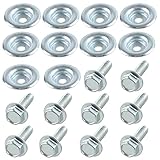
I’ve seen a lot of engine rebuilds in my time, and I’ve learned a few hard truths the expensive way. One of the perennial questions that pops up, especially when you’re staring down a project with a tight budget, is whether you can cut corners. This often leads folks to ask if the 5.7 Hemi head bolts are reusable. My gut reaction is usually a resounding no, but let’s get into why that’s a more nuanced answer than you might think, and what you really need to consider before deciding to reuse them.
The temptation is real, I get it. A full set of new head bolts can set you back a few hundred bucks, and if the old ones look okay, who’s going to know, right?
Well, your engine will know. And it won’t be happy.
The Real Deal with Reusing Head Bolts
Let’s cut to the chase: are 5.7 Hemi head bolts reusable? The short, and usually safest, answer is no. Most manufacturers and seasoned mechanics will tell you to replace them every single time you pull the heads off. Why?
Because head bolts are what’s known as Torque-To-Yield (TTY) fasteners. This means they are designed to stretch to a precise point when torqued down.
That stretch is what creates the immense clamping force needed to seal the combustion chamber and prevent coolant or oil leaks. Once they’ve stretched, they’ve reached their operational limit. Trying to reuse them is like trying to bend a paperclip back and forth a dozen times and expecting it to hold paper securely afterwards.
It might hold for a bit, but eventually, it’s going to fail.
The problem with reusing TTY bolts is that you can’t reliably tell if they’ve been over-stretched or fatigued. Even if they look perfectly straight and don’t show obvious signs of damage, they might have microscopic stresses that will lead to failure down the road. This failure can be catastrophic. A blown head gasket is one thing, but a bolt snapping off or failing to maintain its torque can lead to piston-to-valve contact, cracked heads, or worse.
I learned this the hard way on a different project years ago. I reused some seemingly fine fasteners, and sure enough, a few thousand miles later, I had coolant seeping into my cylinders like a leaky faucet. Took the whole thing apart again and swallowed the cost of new bolts. Lesson learned, painfully.
The specific requirements for the 5.7L Hemi engine are pretty demanding. These engines are known for their power and performance, which means they generate significant cylinder pressures. This puts a tremendous amount of stress on the head gasket and the bolts holding it all together. So, while the temptation to save money might be strong, the potential cost of engine damage due to fastener failure far outweighs the initial savings. It’s one of those areas where you really don’t want to gamble. The metallurgy and engineering that go into these bolts are precise for a reason.
What to Look for (or Hope to God You Don’t See)
Okay, so you’re looking at your old 5.7 Hemi head bolts. You’ve popped the heads off, and you’re wondering, “Are these still good?” Here’s what you should be scrutinizing. First off, visual inspection is your friend, but it’s not foolproof. Look for any signs of stretching. (See Also: Are All Honda Atv Bolt Patterns The Same )
This can sometimes be seen as a slight thinning of the bolt shank, especially near the threads. Run your finger along the threads – do they feel smooth and clean, or are there any nicks, galling, or signs of damage? Any damage to the threads means they’re compromised.
Also, check the head of the bolt and the area where it seats against the block or head. Are there any signs of overheating, discoloration, or deformation?
These are all red flags.
Here’s a little trick that some guys use, though I’m not a huge fan of it as a sole indicator: the thread gauge method. You can get a gauge that measures the pitch diameter of the threads. If the bolt has stretched beyond its original specifications, the pitch diameter will increase.
However, this requires you to have the exact specs for a new bolt and a very precise gauge. Honestly, for the cost of new bolts, it’s usually not worth the hassle or the potential for error. It’s a bit like trying to diagnose a serious illness with a home-testing kit when a doctor’s visit is a much safer bet. I’d rather spend the $200 or $300 on peace of mind than risk a few grand in engine repairs.
Another thing to consider is the condition of the bolt heads. Are they stripped? Are they rounded off from being overtightened or from using the wrong tool? Even if the bolt itself hasn’t failed, a damaged head can make proper torqueing impossible, which defeats the whole purpose. Think about the forces involved: we’re talking about hundreds of foot-pounds of torque, applied in a very specific sequence. If your fasteners aren’t up to the job, the whole system fails. For the 5.7 Hemi, you’re dealing with a pretty high-performance engine, and it demands components that are in perfect condition. Anything less is just asking for trouble.
Common Mistakes and Why They Cost You
The biggest mistake, hands down, is thinking that if a bolt looks okay, it is okay. As we’ve established, TTY bolts are designed to stretch. They work by being stressed into a plastic deformation region. Once they’re in that state, they’re permanently altered. Reusing them is a gamble. You might get away with it, and I’ve heard stories of people doing it successfully. But for every success story, there are likely several failures that don’t get talked about because the owner is too embarrassed or too busy fixing their blown-up engine.
Another common pitfall is not using the correct torque sequence and specifications. The 5.7 Hemi, like most modern engines, has a very specific tightening procedure for its head bolts. This isn’t just a suggestion; it’s important for making sure even clamping force across the head gasket. If you just tighten them willy-nilly, you can warp the head, crush the gasket unevenly, or create hot spots. And if you’re reusing bolts, they might not stretch uniformly, exacerbating this problem. I once saw a shop that didn’t follow the sequence properly, and they ended up with a coolant leak within a week. The customer was furious, and rightly so. It costs more in the long run to do it wrong.
Then there’s the issue of bolt contamination. When you remove heads, there’s always a risk of debris getting into the bolt holes. If you don’t meticulously clean out the bolt holes in the block and the bolt threads themselves, you can introduce contaminants. These contaminants can prevent the bolt from seating properly, lead to inaccurate torque readings, or even cause damage to the threads. And if you’re reusing bolts, you’re just increasing the chances of carrying over some grit or grime that you might not have noticed on a new set. Cleaning the threads with a tap and chase tool is vital, but even then, starting with clean, new bolts is the best insurance.
Real-World Use Cases: When might You Get Away with It?
This is where things get dicey, and honestly, I’m hesitant to even go here because it’s so easy to get wrong. In some very specific, low-stress applications, for some types of fasteners that are not Torque-To-Yield, reuse might be considered. For example, maybe some older, non-performance engines where the bolts are standard grade 8 or similar, and the clamping forces are much lower. However, the 5.7 Hemi is decidedly not in that category. It’s a performance engine designed for significant power output. The forces inside those cylinders are immense. (See Also: Are Ak Bolts Interchangeable )
I’ve heard whispers from guys doing budget rebuilds on older, less important vehicles where they’ve reused head bolts and it seemed to work. They’ll tell you, “I checked them, they looked fine, I torqued them right, and it’s been running for years!” And maybe for that specific application, under that specific driver’s care, it held. But that’s anecdotal evidence, and it’s not a benchmark for reliability. It’s like saying you can skip wearing a seatbelt because you’ve never been in an accident. It’s a risk you’re taking with potentially severe consequences.
Consider this: The manufacturer specifies new bolts for a reason. That reason is reliability and longevity under the designed operating conditions.
When you choose to reuse them, you are basically deviating from the engineering specifications. For a daily driver that needs to be dependable, or for an engine that’s going to see spirited use, the risk is just too high. I’ve seen enough engine failures to know that peace of mind is worth a lot. The few hundred dollars for new head bolts is a pittance compared to the cost of a blown engine, let alone the downtime and frustration.
So, while there might be theoretical edge cases, for a 5.7 Hemi, the honest answer remains: don’t do it. The odds are stacked against you.
A Comparison of Bolt Options
When you’re deciding on head bolts, it’s not always a simple “new or used” decision. There are different grades and types of bolts available. Here’s a quick look at what you might encounter:
| Bolt Type | Material | Typical Use | Reusability Verdict | Cost (Approx.) | Opinion |
|---|---|---|---|---|---|
| OEM Replacement | High-strength steel alloy | Stock 5.7 Hemi engines | No (if TTY) | $150 – $250 | The safest bet if you want to stick to factory specs. Reliable but not exciting. |
| ARP Performance Bolts | High-strength alloy steel (proprietary) | Performance builds, racing, high-stress applications | No (TTY) / Yes (non-TTY) | $250 – $400+ | The gold standard for serious builds. Overkill for a mild build, but fantastic quality. Expensive. |
| Generic Aftermarket | Varies widely | Budget builds, older engines (non-TTY) | Depends on type, often no | $80 – $150 | Buyer beware. Quality can be hit-or-miss. Stick to reputable brands if you go this route. |
For the 5.7 Hemi, the OEM bolts are designed as Torque-To-Yield. Even if you opt for aftermarket performance bolts like ARP, you need to make sure you’re getting the correct type for your application. Some high-performance ARP bolts are designed for multi-use, but they are not necessarily TTY. Always check the manufacturer’s recommendations. For a standard rebuild of a 5.7 Hemi, sticking with new OEM-spec bolts or a reputable aftermarket set designed for TTY applications is the way to go. Don’t cheap out here; it’s the foundation of your engine’s sealing.
Practical Tips for Head Bolt Installation
So, you’ve decided to do the right thing and buy new 5.7 Hemi head bolts. Great! Now, let’s talk about getting them in correctly. This isn’t rocket science, but attention to detail is key. First, make sure your bolt holes in the block and the heads are spotlessly clean. Use a thread chaser (not a tap, which cuts new threads) to clean out any debris or old thread locker. Then, blow them out with compressed air. You want a clean path for the bolts to thread into without resistance.
Next, lubricate your new bolts. Most new head bolts come with a lubricant or a note about what kind of lubricant to use. This is usually a light oil or a specific thread lubricant provided by the bolt manufacturer. For TTY bolts, proper lubrication is important for achieving the correct stretch and torque values.
Without it, you can get false torque readings, or the bolts might stretch unevenly. Some torque specs might also call for a dab of sealant on the bolt threads where they enter the water jacket, typically on the bolts that pass through to the water passages.
Make sure you know which bolts require this and apply it correctly – a little goes a long way, and too much can cause issues. (See Also: Are All Bolt Patterns The Same )
The most important part is following the torque sequence precisely. Your service manual will have this diagram. It’s usually a spiral pattern, working from the center outwards.
You’ll have stages: initial snugging, a lower torque value, and then the final torque-to-yield stage, which often involves turning the bolt a specific additional angle (e.g., 90 degrees, then another 90 degrees). Some systems might use two stages of angle tightening. Use a good quality torque wrench that has been calibrated recently. For the angle tightening, an angle gauge is key.
Don’t guess. Get it right. Take your time, double-check your sequence, and make sure each bolt reaches its final specification. It’s tedious, but it’s the only way to guarantee your engine seals properly and avoids the headaches we’ve discussed.
Faq Section
Are 5.7 Hemi Head Bolts Torque-to-Yield?
Yes, the factory 5.7 Hemi head bolts are designed as Torque-To-Yield (TTY) fasteners. This means they are engineered to stretch to a precise amount to achieve the necessary clamping force. Once they have undergone this stretching, they have reached their operational limit and are not considered reusable by the manufacturer.
Can I Reuse Head Bolts If They Look Perfectly Fine?
Visually, bolts might look fine, but TTY bolts can be stressed beyond their limits without showing obvious signs. Reusing them is a gamble because you cannot reliably determine if they have retained their original strength and elasticity. While some may get away with it, the risk of engine damage due to bolt failure or improper sealing is significantly increased.
What Happens If I Reuse 5.7 Hemi Head Bolts?
If you reuse 5.7 Hemi head bolts, you risk inadequate clamping force, leading to head gasket failure, coolant leaks, or oil contamination. In severe cases, a bolt could fail completely, potentially causing catastrophic engine damage, such as piston-to-valve contact or cylinder head failure.
How Do I Know If My Head Bolts Are Tty?
Manufacturers typically specify TTY bolts in their service manuals and often stamp them with a designation or include them in the part number. For the 5.7 Hemi, it’s standard practice to consider the factory head bolts as TTY and therefore single-use. If you’re unsure, always consult the official service manual for your specific engine model.
Final Verdict
So, to circle back to the question: are 5.7 Hemi head bolts reusable? The overwhelming consensus, backed by engineering principles and years of practical experience, is a firm no. The risk you take by reusing Torque-To-Yield bolts is simply not worth the potential cost of engine failure and extensive repairs. I’ve learned this lesson myself, and while budget is always a concern, some things are just a must for engine reliability.
When you’re rebuilding a performance engine like the 5.7 Hemi, you’re dealing with significant pressures and heat. Every component plays a vital role in its longevity and performance. Skimping on important fasteners like head bolts is like building a house on a shaky foundation. It might stand for a while, but eventually, it’s going to crumble.
My advice? Bite the bullet, buy new, quality head bolts from a reputable source, and follow the installation procedures to the letter. It’s the only way to make sure your rebuild lasts and you don’t end up having to do the job all over again. Trust me, the peace of mind you’ll gain is well worth the investment in new fasteners for your 5.7 Hemi.