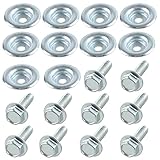
I remember staring at a box of shiny ARP bolts, feeling that familiar mix of excitement and dread. It was for a build that was already creeping over budget, and the question burned: are 7 bolt ARP 11mm rod bolts really worth the hefty price tag when the stock ones look pretty beefy?
I’d heard the gospel preached by online forums and magazine articles – ARP is the only way to go, blah blah blah. But my wallet was screaming in protest. I eventually caved, and honestly, it was one of those moments where you pay a premium and then spend the next year trying to convince yourself it was the right move.
Let’s cut to the chase. These aren’t just fancy fasteners; they’re a specific solution for specific problems, and you absolutely need to know why you’re considering them before you hand over your hard-earned cash.
Why So Many Bolt Holes? The Tech Behind 7-Bolt Design
Alright, let’s talk nuts and bolts, literally. When you see ‘7 bolt’ on an ARP rod bolt, it’s not just some arbitrary number. It refers to the design of the rod cap itself, specifically how it’s secured to the connecting rod. Most factory rods, especially in older or less performance-oriented engines, use a 4-bolt pattern where the rod cap bolts directly into the rod. Simple, effective for its intended purpose. But when you start pushing an engine harder – think boosted applications, higher RPMs, or just plain aggressive driving – those stock bolts can become a weak link.
The 7-bolt design, however, often implies a specific type of rod that has an integrated flange or shoulder on the rod cap. This design allows for additional clamping force and a more secure way to hold the cap in place under extreme stress.
ARP, being the wizards of fastener technology they are, recognized this and developed their specialized 11mm rod bolts to work with these 7-bolt configurations. The extra bolt hole isn’t just for show; it’s part of a system designed to prevent the rod cap from shifting or failing under the immense forces generated during combustion and rotation.
Think about the pistons slamming down, the crank spinning at thousands of RPMs – that’s a lot of G-forces trying to tear everything apart. A 7-bolt setup, paired with quality ARP fasteners, helps keep that important rod-to-cap interface locked down.
What makes ARP bolts different? It’s the material and the manufacturing. They typically use their proprietary 8740 chromoly steel, heat-treated to achieve a very high tensile strength and fatigue resistance. This isn’t your hardware store grade steel. They’re also rolled, not cut, for threads, which makes them stronger. The bolts are often forged and then precision-machined. The point is, they’re engineered to handle loads far beyond what a stock bolt can endure. So, when we talk about ‘are 7 bolt ARP 11mm’ rod bolts, we’re talking about a high-performance component designed for engines that are expected to operate at the ragged edge, or are being built to do so.
I learned this the hard way on a project years ago. I was building a turbo Miata, and in my infinite wisdom (read: budget-induced ignorance), I reused the stock rod bolts. The engine made decent power for a while. Then, one day at the track, it all went south with a rather spectacular mechanical blend. The autopsy revealed a spun bearing and, you guessed it, a slightly deformed rod cap. The forces were just too much. If I’d had a 7-bolt setup with ARP bolts, that might have been avoided. It’s a lesson that sticks with you, much like the smell of burnt oil.
When Stock Just Doesn’t Cut It: Identifying Your Need
So, how do you know if you actually need something as specific as ARP 11mm 7-bolt rod bolts? It all comes down to the intended use and the components already in your engine. If you’re building a mild street car that occasionally sees spirited driving, your stock rod bolts might be perfectly fine, especially if you’re not significantly increasing horsepower or torque. But if you’re venturing into forced induction (turbocharging or supercharging), nitrous oxide, or building a dedicated track or race engine, then you’re entering territory where stock components often don’t have the margin of safety required.
The ’11mm’ part is also important. This refers to the diameter of the bolt shank.
Many high-performance engines, or aftermarket performance rods, use larger diameter bolts like 11mm or even 7/16-inch, which offer greater shear strength and clamping force than smaller, standard diameter bolts (often around 3/8-inch or 10mm). If your connecting rods, whether stock or aftermarket, are designed for 11mm bolts, then using standard 10mm bolts would be a catastrophic mistake. You’d be undersizing the fastener for the application, leading to potential failure.
The question ‘are 7 bolt ARP 11mm’ rod bolts relevant often comes up when someone is either upgrading to aftermarket rods that use this spec, or has an engine known to benefit from the 7-bolt configuration when building it for high power. (See Also: A 5104015 Bolt )
Let’s consider an example. Take a common JDM engine like a Nissan SR20DET. Stock, it’s a pretty solid engine, but when you start pushing 400-500 horsepower through it, the stock rod bolts are definitely a concern. Many tuners will upgrade to aftermarket rods that often come with provisions for larger, stronger fasteners. If those rods are specified for 11mm bolts and feature a 7-bolt cap design, then ARP becomes a logical choice for that important component. It’s not just about having the strongest bolt; it’s about having the correct strong bolt for the specific rod design and expected loads.
Another angle is engine longevity under stress. Even if you’re not aiming for record-breaking horsepower, if your engine is going to be subjected to prolonged high-load situations, like towing heavy loads up steep grades in a truck or constant high-RPM cruising on a highway, the stresses on the rotating assembly are significant.
Upgrading rod bolts can provide peace of mind and prevent premature wear or failure that might otherwise occur over tens of thousands of miles. It’s an insurance policy for your engine’s core components.
So, before you dismiss them as overkill, really assess what your engine will be doing and how much power you’re aiming for. If the answer involves pushing limits, then the conversation about ‘are 7 bolt ARP 11mm’ rod bolts becomes much more serious.
Are There Different Types of Arp Rod Bolts?
Yes, ARP offers a wide range of rod bolts custom to specific engine applications and performance levels. They have different materials (like 8740 chromoly or their premium ARP2000 and 625+ alloys), thread sizes (11mm, 7/16″, etc.), and lengths. Some are direct replacements for stock bolts, while others are designed for aftermarket rods with enhanced features. It’s important to select the exact part number that matches your connecting rods and intended application.
Contrarian Corner: Do You really Need Them?
Okay, here’s where I might ruffle some feathers. Everyone and their dog will tell you that if you’re building a performance engine, you must have ARP rod bolts. And for many high-horsepower builds, they are absolutely the right choice, no question. But let’s get real for a second. Are they always necessary? I’m going to go out on a limb and say… no.
My contrarian take is this: for many builds that are only slightly above stock power levels, or even moderately boosted applications where the engine management is dialed in perfectly and the boost is kept reasonable, the obsession with ARP can sometimes be overkill. I’ve seen perfectly healthy engines running stock rod bolts that were perfectly capable of handling their power output. The key here is engine management and realistic goals. If you’re meticulously tuning your fuel and timing, keeping detonation at bay, and not trying to make supercar power on a shoestring budget engine, your stock bolts might just survive and thrive.
Think about it: manufacturers spend millions on R&D. When they design an engine for a certain power output, the components are usually engineered with a safety margin. If you’re only adding, say, 20-30% more horsepower through mild bolt-ons and a conservative tune, you might be within that safety margin. The problem is, most people don’t stop there.
They see a little success and then push it further, and that’s when the stock bolts start to complain. So, while I respect the “better safe than sorry” mentality, I also believe in understanding the actual limits and needs of your specific build. Sometimes, the money spent on fancy rod bolts could have been better allocated to better tuning, a more solid cooling system, or a stronger clutch – components that might be equally or even more important for reliability at moderate power levels.
I once had a customer who insisted on ARP rod bolts for his naturally aspirated 2.0L import build. He was aiming for about 160 horsepower, which is only about 20hp over stock.
His stock rods were in perfect condition. We installed the ARP bolts, and he felt a ‘difference’ (spoiler: he didn’t, not in any measurable way). The money spent there could have bought him a really nice exhaust system that would have given him actual performance gains and a better sound. It’s about prioritizing.
If you’re building an engine that will see consistent 600+ horsepower or frequent track abuse, then yes, ARP is a no-brainer. But for the guy just looking for a bit more punch for spirited street driving and occasional spirited blasts? Maybe not. You might be buying peace of mind you don’t actually need, at the expense of other potential upgrades. (See Also: Are All Four Bolt Rims The Same )
Installation and Common Pitfalls
Getting ARP rod bolts installed correctly is almost as important as choosing the right ones. This isn’t a job for a beginner with a rusty wrench and a prayer. The biggest mistake people make is improper torque. ARP bolts aren’t just tightened to a generic torque spec; they are almost always torqued using a stretch method. This means you’re not just tightening them to a specific pound-feet value; you’re measuring how much the bolt actually stretches. This makes sure the bolt is under the correct clamping load, which is vital for its performance and longevity.
Here’s a simplified breakdown of the process, though you absolutely must follow the manufacturer’s specific instructions for your bolts and engine:
- Cleanliness is King: Make sure the rod, cap, and threads are absolutely spotless. Any debris can throw off torque readings and cause issues.
- Lubricate Properly: ARP provides specific moly lube. Use it! Apply it to the threads and under the bolt head. This is important for accurate stretch measurements.
- Torque in Stages: You’ll tighten the bolts in a specific sequence, often in multiple stages, to seat the cap properly.
- Measure Stretch: This is the important step. Using a specialized stretch gauge (often a dial indicator setup), you measure the elongation of the bolt. ARP will provide a target stretch value (e.g., 0.005 inches). You tighten until you reach that specific stretch.
- Verify Torque (Optional but Recommended): Some builders will then gently check the final torque value to make sure it’s within an acceptable range around the stretch-indicated setting, but the stretch is the primary measurement.
A common mistake is using a standard torque wrench and just cranking them down to a value found online or in a generic manual. This is a recipe for disaster. Either you’ll under-torque them, and the cap can shift, or you’ll over-torque them and stretch the bolt beyond its elastic limit, weakening it or even breaking it. I’ve seen it happen. A friend of mine, trying to save a few bucks by skipping the stretch gauge rental, ended up with a spun bearing because his rod bolts weren’t properly tensioned. The cost of the gauge would have been far less than a new engine.
Another pitfall is mixing up bolts or not using the correct ARP hardware. They often come with specific nuts or studs and washers. Using the wrong ones can compromise the entire system. Always use the hardware provided by ARP for that specific kit.
Also, remember that once a bolt has been stretched to its intended limit, it has performed its job. While some bolts can be reused if they haven’t been stretched beyond their spec and are inspected carefully, many high-performance builders will recommend replacing them with new ones for a important rebuild, especially if you’re aiming for maximum reliability and performance.
For a standard 7 bolt ARP 11mm application, especially in a high-stress build, new is often the way to go for absolute peace of mind.
Real-World Performance: What to Expect
So, you’ve got a 7-bolt setup, you’ve gone with the ARP 11mm rod bolts, and you’ve painstakingly followed the installation procedure. What can you realistically expect in terms of performance and reliability? The most significant benefit isn’t a horsepower increase you can measure on a dyno chart. Instead, it’s about durability and consistency under stress.
When you’re dealing with higher cylinder pressures from forced induction or aggressive tuning, the connecting rod bolts are under immense tensile and bending loads. Stock bolts, while adequate for their original design intent, can begin to yield or fatigue under these conditions. This can lead to a slight deformation of the rod cap, which in turn can cause bearing clearance issues, oil pressure drops, and eventually, catastrophic failure. ARP bolts, with their superior material strength and precise manufacturing, are designed to resist these forces without yielding. This means your rod bearings stay properly seated, your oil pressure remains stable, and your engine is far less likely to suffer a rod failure.
I remember a build I did on a Subaru EJ25. This engine is notorious for needing solid internals when you start pushing power. We went with forged pistons, forged rods, and yes, ARP 11mm rod bolts. After a couple of seasons of spirited driving and a few track days, the engine felt as solid as the day it was built. No odd noises, no inconsistent oil pressure. It was the kind of reliability that lets you focus on driving, not worrying about what might happen if you put your foot down a little too hard on a long pull. That peace of mind is, in my opinion, the biggest return on investment with these kinds of components.
However, it’s important to manage expectations. You won’t suddenly gain 50 horsepower just by installing these bolts. The performance gain is indirect. It allows the rest of your engine components to survive and perform optimally under higher loads. If your engine is already running efficiently with good tuning, you might not even feel a difference until you push it past the point where a stock engine would have already failed. It’s a preventative measure that enables higher power levels to be sustained reliably. Think of it like upgrading the foundation of a house before building a second story – the foundation itself doesn’t make the house taller, but it allows the additional structure to stand safely.
For engines like the popular LS series V8s, which are known for their strength but can also be pushed to extreme power levels (800+ hp is common), ARP rod bolts are practically a mandatory upgrade for anyone serious about performance. They transform a strong stock-ish engine into a reliable powerhouse. So, when you ask ‘are 7 bolt ARP 11mm’ rod bolts worth it, the answer is almost always a resounding ‘yes’ for anyone building an engine that deviates significantly from stock specifications, especially in high-performance applications.
Arp vs. Other Brands and Cost Considerations
When you’re in the market for performance engine internals, especially something as important as rod bolts, ARP is often the first name that comes to mind. And for good reason – they have a long-standing reputation for quality and reliability. However, they aren’t the only player in town. Brands like Manley, Eagle, and others also produce high-performance rod bolts, often designed to be compatible with their own connecting rod offerings or as upgrades for specific OEM applications. When comparing, you’ll find variations in materials, tensile strength ratings, and of course, price. ARP tends to sit at the higher end of the price spectrum, but their widespread adoption and proven track record often justify the cost for many builders. (See Also: Are All Crew Served Weapons Open Bolt )
Let’s look at a general comparison, keeping in mind that exact pricing fluctuates wildly based on the specific application and retailer. For a typical 4-cylinder or smaller 6-cylinder engine, a set of ARP 11mm rod bolts (assuming they are available for your specific 7-bolt application) might range from $100 to $200. For larger V8 engines, or if you’re looking at their higher-tier ARP2000 or 625+ materials, the price can easily climb to $200-$400 or more for a set.
| Brand | Typical Material | Price Range (Estimate for 6-Cyl) | Opinion/Verdict |
|---|---|---|---|
| ARP | 8740 Chromoly, ARP2000, 625+ | $120 – $350+ | The industry standard. Proven reliability, excellent strength, but premium pricing. Usually the go-to for most serious builds. |
| Manley | High-strength steel alloys | $100 – $250 | Good quality and strength, often paired with their rods. A solid alternative if ARP isn’t readily available or if bundled with other components. |
| Eagle | Forged steel alloys | $90 – $200 | Generally very good value, especially when purchased with their connecting rods. A reliable option for many street/strip applications. |
The cost of ‘are 7 bolt ARP 11mm’ rod bolts is a significant consideration. If you’re on a tight budget, you might be tempted to look for cheaper alternatives. However, this is one area where cutting corners can have severe consequences.
A cheap, unbranded set of rod bolts is a gamble you don’t want to take with your engine’s internals. The potential cost of an engine failure far outweighs the savings on a set of bolts.
So, while ARP might be more expensive, their reputation for consistency and superior materials usually makes them a worthwhile investment for important applications. If you can’t afford ARP, make sure the alternative you choose has a solid reputation and clear material specifications, and consider if your build truly demands the upgrade.
Can I Reuse Stock Rod Bolts After Installing Arp 11mm Bolts?
No, you absolutely cannot reuse stock rod bolts. If you are upgrading from stock bolts to ARP bolts, the stock ones are removed and discarded. The ARP bolts are the new, upgraded fasteners being installed. The question of reusing ARP bolts themselves is a different matter and depends on whether they were stretched beyond their specified limits during installation, but stock bolts are never to be reused in a performance build.
Do I Need a Special Tool to Install Arp 11mm Rod Bolts?
Yes, you will almost certainly need specialized tools. The most important tool is a torque wrench capable of accurate measurements, and more importantly, a stretch gauge (often a dial indicator setup) to measure the elongation of the bolt, as ARP bolts are typically installed using a stretch-to-yield method rather than just a fixed torque value. You’ll also need appropriate sockets and potentially a way to turn the crankshaft smoothly during the installation process.
What’s the Difference Between 7/16″ and 11mm Rod Bolts?
Both are larger diameter bolts commonly used in performance applications, offering greater strength than standard 3/8″ (approx. 10mm) bolts. 11mm is a metric measurement, while 7/16″ is an imperial measurement. While they are close in size (7/16″ is approximately 11.11mm), they are not interchangeable. Connecting rods are machined to accept one specific size, and using the wrong size will lead to improper fitment and likely catastrophic failure. Always use the size specified for your connecting rods.
How Do I Know If My Engine Has a 7-Bolt Rod Cap Design?
Identifying a 7-bolt rod cap design usually involves inspecting the connecting rod itself. These designs often have an integrated flange or shoulder on the rod cap that the bolts pass through or engage with, in addition to the primary bolt holes. It’s also a characteristic of specific aftermarket connecting rods or certain OEM high-performance engine designs. If you’re unsure, consult the service manual for your specific engine or the specifications provided by the manufacturer of your connecting rods.
Verdict
So, after all this, are 7 bolt ARP 11mm rod bolts worth the headache and the expense? For engines being built for serious performance – think forced induction, high RPM, or track abuse – the answer is a definitive yes. They are the insurance policy that allows your engine to withstand the pressures you’re throwing at it.
However, for mild builds or engines that will only see occasional spirited driving, you might be able to get away with stockers or a less expensive upgrade if you’re meticulous with tuning and realistic about your power goals. Don’t just buy them because the internet told you to; understand why you need them.
Ultimately, when it comes to important engine components, investing in quality from a reputable manufacturer like ARP for your 7 bolt ARP 11mm rod bolt needs is rarely a decision you’ll regret. It’s about building an engine that you can trust when it matters most.