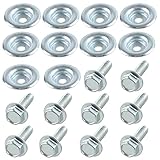
You’re standing in the auto parts store, alternator in hand, ready to slap it on your aging pickup. Then you hit a snag: the mounting bolts. You grab a handful from the bin, hoping for the best. Sound familiar? Too many of us have faced this moment, staring down a pile of metal, wondering if there’s a simple answer to whether are alternator mounting bolts universal. The short, frustrating answer? Nope, not even close.
I’ve been there, bleeding knuckles and cursing the automotive gods over a simple bolt. It’s a tiny piece of hardware, but get it wrong, and your alternator ends up looking like a poorly attached accessory rather than a vital engine component.
Why You Can’t Just Grab Any Bolt
Look, I get it. We want things to be simple. We want a universal bolt that fits everything from a lawnmower to a semi-truck. But the reality of automotive engineering is a lot more nuanced, especially when it comes to something as important as securing your alternator. These aren’t just bolts holding on a plastic trim piece; they’re holding a heavy, vibrating component in place, under constant stress from engine movement and the electrical load it carries. Getting it wrong is a fast track to a dead battery and a tow truck.
The primary reasons why alternator mounting bolts aren’t universal boil down to a few key factors: thread pitch and diameter, length, and material strength. Think about it: different engine blocks, different alternator housings, different bracket designs. Each of these variations necessitates specific bolt dimensions. A bolt that’s too thin might strip out the threads in the bracket or the alternator housing. One that’s too short won’t engage enough threads to be secure, leading to loosening and potential failure. Too long, and it might bottom out, not clamping the alternator properly, or worse, interfere with other engine components.
I remember one particularly hot afternoon wrestling with a Jeep Cherokee’s alternator. I’d bought a ‘universal’ bolt kit, feeling pretty smug about my foresight. Turns out, ‘universal’ in this context meant ‘will fit some applications, but not yours.’ The bolts were the right diameter, but the thread pitch was slightly off. I spent a good hour trying to force them, convinced I was just not putting enough muscle into it. Eventually, I realized I was about to strip the threads on the alternator housing itself. That ‘universal’ kit cost me about $20 and about three hours of frustration I’ll never get back, plus a trip to a dedicated fastener shop.
The common advice you’ll find online often oversimplifies this. It’s easy to find forums where someone says, “Just use a grade 8 bolt, it’ll be fine.” While a higher grade bolt is generally better for strength, it doesn’t address the fundamental dimensional differences. A grade 8 bolt with the wrong thread count per inch (TPI) is still the wrong bolt. It’s like saying any screwdriver works on any screw – technically, you might get lucky, but you’re far more likely to damage both.
The alternator housing itself is often made of aluminum, which is relatively soft. Forcing a bolt with the wrong thread pitch into aluminum is a surefire way to strip those threads, turning a simple bolt replacement into a much bigger, more expensive repair involving thread inserts or even replacing the alternator housing. The brackets, too, can be cast iron, steel, or even aluminum, each requiring a specific engagement to hold firm.
What to Look for: The Nitty-Gritty Details
So, if ‘universal’ is out the window, what do you actually need to look for? It’s all about matching the specifications of the original bolt or finding a direct replacement. The three key specs are thread diameter, thread pitch (or TPI), and length. You also need to consider the bolt grade, which tells you about its strength.
Thread Diameter: This is the overall thickness of the bolt shank. Common automotive bolts come in various diameters like M8, M10, M12, etc., or imperial sizes like 5/16”, 3/8”, 7/16”. You can measure the diameter of a bolt you’ve removed (or the hole it came out of) with a caliper or even a ruler, but a thread gauge is more precise for determining diameter and pitch simultaneously.
Thread Pitch (TPI): This is arguably the most important and often overlooked factor. Thread pitch refers to the distance between the threads. On metric bolts, it’s measured in millimeters (e.g., M10x1.5 means a 10mm diameter bolt with 1.5mm between threads). On imperial bolts, it’s measured in Threads Per Inch (TPI) (e.g., 3/8”-16 means a 3/8” diameter bolt with 16 threads per inch). A bolt with the wrong TPI simply won’t thread properly into the mating part. Even a slight difference can cause it to bind, strip threads, or not seat securely. Always compare the pitch of a new bolt to the old one or to the specifications for your vehicle. (See Also: Are All Honda Atv Bolt Patterns The Same )
Length: This sounds obvious, but it’s easy to get wrong. The bolt needs to be long enough to engage a sufficient number of threads in the receiving part (alternator housing or bracket) to create a strong connection, but not so long that it bottoms out or interferes with other components. Measure the bolt you removed, from the underside of the bolt head to the tip. Add a little extra if you’re unsure, but not too much. A bolt that’s too long can be just as problematic as one that’s too short.
Bolt Grade: This indicates the bolt’s tensile strength. For automotive applications, you want at least a Grade 5 (SAE) or 8.8 (Metric) bolt. Ideally, you’d use Grade 8 (SAE) or 10.9 (Metric) for important components like alternator mounts, especially if you’re replacing an original bolt that was of a higher grade. Higher grades mean the bolt can withstand more stress before deforming or breaking. Often, original alternator bolts are quite solid for a reason.
Here’s a quick reference table. Remember, these are general examples, and your specific vehicle will vary:
| Vehicle Type/Application | Common Bolt Diameter | Common Thread Pitch (Metric/SAE) | Typical Grade (SAE/Metric) | Opinion/Verdict |
|---|---|---|---|---|
| Older Domestic Cars (e.g., Ford, Chevy V8s) | 3/8″ or 7/16″ | 16-20 TPI | Grade 5 or 8 | Often solid, look for sturdy original specs. |
| Import Cars (e.g., Toyota, Honda, Nissan) | M8 or M10 | 1.25 or 1.5mm | 8.8 or 10.9 | Metric precision is key; wrong pitch is a killer. |
| European Cars (e.g., VW, BMW, Mercedes) | M8, M10, or M12 | 1.25mm (most common) | 10.9 or higher | Often high-strength, precise metric threads. |
| Heavy Duty/Trucks | 7/16″ to 9/16″ | 14-20 TPI | Grade 8 or higher | Needs serious clamping force; don’t skimp on grade. |
The key takeaway is that you need to match the original hardware as closely as possible. If you don’t have the old bolts, your vehicle’s repair manual or a good online parts catalog for your specific make and model is your best friend. Many online retailers will list the specific bolts needed for your year, make, and model.
Common Mistakes and Why They Bite You
Mistakes with alternator mounting bolts are surprisingly common, mostly because people underestimate their importance or assume a ‘standard’ bolt will do. I’ve seen a few classic blunders in my time, and they all lead to the same headache: the alternator failing prematurely, or worse, coming loose while the engine is running.
The most frequent mistake is using bolts that are close enough in thread pitch. You might be able to get them started, and even tighten them down a bit. But over time, the slight mismatch in thread geometry causes excessive wear. The threads inside the alternator housing or bracket get chewed up, leading to a loose connection. You might not notice it at first. The car drives fine. Then, one day, you hear a grinding noise, or your battery light flickers on, and you find the alternator has shifted, its belt slapping against something it shouldn’t. That’s the cost of a slightly wrong thread pitch.
Another common blunder is using bolts that are too short. The alternator mount might look secure, but if the bolt isn’t engaging enough threads in the housing or bracket, it simply doesn’t have the clamping force to withstand vibration. I’ve seen bolts sheer off because they were only engaged a few threads deep. It’s a catastrophic failure waiting to happen. The engine vibration is relentless, and a weak connection will eventually break.
Then there’s the issue of bolt grade. People sometimes grab zinc-plated hardware store bolts that look fine but are made of much softer steel. Your alternator experiences significant vibration and heat. A bolt that’s too soft will stretch, loosen, and eventually fail. It’s not just about holding it in place; it’s about holding it there reliably for tens of thousands of miles.
I once worked on a friend’s car where the alternator was replaced by a less-than-reputable shop. A few months later, the serpentine belt kept slipping off. (See Also: Are Ak Bolts Interchangeable )
We checked the tensioner, the pulleys, everything. Finally, we noticed the alternator was sitting at a weird angle. Two of the three mounting bolts were loose, and one was actually missing.
Turns out, the shop had used some generic hardware store bolts that were slightly the wrong length and, importantly, lower grade. They’d vibrated loose and fallen out. The cost of their shoddy work was a new alternator belt, a tow, and the labor to properly reinstall the alternator with the correct fasteners.
That’s the sort of thing that makes you want to do it yourself, even if it takes longer.
Finally, people often overlook the importance of the washers. Some alternator mounting systems use specific washers, like crush washers or shoulder bolts that incorporate a washer function. Using the wrong type of washer, or no washer at all, can lead to uneven pressure distribution, damaging the alternator housing or bracket, or allowing the bolt to loosen under vibration. Always pay attention to what was there originally.
Real-World Use: When It Matters Most
The stakes are higher than most people realize when it comes to alternator mounting bolts. Your alternator is responsible for charging your car’s battery and powering all the electrical systems while the engine is running. If it fails, you’re not going anywhere. And a loose alternator can cause a cascade of problems beyond just a dead battery.
Imagine driving down the highway, and suddenly your power steering goes out, your headlights dim, and your dashboard lights up like a Christmas tree. That could be the result of an alternator that’s shifted due to loose or incorrect mounting bolts. The serpentine belt, which drives the alternator, could also slip off a pulley or break if the alternator isn’t aligned properly. This means no charging, no power steering, no AC, and potentially overheating if the water pump is also driven by that belt.
In my experience, older vehicles, especially those with V-belts and separate mounting brackets, can be more forgiving with slightly non-standard bolts because the systems are often more solid and less compact. However, modern vehicles with serpentine belts and integrated tensioners demand precision. The tight tolerances in modern engine bays mean there’s less room for error. A bolt that’s even a millimeter too long could rub against something vital, like a coolant hose or a power steering line, leading to a leak or a failure.
I learned this lesson the hard way on a 1990s Toyota pickup. The alternator bracket had a bit of rust, and I decided to clean it up and use a slightly longer bolt to get a better bite into the remaining metal.
Big mistake. A few weeks later, I noticed a slight dripping. Turned out the bolt was just long enough to be piercing the edge of a coolant passage in the engine block. It wasn’t a fast leak, but it was constant and would have eventually caused major overheating. (See Also: Are All Bolt Patterns The Same )
The fix was to extract the bolt, carefully re-tap the hole, and use a bolt of the correct length. It taught me that ‘just a little bit longer’ can be disastrous.
When you’re working on a vehicle, especially one you rely on daily, using the correct, OEM-spec (Original Equipment Manufacturer) or equivalent fasteners is always the best bet. If your original bolts are corroded or damaged, don’t just grab any old bolt from the junk drawer. Go to a reputable auto parts store that can look up the exact specifications for your vehicle, or consult your car’s service manual. Some manufacturers even sell specific alternator bolt kits for popular models, which is the safest route if you can find one.
A Few Practical Tips for Success
Alright, so we’ve established that universal alternator mounting bolts are a myth. Now, how do you actually get this right without wasting time and money? Here are a few practical tips that have saved my bacon more than once:
- Keep the Old Bolts: If you’re removing an alternator, clean up the old bolts thoroughly and save them. They are your best reference for diameter, pitch, and length. Even if they look a bit rough, you can take them to a fastener store for precise matching.
- Consult Your Service Manual: This is the holy grail of vehicle repair information. Your car’s service manual will list the exact specifications for almost every fastener, including thread size and grade. If you don’t have one, they are usually available for purchase online or at auto parts stores.
- Use a Thread Gauge/Calipers: If you have a set of thread gauges or a digital caliper, use them. You can measure the diameter and count the threads per inch (or measure the pitch in mm) to accurately identify the correct fastener.
- Buy a Vehicle-Specific Kit: For many popular vehicles, manufacturers or aftermarket companies sell specific alternator or power steering pump bolt kits. These kits contain the exact bolts needed and are often the easiest and most reliable solution. They usually cost a bit more than generic bolts but save you the guesswork and potential for error.
- When in Doubt, Buy New OEM: If you’ve lost the old bolts, can’t find specs, or the original bolts are damaged beyond repair, buying new ones directly from a dealership or a reputable OEM parts supplier is the safest bet. It might cost more upfront, but it prevents costly mistakes down the line.
- Torque is Your Friend (and Enemy): Once you have the correct bolts, make sure you tighten them to the manufacturer’s specified torque. Overtightening can strip threads or crack housings. Undertightening means they’ll likely loosen. Your service manual will have these specs.
- Clean the Mating Surfaces: Before installing the alternator, make sure the mounting surfaces on the alternator housing and the engine bracket are clean and free of debris, rust, or old gasket material. This makes sure a flush fit and proper alignment.
I remember doing a quick alternator swap on my buddy’s old Honda Civic. We were in a hurry, and I grabbed some bolts from my ‘assorted metric bolts’ bin. They threaded in okay, but the alternator sat a little crooked. We tightened them down, fired it up, and it sounded fine. About a week later, he called me, panicked. The belt had come off. When we looked, one of the bolts had backed out just enough to let the alternator shift. We ended up finding the exact OEM bolts at a local junkyard for $5. Lesson learned: precision matters, and sometimes the cheapest option isn’t the best value.
Frequently Asked Questions About Alternator Bolts
Are Alternator Mounting Bolts Interchangeable Between Different Car Makes and Models?
Generally, no. While some very specific applications might share bolts, it’s highly unlikely that bolts from one make or model will be interchangeable with another. Different manufacturers use different thread sizes, pitches, and lengths based on their specific engineering and design choices for each vehicle.
How Do I Find the Correct Alternator Mounting Bolt Size for My Car?
The best ways to find the correct size are to consult your vehicle’s service manual, check a reliable online parts catalog for your specific year, make, and model, or carefully measure and identify the thread pitch and diameter of the original bolts if you have them.
Can I Use a Stronger Bolt Than the Original If I Can’t Find the Exact One?
Yes, you can often use a bolt of a higher grade (stronger material) if you can find one with the exact same thread diameter, pitch, and length. However, using a bolt with different dimensions, even if it’s stronger, is not recommended and can cause damage or failure.
What Happens If I Use the Wrong Alternator Mounting Bolts?
Using the wrong bolts can lead to several problems, including stripped threads in the alternator housing or mounting bracket, the alternator coming loose and shifting (causing belt issues or damage), premature bolt failure, or the alternator not being secured properly, leading to its failure.
Final Thoughts
So, to finally put this to bed: are alternator mounting bolts universal? Absolutely not. It’s a hard truth, but one that saves you a lot of grief and money in the long run. Don’t be tempted by the ‘universal’ kits or just grabbing what looks close. The slight difference in thread pitch or length can cause significant problems down the road, turning a simple repair into a much bigger headache.
Take the time to find the exact bolts for your vehicle. It’s worth it. Your car’s electrical system depends on that alternator being held rock-solid in place, and the right fasteners are the foundation of that stability. Don’t let a cheap bolt or a moment of impatience cost you more than the correct part ever would.
Next time you’re faced with replacing an alternator, remember this: measure twice, buy once, and get the right hardware. It’s the only way to truly get the job done right.