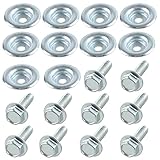
I swear, the first time my microwave decided to throw a fit and start rattling like a maraca full of loose change, I thought, ‘Easy fix, right? Just tighten a bolt or two.’ Little did I know I was about to embark on a quest that felt more like a treasure hunt for a unicorn. I ended up with a drawer full of fasteners that looked vaguely similar but were as useful as a chocolate teapot for my specific problem. So, if you’re staring at your microwave wondering, are all microwave bolts the same? Let me save you some grief right now: nope, not even close.
This isn’t a simple ‘yes’ or ‘no’ situation. It’s more like a ‘depends on what part of the microwave you’re looking at and what the original manufacturer had in mind’ kind of deal. I’ve learned this the hard way, and frankly, I’ve wasted enough money on random bits of metal to want to steer you clear of the same fate.
The Myth of the Universal Microwave Bolt
Let’s cut to the chase: the idea that all microwave bolts are interchangeable is a pure fantasy. I learned this the hard way when a small vibration started making my microwave sound like a jet engine preparing for takeoff. My first thought, like many, was to just grab a handful of screws from my assorted junk drawer and tighten whatever looked loose.
Big mistake. Huge. I ended up with a few screws that looked right, but one was too short, another had the wrong thread pitch, and the third stripped out the receiving nut because it was slightly too big.
After about an hour of fiddling and frustration, the rattling was still there, and I had a few new dents in my microwave’s casing from my clumsy attempts.
Microwaves are surprisingly complex appliances, and different parts require different types of fasteners for a reason. Think about it: the bolts holding the internal magnetron in place are going to be different from the ones securing the outer casing, and those are different again from the screws holding the turntable motor.
The manufacturers use specific bolts not just for holding things together, but also for electrical grounding, vibration dampening, and making sure structural integrity under heat and microwave radiation. Using the wrong bolt, even if it fits initially, can lead to a whole host of problems, from buzzing noises and loose panels to more serious issues like improper grounding or even damage to sensitive components. It’s not just about preventing things from falling apart; it’s about the whole system working as intended. The common advice to just ‘find a similar-looking screw’ is often wrong and can lead to more headaches than it solves.
For instance, I once tried to replace a tiny screw on the door hinge of a smaller countertop model. It looked like any other small machine screw.
I found one that fit the threads, but it was slightly longer. I managed to get it in, but the door didn’t close quite right anymore, leaving a tiny gap. Turns out, that specific screw had a particular head profile designed to sit flush and not interfere with the door seal.
My ‘close enough’ fix meant the microwave wouldn’t always register that the door was shut, leading to it refusing to start half the time. That little victory cost me $200 when I ended up having to replace the whole door assembly because of a $0.10 screw.
Why They Aren’t All the Same: A Deep Dive Into Fastener Types
So, why the variety? It boils down to the specific job each bolt or screw has to do within the microwave. Let’s break down the common culprits you’ll find: (See Also: Are All Honda Atv Bolt Patterns The Same )
Machine Screws
These are probably the most common. They have uniform threads along the shaft and are designed to thread into a nut or a pre-tapped hole.
You’ll find these holding various external panels and internal brackets together. The key differences here are thread pitch (how close the threads are together), diameter, and length. A metric M4 screw has a different thread pitch than a standard 10-24 screw, and even within metric, an M4x0.7 is different from an M4x0.5. Using the wrong one can damage the threads in the appliance or simply not hold securely.
I’ve seen some cheaper microwaves use self-tapping screws for the casing, which is a bit less solid but easier for assembly lines. These cut their own threads into plastic or thin metal.
Sheet Metal Screws
These have sharper threads that are designed to cut into sheet metal or plastic. They often have a tapered point. You’ll see these used for attaching thinner metal components or plastic housings where a strong, precise thread isn’t as important as a secure grip. The angle of the thread and the sharpness of the point are designed for specific materials. Trying to force a sheet metal screw into a pre-tapped machine screw hole is a recipe for disaster, usually resulting in stripped threads on both the screw and the hole.
Self-Tapping Screws
Similar to sheet metal screws, but often designed for plastic. They have coarser threads and a blunt or semi-blunt tip that ‘taps’ its own thread as it’s driven in. The material of the screw itself is also often softer than a machine screw, as it’s meant to cut into softer materials like plastic. I’ve had to replace these on the plastic vents or decorative trim pieces of microwaves. If you use a metal screw, it might crack the plastic. If you use a screw with the wrong thread pattern, it might not grip at all.
Standoffs and Spacers
These aren’t technically bolts, but they often use screws. They’re used to create a specific distance between two components, often to mount a circuit board or keep a heatsink away from the chassis. The screws that go into the standoffs are usually standard machine screws, but the standoffs themselves come in various heights and thread types (male and female). Getting the height wrong here can cause shorts on a circuit board or prevent other parts from fitting.
Grounding Screws
These are super important for safety. They are specifically designed to make a solid electrical connection to the metal chassis, making sure that if there’s a fault, electricity is safely shunted to ground rather than making your appliance live. They often have a toothed washer or a special head designed to bite into the metal. Replacing these with a regular screw is frankly dangerous. I’ve seen appliance repair forums where people debate if a standard bolt is okay for grounding. My take? If it’s a designated grounding screw, it has a purpose beyond just holding things. Don’t mess with it.
| Fastener Type | Common Use | Why it Matters | My Verdict |
|---|---|---|---|
| Machine Screws | Panels, Brackets | Thread pitch, diameter, length | Standard for most structural connections. Get size exact. |
| Sheet Metal Screws | Thin Metal, Plastic Housings | Sharp threads, tapered point | Good for lighter duty. Don’t force into pre-tapped holes. |
| Self-Tapping Screws | Plastic Parts, Vents | Coarse threads, blunt tip | Plastic-specific. Wrong type cracks plastic or won’t grip. |
| Grounding Screws | Chassis Connection | Makes sure electrical safety | Absolutely DO NOT substitute. Safety first. |
Common Mistakes & What to Actually Look For
My biggest screw-up, besides the hinge incident, was assuming that because two screws looked the same, they were the same. This often happens when you’re just trying to fix a rattling noise. You see a screw head, you grab a screwdriver, you tighten.
Simple, right? Wrong. I remember trying to fix a loose panel on the side of a microwave. I found a screw that fit the slot and went in.
But it was slightly too long, and I felt it push against something inside. I ignored it, thinking I was done. A week later, the microwave started making a high-pitched whine, and it wouldn’t heat food properly. Turns out, that slightly-too-long screw was pressing against a part of the magnetron’s waveguide, slightly misaligning it. (See Also: Are Ak Bolts Interchangeable )
It was a $3 screw causing a $300 repair bill. Lesson learned: length, diameter, and thread pitch are all important.
When you’re facing a repair, the best approach is to be methodical. First, identify exactly which screw or bolt is loose or missing. Sometimes you can see it, other times you have to gently prod and wiggle panels to find the source of the noise. If you can, carefully remove the suspect fastener. Take it to a hardware store that has a good selection. Look for an identical one. Pay attention to:
- Head Type: Phillips, flathead, Torx? Even the shape of the head (dome, flat, pan) matters if it has to sit flush or clear other components.
- Diameter: This is the thickness of the bolt. Use a caliper if you have one, or at least a visual comparison to other known bolts.
- Thread Pitch: This is important. Fine threads vs. coarse threads. Metric vs. imperial. If you can’t measure it, try screwing it gently into a known good hole of the same size to see if it catches cleanly. If it binds or feels loose, it’s the wrong pitch.
- Length: Measure from where the threads start to the tip. Too long can cause internal damage, too short won’t engage enough threads to be secure.
- Material/Coating: While less important for non-structural parts, sometimes a specific material or coating is used for corrosion resistance or electrical conductivity (like with grounding screws).
If you can’t remove the original, or if you just need to replace a missing one, your best bet is to consult the microwave’s service manual or parts diagram. These are often available online if you know the model number. They will list the exact part numbers for all fasteners. Many appliance repair sites sell specific fastener kits for common microwave models, which can be a lifesaver.
The Pain of Generic Replacement Parts
Look, I get it. When your microwave breaks, you want it fixed now. The idea of ordering a specific screw and waiting a week feels like torture. This is where the lure of generic replacement parts, especially online, becomes strong. You see a picture of a “Microwave Screw Assortment” that looks like it has a hundred different little metal bits for $10. Tempting, right? I’ve fallen for it. I bought one of those big tubs of assorted screws and bolts for general household repairs, and while it’s been useful for other things, it’s been a graveyard for my microwave repair attempts.
The problem with these generic kits is that they rarely, if ever, contain the exact specifications needed for a specific microwave model. They might have something that looks similar, but as we’ve discussed, ‘looks similar’ is often the enemy of ‘works correctly.’ You might get a screw with the right head and length, but the thread pitch could be off, leading to weak hold or damaged threads.
Or, you might get a bolt that’s slightly too wide, and while you can force it in, it can stress the plastic housing or metal frame. I tried using a screw from one of these kits to reattach a metal bracket inside a microwave.
It seemed to hold at first, but the vibration of the microwave running caused the threads to loosen over time, and the bracket eventually came free, rattling incessantly. It wasn’t just annoying; that bracket was part of the airflow system, and its dislodging caused the unit to overheat much faster than it should have. I ended up having to order the specific OEM (Original Equipment Manufacturer) screw.
Another issue with generic parts is material. Microwaves operate in a high-energy environment. While most screws are just holding plastic or thin metal, some internal components might use screws made of specific alloys for heat dissipation or electrical conductivity. Using a generic screw made of a cheaper metal could potentially affect the microwave’s performance or longevity. I’ve also encountered screws with specific coatings – like zinc plating for corrosion resistance – that are missing from generic versions, leading to rust and future problems. It’s a false economy. Spending $2 on the correct OEM screw is far cheaper than the potential damage or the cost of a new microwave if a generic part fails catastrophically.
When to Call a Professional (or Just Buy a New One)
There’s a point where tinkering becomes counterproductive, and for microwave repairs, that point often arrives faster than you think. My rule of thumb: if the problem isn’t a simple, easily identifiable loose screw on an external panel, or a burnt-out light bulb, it’s probably time to step back. Trying to disassemble the entire microwave, especially the parts near the magnetron or high-voltage capacitor, is incredibly dangerous. These components can store a lethal electrical charge even when the unit is unplugged. I’m not exaggerating here. I’ve seen people get seriously hurt by not respecting the dangers inside a microwave.
If you’ve identified a rattling noise, and you’ve checked all the external screws and found them tight, the noise is likely coming from something internal. This could be a loose motor mount for the turntable, a vibration in the fan assembly, or even something more serious like a loose component within the magnetron assembly itself. Attempting to tighten these internal fasteners often requires specialized tools and a deep understanding of how the microwave is constructed and, more importantly, how it’s shielded to contain radiation. The metal casing and door seals are designed to prevent microwave energy from escaping. Any modification or damage to these can compromise safety. (See Also: Are All Bolt Patterns The Same )
My own experience with the door hinge screw that caused the start-up issues taught me a valuable lesson. I thought I was being resourceful by finding a screw that fit the hole. But I didn’t consider the function of that screw beyond just holding the hinge. It had to allow the door to close perfectly flush.
When it didn’t, the safety interlocks failed to engage properly. This is a prime example of how a seemingly minor fastener issue can cascade into a major functional (and potentially safety) problem. If your microwave is making unusual noises, smells strange, sparks, or just isn’t heating effectively, the cost of a professional diagnostic and repair often outweighs the cost of a new appliance, especially for older or less expensive models. Sometimes, the most honest assessment you can give yourself is that it’s time for an upgrade rather than an expensive, potentially risky repair.
Faq: Your Burning Microwave Bolt Questions
Can I Use a Screw From Another Appliance?
Generally, no. Appliances are designed with specific fasteners for their unique operating conditions and structural needs. While a screw might look similar, its thread pitch, material, length, and head type could be completely wrong for your microwave, potentially leading to damage or safety issues. It’s best to stick to screws designed for your specific microwave model.
What If I Lose a Screw When I’m Cleaning My Microwave?
If you’ve just removed a screw for routine cleaning and lost it, try to identify its exact location and the type of panel or component it secured. Take a photo before you disassemble anything. Your best bet is to then consult your microwave’s manual or look up parts online using the model number to find the correct replacement screw. If you can’t find the exact spec, take the removed screws (if you have spares) to a well-stocked hardware store and match them meticulously by diameter, thread pitch, and length.
Are All Bolts Inside a Microwave the Same Size?
Absolutely not. Microwaves use a variety of bolts and screws for different purposes. Internal components like the magnetron, fan motor, and power supply use different fasteners than the external casing panels. Even within the casing, different panels might use different screw sizes and types to make sure a secure fit and proper shielding. Trying to swap them around is a bad idea.
Where Can I Buy Specific Microwave Bolts?
Your first stop should be the manufacturer’s website or an authorized parts dealer for your microwave brand. You can usually search by model number to find official part diagrams and order specific screws. Online appliance parts retailers also carry a wide selection, but be sure to verify compatibility with your model. For very common sizes, a well-stocked local hardware store might have them, but you’ll need to be very precise about the specifications.
What Happens If I Use the Wrong Screw for Grounding?
Using the wrong screw for grounding is extremely dangerous. Grounding screws are specifically designed to create a secure electrical connection to the appliance chassis. If you use a standard screw, it might not make proper contact, or it might not be made of conductive material, failing to shunt electrical faults to ground. This can lead to the appliance’s metal casing becoming live with electricity, posing a severe shock hazard to anyone who touches it.
Verdict
So, to circle back to the burning question: are all microwave bolts the same? The definitive answer is a resounding no. They vary wildly in size, thread type, material, and function. My own blunders with misplaced screws, stripped threads, and door seal issues have taught me that guesswork in this area is just asking for trouble, and potentially dangerous trouble at that. It’s always better to get the right fastener, even if it means waiting a few extra days or spending a few dollars more.
If you’re facing a microwave repair, take the time to identify the exact bolt needed. Consult your manual, check online diagrams, or even take the old one to a reputable hardware store. Don’t be tempted by cheap, generic assortments if precision is required. Investing a little time and effort upfront can save you a lot of frustration, money, and potentially even your safety down the line.
Ultimately, while the drive to fix things ourselves is admirable, when it comes to the complex and potentially hazardous internals of a microwave, knowing when to call in the pros or recognize that it’s time for a replacement is often the smartest move.