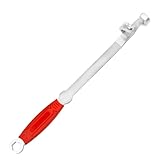
I’ve been elbow-deep in engine bays and wrestling with stubborn bolts for longer than I care to admit. And like many of you, I’ve fallen for the shiny packaging and the promise of a tool that’s supposed to do it all. So, the question pops up: can you undo bolts with a torque wrench? It seems like a simple yes or no, but the reality is a bit more… nuanced. Like using a sledgehammer to crack a walnut, you can do it, but you’re probably going to regret it.
Look, a torque wrench is a precision instrument. It’s designed to tell you exactly how tight a fastener is, not to just brute-force it into submission. Using it for anything other than its intended purpose is like using a micrometer to hammer a nail – it’s overkill, it’s imprecise, and you risk messing up something important.
So, Can You Actually Undo Bolts with a Torque Wrench?
Alright, let’s get this straight from the get-go. Can you physically use a torque wrench to loosen a bolt? Yes. Absolutely. You can take a click-type torque wrench, set it to its lowest setting, and turn counter-clockwise. If the bolt isn’t seized or rusted into oblivion, it will likely break loose. It’s not rocket science; it’s use and a mechanism designed to measure force.
However, and this is a massive ‘however,’ you really, really shouldn’t. Think about it: a torque wrench is calibrated to measure the application of a specific rotational force.
It’s basically a measuring device. When you’re loosening a bolt, especially a tight one, you’re not measuring anything; you’re just applying force until something gives. This is where things go sideways. Setting a torque wrench to its lowest setting might not even be low enough to avoid damage if you’re dealing with a fastener that’s stuck good and proper.
And if you crank it on a higher setting? You might as well be using a pipe wrench for all the precision you’re getting, except now you’ve potentially bent or damaged the internal mechanism of your expensive torque wrench.
I remember a time a few years back when I was rebuilding a vintage motorcycle. I had a particularly stubborn exhaust header bolt that just wouldn’t budge with my regular socket wrench. In a moment of frustration and overconfidence, I grabbed my nice, calibrated torque wrench, cranked the dial down to its minimum setting (which was still pretty high for loosening, in hindsight), and gave it a heave. It broke free, sure, but I heard a faint ‘ping’ from inside the wrench.
Later that week, when I went to torque down some engine components, my torque wrench was reading wildly inaccurate. I’d basically ruined its calibration by using it for a task it wasn’t designed for. That little ‘ping’ cost me about $180 to get recalibrated, and I learned a valuable, albeit expensive, lesson about respecting the tools you have.
The core issue is that a torque wrench’s mechanism is sensitive. It relies on precise internal springs and ratchets to click or indicate when a set torque value is reached. Applying a shock load or significant counter-rotational force can misalign these components, throw off the calibration, or even break them. It’s like taking your fancy digital scale and using it to pound nails – it might work once, but it’s going to wreck the scale.
Why Loosening with a Torque Wrench Is a Bad Idea
Let’s break down why this is a genuinely terrible idea for your tools and your projects. First off, the primary function of a torque wrench is to apply a specific amount of twist to a fastener. It’s about precision in tightening, making sure that a bolt is neither too loose (risking failure) nor too tight (risking stripping threads, breaking the bolt, or damaging components). When you use it to undo a bolt, you’re basically trying to apply force in the opposite direction, and the wrench isn’t designed for that kind of stress, especially when dealing with seized or overtightened fasteners.
Consider the internal workings. Most common click-type torque wrenches have a spring-loaded mechanism. You set a desired torque value, and when the force reaches that point, a spring-loaded detent releases, making the wrench click. This mechanism is calibrated for rotational tension.
When you’re trying to break a bolt loose, you’re often dealing with static friction, rust, or thread locker. This requires a sudden, often significant, breaking torque that can be much higher than the final torque value you’d set for tightening. Applying this kind of shock load or sustained high force in reverse can damage the delicate spring, the detent, or the internal gearing. This damage directly impacts its accuracy when you do use it for its intended purpose: tightening fasteners to spec.
You might think you’re loosening a bolt, but you’re actually silently ruining your torque wrench’s ability to do its job correctly. This can lead to under-tightening or over-tightening in future applications, which can have disastrous consequences, from parts falling off to catastrophic mechanical failure. Nobody wants their wheel coming loose on the highway because their torque wrench gave a false click. (See Also: Do You Need Torque Caliper Bolts )
Furthermore, the handle design of many torque wrenches isn’t optimized for the kind of grip and use needed to break loose a stubborn fastener. They’re designed for a smooth, controlled pull. Trying to get a solid, high-torque grip on a torque wrench for loosening can be awkward and increase the risk of slipping, potentially causing injury or further damage to the tool or the surrounding components. You’re better off using a breaker bar or a solid socket wrench for those tough jobs. These tools are built for high torque, impact, and sheer brute force without compromising their internal accuracy.
What Torque Wrenches Are Good for (and What to Use Instead for Loosening)
Let’s be clear: torque wrenches are indispensable for many automotive and DIY projects. They are your best friend when you need to make sure that important components are fastened to the manufacturer’s exact specifications. This is most important for safety and longevity. Think about wheel lug nuts – overtighten them, and you can warp your brake rotors or stretch the studs.
Undertighten them, and your wheel could literally come off. Head bolts? Absolutely must be torqued correctly, in the right sequence, to prevent blown head gaskets.
Anything involving important load-bearing or high-vibration applications demands accurate torque. My own experience tells me that when a manual specifies a torque value, you should stick to it religiously. I’ve learned the hard way that skimping on this step, or guessing, often leads to double the work and triple the cost down the road.
So, what should you use when you encounter a bolt that needs to be undone? For general loosening, a standard socket wrench with a good quality ratchet is your go-to. If you’re facing a truly stubborn bolt – one that’s rusted, seized with threadlocker, or just plain overtightened – you need something designed for higher torque applications and potentially impact. This is where a breaker bar comes into play. A breaker bar is basically a long, non-ratcheting handle that provides significant use. Its simple, solid construction means it can handle a lot more abuse and force than a torque wrench without internal damage.
For really tough situations, an impact wrench (either pneumatic or electric) is the professional’s choice. These tools deliver rapid, high-torque rotational impacts that can shock a stubborn fastener loose without the sustained, steady force that might snap a bolt. They’re not precise in the way a torque wrench is, but they excel at breaking fasteners free. I bought a decent cordless impact wrench a few years ago for about $120, and it paid for itself within a month on lawnmower blade replacements alone. It’s also a lifesaver for suspension work and anything involving rusty fasteners. Don’t underestimate the power of a good impact wrench for disassembly; it will save your knuckles and your sanity.
Here’s a quick rundown of what tool to use for what task:
| Task | Recommended Tool | Why? | Verdict |
|---|---|---|---|
| Tightening important fasteners to spec | Torque Wrench (Click-type, Beam, or Digital) | Precise measurement makes sure correct tension, preventing damage or failure. | Key. A must for safety-important areas. |
| Breaking loose a moderately tight bolt | Socket Wrench with Ratchet | Provides good use and control for most common loosening tasks. | Standard workhorse. Always have a good set. |
| Breaking loose a very stubborn or seized bolt | Breaker Bar | Long handle offers maximum use; solid design withstands high forces. | Your best bet for truly stuck fasteners. |
| Rapidly removing multiple fasteners or very tight bolts | Impact Wrench (Pneumatic or Electric) | Delivers high torque in short bursts, effective against rust and threadlocker. | Big deal for tough disassembly. |
| Applying specific torque in reverse (rare) | None (Use a calibrated impact socket with a torque multiplier if absolutely necessary and permitted by manual) | Torque wrenches are not designed for reverse torque application. | Avoid at all costs. |
Common Mistakes and How to Avoid Them
The biggest mistake, as we’ve hammered home, is using a torque wrench for loosening. It’s the automotive equivalent of using a chef’s knife to pry open a paint can. You’ll likely damage both.
But there are other pitfalls even when using a torque wrench correctly. One common error is not setting the torque wrench properly. For click-type wrenches, you must remember to dial it back down to its lowest setting after use.
Leaving it wound up puts constant tension on the internal spring, which can weaken it over time and throw off its accuracy. I once saw a mechanic’s wrench that looked like it had been left at a high setting for months; the needle on the side was permanently offset. It was a visual reminder of that simple, yet vital, step.
Another mistake is improper storage. Torque wrenches are precision instruments and should be stored in their protective cases to prevent damage.
Dropping one, or leaving it rattling around in a toolbox, is a recipe for disaster. They are not like a humble adjustable wrench that can take a beating. Also, be aware of the type of torque wrench you’re using and its limitations. Beam-type torque wrenches are simple and relatively inexpensive but can be harder to read precisely, especially in awkward positions. (See Also: Do I Need Special Replacement Bolts For Car Engines )
Click-type wrenches are more common and easier to use but require the aforementioned dial-down storage. Digital torque wrenches offer the highest accuracy and readouts but are also the most expensive and sensitive to shock and drops. Understanding your tool is key.
People also often forget to check the manual for specific torque values and sequences. Just because you can torque something doesn’t mean you know what torque to apply. Always consult the manufacturer’s service manual or a reputable technical guide for the correct specifications. Especially for important components like cylinder heads, crankshafts, or suspension parts, the sequence in which you tighten bolts is just as important as the final torque value.
This makes sure even pressure distribution and prevents warping or stress on components. I learned this the hard way when I overtightened a water pump housing on a project car, causing it to warp just enough to cause a slow leak.
It looked perfect, but the uneven torque was the culprit.
Finally, there’s the issue of using a torque wrench that hasn’t been calibrated recently. Most manufacturers recommend annual calibration, or after a certain number of cycles, or if the wrench has been dropped. A miscalibrated torque wrench is worse than no torque wrench at all because it gives you a false sense of security. You think you’re torquing to spec, but you’re actually over or under-tightening, leading to the problems we’ve discussed. Keep a log of your calibration dates and get them serviced regularly. It’s a small cost for making sure your work is done right.
The ‘why Not’ Behind Reverse Torque
Let’s get into the nitty-gritty of why applying torque in reverse, especially with a torque wrench, is a bad idea. It boils down to the design and calibration principles. Torque wrenches are calibrated to measure the tension built up in a fastener when it’s rotated in the tightening direction. This tension is what creates the clamping force holding parts together. The wrench’s mechanism is designed to accurately reflect this tension buildup. When you use it to loosen, you’re basically applying a rotational force to overcome static friction, rust, or thread-locking compounds. This force, known as breaking torque, is often significantly higher and more sudden than the final tightening torque.
Imagine a click-type torque wrench. It has an internal spring that, when compressed to a certain point by rotational force, trips a mechanism, causing the audible and tactile ‘click’.
This spring is calibrated for stretching, not for being suddenly yanked backwards or subjected to shock loads. Applying a high breaking torque in the reverse direction can do several things: it can shock-load the spring, potentially weakening it or causing it to deform. It can damage the detent mechanism that provides the click.
In some cases, it can even cause microscopic damage to the internal gearing or bearings if the wrench has them. This damage doesn’t always result in an immediate, obvious failure. More often, it leads to a subtle loss of accuracy. The wrench might still click, but the force it registers might be off by 5%, 10%, or even more.
This inaccuracy is the real danger. If your torque wrench is now reading 10% lower than it actually is, you might be under-tightening important fasteners without realizing it.
For example, if a wheel lug nut needs 100 lb-ft of torque, and your damaged wrench is actually applying only 90 lb-ft, you’ve compromised safety. Conversely, if you’re using it on something where the spec is lower, and it’s reading higher, you could still over-tighten. The irony is that by trying to “loosen” a bolt with a tool meant for precise “tightening,” you risk ruining its precision for all future tasks.
It’s a self-defeating action. The repair cost or the cost of a new, properly functioning torque wrench is far less than the potential cost of a component failure due to improper fastening. (See Also: Can You Use A Torque Wrench To Break Bolts Loose )
It’s always better to use the right tool for the job, even if it means having a separate tool for loosening tough bolts.
Can You Undo Bolts with a Torque Wrench? People Also Ask
Can a Torque Wrench Be Used to Loosen Bolts?
Technically, yes, you can apply force to loosen a bolt with a torque wrench. However, it is strongly advised against. Torque wrenches are precision instruments designed for applying a specific tightening force and are not built to withstand the shock loads and higher forces typically involved in breaking bolts loose. Doing so can damage the wrench’s calibration, rendering it inaccurate for its intended use or even causing permanent mechanical damage.
What Happens If You Use a Torque Wrench to Loosen a Bolt?
Using a torque wrench to loosen a bolt can damage its internal calibration mechanism. The shock and high forces involved in breaking a tight bolt loose can weaken or deform the spring, damage the detent, or affect other internal components. This leads to inaccurate torque readings when you use it for tightening, potentially causing fasteners to be over- or under-tightened, which can lead to component failure or damage.
What Tool Should I Use to Loosen a Stuck Bolt?
For stuck bolts, you should use tools designed for high use and impact, such as a breaker bar or an impact wrench. A standard socket wrench with a good ratchet can work for moderately stuck bolts. These tools are more solid and are built to handle the greater forces required to break loose seized or overtightened fasteners without compromising their own integrity or calibration.
Is It Okay to Leave a Torque Wrench Set to a High Torque?
No, it is not okay to leave a torque wrench set to a high torque. For click-type torque wrenches, it is key to dial them back down to their lowest setting after use. Leaving the spring under constant tension can weaken it over time, leading to a loss of accuracy and an unreliable torque reading in the future. Proper storage involves returning the wrench to its lowest setting and storing it in its protective case.
How Often Should a Torque Wrench Be Calibrated?
Torque wrenches should typically be calibrated annually, or according to the manufacturer’s recommendations. Calibration frequency can also depend on usage, especially if the wrench has been dropped, subjected to excessive force, or used extensively. Regular calibration makes sure the tool maintains its accuracy, which is vital for proper and safe assembly of components.
Can I Use a Torque Wrench as a Breaker Bar?
No, you should not use a torque wrench as a breaker bar. A breaker bar is specifically designed to provide high use for loosening fasteners, whereas a torque wrench is designed for precise tightening measurements. Using a torque wrench as a breaker bar will likely damage its internal calibration and accuracy, rendering it unreliable for its primary purpose of torque application.
The Proper Way to Use a Torque Wrench
Now that we’ve established what not to do, let’s quickly cover how to properly use this key tool. First, always consult your project’s manual or service guide for the specific torque value and tightening sequence. Never guess. Second, make sure the torque wrench itself is in good condition and has been recently calibrated. If it’s a click-type, make sure it’s set to its lowest setting before you start adjusting it upwards.
When you’re ready to torque a fastener, set the wrench to the desired value. For click-type wrenches, hold the handle in the designated grip area (usually marked) and apply smooth, steady pressure. Don’t jerk or bounce the wrench. Continue pulling until you hear and feel the distinct ‘click’. Stop immediately. Do not try to get ‘one more click’ or pull harder; that defeats the purpose and can lead to over-tightening. If you’re using a beam-type, watch the needle carefully as you apply steady pressure and stop when it reaches the specified mark. For digital wrenches, you’ll get an audible or visual alert when the set torque is reached.
After you’re finished using your torque wrench, especially a click-type, remember to dial it back down to its lowest setting. Store it in its protective case, away from moisture and extreme temperatures. Treating your torque wrench with respect will make sure it remains an accurate and reliable tool for many years, saving you from the headaches and potential failures that come from improper fastening. It’s an investment in your work.
Conclusion
So, to answer the burning question directly: can you undo bolts with a torque wrench? Yes, you can, but it’s about as smart as using a delicate surgical scalpel to chop vegetables. You risk damaging the tool, compromising its accuracy, and potentially leading to bigger problems down the line. The frustration of a stuck bolt is real, but using the wrong tool for the job is a shortcut that will almost always cost you more in the long run.
My advice? Keep your torque wrench for its intended purpose: precise tightening. For those stubborn fasteners that refuse to budge, reach for a breaker bar or an impact wrench. They’re built for that kind of abuse and won’t sabotage your future projects. Trust me, your future self (and your wallet) will thank you.
Next time you’re facing a seized bolt, remember this: the right tool makes all the difference. Don’t make me come over there and tell you ‘I told you so’ after you’ve snapped a bolt head off or wrecked your torque wrench.