I remember the first time I tried to wire a new outlet in my garage. I was pretty sure I knew what I was doing, armed with a YouTube video and a smug sense of confidence. But as I stared at the wires, a nagging question popped into my head: are American outlets parallel or series? It’s one of those things you just assume you know until you actually have to do it yourself. Turns out, the answer has a lot to do with why your toaster and your light bulb don’t mess each other up.
This isn’t about arcane electrical theory. It’s about understanding the simple genius behind the power in your walls, and why it works the way it does. Let’s cut through the jargon and get to what actually matters.
The Big Secret: Why Everything Doesn’t Flicker Together
Okay, let’s just get this out of the way: are American outlets parallel or series? They are wired in parallel. If you’ve ever spent any time trying to understand basic electrical circuits, you might know this already.
But if you’re like me, you probably just plugged things in and hoped for the best. The reason they’re parallel is incredibly practical. Imagine if they were wired in series. You plug in your laptop, and that’s the only thing that gets power.
Then, you plug in a lamp, and suddenly your laptop dies because the electricity has to go through the lamp first. It’s like a single-file line where each device has to take its turn. That’s a series circuit, and it’s a nightmare for anything beyond a simple Christmas light strand.
In a parallel setup, each outlet gets its own direct path to the power source. So, your microwave, your TV, and your phone charger can all run at the same time without affecting each other.
It’s a system designed for independent operation, which is exactly what we need in a home. Think of it like a multi-lane highway versus a single-lane dirt road.
The highway (parallel) lets everyone get where they’re going independently, while the dirt road (series) creates a bottleneck.
The ‘hot’ wire from your breaker box splits off, going to one side of every outlet. The ‘neutral’ wire from the breaker box connects to the other side of every outlet. And then there’s the ground wire, which is there for safety. This parallel arrangement means that each outlet receives the full 120 volts (in most US homes) regardless of what else is plugged into other outlets. This is fundamental to how our modern electrical systems are designed. It’s not just a technical detail; it’s what makes our homes livable and our appliances functional. Without this parallel wiring, the whole system would be incredibly inefficient and frustrating to use.
I learned this the hard way when I was helping a buddy set up a workshop. We were running new circuits, and I genuinely thought we could just daisy-chain them. Big mistake. We ended up tripping breakers constantly and blowing out a cheap power strip I’d bought. It took a serious dressing-down from an actual electrician (and a hefty bill to fix my mess) to understand why parallel is the only way to go for household circuits. He just shook his head and said, ‘Son, it’s parallel for a reason. You wouldn’t wire your Christmas lights in series and expect them all to light up, would you?’ That analogy stuck.
The Anatomy of Your Wall Socket: Hot, Neutral, and Ground
So, we know American outlets are wired in parallel. But what does that actually look like inside the wall and in the outlet itself? Each outlet has three slots, and each slot is connected to specific wires. You’ve got the ‘hot’ slot (usually the smaller, rectangular one), the ‘neutral’ slot (usually the larger, U-shaped one), and then the round hole for the ground.
The hot wire carries the electrical current from the power source. The neutral wire completes the circuit, providing a return path for the current back to the source.
The ground wire is a safety feature that provides a path for electricity to flow to the ground in case of a fault, preventing shocks and fires. This is where understanding are American outlets parallel or series truly matters for safety. (See Also: Are American Outlets Ac Or Dc )
Think of it like a plumbing system. The hot water pipe is like the hot wire, carrying the water (electricity).
The drainpipe is the neutral wire, taking the used water away. And the emergency overflow drain is your ground wire, there just in case something goes really wrong. In a parallel circuit, each ‘fixture’ (your outlet) is connected directly to both the hot and neutral ‘mains’ (the wires coming from your breaker box). This makes sure that each outlet gets the proper voltage, independent of the others.
The breakers in your electrical panel are basically switches that protect these circuits. If too much current flows – meaning too many devices are drawing power, or there’s a short circuit – the breaker trips, shutting off power to that entire circuit. This is another layer of protection that works because of the parallel wiring.
If it were series, a fault in one appliance could potentially damage others on the same circuit simply by interrupting the flow.
I once had a situation where a faulty appliance caused my entire kitchen circuit to go dead. The breaker tripped, of course. But what was interesting was that the electrician pointed out that because it was wired in parallel, only that specific circuit was affected.
If it had been series, who knows what else would have gone dark, or worse, been damaged. He explained that the parallel design is elegant in its redundancy. Each outlet is a node, receiving the full potential difference.
This is why you can plug in a hair dryer and a coffee maker simultaneously without either struggling for power, provided they’re on the same circuit and not exceeding its capacity. The voltage across each outlet remains consistent.
What If I Have an Older Home with Two-Prong Outlets?
Two-prong outlets (without a ground hole) are typically found in older homes. They are still wired in parallel between the hot and neutral wires, but they lack the safety ground connection. This means there’s no dedicated path for fault current to dissipate safely, making them less safe than modern three-prong outlets. While they function for basic devices that don’t require grounding, it’s highly recommended to upgrade to grounded outlets for enhanced safety, especially for appliances with metal casings.
Understanding Voltage and Current in Parallel Circuits
The magic of parallel wiring is how it handles voltage and current. In a parallel circuit, the voltage across each connected device remains the same. For standard US household outlets, this is typically 120 volts. This is important because most appliances are designed to operate at a specific voltage.
If the voltage dropped significantly when you plugged in multiple things, your appliances wouldn’t work correctly, if at all. My first toaster oven, a cheap model I bought for about $30, used to dim the lights in my kitchen whenever it kicked into high heat.
That was a sign of an overloaded circuit and, potentially, some wiring that wasn’t quite up to snuff or a circuit with too many things on it. It was a stark, albeit annoying, demonstration of voltage being shared unevenly due to load, hinting at issues related to the circuit’s capacity rather than a fundamental flaw in parallel design itself.
The current, on the other hand, is what adds up. Each device draws its own amount of current (measured in amperes or amps) based on its power consumption. So, if one appliance draws 5 amps and another draws 10 amps, the total current flowing from the power source to those two outlets is 15 amps. (See Also: Are All Power Outlets Ac )
This is why circuits have breakers with specific amperage ratings (e.g., 15 amps or 20 amps). The breaker is designed to protect the wiring from overheating if the total current exceeds the safe limit. If it were a series circuit, the current would be the same through every device, but the voltage would be divided, which is usually not what you want for household appliances.
The fact that American outlets are parallel allows for this distribution of current and consistent voltage, making our electrical system so practical.
It’s also why you can’t just replace a 15-amp breaker with a 20-amp breaker on the same wiring. The wiring itself has a maximum current capacity. Overloading it, even with a higher-rated breaker, can lead to melted insulation and fires. This is a common mistake I’ve seen people make when trying to ‘fix’ tripping breakers. The breaker is doing its job, telling you the circuit is overloaded. The parallel wiring allows for multiple devices, but it doesn’t grant infinite capacity. You have to respect the limits of the circuit and the wiring.
What Is the Difference Between a 15-Amp and a 20-Amp Outlet?
A 15-amp outlet is designed for circuits with a 15-amp breaker and typically has two parallel slots and a U-shaped neutral slot. A 20-amp outlet can be identified by a T-shaped neutral slot and is designed for circuits with a 20-amp breaker. While a 15-amp plug will fit into a 20-amp outlet, and a 20-amp plug (with a standard straight-blade plug) will fit into a 15-amp outlet, it’s best practice to match the outlet and plug rating to the circuit’s breaker rating for safety and optimal performance. You can’t draw more than 15 amps from a 15-amp circuit, regardless of the outlet type.
| Circuit Type | Voltage | Current | Common Use Case | Verdict |
|---|---|---|---|---|
| Parallel | Constant across devices (e.g., 120V) | Adds up across devices (total current drawn) | Household outlets, most appliances | Key for modern living. Allows independent operation of multiple devices. |
| Series | Divided across devices | Same through all devices | Simple string lights, old-school Christmas lights | Impractical for most home use. A failure in one device affects all others. |
Common Mistakes and Why They Matter
When you don’t fully grasp how are American outlets parallel or series, mistakes are inevitable. The most common one I see, and admittedly one I’ve made, is overloading a circuit. You’ve got your microwave, your coffee maker, your toaster, and maybe a portable space heater all plugged into outlets on the same circuit. Eventually, the breaker trips. People often think, ‘My breaker is bad’ or ‘This appliance is faulty.’ Sometimes, it is. But more often, it’s simply the total current draw exceeding the circuit’s capacity. The parallel wiring means each device can draw power, but the breaker is the gatekeeper, preventing too much from flowing at once.
Another mistake is improper wiring when installing or replacing outlets. If you mix up the hot and neutral wires, the outlet might still work, but it can be dangerous. For instance, a switch might control the neutral wire instead of the hot wire, meaning the appliance is still technically live even when the switch is off. This is a significant shock hazard.
Or, a reversed connection can cause sensitive electronics to behave erratically. I once spent an entire afternoon troubleshooting why a new smart plug wouldn’t connect to Wi-Fi, only to discover the electrician who did some work prior had swapped the hot and neutral on that specific outlet. It was a simple fix, but a frustrating lesson about paying attention to detail. The parallel setup relies on correct connections for safety and functionality.
Then there’s the temptation to bypass safety features. I’ve seen people remove the grounding pin from a plug to make it fit into a two-prong outlet, or stuff tissue paper into the slots of a faulty outlet to make a plug fit tighter. These are incredibly dangerous practices. The grounding pin is there for a reason, and a loose plug connection can cause arcing, overheating, and fire. The parallel wiring system depends on all its components – outlets, wires, breakers, and plugs – functioning correctly and safely. Cutting corners here isn’t saving time; it’s inviting disaster. Understanding that parallel wiring is designed to distribute power safely and efficiently means respecting its components and connections.
Why Is It Bad to Put Too Many Things on One Circuit?
Putting too many devices on a single circuit can overload it. Each device draws a certain amount of electrical current. When the sum of the current drawn by all devices on a circuit exceeds the circuit’s rated capacity (e.g., 15 or 20 amps), the wiring can overheat. This is a significant fire hazard. The circuit breaker is designed to trip and cut off power before this overheating occurs, but repeated overloading can still stress the system and potentially cause damage. It basically means the system is being pushed beyond its intended limits, and even the safety mechanisms can be compromised over time or in extreme cases.
Real-World Applications and Practical Tips
So, how does knowing are American outlets parallel or series translate into practical advice? For starters, it explains why certain appliances need their own dedicated circuits. High-draw items like electric ovens, clothes dryers, or powerful air conditioners are usually on their own 240-volt circuits (which are also wired in parallel, just with more power). They have thicker wires and higher-rated breakers because they are designed to pull a lot of current. Trying to run one of these on a standard 120-volt, 15-amp circuit would trip the breaker instantly, if it could even be plugged in.
For everyday use, it means you should be mindful of what you plug into a single circuit. If you have a home office with a computer, monitor, printer, and desk lamp all on one circuit, and you decide to add a space heater, don’t be surprised when the power goes out. It’s a good practice to distribute high-draw appliances across different circuits. In my own house, I’ve learned to put the coffee maker and toaster oven on separate circuits, even though they are both kitchen appliances. That way, I don’t have to worry about tripping the breaker during my morning routine. It’s a small thing, but it saves a lot of annoyance.
Here are a few practical tips stemming from this knowledge: (See Also: Are Arc Trip Outlets Required In Hillsborough County )
- Know Your Circuits: Label your breaker box. When a breaker trips, you’ll know exactly which outlets or rooms it controls.
- Don’t Overload: Be aware of what’s plugged into a circuit. If you’re using a high-draw appliance like a microwave or a hair dryer, try not to run other major appliances on the same circuit simultaneously.
- Upgrade When Necessary: If you have an older home with two-prong outlets, seriously consider upgrading to grounded, three-prong outlets. It’s a significant safety improvement.
- Use Quality Power Strips (with surge protection): For multi-device setups (like a home entertainment center or a computer workstation), a good power strip distributes the load and protects against voltage spikes. However, even a power strip doesn’t magically increase the capacity of the circuit it’s plugged into.
- When in Doubt, Call a Pro: Electrical work can be dangerous. If you’re unsure about wiring, installing outlets, or diagnosing problems, always hire a qualified electrician. I learned my lesson the expensive way.
The Future of Outlets: Smart and Efficient
The fundamental principle of parallel wiring for American outlets isn’t going anywhere, but the outlets themselves are evolving. We’re seeing more and more ‘smart’ outlets that can be controlled remotely via an app or voice assistant. These outlets still operate on the same parallel circuit principle, receiving their 120 volts independently. What’s different is the integrated electronics that allow for communication and control. You can turn devices on or off, set schedules, and even monitor energy usage through an app. It’s like adding a brain to your outlet.
These smart outlets are fantastic for convenience and energy efficiency. For instance, you can schedule lights to turn on and off while you’re away, making your home look occupied. Or you can make sure that electronics that draw ‘phantom power’ when turned off (like TVs or chargers) are completely de-energized when not in use. This concept of controlling power flow, even within a parallel system, is where innovation is happening. The underlying electrical principles remain, but the application becomes more sophisticated.
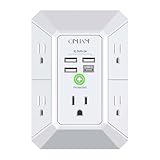
Another development is the integration of USB ports directly into outlets. This is incredibly handy, reducing the need for bulky wall adapters. Again, the outlet is still wired in parallel, providing the necessary voltage to power both the standard receptacles and the USB charging ports. The complexity is contained within the outlet housing. It’s a practical evolution that acknowledges how we use power today. While the question of are American outlets parallel or series might seem basic, understanding it underpins how we can safely and effectively integrate these new technologies into our homes. The parallel design is the bedrock that allows for this modular and intelligent expansion of our electrical systems.
Are Smart Outlets Safe for High-Draw Appliances?
Most smart outlets are designed for standard household loads, typically up to 10-15 amps, similar to regular outlets. However, it’s important to check the specifications of any smart outlet before plugging in high-draw appliances like space heaters, hair dryers, or power tools. Some smart outlets may not be rated for continuous heavy use and could overheat or fail. Always make sure the smart outlet’s amperage rating meets or exceeds the appliance’s requirements and that it’s plugged into a circuit with adequate capacity. If an appliance requires a dedicated circuit, a standard smart outlet is generally not suitable.
Are Us Electrical Outlets Wired in Parallel or Series?
US electrical outlets are wired in parallel. This means that each outlet receives the full household voltage (typically 120 volts) independently of other outlets. This arrangement allows multiple appliances to be used simultaneously without affecting each other’s power supply, as each device draws its own current from the shared power source.
Why Are Household Outlets Wired in Parallel?
Household outlets are wired in parallel because it allows each appliance or device to receive the standard, consistent voltage required for its operation. If they were wired in series, the voltage would be divided among the devices, and if one device failed or was removed, the entire circuit would be broken, stopping power to all connected items.
What Happens If Outlets Are Wired in Series?
If outlets were wired in series, the voltage would be divided among them. This means each device would receive less than the full household voltage, likely causing them to underperform or not work at all. Furthermore, if one device in the series failed or was unplugged, the entire circuit would be interrupted, cutting power to all subsequent devices on that circuit.
Does the Order of Outlets in Series Matter?
In a series circuit, the order of devices does matter in terms of how voltage is divided. However, for household electrical systems, series wiring is highly impractical and dangerous, so this concept is not applicable to how outlets are wired in homes. The order is irrelevant because they are not wired in series.
How Do I Know If My Outlets Are Parallel or Series?
All standard US household outlets are designed and installed in parallel. This is a fundamental aspect of residential electrical wiring codes and practices. You don’t typically need to test this; it’s the standard configuration for safe and functional operation of your home’s electrical system.
Final Verdict
So, there you have it. The answer to whether are American outlets parallel or series is a resounding parallel. It’s not just a technicality; it’s the backbone of why our homes hum with power, letting us run the dishwasher while the kids watch TV and you charge your phone. Understanding this simple principle is the first step to not only demystifying your home’s electrical system but also to using it safely and effectively.
Don’t be afraid to look at your outlets, check your breaker box, and understand what’s happening behind the walls. It’s helping, and honestly, it can save you a lot of headaches – and maybe even some money on future repair bills.
Next time you plug something in, take a second to appreciate that little bit of engineering that lets your devices work independently. It’s a small thing, but it’s a big deal.