I remember the first time I packed for a trip to Canada, a lifetime ago, feeling smug about how prepared I was. I had my adapters, my travel chargers, the whole nine yards. Then I got to my hotel and realized… my stuff just plugged right in. No fuss, no fire alarm, just power. It was one of those moments where you feel like you’ve been lied to by travel brochures for years, or maybe just by your own assumptions.
So, are Canadian electrical outlets the same as US ones? Let’s cut to the chase: for the most part, yes, they are. But like anything with electricity and different countries, there are nuances that can bite you if you’re not paying attention. And believe me, I’ve seen people get bitten, metaphorically speaking, by these small differences.
The Shocking Truth: Type a and Type B Are King
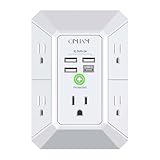
Alright, let’s get down to brass tacks. When you look at a wall socket in Canada, and you look at one in the United States, they’re going to look like twins. We’re talking about the familiar parallel slots for Type A plugs and the grounded version, Type B, which adds that round hole below the two flat ones. These are the workhorses of North American electricity, and thankfully, they span the border.
Why is this the case? Geographically and historically, it just made sense. Canada and the US share a massive border and a lot of integrated infrastructure. Standardizing electrical systems, especially for common voltage and plug types, was a no-brainer for trade, convenience, and safety. Think about it: if every time you crossed into Canada, you needed a different plug for your phone or laptop, it would be a logistical nightmare. This uniformity is one of those silent conveniences we often overlook until it’s gone.
The voltage is also pretty much identical. Canada, like the US, operates on a 120-volt system, with a frequency of 60 Hertz. This is important. Voltage differences are where you can really fry your electronics if you’re not careful. Imagine plugging in your hairdryer in Europe and hearing a sad sizzle – that’s usually a voltage mismatch at play. But between Canada and the US, you’re usually in the clear. Your standard American laptop charger, phone charger, or even that hair dryer you bought back home? It’s going to be perfectly happy in a Canadian outlet.
However, before you get too complacent, let’s talk about some edge cases. While the vast majority of residential and standard commercial outlets are Type A and Type B, sometimes you might encounter older buildings or specialized industrial settings that have different configurations. It’s rare, but it can happen. I once stayed in a very old, charming inn in rural Quebec, and one of the outlets in my room looked suspiciously different. It wasn’t a major issue because most of my devices had modern, compatible plugs, but it was a visual reminder that not everything is 100% standardized everywhere.
The real kicker, and something most people don’t even consider, is the wiring and safety standards behind the outlet. While the physical plug might fit, the internal safety mechanisms or the quality of the wiring might differ. This is usually not a problem for modern, certified electronics that have built-in surge protection and voltage regulation. But if you’re plugging in something old, something high-powered, or something you’re not entirely sure about, it’s always a tiny gamble. For the average traveler with a smartphone and a laptop, though, this is a non-issue. The peace of mind comes from knowing that the physical connection is the same.
When ‘same’ Isn’t Exactly the Same: The Nuances
So, we’ve established that the plugs themselves, Type A and Type B, are what you’ll find in both countries. That’s the good news. But here’s where things get a little murky, and where I’ve seen people (and myself, embarrassingly) run into minor hiccups. It’s not about the shape of the plug; it’s about the specifics and the expectations.
The most significant thing to understand is that while the type of outlet is the same, the quality and the specific safety certifications can vary. Canada adheres to its own set of electrical codes, primarily the Canadian Electrical Code (CEC), which is similar to the US National Electrical Code (NEC) but has its own distinctions. Both prioritize safety, but the exact implementation and testing standards might have subtle differences. For most modern, UL-listed (Underwriters Laboratories) or CSA-certified (Canadian Standards Association) electronics, this isn’t a problem. They are designed to meet stringent safety requirements that overlap significantly between the two countries.
However, I once bought a cheap power strip from a questionable online vendor that claimed to be universal. I plugged it into a Canadian outlet, and it worked. Great, right?
Wrong. A few weeks later, a storm rolled in, there was a minor power surge, and that cheap power strip, unlike all my other properly certified devices, decided to become a fire hazard.
It melted, smoked, and thankfully, my house didn’t burn down. That experience taught me a vital lesson: just because a plug fits, it doesn’t mean the internal engineering is equivalent or solid enough to handle variations. Always look for reputable certifications – UL, CSA, ETL, or CE. The fact that a plug physically fits is only step one.
Another point of consideration, though rarely an issue for standard travel, is amperage ratings. While most common household outlets are rated for 15 amps, you can find higher-rated outlets in some residential and commercial settings. Your standard chargers for phones, laptops, and cameras draw very little amperage, so this is typically a non-issue. But if you were thinking of plugging in some industrial equipment or a very high-draw appliance that wasn’t designed for North American standards, you might run into capacity issues, though again, the physical plug compatibility is the primary concern here. (See Also: Are American Outlets Ac Or Dc )
There’s also the matter of GFCI (Ground Fault Circuit Interrupter) outlets. You see these a lot in North America, especially in kitchens, bathrooms, and outdoor areas. They have those two buttons on them – ‘Test’ and ‘Reset’. Both Canada and the US use these extensively for enhanced safety against electrical shock. So, if you see one, it’s a good sign of safety, and it won’t affect your standard plugs. But it’s worth noting that the prevalence and exact placement of GFCIs might differ slightly based on local building codes and interpretations of safety standards.
My contrarian take? Everyone obsesses over plug shapes and voltage, and that’s important. But the real hidden danger, especially with cheaper electronics, isn’t the outlet itself but the quality of the device being plugged into it. A high-quality, certified charger will work perfectly fine in either country. A cheap knock-off might fail spectacularly, regardless of whether it’s plugged into a Canadian or a US outlet.
What to Look for: Your Practical Checklist
Okay, so you’re heading to Canada, or perhaps a Canadian friend is visiting you. You’ve got the core question: are Canadian electrical outlets the same as US ones? For 99% of everyday use, the answer is a resounding yes. Your standard North American electronics will plug right in. But to avoid any unforeseen headaches, here’s a practical checklist of what you should actually be looking at.
First and foremost, check your device’s power adapter. Most modern electronics – think smartphones, laptops, tablets, digital cameras – have power adapters that are already designed for dual voltage (100-240V) and wide frequency ranges (50/60Hz). You’ll usually see this information printed directly on the adapter brick. If it says something like ‘INPUT: 100-240V ~ 50/60Hz’, you’re golden. This means your device is happy pretty much anywhere in the world from a voltage perspective. For these devices, you don’t need a voltage converter, just a plug adapter if the physical outlet shape differs (which it doesn’t between Canada and the US).
Second, look for safety certifications. As I mentioned, UL (Underwriters Laboratories) is a US standard, and CSA (Canadian Standards Association) is the Canadian equivalent. ETL (Intertek) is another widely recognized safety certification. If your electronics have any of these marks, you can be confident they meet rigorous safety standards that are largely compatible across the border. Avoid unbranded, suspiciously cheap electronics. They might work initially, but they’re a gamble when it comes to safety and longevity.
Third, consider the types of devices you’re bringing. For most personal electronics, you’re fine. But if you’re bringing high-power items like hair dryers, curling irons, or even certain kitchen appliances that are not dual-voltage, and you’re coming from a country with a different voltage (say, the UK or much of Europe with 220-240V), then you would need a voltage converter. However, since the question is about Canada and the US, where the voltage is already the same (120V), this is generally not an issue for devices purchased in either country. It becomes a concern if you’re bringing American appliances to Europe, or vice-versa, not usually between Canada and the US.
Here’s a simple table to break down what to look for, with my own two cents:
| Item to Check | What to Look For | My Verdict |
|---|---|---|
| Device Power Adapter Label | ‘INPUT: 100-240V ~ 50/60Hz’ | Excellent. You’re good to go for voltage and frequency. No converter needed. |
| Safety Certifications | UL, CSA, ETL markings | Good. Indicates reputable safety standards. Buy with confidence. |
| Device Type | Personal electronics (phone, laptop) vs. High-power appliances (hair dryer) | Personal electronics: Almost always fine. High-power appliances: Check voltage compatibility, though typically not an issue for US/Canada domestic items. |
| Plug Type | Type A (two flat parallel prongs) or Type B (with ground pin) | Perfect match. This is the standard in both countries. |
Finally, a practical tip: If you’re traveling extensively within North America, consider getting a good quality, multi-port USB charger that is certified by UL or CSA. These can consolidate your charging needs and often have built-in surge protection. It simplifies your travel kit and provides a layer of safety. Don’t underestimate the value of a simple, well-made gadget when it comes to something as fundamental as power.
Common Mistakes and How to Avoid Them
You’d think something as straightforward as plugging in a device would be simple, especially when the outlets are physically the same. But I’ve seen people mess this up in a few key ways, usually born out of assumption or a lack of attention to detail. Let’s talk about the common pitfalls so you don’t fall into them.
The biggest mistake people make is assuming that because the plug fits, the outlet is inherently safe and compatible for any device. As I’ve harped on, this isn’t always true. A cheap, uncertified power strip or adapter might physically connect, but its internal components could be substandard. I once saw a friend’s brand-new phone charger overheat and melt while plugged into what looked like a perfectly normal Canadian outlet. It wasn’t the outlet’s fault; it was the shoddy charger. It’s like putting cheap tires on a sports car – the connection is there, but the performance and safety are compromised.
Another common error is not checking the voltage rating on devices that aren’t inherently dual-voltage. While most modern electronics are designed for global use, older appliances or specialized equipment might not be.
For example, some hair styling tools, especially older ones, might be designed only for 120V. If you were to take one of those to Europe, you’d need a voltage converter. (See Also: Are All Power Outlets Ac )
Conversely, if someone from Europe brings a 220-240V appliance to North America, they’d need a converter. Since the question is about are Canadian electrical outlets the same as US ones, and the voltage is the same (120V), the issue here is less about the outlet and more about the device’s origin if it’s not dual-voltage. If you buy a hair dryer in Canada or the US, it’s designed for 120V. If you buy one in the UK, it’s designed for 220-240V.
Plugging the UK one into a Canadian socket without a converter will likely damage the dryer and potentially blow a fuse.
My personal blunder involved a travel adapter that was supposed to handle multiple plug types. I bought a cheap one years ago, thinking it was a great deal. It had flimsy prongs and a plastic casing that felt like it could snap. When I first used it in Canada, it felt loose in the wall socket.
It worked, but it was wobbly. On my second trip using it, one of the prongs bent inside the outlet. I had to carefully (and nervously) pry it out with pliers, leaving the outlet slightly damaged.
That was a stark reminder that investing in quality travel accessories is most important. A $5 adapter is not worth the risk of damaging your electronics or a wall socket.
People also sometimes forget about amperage. While most household circuits are 15 amps, and standard electronics draw minimal current, if you’re planning on using a high-wattage appliance, it’s worth confirming the outlet’s rating. However, for typical travel needs – charging phones, laptops, using a hair straightener – this is rarely an issue. The vast majority of standard outlets in both countries can handle the load of common travel devices without breaking a sweat.
Here’s a quick run-down of what not to do:
- Don’t assume any plug that fits is safe. Always check for reputable certifications.
- Don’t plug non-dual-voltage appliances into a different voltage system without a proper converter.
- Don’t buy the cheapest travel adapters or power strips you can find. Quality matters for safety.
- Don’t ignore the amperage rating if you’re planning to use very high-draw appliances.
The core takeaway is to be informed about your devices, not just the outlets. The physical compatibility between Canada and the US is a huge convenience, but it shouldn’t breed complacency about the quality and specifications of your electronics.
Real-World Use: My Canadian Electrical Adventures
Living near the border for years, I’ve made the trek into Canada more times than I can count. Business trips, weekend getaways, visiting friends – you name it. And throughout all these journeys, the electrical situation has been consistently, blessedly, the same as in the US. My phone charger, my laptop, my Kindle, even my trusty old electric razor – all plugged in without a second thought. This uniformity is a massive plus for anyone traveling back and forth.
I remember one specific instance where this came in handy. I was on a last-minute work trip to Toronto.
I’d packed my gear, but in my haste, I completely forgot to bring my usual travel surge protector power strip. Panic set in for a moment – would I have enough outlets?
Would they be compatible? I arrived at the hotel, and to my immense relief, the outlets looked identical to what I had at home. I unpacked my laptop, my phone, my portable battery bank, and plugged them all into the wall and into the limited outlets in the room. Everything worked perfectly. (See Also: Are Arc Trip Outlets Required In Hillsborough County )
I didn’t need any special adapters or converters. It saved me a significant amount of stress and the cost of buying a potentially overpriced adapter at the airport or in a tourist shop.
Conversely, I’ve had friends visit me from Europe, and the conversation about outlets always comes up. They arrive, and their chargers have those funny European pins. They’re shocked that their phone charger, which they assumed was universal (it wasn’t, it was only rated for 220-240V), wouldn’t just magically work. I had to pull out a voltage converter for them, and even then, their hair dryer, designed for much higher voltage, was a no-go. It highlighted how spoiled we are in North America with our standardized 120V system and compatible plug types. The trouble they faced was a stark contrast to my smooth experience crossing the Canadian border.
The only time I’ve ever encountered anything slightly different was in a very, very old heritage building in Montreal that had been converted into boutique hotel rooms. One of the outlets, tucked away behind a bed, looked a bit older and had a slightly different configuration – maybe a slightly wider slot or a different spacing. It wasn’t a major issue because most of the other outlets were standard, and my devices had modern plugs that still fit snugly. But it was a visual cue that while the standard is dominant, older infrastructure can sometimes hold surprises. It wasn’t incompatible, just… different. It reinforced my habit of always packing a small, high-quality multi-port USB charger as a backup.
My opinion? For 98% of travelers crossing between Canada and the US, the electrical system is functionally identical. Don’t waste money on unnecessary adapters. Focus on the quality of your devices and make sure they are rated for 120V (which they will be if purchased in either country) and have proper safety certifications. The physical plug is the least of your worries. It’s the internal workings of your chargers and appliances that truly matter for safety and performance.
The Faq: Clearing Up Your Canadian Outlet Questions
Are Canadian Electrical Outlets Different From Us Ones?
No, for the most part, Canadian electrical outlets are not different from US ones. Both countries predominantly use Type A and Type B plugs and sockets. These have two flat parallel prongs (Type A) or two flat parallel prongs with a round grounding pin below (Type B). This physical compatibility means most North American electronics can plug directly into outlets in both countries without needing a physical adapter.
Will My Us Electronics Work in Canada?
Yes, your US electronics will almost certainly work in Canada. Both countries operate on a standard 120-volt electrical system with a frequency of 60 Hertz. This voltage and frequency compatibility means that devices designed for the US will function correctly in Canada. Always check your device’s power adapter for its input voltage rating (ideally 100-240V for universal compatibility), but for standard US-purchased items, you are good to go.
Do I Need a Voltage Converter for Canada If I’m From the Us?
No, you do not need a voltage converter for Canada if you are from the US. The electrical systems in both countries operate at approximately the same voltage (120 volts) and frequency (60 Hertz). Voltage converters are only necessary when traveling between regions with significantly different voltage standards, such as North America (120V) and Europe or Asia (220-240V).
What About Plug Adapters for Canada?
You generally do not need plug adapters for Canada if you are coming from the US. Since both countries use the same Type A and Type B plug and socket configurations, your standard US plugs will fit directly into Canadian outlets. The main reason to use a plug adapter is when the physical shape of the plug is different from the socket, which is not the case between the US and Canada.
Are There Any Safety Differences in Canadian Outlets?
While the physical outlet and voltage are the same, there can be subtle differences in safety standards and implementation. Canada adheres to its own electrical codes, similar to the US. Both countries extensively use GFCI (Ground Fault Circuit Interrupter) outlets for enhanced safety, especially in wet areas. For travelers, the most important safety aspect is making sure the electronics themselves are properly certified (e.g., by CSA in Canada or UL in the US) and of good quality, rather than worrying about the outlet itself being fundamentally different or unsafe compared to its US counterpart.
Conclusion
So, to wrap this up, the short answer to ‘are Canadian electrical outlets the same as US ones?’ is a confident ‘mostly, yes.’ You can generally plug your American devices directly into Canadian outlets without needing any special adapters or converters. The voltage, frequency, and plug types are standardized across both countries for everyday use.
My advice? Don’t overthink it. Save your money on fancy adapters that you’ll likely never use for Canada-to-US travel. Instead, focus on making sure the electronics you’re bringing are good quality and properly certified. That’s where the real safety and reliability come from, whether you’re at home or north of the border.
If you’re planning a trip, just give your device’s power brick a quick glance to confirm it’s rated for 100-240V. If it is, you’re practically home free. Enjoy your travels!