I remember the first time I tried hanging a ceiling fan. Seemed simple enough. Grab some anchors, screw ’em in, hang the fan. Famous last words. The whole thing came crashing down a week later, taking a chunk of drywall with it. It’s a question I get asked a lot, and one I’ve learned the hard way: can drywall anchors be used in ceiling? The short answer is yes, but it’s a big, fat ‘but’ that needs a whole lot of explaining.
Most folks think of anchors as all-purpose, but the ceiling is a different beast entirely. Gravity’s got a stronger grip up there, and what holds fine on a wall can be a disaster waiting to happen overhead.
Weight Limits Aren’t Just Suggestions
Look, I’m all for DIY, but when it comes to hanging stuff from the ceiling, especially anything with a bit of weight, you gotta respect the physics. Drywall itself is basically paper and gypsum dust.
It’s not exactly structural. Anchors are designed to distribute weight, sure, but they’re primarily fighting lateral forces on a wall. In the ceiling, the force is almost entirely downward, and drywall just isn’t built for that kind of sustained pull, even with an anchor. I once tried to hang a fairly lightweight decorative light fixture, maybe 15 pounds, in my garage ceiling using standard plastic wing anchors.
They seemed to hold okay when I tested them, nice and snug. A month later, I found the fixture dangling by one screw, the anchor completely pulled out. It wasn’t a catastrophic failure, but it was a stark reminder that these things have limits, and the ceiling tests them harder than a wall ever will.
The common advice you’ll find everywhere online is that if the anchor is rated for the weight, you’re good to go. I’m here to tell you that’s often a load of crap, especially for anything more than a picture frame or a very light smoke detector. Those weight ratings are usually based on the anchor holding in solid wood or a thick, structurally sound stud. Drywall, even with an anchor, is a compromised material. The plastic or metal of the anchor is only as good as the fluff it’s gripping. Think of it like trying to tie a knot in a cloud – it’ll hold for a second, but don’t expect it to carry anything substantial.
When you’re screwing an anchor into drywall, you’re basically creating a friction fit or a wedge. On a wall, the anchor material pushes against the drywall, and the weight of the object pulls it down, creating friction.
In the ceiling, that downward pull is constant and unwavering. The drywall material can compress, crumble, or simply tear around the anchor over time. This is especially true with heavier items like ceiling fans, hanging chairs, or even substantial light fixtures.
The vibration from a fan can also work an anchor loose over time. Most standard drywall anchors are not designed for dynamic loads or sustained downward pressure in drywall. They’re often rated for shear strength (holding something on a wall) rather than tensile strength (pulling something straight down from the ceiling).
What about those fancy toggle bolts or molly bolts? They’re better, sure. They have larger wings that spread out behind the drywall, giving you more surface area. These are often the go-to for ceiling applications because they offer significantly more holding power than simple plastic anchors. However, even these have their limitations and require a decent-sized hole. The key is understanding the ceiling material you’re drilling into. Is it just drywall? Or is there a joist or a metal stud behind it? If you can hit a joist, you’re golden. Anchors are a last resort when you can’t.
When ‘good Enough’ Becomes Dangerous
I’ve seen people hang all sorts of things from ceilings using what I’d consider questionable anchor choices. A buddy of mine, bless his heart, decided to hang a substantial plant shelf from his living room ceiling using a bunch of those self-drilling drywall anchors you can just screw in. He swore they felt solid. (See Also: Are Anchors Required For Mobile Homes In Citrus County )
Six months later, the shelf, along with the potted ficus that had grown to the size of a small tree, was on the floor. Thankfully, no one was hurt, but the mess was epic, and the drywall repair was a nightmare.
He learned the hard way that not all anchors are created equal, and ‘feeling solid’ in the moment is a terrible metric for long-term ceiling security.
The truth is, many common drywall anchors you find at the hardware store – the little plastic ones, the self-drilling ones with the screw already in them – are really only good for very light items on walls. Think a small framed picture, a coat hook for a single jacket, or maybe a lightweight towel bar. When you’re thinking about the ceiling, you have to upgrade your thinking, and your hardware. The forces are different. Gravity is always trying to win when it comes to overhead attachments.
The real danger with using the wrong anchor in a ceiling is not just the item falling, but the potential for serious injury or damage. Imagine a ceiling fan detaching. Or worse, a heavy light fixture or even a suspended shelf full of books. The weight adds up quickly, and drywall’s inherent weakness in tension means that anchor failure isn’t usually a gentle slide; it’s a sudden, catastrophic drop. It’s why inspecting the anchor and the surrounding drywall regularly is important, especially if you’ve opted for a less solid solution.
A lot of the advice online is generated by folks who might have had a single positive experience or are pushing products. They don’t always emphasize the nuances of drywall thickness, the type of anchor, the quality of the drywall itself, and critically, the actual load the item will put on the anchor, including any dynamic movement. I’ve seen many articles that simply say ‘yes, you can use drywall anchors in the ceiling’ without adequately explaining the caveats. It’s a half-truth that can lead to disaster. For anything more than a pound or two, you’re playing with fire.
Types of Anchors and What They Actually Handle
Let’s break down the usual suspects you’ll find in the anchor aisle and what they’re really good for when it comes to ceilings.
| Anchor Type | Ceiling Use Case | My Verdict |
|---|---|---|
| Plastic Expansion Anchors (e.g., ‘Molly’ bolts, cone anchors) | Extremely light items only (e.g., a single sheet of paper, a very small picture frame). Generally not recommended for ceilings. | Avoid for ceilings. Too weak. |
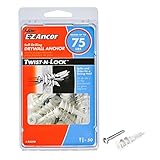
| Self-Drilling Drywall Anchors (e.g., ‘E-Z Ancor’, screw-in types) | Slightly better than basic plastic, but still limited. Maybe a smoke detector or a small, lightweight decorative item. Still risky. | Barely acceptable for very light items. Still risky. |
| Toggle Bolts (e.g., ‘Molly’ bolt with spring wings) | Can hold moderate weight if installed correctly, especially if the wings can spread widely. Suitable for light to medium fixtures (e.g., a small pendant light, lightweight ceiling fan support). Requires a larger hole. | Decent option when joists aren’t available, but check weight limits carefully. |
| Molly Bolts (metal expansion with a sleeve) | Similar to toggle bolts but the sleeve expands. Good for medium weight items. Needs a larger hole. | Reliable for moderate loads, but requires proper installation. |
| Heavy-Duty Drywall Anchors (e.g., Monkey Hooks, specific load-rated anchors) | Designed for higher weight capacities (check manufacturer specs). Can be used for things like hanging a bicycle (if the ceiling is strong enough), a hammock (definitely not recommended unless into joists), or very heavy light fixtures. | Can work for heavier items, but always verify the actual load capacity in drywall. |
The most important thing here is to understand that even the best drywall anchor is a compromise. It’s filling a void. Its holding power is directly related to the integrity of the drywall material it’s expanding into. If your drywall is old, crumbly, or thin, even a heavy-duty anchor might fail. It’s like trying to anchor a ship in sand versus rock.
When you’re choosing an anchor for the ceiling, you need to think about shear strength versus tensile strength. Most anchors are rated for shear (holding sideways on a wall), but in the ceiling, you’re dealing with tensile pull. A toggle bolt’s wings spreading out behind the drywall provide a good tensile grip. Monkey Hooks work by creating a strong grip on the surface of the drywall and distributing the load over a larger area. These are often cited as being good for ceilings, and they can be, but again, they rely on the drywall itself not giving way.
I’ve experimented with these heavy-duty anchors, and while some are genuinely impressive, I still wouldn’t trust them with anything I couldn’t afford to drop. The manufacturer ratings are often based on ideal conditions and pull tests that don’t always reflect real-world, long-term use in a potentially stressed ceiling. For important applications, like a significant weight or something that could cause injury if it fell, direct mounting into a ceiling joist or using a specialized ceiling brace is always the superior and safer option.
The Golden Rule: Find the Joists!
This is the part where I sound like a broken record, but seriously, if you can avoid using drywall anchors in the ceiling altogether, do it. The absolute best way to hang anything substantial from a ceiling is to anchor directly into a ceiling joist or a solid beam. Drywall is just the skin; the joists are the bones. They’re the structural elements that are designed to hold weight. (See Also: Are Box Anchors Good )
How do you find joists? It’s not as hard as it sounds. You can use a stud finder, which is a small electronic device that beeps when it detects a change in density behind the wall or ceiling. You’ll need to calibrate it properly and sweep it across the area where you want to hang your item.
Mark the edges of each joist you find. Joists are typically spaced 16 inches or 24 inches apart on center, but this can vary depending on the age and construction of your house.
Sometimes, older homes have slightly irregular spacing. You can also try the ‘nail test’ – gently tap a small finishing nail into the drywall. If you hit solid wood, you’ve found a joist.
If it goes in easily and then just keeps going, you’re in the void between joists.
Another method is to look for clues. Where are existing fixtures attached? Where do ceiling beams meet walls? Sometimes, by looking at the pattern of screws or nails used for the drywall itself, you can deduce the joist locations. You can also sometimes feel for them by tapping. A solid thud indicates a joist; a hollow sound means you’re in the open space.
If you’re installing something like a ceiling fan or a heavy light fixture, most manufacturers will explicitly state that it must be mounted to a ceiling fan-rated electrical box that is securely attached to a joist or a specialized brace. Trying to hang a heavy ceiling fan on just drywall anchors is a recipe for disaster and a serious fire hazard if it pulls wires loose. The electrical box itself is designed to support that weight and the vibrations.
So, the hierarchy of ceiling attachments is: 1. Ceiling Joist/Beam. 2. Specialized Ceiling Brace (if joists aren’t accessible or you need to span between them). 3. Heavy-duty, load-rated anchors (like toggle bolts or molly bolts) for lighter items, with extreme caution. Anything less than that for anything heavier than a small decoration is just asking for trouble. My first DIY disaster was hanging a shelf for books using only drywall anchors in the ceiling. It lasted about three days before it gave way, and my entire collection of paperback novels came crashing down. That was a wake-up call.
When Anchors Are Your Only Option: Tips for Success
Okay, I get it. Sometimes, for whatever reason – maybe it’s an old house with weird framing, or you’re just hanging something really light – finding a joist isn’t feasible. In those situations, if you absolutely have to use drywall anchors in the ceiling, you need to be smart about it. This is where you switch from ‘good enough’ to ‘as safe as possible’.
First, choose the right anchor. As we discussed, this means going for toggle bolts, molly bolts, or specific heavy-duty drywall anchors designed for higher load capacities. Forget the cheap plastic ones. You’re looking for anchors with a larger surface area that spread out behind the drywall. Make sure the anchor’s weight rating, when installed in drywall, is significantly higher than the item you’re hanging. I’d aim for at least double the weight. So, if your item is 10 pounds, look for an anchor rated for 20-25 pounds in drywall. Remember, these ratings are often optimistic.
Second, preparation is key. Drill the correct size hole. Too small and you’ll struggle to insert the anchor, potentially damaging the drywall. Too large and the anchor won’t have enough material to grip securely. Follow the anchor manufacturer’s instructions precisely. Many toggle bolts require a larger hole than you might think. Use a clean, sharp drill bit for a neat hole. A ragged hole means a weak anchor point. (See Also: Are The Titanic Anchors Still There )
Third, test carefully. Once the anchor is installed, give it a good tug. Not a violent yank, but a firm, steady pull in the direction the weight will be applied. Does it feel solid?
Does it budge at all? If there’s any movement or creaking, remove it and try a different anchor or a different location. If you’re hanging something that carries a risk (like a light fixture that could cause damage if it fell), consider installing two anchors very close together to share the load, if the design of the item allows.
This distributes the stress more effectively. I once used two heavy-duty toggle bolts for a very light decorative chandelier, spaced about 4 inches apart. It felt much more secure than a single anchor, even though the chandelier was only 5 pounds.
Fourth, consider the drywall itself. Is it new, sturdy 1/2-inch or 5/8-inch drywall? Or is it old, brittle, maybe 3/8-inch stuff? The thicker and newer the drywall, the better your anchor will hold. If you’re working with older or thinner drywall, you might need to reinforce the area with a backing plate or a small piece of plywood cut to size and screwed into multiple joists if possible. This adds a layer of security. It’s a bit more work, but it’s worth it for peace of mind. I’ve done this for hanging a swing from a porch ceiling, and while I ultimately went into solid beams, the plywood backing added an extra layer of confidence.
Finally, accept the limitations. Even with the best anchor, you are still relying on drywall. Don’t hang anything valuable, heavy, or potentially dangerous from drywall anchors in the ceiling. Think decorative, lightweight items. If in doubt, and you can’t find a joist, consult a professional. It’s cheaper than fixing the damage or dealing with an injury.
People Also Ask:
Can I Hang a TV on a Drywall Ceiling?
Absolutely not. A TV is far too heavy and can cause catastrophic failure. Televisions should always be mounted to wall studs or a reinforced mounting system designed for that specific purpose. The forces involved are immense, and drywall alone, even with anchors, cannot safely support that weight from a ceiling.
What Is the Strongest Drywall Anchor for a Ceiling?
The strongest drywall anchors for a ceiling that don’t involve hitting a joist are typically toggle bolts or heavy-duty molly bolts. These have wings or sleeves that expand behind the drywall, distributing the weight over a larger surface area. However, their effectiveness is still limited by the integrity of the drywall itself.
How Much Weight Can a Drywall Anchor Hold in a Ceiling?
This varies wildly. Basic plastic anchors might hold less than 5 pounds, while heavy-duty toggle bolts might hold 20-50 pounds or more, depending on the specific anchor and the quality of the drywall. However, these are often optimistic ratings and should not be taken as absolute guarantees. Always err on the side of caution and significantly overestimate your needs.
Do Ceiling Fan Anchors Exist?
Ceiling fans require specialized electrical boxes that are securely mounted to a ceiling joist or a heavy-duty brace. While you might see decorative caps that look like anchors, the actual support for a ceiling fan must come from the building’s structure, not just drywall anchors. Using only drywall anchors for a ceiling fan is extremely dangerous.
Can Drywall Anchors Be Used in Ceiling for a Light Fixture?
For very light decorative fixtures, perhaps. But for anything substantial, like a multi-bulb chandelier or a heavy pendant light, you absolutely need to attach the fixture’s electrical box directly to a ceiling joist or use a proper ceiling brace. The weight and potential vibration of a light fixture demand structural support.
Conclusion
So, to circle back to the original question: can drywall anchors be used in ceiling? Yes, but with massive caveats. For anything that isn’t basically feather-light, you’re playing with fire. The ceiling is unforgiving, and gravity is relentless. My advice? Always, always try to find a joist. If you can’t, then use the absolute heaviest-duty anchor you can find, install it meticulously, and only hang the lightest, least important items. Anything that could cause serious damage or injury if it fell should be attached directly to structural elements. It’s not worth the risk.
Don’t be like me and learn the hard way. When in doubt, overbuild. A little extra effort to hit a joist can save you a lot of headaches, and potentially a lot of broken stuff (or worse). If you’re still unsure after reading this, grab your phone and call a handyman. Seriously.