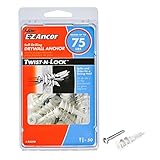
I’d seen them everywhere: those little plastic doodads that supposedly let you hang anything on drywall. “Box anchors,” they called ’em. Honestly, I was skeptical. How could a tiny piece of plastic hold up a shelf full of books, let alone a TV mount? My first experience hanging a simple picture frame using a standard screw directly into drywall ended with a sad, lopsided disaster and a hole bigger than I expected. That’s when I finally gave in and bought a pack of those plastic anchors, wondering if box anchors are good for anything beyond collecting dust in my toolbox.
So, How Exactly Do These Plastic Things Work?
Alright, let’s get down to brass tacks about these things. Forget the fancy names; we’re talking about those plastic ribbed tubes, often accompanied by a screw. They’re designed to give a screw something solid to bite into when you’re mounting something to drywall. Drywall, for all its ubiquity, is basically compressed gypsum plaster sandwiched between paper.
It’s brittle and has very little structural integrity on its own. If you just screw directly into it, especially with any weight, you’re asking for trouble. The screw threads have nothing to grip, and eventually, they’ll pull right out, taking a chunk of your wall with them.
Ask me how I know. My ‘DIY’ bookshelf lasted about three weeks before it sagged like a deflated balloon. Box anchors, or more commonly called drywall anchors, work by expanding or providing a larger surface area for the screw to engage with. The most basic ones are the ‘expansion anchors.’
You drill a hole, shove the anchor in, and then screw into it. As the screw goes in, it pushes the anchor’s ribs outwards, wedging it tightly against the inside of the drywall.
It’s like giving the screw a much bigger foothold. Some are even designed to spread out behind the drywall, creating a sort of toggle effect, though those are usually a bit more involved than your standard plastic plug. The idea is simple: turn a weak material into something that can actually bear a load. It’s not magic, but for certain applications, it’s a clever workaround to a fundamental building material limitation.
They’re cheap, readily available, and for light- to medium-duty jobs, they can be surprisingly effective. But and this is a big ‘but’ – they are NOT a substitute for proper structural support, like hitting a wall stud.
What to Look for (and What to Ignore)
Walking down the hardware aisle, you’ll see a bewildering array of these things. Some look like simple cones, others have wings, some are self-drilling, and then you have the toggle bolts which are a whole different ballgame.
For the most common scenario, hanging a picture, a shelf for lighter items, or a curtain rod, you’re probably looking at the plastic expansion anchors. They come in various sizes, usually indicated by the size of the drill bit you need and the weight they’re rated for. Here’s the thing: those weight ratings? Treat them with a healthy dose of skepticism.
A manufacturer might say an anchor can hold 50 pounds. Great. In a perfect, theoretical world, maybe.
In your actual wall, with its imperfections and the dynamic forces of everyday life (like someone bumping into the shelf), that 50 pounds is more like 10-20 pounds, tops. I learned this the hard way when a shelf designed for, say, 30 pounds of books, ended up halfway on the floor because I trusted the label a little too much. What I’ve found works best is looking at the size of the anchor.
A fatter, longer anchor generally has more surface area to grip. Also, pay attention to the type of screw it comes with or recommends. (See Also: Can Concrete Anchors Be Used In Brick )
A fatter screw will also provide a better hold. For anything heavy – and I mean anything that could cause injury if it falls, like a TV mount or a substantial piece of furniture – plastic anchors are out of the question. You need to find a stud.
If you can’t find a stud, you need heavy-duty anchors designed for that specific purpose, like toggle bolts or molly bolts, and even then, you’re relying on the integrity of the drywall itself, which isn’t ideal. For basic wall hangings, though, a good quality plastic anchor, used within reason, can be perfectly adequate. Just don’t go hanging your entire collection of antique encyclopedias on them.
Common Mistakes That Lead to Wall Disasters
You’d think hanging a picture is simple, right? Wrong. I’ve seen, and committed, enough mistakes with drywall anchors to fill a small manual.
The most obvious one? Not finding a stud. I know, I know, studs aren’t always where you want them to be. But if you’re hanging something substantial, like a mounted TV or a heavy mirror, a stud is your best friend.
Using anchors when a stud is available is like using a crutch when you can walk perfectly fine. Another common blunder is using the wrong size anchor for the job. You drill a hole that’s too big, and the anchor just rattles around loosely. Or you use an anchor that’s too small for the weight, and it pulls out.
It’s a delicate balance, and often, trial and error is involved. I’ve had to patch holes multiple times because I underestimated the required anchor size.
Then there’s the over-tightening. You crank on that screw like it owes you money, and you end up stripping the threads inside the anchor or, worse, cracking the drywall around it. Gentle and firm is the mantra. My biggest personal screw-up?
Assuming all plastic anchors were created equal. I once bought a generic, no-name brand pack because they were cheaper.
They looked fine, but they were made of a softer plastic. They deformed under load and pulled out, taking the drywall with them. That taught me to stick with reputable brands. It’s worth a few extra bucks for anchors that won’t fail you.
Finally, people often forget about the weight of the items they’re hanging. A shelf might be rated for 20 pounds, but if you load it with 30 pounds of books, the anchor is going to fail, regardless of how well it was installed. Always err on the side of caution with weight limits.
Real-World Use: When Box Anchors Actually Shine
Okay, so we’ve established they’re not for mounting your entire home theater system. But are box anchors good for anything? Absolutely. For light-duty tasks, they’re fantastic. (See Also: Can Cords Be Used To Make Anchors Climbing )
Think about hanging lightweight framed photos, small decorative shelves, curtain rods for sheer curtains, or even that tricky toilet paper holder in a bathroom where studs are a pipe dream. I recently hung a set of three small floating shelves in my entryway for keys and mail.
I used decent quality plastic anchors, drilled the appropriate hole size, and screwed them in gently. They’ve been up for months, holding a surprising amount of clutter, and they’re still perfectly flush with the wall.
That felt like a win. Another time, I needed to hang a set of lightweight acoustic foam panels in my home office.
These things are bulky but don’t weigh much. Standard screws wouldn’t have held them long-term, but the plastic anchors did the trick beautifully. They provided just enough grip without damaging the delicate foam.
The key here is understanding the limitations and choosing the right anchor for the specific application. If the item you’re hanging weighs less than a bag of potatoes and doesn’t have sharp edges that could put undue pressure on one spot, a good plastic anchor is probably your best bet. They’re quick, cheap, and easy to use.
My advice? Keep a variety pack of different sizes of good quality plastic anchors handy. For those moments when you absolutely cannot hit a stud, but the item is definitely not heavy, they are a lifesaver. They saved me from having to patch a wall over a simple picture frame, which is a win in my book.
A Practical Comparison Table: Anchors vs. Studs
When you’re deciding what to use, it’s useful to see the options laid out. Here’s a quick rundown, with my personal take on each. Remember, this is for general DIY stuff, not professional construction.
| Method | Best For | Pros | Cons | My Verdict |
|---|---|---|---|---|
| Screwing Directly into Drywall | Absolutely nothing of value. Maybe a feather. | Easy? (If you ignore the inevitable failure). | Will fail. Guaranteed. Tears up the wall. | Never. Just don’t. |
| Standard Plastic Expansion Anchors (Box Anchors) | Lightweight items: pictures, small shelves, curtain rods for sheer curtains. | Cheap, easy to find, simple to install for light loads. | Limited weight capacity, can fail if overloaded or installed improperly, can loosen over time. | Good for what they are, if used wisely. Don’t push it. |
| Self-Drilling Anchors | Light to medium-light items, where you want to avoid a separate drill bit step. | Faster installation than traditional plastic anchors, often provide a slightly better grip. | Still limited weight capacity, can be tricky to remove, can damage drywall if overtightened. | A step up from basic plastic if you’re in a hurry, but still not for heavy items. |
| Toggle Bolts / Molly Bolts | Medium to heavy items where studs aren’t available (e.g., hollow doors, thicker drywall). | Much higher weight capacity than plastic anchors, provide a strong hold in hollow walls. | Require a larger hole, installation is more complex, can be bulky behind the wall, require specific tools. | The go-to for medium-heavy when studs are impossible. A solid choice. |
| Screwing Directly into Wall Studs | Anything substantial: heavy shelves, TV mounts, cabinets, anything load-bearing. | Strongest possible hold, extremely reliable, safe for heavy items. | Requires locating a stud (use a stud finder!), can be difficult to hit precisely where you want. | The gold standard. Always find a stud if you can. |
People Also Ask: Common Anchor Questions
Can You Hang a TV on Drywall?
Generally, no, you should not hang a TV directly on drywall using only plastic anchors. TVs are heavy, and the force they exert, especially if bumped, is significant. You absolutely must locate wall studs and mount the TV bracket directly into them. If studs are not perfectly positioned, use heavy-duty anchors specifically designed for TV mounts that have extremely high weight ratings and a wide spread behind the drywall, but even then, studs are always the safest bet.
What Holds More Weight, Drywall Anchors or Screws?
Screws alone hold almost no weight in drywall. Drywall anchors, even basic plastic ones, hold significantly more weight than a screw directly into drywall because they distribute the load and provide a better grip. However, screws driven directly into wall studs are by far the strongest and can hold hundreds of pounds, far exceeding any drywall anchor’s capacity.
How Do You Make Drywall Anchors Stronger?
You don’t ‘make’ drywall anchors stronger; you choose the right type for the load. For increased strength in drywall without studs, use toggle bolts or molly bolts, which have a much higher weight rating than plastic anchors. Making sure the anchor is the correct size for the hole and the screw is also tightened properly without overtightening is key to maximizing its holding power. Ultimately, the strongest hold comes from anchoring into a wall stud.
Are There Anchors Better Than Plastic Ones?
Yes, absolutely. While plastic anchors are fine for very light items, there are many better options for heavier loads. Toggle bolts, molly bolts, and screw-in anchors (for lighter loads but often more secure than basic plastic) are all generally stronger and more reliable than standard plastic expansion anchors. The best anchor depends entirely on the weight of the item you’re hanging and the type of wall material. (See Also: Can Anchors In Your Shoulder Break )
Tips for Success (so You Don’t End Up Patching Walls)
Look, nobody likes spackling holes. It’s messy, it takes time, and it’s a constant reminder of a DIY fail. So, here are a few things I’ve learned that usually keep my walls intact and my hangings secure. First off, get a decent stud finder.
Not the $5 plastic toy; invest in one that actually works. Most of them have a little light or a beep that tells you when you’re over a stud.
Mark the stud location clearly. If you’re hanging something that spans multiple studs, great.
If it falls between studs, you’ll need anchors. For those times, and only those times, use good quality plastic anchors. Don’t cheap out.
Buy a pack from a reputable brand, and make sure you have the right size drill bit for the hole. Drill the hole cleanly, and then gently tap or push the anchor in. It should be snug, not forced.
When you drive the screw, do it steadily. If you feel too much resistance or hear cracking, stop. You might have missed the anchor or cracked the drywall. For curtains, shelves holding books, or anything that might get bumped, I always add a little bit of construction adhesive on the back of the plastic anchor before I insert it.
It gives it extra grip and prevents it from rotating if you ever need to remove the screw. It’s a small extra step, but it’s saved me headaches. Finally, if you’re ever in doubt, especially with anything heavier than a framed poster, just find a stud.
Seriously. It’s always the better, safer, and more reliable option. Don’t learn this lesson the hard way like I did with that leaning tower of books.
Final Thoughts
So, are box anchors good? My honest take is that they’re not magic bullets for every hanging job, but they are incredibly useful tools when used for their intended purpose. They’re best for light-duty tasks where hitting a wall stud just isn’t feasible or necessary. Think small pictures, lightweight decor, or temporary fixtures. They’re cheap, easy to use, and for those specific jobs, they do exactly what they’re supposed to do.
However, it’s important to understand their limitations. Don’t try to hang your TV, a heavy mirror, or a substantial bookshelf on plastic anchors. You’ll regret it. For anything with significant weight or that could cause damage if it falls, you absolutely must find a wall stud. If you can’t find a stud and need to hang something heavier, you’ll need to step up to more solid hardware like toggle bolts.
Ultimately, knowing when to use a box anchor and when to use something else, or better yet, a stud, is the real trick. Keep a good variety pack on hand for those lighter jobs, but always prioritize structural support for anything substantial. It’ll save you time, money, and a whole lot of wall patching.