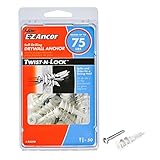
I’ve been there. Staring at a wall, a new piece of art or a shelf, and realizing the flimsy plastic anchors that came with it are, frankly, a joke. Then I stumbled upon those little mushroom-shaped doodads. They look weird, I’ll give you that. But are mushroom anchors good? That’s what we’re here to figure out, no corporate fluff, just the real deal from someone who’s actually used them. I’ve wrestled with drywall, cursed at anchors that spun loose, and wasted more money than I care to admit on hardware that promised the moon and delivered dust.
So, let’s cut through the noise. I’m going to tell you what I’ve learned, the good, the bad, and the downright ugly, so you don’t have to make the same mistakes I did.
So, What Exactly Are These Mushroom Anchors?
Alright, let’s get down to brass tacks. When people talk about mushroom anchors, they’re usually referring to a specific type of drywall anchor designed for lighter loads. The name comes from their shape – a wider, flat head that sits on the surface and a slimmer shaft that goes into the wall. When you screw into them, the shaft expands or flares out behind the drywall, creating a sort of mushroom cap on the inside.
Think of it like a tiny umbrella opening up in the void behind your wall. This ‘cap’ is what gives it its holding power.
They’re typically made of plastic, sometimes a softer, more pliable kind, and come in various sizes depending on the screw they’re meant to hold.
I remember the first time I saw them. I was trying to hang a ridiculously light decorative mirror, the kind that probably weighs less than a feather boa. The standard cone-shaped plastic anchors felt too aggressive, and I worried they’d just crumble the drywall.
I saw these little mushroom guys in the hardware store, and they seemed less… violent. I figured, why not? They looked like they’d distribute the weight better just by that wider head. I screwed one in, popped the little plastic retainer off, and then screwed my mirror bracket into it.
It felt surprisingly solid for something so small and unassuming. It didn’t pull out, and the mirror stayed put. My initial reaction was, ‘Huh, okay, maybe these aren’t so bad after all.’
It was a pleasant surprise, considering how many times I’ve been burned by promising hardware.
The core mechanism is simple: insertion and expansion. You drill a hole, push the anchor in, and when you drive the screw, the anchor’s body deforms behind the drywall surface. This deformation creates a larger surface area of contact on the blind side of the wall, preventing the anchor from pulling through. It’s not rocket science, but it’s effective for what it’s designed for.
The key here is ‘what it’s designed for’. You’re not hanging a 50-pound flat-screen TV on these bad boys, but for picture frames, light shelving, or small decorative items, they can be a perfectly viable option. They’re also pretty forgiving if you accidentally overtighten them a bit; they tend to yield rather than snap outright, which is more than I can say for some of their more rigid counterparts.
The common advice you’ll hear is that plastic anchors are inherently weak. And sure, compared to a toggle bolt or a molly bolt, they are. But for the vast majority of tasks around the house that don’t involve supporting the weight of a small child or a fully-stocked bookshelf, they’re often more than adequate. This is where the ‘are mushroom anchors good’ question really hinges on expectation and application. Are they a miracle cure for all your hanging needs? Absolutely not. Are they a decent, readily available, and often very inexpensive solution for light-duty tasks? Yes, they can be.
The Good, the Bad, and the Spinny
Let’s get into the nitty-gritty of what makes these little guys tick, and where they sometimes fall flat on their face. The biggest win for mushroom anchors is their simplicity and cost. You can buy a bag of them for a few bucks, and they’re incredibly easy to use.
Drill a hole, tap it in, screw it in. That’s it.
No special tools, no complex mechanisms to fiddle with. This makes them a go-to for folks who aren’t exactly DIY wizards, or for those quick fixes when you just need something to hang now. The softer plastic can also be a plus; it’s less likely to crack your drywall during installation if you’re not perfectly precise with your drill bit size or hammer tap. (See Also: Can Concrete Anchors Be Used In Brick )
However, here’s where the rubber meets the road, or rather, where the anchor meets the wall and decides to… spin. The main drawback, and it’s a big one, is their tendency to spin in the hole. If the hole you drilled is even slightly too big, or if the drywall is particularly crumbly, the anchor won’t get a good grip.
When you start screwing into it, instead of expanding properly, the whole anchor just rotates in the hole. This is infuriating. You end up with an anchor that’s basically useless, stuck in the wall, and you have to dig it out, patch the hole, and start over.
I once spent a solid 20 minutes trying to get a particularly stubborn mushroom anchor to bite, only to realize it was just spinning merrily. I ended up having to cut it out with a utility knife, which was messy, and then I just used a heavier-duty anchor that I knew would grip. It’s a frustrating experience that’s cost me time and a perfectly good screw.
Another issue is their weight rating. While they are cheap and easy, they’re not designed for heavy loads.
If you overstep the mark and try to hang something too heavy, you’ll find out quickly. The anchor might hold for a while, but eventually, the stress will cause it to pull out, or the drywall around it will crumble.
This can lead to dropped items, damaged walls, and a general sense of disappointment. They are best suited for items that weigh a pound or two, maybe up to five pounds if the drywall is in excellent condition and the anchor is properly installed. Anything more, and you’re really pushing your luck, and I’d strongly advise looking at screw-in anchors, toggle bolts, or snap toggles.
Here’s a quick comparison table that sums up my personal take:
| Anchor Type | Ease of Use | Holding Power (Light Duty) | Holding Power (Heavy Duty) | Cost | My Verdict |
|---|---|---|---|---|---|
| Mushroom Anchor | Excellent | Good | Poor | Very Low | Good for very light items, but watch out for spin! |
| Screw-in Anchor (e.g., E-Z Ancor) | Good | Very Good | Moderate | Low | Generally more reliable than mushroom for slightly heavier loads. |
| Toggle Bolt | Moderate | Excellent | Excellent | Moderate | The go-to for serious weight. |
| Snap Toggle | Good | Excellent | Excellent | Moderate | Similar to toggle bolts, often easier to install. |
This table shows my real-world experience. While mushroom anchors are cheap and easy, their reliability for anything beyond a lightweight picture frame is questionable. The ‘spinning’ issue is a recurring problem that many DIYers face, and it’s something you need to be prepared for. So, while they have their place, understanding their limitations is key.
Common Mistakes and How to Avoid Them
Let’s talk about the pitfalls. You’ve got your mushroom anchors, you’re ready to hang that picture, and then BAM, disaster strikes.
Often, the problem isn’t the anchor itself, but how it’s used. The most common mistake I see, and one I’ve made myself, is using the wrong drill bit size. These anchors are often designed for a specific drill bit diameter. If you go too small, you won’t get the anchor in properly, and it won’t expand.
If you go too big, you’ll drill a hole that’s too wide, and that’s where the dreaded spinning starts. Always, and I mean always, check the packaging for the recommended drill bit size. It’s usually printed right there in small font. If you’re unsure, err on the side of slightly smaller and tap it in gently.
You can always ream it out a bit if it’s too tight.
Another biggie is installing them in the wrong type of wall material. While they’re designed for drywall, they’re not magic. If your drywall is old, crumbly, or has been damaged previously, the anchor simply won’t have a solid surface to expand against. Trying to force one into a section of wall that’s already soft or damaged is a recipe for failure. You’ll end up with a loose anchor and a bigger hole than you started with. It’s better to recognize weak drywall and use a more solid anchoring solution, like a toggle bolt, or even consider finding a stud if the weight warrants it. Sometimes, the best ‘anchor’ is a solid piece of wood.
Over-tightening is another classic blunder. People think ‘more torque means more secure.’ Not with these. Once the anchor is snug and you feel resistance as it expands, stop. If you keep cranking on the screw, you can strip the threads inside the anchor, or worse, you can crack the drywall around the anchor. A stripped anchor won’t hold anything, and cracked drywall means a weakened spot. You want it firm, not fused into the wall by sheer force. Think of it as a firm handshake, not a bone-crushing grip. (See Also: Can Cords Be Used To Make Anchors Climbing )
Finally, and this is a lesson learned the hard way: don’t assume they’ll hold more than they’re designed for. A lot of people see ‘anchor’ and think ‘heavy duty.’ Mushroom anchors are for light duty. If you’re hanging a shelf that’s going to hold books, or a coat rack that’s going to be yanked on, these are not your friends.
I once tried to hang a small spice rack with a few jars on it, and within a week, the whole thing was sagging. I pulled it down, and the anchors had just pulled through the drywall.
It was a classic case of trying to make a lightweight anchor do a medium-weight job. So, be honest about the weight you’re hanging.
If in doubt, go with a stronger anchor.
Here are the key mistakes to sidestep:
- Using the wrong drill bit size (too big = spin, too small = won’t fit).
- Installing in damaged or crumbly drywall.
- Over-tightening the screw.
- Exceeding the weight limit.
By paying attention to these details, you can significantly increase your chances of success when using mushroom anchors.
Real-World Applications: When Do They Shine?
So, if they’re not for heavy lifting, where do mushroom anchors actually perform well? Think of them as the reliable workhorses for the really lightweight stuff. My go-to application for them is hanging lightweight wall decor. We’re talking about those unframed canvas prints that weigh next to nothing, small decorative plates you’ve collected, or even a set of those trendy geometric metal wall hangings. These items are typically under two pounds, and the mushroom anchor handles them with ease. They provide a clean, flush finish against the wall, and you don’t get that bulky plastic flange sticking out like you do with some other types of anchors.
Another surprisingly good use is for securing cables or light conduit. If you’re running some low-voltage wiring for a speaker or a smart home device, and you need to tack it neatly along a baseboard or wall, a few strategically placed mushroom anchors can hold those small plastic clips or even the conduit itself. They’re unobtrusive and don’t mar the wall excessively. I used them to tack up some fairy lights around a doorway for a party, and they worked perfectly. The little clips for the lights fit snugly into the anchors, and the lights looked great, held securely without any visible hardware issues. It’s the kind of job where a heavy-duty anchor would be overkill and frankly, look unsightly.
I’ve also seen people use them for very light-duty shelving, and I’m talking very light. Think about a small piece of wood with a couple of lightweight ceramic figurines on it. This is borderline, and I wouldn’t do it in a high-traffic area or where there’s any chance of bumping the shelf.
The key here is that the shelf itself is light, and the items on it are also light. If you’re thinking about a book shelf, or anywhere you’d put something with any significant weight, steer clear. I tried this once for a tiny shelf meant to hold my keys by the front door. It worked for a while, but I noticed it started to sag after about six months.
I eventually replaced it with a screw-in anchor that had a wider flange to distribute the weight better on the drywall surface.
The absolute best-case scenario for mushroom anchors is when you’re screwing them into a wall that’s in good condition, using the correct drill bit, and attaching something that weighs very little. They’re also great for situations where you might need to remove the item later and want minimal damage to the wall. Because they expand behind the drywall, you can often remove the screw, and the anchor itself might be salvageable or leave a smaller hole than other types of anchors. This is especially useful for temporary installations or for renters who need to keep wall damage to a minimum.
Here’s a quick rundown of applications where they can work:
- Hanging lightweight picture frames (under 2 lbs).
- Securing small decorative wall art.
- Tacking down low-voltage wiring or thin cables.
- Holding lightweight curtain tie-backs.
- Very light-duty displays for small, non-fragile items.
Anything beyond this, and you’re venturing into risky territory where you’re likely to be disappointed. (See Also: Can Anchors In Your Shoulder Break )
The Contrarian View: Why I Sometimes Pick Them Over Others
Now, here’s where I might ruffle some feathers. Everyone seems to preach that plastic anchors are for amateurs and that you should always go for metal anchors, toggle bolts, or anchors that screw directly into the stud. And yes, for heavy-duty applications, they are absolutely right. But for certain situations, I find myself reaching for mushroom anchors precisely because they are plastic and because they are simple. My contrarian stance is this: when you need a quick, non-damaging, super-light-duty fix, and you don’t want to mess around with tools or make a big hole, mushroom anchors are sometimes the best choice, despite their reputation.
Think about it. You’re renting an apartment, and you want to hang a small, inexpensive mirror in the bathroom. You don’t want to put a huge hole in the wall that you’ll have to patch extensively later. A mushroom anchor, if installed correctly, leaves a relatively small hole.
If you ever need to remove it, you can often just pull the anchor out and fill the small cavity with spackle. Compare that to the larger hole left by a toggle bolt or the more significant disruption of screwing into a stud (which you might not even be able to locate reliably).
For these temporary, light-load situations, the ease of installation and minimal wall damage can outweigh the potential for spin. It’s about choosing the right tool for the specific job, not just grabbing the heaviest-duty option available.
Furthermore, I’ve found that some of the softer, more flexible plastic mushroom anchors can actually provide a better grip in certain types of plaster walls, which can be more brittle than drywall. While they might still spin if the hole is too large, they are less likely to cause immediate cracking compared to a harder plastic or metal anchor. I’ve used them in a few older homes where the plaster was in decent shape, and they held surprisingly well for lightweight items. It’s not a universal rule, but it’s an observation from my own tinkering.
The other reason I’ll pick them is pure speed and convenience. If I’m hanging a series of small, identical frames in a gallery wall, and each one weighs less than a pound, drilling a small pilot hole, tapping in a mushroom anchor, and screwing in the hook takes seconds.
Doing that for ten frames with toggle bolts would take significantly longer and involve more potential for error. It’s a pragmatic choice when the load is minimal and the speed of execution is a priority. I know the common advice is to always go heavier, but sometimes, a light touch is exactly what’s needed, and the mushroom anchor, for all its faults, can provide that touch effectively when used within its very specific limitations. It’s about understanding that ‘good enough’ is sometimes precisely what you need, and over-engineering a solution for a lightweight problem can be a waste of time and resources.
Frequently Asked Questions About Mushroom Anchors
How Much Weight Can a Mushroom Anchor Hold?
This is the million-dollar question, and the honest answer is: it varies. Generally, mushroom anchors are rated for very light loads, typically between 5 to 15 pounds in ideal conditions. However, in practice, I’d be comfortable trusting them for no more than 5 pounds, and often much less for peace of mind. The actual holding power depends heavily on the condition of your drywall, the size of the anchor, and how well it’s installed. For anything important or heavy, do NOT rely on this range.
Can You Reuse Mushroom Anchors?
Technically, you might be able to. If you remove the screw and the anchor comes out intact without the plastic flange breaking or the body deforming too much, you could try to reinsert it. However, their holding power often diminishes with reuse, and the risk of the anchor spinning in the hole increases. For best results and security, it’s usually recommended to use a new anchor for each installation.
What’s the Difference Between Mushroom Anchors and Other Plastic Anchors?
Mushroom anchors typically have a broader, flatter head and a more flexible shaft that flares out behind the drywall. Other common plastic anchors, like ribbed or conical ones, might expand more aggressively or have deeper ribs to grip the drywall. The mushroom shape is designed to distribute force over a wider area, theoretically preventing pull-through, while simpler ribbed anchors rely on friction and expansion within the hole. Their effectiveness can vary greatly depending on the specific design and wall material.
Are Mushroom Anchors Good for Plaster Walls?
They can work on plaster, but with caveats. Plaster can be more brittle than drywall, meaning over-expansion or aggressive force can cause it to crack. Some softer plastic mushroom anchors might be gentler than harder anchors. However, if the plaster is old or weak, the anchor may not find a solid surface to grip, leading to spinning. It’s a bit of a gamble, and a screw-in anchor designed for plaster might be a more reliable choice.
How Do I Stop a Mushroom Anchor From Spinning?
The best way to prevent spinning is to make sure you’re using the correct drill bit size for the anchor and that your hole isn’t too large. If it starts spinning during installation, stop immediately. You might be able to carefully wiggle it out and try again with a slightly smaller bit or a different anchor. If it’s already spun and loose, you’ll likely need to remove it (which can be tricky) and patch the hole before trying a different anchor type, possibly a toggle bolt or molly bolt for better grip.
Conclusion
So, are mushroom anchors good? My honest answer is: they’re good for some things, and pretty terrible for others. They’re cheap, readily available, and easy to pop into a wall for lightweight items like a small picture frame or a cable clip. Think of them as a temporary fix or a solution for things that weigh practically nothing. But if you’re expecting them to hold up anything substantial, or if you’re dealing with questionable drywall, you’re setting yourself up for a frustrating experience. I’ve learned to respect their limitations, and when a job calls for a bit more strength or reliability, I move on to something sturdier.
The key takeaway is to manage your expectations. Don’t try to hang a mirror that could break your foot with a mushroom anchor. Stick to what they’re designed for. If you’re in doubt about the weight or the wall’s integrity, always err on the side of caution and choose a more solid anchoring solution. It’s better to spend a few extra dollars on a toggle bolt than to deal with a fallen item and a damaged wall.
Ultimately, they have a place in the toolbox, but it’s a small, light-duty corner. So, next time you’re staring at a wall, consider what you’re hanging and be realistic about what these little mushroom-shaped guys can actually do. Are mushroom anchors good? Yes, but only if you use them for the right job.