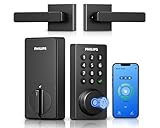
I remember staring at that sleek, new smart lock for a solid hour. It promised so much – no more fumbling for keys in the dark, letting the dog walker in remotely, the whole nine yards. But then came the nagging question: are keyless door locks easy to install? I’d already wasted a chunk of cash on a smart thermostat that turned out to be a glorified light switch, so I was understandably wary.
The box itself looked intimidating, a mess of screws, batteries, and what felt like a dozen little plastic bits. My initial thought was, ‘This is going to be a nightmare.’ I’m not exactly a DIY guru, more of a ‘read the instructions very, very carefully and still mess it up’ kind of person.
But let me tell you, my actual experience was… well, it was a surprise. A good one.
My First Keyless Lock: A DIY Disaster Waiting to Happen?
Let’s get this straight: I am not a carpenter. My toolbox contains a hammer, a Phillips head screwdriver (bless its soul), and a tape measure I mostly use to check if my pizza is flat enough. When I decided to upgrade from my ancient deadbolt, the question ‘are keyless door locks easy to install?’ loomed large. I’d seen those fancy ads with smiling families breezing through their doors, but my reality usually involves stripped screws and muttered curses. This specific lock I bought, a mid-range smart lock that boasted Bluetooth and a keypad, felt like a gamble. It cost me about $180, which felt like a lot for something I might end up calling a locksmith for.
The box contained the keypad unit, the interior assembly, a bolt, a strike plate, and a bewildering array of screws and mounting hardware. The instructions were… present. They had diagrams. Lots of diagrams.
My first hurdle was removing the old deadbolt. That was surprisingly straightforward – a couple of screws, and the whole thing came apart.
So far, so good. Then came the new bolt. This is where things usually go south for me.
The new bolt had to fit perfectly into the hole on the edge of the door. I’d say I spent a good fifteen minutes just wiggling and nudging it, making sure it slid smoothly. It did. I was starting to feel a flicker of hope.
The interior assembly was next, and this involved feeding a cable from the keypad to the interior unit. Again, the instructions were clear enough that even I could follow them. I connected the wires, slotted the interior unit into place, and secured it with screws.
The moment of truth was attaching the keypad to the exterior. It snapped on with a satisfying click. I popped in the batteries. The screen lit up.
I typed in the default code. And the door… locked. I turned the knob.
It was solid. I opened it. The bolt retracted. Success!
It took me about 45 minutes, from start to finish, and honestly, I was bracing myself for a much longer, more frustrating afternoon. So, to answer the initial question for my first foray: yes, this one was surprisingly easy.
What Makes a Keyless Lock ‘easy’ to Install? The Devil’s in the Details
When you ask ‘are keyless door locks easy to install?’, the answer really hinges on a few key things. It’s not just about having a screwdriver. (See Also: Are There Different Size Holes For Installing Door Locks )
First off, your existing door hardware is a massive factor. Most smart locks are designed to fit standard US door preps.
That means if your current deadbolt is a standard size, you’re probably golden. The bolt on the edge of the door needs to align perfectly with the frame.
If your door frame is warped or the current hole is slightly off, you might have trouble getting the new bolt to slide smoothly. I learned this the hard way with a friend’s older house where the frame had shifted over the years.
We had to do a bit of chiseling to get the new strike plate to sit flush.
Then there’s the battery situation. Most keyless locks run on AA or 9V batteries. Some high-end ones might have rechargeable packs, but the vast majority are standard batteries. This is generally a good thing – easy to replace. However, you need to make sure you have fresh batteries before you start. Nothing is more annoying than getting everything installed, only to realize you can’t power it up. I made that mistake with a smart light switch once, and the ensuing trip to the store felt like an eternity.
The physical connection between the interior and exterior parts is another point. Most systems use a cable that you need to thread through the door. This is usually not a big deal, but sometimes the cable is a bit stiff, or the hole in the door isn’t quite big enough. A little gentle persuasion usually does the trick, but if you have to force it, stop and re-check your alignment.
The mounting screws are also important. They need to be snug, but not so tight that you strip the threads or crack the plastic. This is where a good quality screwdriver is your friend. For most of the locks I’ve fiddled with, the installation process is designed to be intuitive.
The pieces usually only fit together one way, which helps prevent errors. Think of it like LEGOs for grown-ups, but with more important security implications.
Finally, the app setup. While not strictly installation, it’s part of the initial setup. If the app is clunky or the pairing process is a nightmare, it can sour the whole experience. I’ve seen apps that look like they were designed in 1998, making it a chore to add users or set schedules. Most reputable brands have decent apps now, but it’s worth a quick look at reviews specifically mentioning the app’s user-friendliness before you buy.
Common Pitfalls and How to Avoid Them
Okay, so if you’re asking ‘are keyless door locks easy to install?’, you also need to know where people tend to mess up. It’s not always about a lack of skill; sometimes it’s just overlooking the obvious. My biggest personal blunder? Not checking the backset measurement of the bolt.
Most locks have a standard 2 3/8 inch backset, but some doors might have a 2 3/4 inch. If the new bolt is too short, it won’t reach the latch mechanism inside the door, and your lock will be useless. I realized this when the bolt on my second smart lock installation just didn’t quite engage.
I had to run back to the store to swap it out. Annoying, but easily avoidable if you measure first.
Another common issue is battery orientation. I know, it sounds ridiculously simple, but in the dim light of a hallway, or when you’re rushing, it’s easy to pop a battery in backwards. Most locks have a little diagram showing the correct way, so pay attention to that. Forgetting to remove the old bolt’s hardware is also a thing. You’d think people would notice, but I’ve heard stories of people trying to install the new lock over the old one. Don’t be that person. Clear out the old stuff completely. (See Also: Are Sesame Seeds Kosher For Passoveris Pollock Kosher )
Alignment is king. I mentioned it before, but it bears repeating. The bolt needs to slide into the strike plate on the door frame without any resistance. If it’s binding, don’t force it. You’ll either damage the bolt or the door frame. Check the alignment from the inside and outside. Sometimes the door itself might be sagging, or the frame has settled. A quick check with a level can save you a lot of grief. If the bolt isn’t going in smoothly, you might need to slightly enlarge the hole in the door frame for the strike plate or adjust the plate itself. A file or a chisel can be your friend here, but go slow. Patience is key.
Finally, the wiring. If your lock has a cable connecting the exterior keypad to the interior unit, make sure it’s not pinched or frayed when you assemble the two halves. Most connectors are pretty solid, but a clumsy hand can still cause damage. Always double-check that the cable is seated correctly and not caught in the moving parts. For those using a smart lock with a touchscreen, fingerprint scanners, or other advanced features, there are often specific calibration steps in the app. Rushing through these can lead to unreliable performance down the line. Take your time with the setup wizard.
Here’s a quick rundown of what to look for:
| Feature | My Verdict | Why |
|---|---|---|
| Door Prep Compatibility | Generally Good | Most locks fit standard US doors. Check your existing measurements. |
| Battery Type | Standard AA | Easy to find and replace. Keep spares handy. |
| App Interface | Varies Wildly | Look for reviews mentioning ease of use. A bad app ruins a good lock. |
| Physical Assembly | Usually Intuitive | Pieces often only fit one way, simplifying installation. |
| Connectivity | Bluetooth/Wi-Fi | Bluetooth is simpler for local control. Wi-Fi adds remote access but needs a hub sometimes. |
Real-World Use: Beyond the Install
So, you’ve wrestled the lock into submission and it’s on your door. Great. But are keyless door locks easy to live with? This is where the rubber meets the road, and my experience has been a mixed bag, leaning towards positive. The convenience is, frankly, addictive. Not having to dig through my pockets or purse when my hands are full of groceries or holding a screaming toddler is a genuine lifesaver. The ability to give temporary access codes to guests or service providers is fantastic. I once had a plumber coming while I was at work, and I just sent him a code that expired after two hours. No need to coordinate schedules or leave a key under a gnome.
However, there’s a learning curve, and sometimes, the ‘smart’ aspect can be a pain. Battery life is the big one. While most claim months of use, it varies wildly depending on how often the lock is used and the temperature. I’ve had a lock’s battery die on me in the dead of winter after only two months, leaving me in a slightly panicked situation until I found the backup battery pack. This is why I always keep a spare set of batteries nearby and a small tool kit hidden somewhere accessible, just in case.
Connectivity can also be a hiccup. If your lock relies on Wi-Fi and your internet goes down, or your router decides to take a nap, you might lose remote access. Many locks have a fallback Bluetooth connection for this, but it’s not always as smooth as you’d hope. I’ve had a few instances where the app just wouldn’t connect via Bluetooth, and I had to resort to the old-fashioned backup key (which, thankfully, most still come with). It’s a good reminder that no technology is foolproof.
The security aspect is another area people worry about. The common advice is that these locks are secure, but I’ve always been a bit cautious. I tend to stick with reputable brands that have good security track records. The idea of someone hacking into my door lock is… unsettling. For this reason, I’m a big fan of locks that offer multiple authentication methods – a keypad, a fingerprint scanner, and a physical key backup. The more layers, the better, in my opinion. I’ve seen too many news reports about smart home vulnerabilities to be completely complacent.
The physical durability is also something to consider. Some of the cheaper plastic models I’ve encountered feel a bit flimsy. They might work fine for a while, but after a few years of constant use, especially in harsh weather, they can start to degrade.
I prefer models with a more solid metal construction, even if they cost a bit more upfront. The initial investment is worth it for something that’s going to be a primary entry point to your home for years to come. My current smart lock has a nice solid feel to it, and it’s held up well through a couple of brutal Michigan winters.
It gives me more peace of mind than the plastic alternatives I’ve tried in the past.
Keyless Door Locks: Are They Worth the Hassle? My Take
So, after all is said and done, and you’ve navigated the installation and the daily use, the big question remains: are keyless door locks easy to justify? For me, the answer is a resounding yes, with caveats. The sheer convenience factor is undeniable. I can’t stress that enough. Coming home with arms full of shopping bags and not having to juggle them to find a key is a luxury I’ve come to appreciate immensely. Letting my sister in when she’s visiting while I’m out is a breeze. No more hiding spare keys under the mat – a practice I always felt was about as secure as a chocolate teapot.
The initial setup, as I’ve detailed, can be surprisingly straightforward for most people. If you can handle a screwdriver and follow basic diagrams, you’re likely to succeed. It’s not rocket science, and for many brands, it’s designed specifically for the average homeowner. The peace of mind knowing that you can remotely check if your door is locked (or lock it if you forgot) is also a big plus, especially for those of us prone to second-guessing ourselves. I’ve done the ‘did I lock the door?’ mental check countless times while halfway to work, and being able to verify it on my phone is incredibly reassuring.
However, it’s not all sunshine and remote opening. You have to be prepared for the maintenance. Batteries die. (See Also: Are Sliding Door Locks Common )
Technology glitches. You need to have a backup plan – a physical key, a spare battery, and a basic understanding of how to troubleshoot. The idea that a keyless lock is a set-it-and-forget-it device is simply not true.
You need to be an engaged user. I’d also say that not all locks are created equal. The cheap, plastic models you see online might save you some cash upfront, but they often lack durability and may have less secure software. Investing in a reputable brand with a solid build and good reviews is, in my opinion, a must for a device that protects your home.
My personal contrarian take? Everyone talks about the tech and the app features, but I think the most important thing is the physical construction and the reliability of the core locking mechanism. If the lock itself is flimsy or the deadbolt jams, all the fancy app features in the world won’t make up for it. I’d rather have a slightly less feature-rich lock that’s built like a tank and never fails than a super-smart one that’s prone to issues.
The convenience is the big draw, but it needs to be built on a foundation of solid, reliable hardware. For the average homeowner, the answer to ‘are keyless door locks easy to install?’ is yes, and for most, they are absolutely worth the upgrade. Just do your homework and be prepared for a little bit of upkeep.
Frequently Asked Questions About Keyless Lock Installation
Do Keyless Door Locks Require Drilling New Holes?
Most keyless door locks are designed to replace existing deadbolts and use the standard door preparation found in most homes. This means they typically fit into the existing holes for the doorknob and deadbolt, so no new drilling is usually required. However, it’s always a good idea to check the specific lock’s requirements and compare them to your current door setup.
What Tools Do I Need to Install a Keyless Door Lock?
You’ll typically need a Phillips head screwdriver, and sometimes a flathead screwdriver. A tape measure is useful for confirming measurements. Some installations might benefit from a file or chisel if minor adjustments are needed for the strike plate or bolt alignment, but for most standard installations, basic tools are sufficient.
Can I Install a Keyless Door Lock on Any Door?
Keyless door locks are generally designed for standard exterior doors, especially those that already have a deadbolt. They are less common or practical for interior doors or specialized doors like screen doors, which often have different hardware and thicker frames. Always check the lock manufacturer’s specifications for compatibility with your door type and thickness.
How Long Does It Typically Take to Install a Keyless Door Lock?
For someone with basic DIY experience, the installation of a typical keyless door lock can take anywhere from 30 minutes to an hour. If you encounter unexpected issues with your door or frame, or if it’s your very first time doing anything like this, it could take a bit longer. The setup of the accompanying app might add a few extra minutes.
What Happens If the Battery Dies on a Keyless Door Lock?
Most keyless door locks have a backup method to open the door if the battery dies. This usually involves a hidden physical key override or a terminal on the exterior where you can temporarily connect a 9V battery to power the lock long enough to open it. It’s important to know your lock’s backup procedure and keep the necessary tools or batteries accessible.
Final Verdict
So, to wrap things up: are keyless door locks easy to install? For the most part, yes. The days of needing to be a master craftsman to upgrade your door hardware are largely over, thanks to manufacturers designing these locks with the average homeowner in mind. My own experience, from the initial intimidation to the surprisingly smooth installation of my first smart lock, confirms this.
However, ‘easy’ doesn’t mean ‘effortless’. You still need to pay attention, have the right screwdriver, and understand your door’s specific setup. Don’t be afraid to check measurements, read those instructions (even the tiny print), and have a backup plan for dead batteries. The convenience they offer is real and, in my opinion, well worth the small amount of effort required for installation and a bit of ongoing upkeep.
If you’re on the fence, I’d say go for it. Just pick a reputable brand, watch a couple of installation videos online for that specific model, and go into it with a clear head. You’ll likely find that upgrading your entry security and convenience is far less daunting than you imagined.