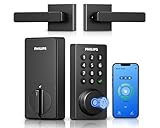
I remember standing in my driveway, wrestling with a new smart lock I’d bought after seeing it on a gadget blog. It was supposed to be the future. Instead, it was a blinking, beeping mess that refused to connect. That’s when I started thinking about the basics again, about brands that have been around forever, like Schlage. So, are Schlage door handles and locks good? I’ve been installing them, breaking them (accidentally, mostly), and living with them for years, and I’ve got some thoughts.
It’s easy to get seduced by the latest tech, but sometimes, the tried-and-true is exactly what you need. Schlage isn’t exactly a startup; they’ve been in the lock business for over a century. That kind of history tells you something, but it doesn’t automatically mean they’re still the best game in town. We need to dig into what makes a lock actually work and what you should expect from a brand like this.
Schlage’s Reputation: More Than Just a Pretty Handle?
Let’s get this straight: Schlage is a name you see everywhere. In apartment buildings, in new homes, on hardware store shelves. This ubiquity means they’re doing something right, but it also means they cater to a massive market, which can sometimes lead to compromises. For years, they were the default choice for builders, a solid, no-nonsense option that just worked. Think about it – how many times have you seen a Schlage lock and thought, ‘Yeah, that’s a lock’?
I’ve personally installed a bunch of Schlage deadbolts and doorknobs over the years, both on my own properties and helping out friends. My first foray into DIY lock replacement was a Schlage knobset for my garage entry. It was a simple job, and the mechanism felt solid. No flimsy plastic parts that felt like they’d snap under pressure. The weight of the metal, the satisfying click of the latch – it felt substantial, like it would actually deter someone who wasn’t supposed to be there. That’s a far cry from some of the cheaper brands that feel like they’re made of tin foil and hope.
The common advice is that Schlage offers a good balance of security, durability, and affordability. They’re not the cheapest locks out there, and they’re definitely not the most expensive. They sit comfortably in the middle, which is usually a good sign. It means they’re not cutting corners to hit a rock-bottom price point, but they’re also not charging you for features you’ll never use or a brand name that’s been overhyped. This middle ground is where most homeowners should be looking for everyday security.
I remember a friend who bought a house that had original Schlage locks from the 1970s. They were still functioning perfectly. Sure, they weren’t high-security, but the build quality was evident. That’s the kind of longevity that builds trust. You’re not just buying a lock; you’re buying a piece of hardware that’s designed to last, and that’s a big part of why they’ve stayed relevant for so long. It’s about that feeling of reliability when you turn the key, knowing that mechanism is going to engage properly every single time.
The Nuts and Bolts: What Makes a Schlage Lock Tick?
When you look at a Schlage lock, especially their traditional mechanical ones, you’re looking at solid construction. Most of their popular deadbolts and doorknobs use solid brass or zinc alloy for the body and internal components. This isn’t just about looks; it’s about strength. Metal parts resist bending, breaking, and wear better than plastic. This is why older Schlage locks still function – the core materials are just tougher.
Take their deadbolts, for example. Many feature a hardened steel bolt that’s designed to resist sawing and prying. The strike plate, the part that the bolt goes into on the door frame, is usually made of thick steel, often with long screws that go into the wall stud. This is a detail a lot of people overlook, but it’s important. A strong lock on a weak door frame is like putting a fancy lock on a cardboard box – it’s easily defeated. Schlage generally gets this right by providing hardware that’s meant to integrate with a secure frame.
Their internal mechanisms, like the pin tumbler system in most of their locks, are standard but well-executed. The pins and springs are made from durable materials. While you won’t find the incredibly complex master keying systems of commercial-grade locks in their residential offerings, the basic security they provide is sound. For most homes, the standard Schlage pin tumbler is more than adequate against casual burglary attempts. It’s about having enough resistance to make a thief move on to an easier target.
I had a situation once where a door frame had warped slightly due to humidity. The deadbolt was a bit stiff to operate. Instead of just forcing it, I was able to apply a bit of grease to the bolt and the strike plate, and the issue was resolved. The mechanism itself wasn’t the problem; it was the environment. The fact that the mechanism was still smooth and well-machined even with that slight resistance is a testament to the quality of the internal workings. Some cheaper locks would have jammed or felt like they were about to break.
For those looking at smart locks, Schlage offers options like the Sense, Connect, and Encode series. These integrate electronics with their traditional mechanical knowledge. The deadbolt itself is still a solid piece of hardware, but it’s augmented with motors, keypads, and connectivity. The internal mechanics for locking and opening are driven electronically, which can be convenient but also introduces potential points of failure that mechanical locks don’t have. It’s a trade-off between convenience and pure mechanical simplicity. (See Also: Are There Different Size Holes For Installing Door Locks )
How Does a Schlage Lock Work?
Most standard Schlage locks, like doorknobs and deadbolts, use a pin tumbler mechanism. When you insert the correct key, the angled cuts on the key lift a series of pins inside the lock cylinder to specific heights. These pins are made of two parts, a key pin and a driver pin, separated by a shear line. When all the pins are lifted to the correct height by the key, the shear line of all pin sets aligns perfectly with the edge of the cylinder. This allows the cylinder to rotate freely, which in turn operates the latch or deadbolt mechanism.
For smart locks, an electric motor takes over the job of rotating the cylinder once the electronic authentication (keypad code, app, etc.) is verified. This motor is controlled by the lock’s internal computer and wireless communication modules. The mechanical part of the lock still exists to provide a backup way to lock and open, usually with a traditional key or by manually turning a thumbturn from the inside.
Are Schlage Door Handles and Locks Good Value for Money?
This is where things get interesting. Schlage definitely isn’t the bargain-basement option. You can walk into Home Depot and find a basic, no-name doorknob for under $20. A comparable Schlage knob will likely run you $30-$50, and their deadbolts can easily go from $50 to $100 or more, depending on the style and finish. So, are they worth the extra cash? For me, generally, yes.
Think about the lifespan. I’ve had cheap doorknobs that started sticking or the finish chipped off within a year or two. The Schlage ones I’ve put in have held up much better. The finish on their aged bronze or brushed nickel tends to be more durable, resisting scratches and wear from daily use. And the internal mechanisms just feel smoother for longer. That’s tangible value. You’re not having to replace them as often, and they continue to function reliably day in and day out.
The smart locks are a different beast regarding value. They can range from $150 to $300+. Here, the value proposition is tied to convenience, connectivity, and the perceived security boost. If you’re someone who frequently has guests, needs to grant temporary access, or likes the idea of locking/opening from your phone, then the added cost might be justified. However, if you just need a solid deadbolt and rarely have anyone needing access when you’re not home, you might find the smart lock features overkill and not worth the premium price tag compared to a high-quality mechanical Schlage deadbolt.
Here’s a little table I put together based on my experience. It’s not exhaustive, but it gives you an idea of where I land on some common hardware store options versus Schlage.
| Product Type | Typical Price Range (Low-End) | Typical Price Range (Schlage) | My Verdict on Value |
|---|---|---|---|
| Doorknob (Passage) | $15 – $30 | $30 – $60 | Schlage offers better durability and finish longevity for the extra cost. Worth it for frequently used doors. |
| Doorknob (Privacy) | $20 – $40 | $40 – $70 | Similar to passage knobs, Schlage feels more solid. The privacy button mechanism is usually more reliable. |
| Deadbolt (Single Cylinder) | $25 – $50 | $50 – $100+ | Schlage is a clear winner for security and durability. The hardened bolt and solid construction are worth the investment. |
| Smart Lock (Various) | $100 – $180 | $150 – $300+ | Value is subjective. Schlage’s smart locks are reliable but expensive. Consider your specific needs for convenience and connectivity. |
Contrarian opinion time: Some people will tell you that any lock above $30-$40 is a waste of money for residential use. They argue that a determined thief can bypass any lock. While it’s true that no lock is impenetrable, this thinking often ignores the reality of crime. Most burglars are looking for the easiest target, not a master safecracker. A good quality lock like a Schlage deadbolt significantly raises the barrier to entry, making your home less appealing than a neighbor’s with a flimsy lock. So, while you don’t need a $500 commercial-grade lock for your front door, skimping too much is a false economy.
Common Mistakes When Buying and Installing Schlage Locks
One of the biggest mistakes I see people make is not measuring correctly when buying a replacement lock. Doors have standard backsets (the distance from the edge of the door to the center of the hole for the doorknob/deadbolt) and door thicknesses. Schlage locks are designed for standard doors, but if you have an older or custom door, you might run into issues. Always measure your existing backset (usually 2 3/8 inches or 2 3/4 inches) and door thickness (typically 1 3/8 inches to 1 3/4 inches) before you buy. Schlage often provides shims or adjustable bolts, but it’s better to know upfront.
Another common error is improper installation, especially with deadbolts. People sometimes don’t align the bolt properly with the strike plate, making it hard to lock or open. This can put undue stress on the mechanism and shorten its lifespan. The strike plate also needs to be securely mounted into the door frame, ideally into the stud behind it. Using short screws here is a huge mistake. I’ve seen people use the short screws that come with the lock for the strike plate, which is just asking for trouble. Always use the longest screws you can, ideally 3-inch screws, that will bite deep into the frame and the stud for maximum security.
With smart locks, people often rush the setup or don’t understand the pairing process. They might have weak Wi-Fi signals where the lock is installed, or they don’t follow the app’s instructions precisely. This leads to connectivity issues, remote access problems, or the lock not responding. I had a neighbor who was furious because their new Schlage smart lock wouldn’t connect to their Wi-Fi. Turns out, their router was on the opposite side of the house, and the signal was just too weak. Moving the router slightly and adding a Wi-Fi extender solved the problem immediately. It wasn’t the lock’s fault; it was the environment. (See Also: Are Sesame Seeds Kosher For Passoveris Pollock Kosher )
A surprising number of people also neglect to lubricate their locks periodically. Even high-quality mechanical locks can become stiff over time due to dust, dirt, and natural wear. A quick spray of graphite lubricant (never WD-40 for a lock cylinder!) every six to twelve months can make a world of difference. It keeps the pins moving freely and prevents the mechanism from becoming gritty. This is a simple maintenance step that many overlook, leading them to believe the lock is failing when it just needs a little care. This is particularly true for exterior locks exposed to the elements.
Finally, choosing the wrong type of lock for the application. For instance, using a passage knob (which doesn’t lock) on a bathroom door where privacy is needed, or using a decorative, low-security knob on an exterior door. Schlage offers a wide range of products, and it’s important to select one that matches the security and functional needs of the specific door. Don’t just pick the one that looks the prettiest.
Real-World Performance: My Schlage Lock Stories
I’ve got a Schlage deadbolt on my back door that’s seen better days, but it still works. It’s one of those older, all-brass models. It gets blasted by sun, rain, and snow, and I’ve probably only ever put lubricant in it twice in ten years. The finish is a bit worn, and you can tell it’s taken a beating, but the bolt still retracts and extends smoothly, and the key turns without much fuss. It’s a workhorse, and it’s never failed me, even when I’ve forgotten to lock up before heading out for the day.
On the flip side, I tried one of Schlage’s early smart locks, the Connect, on my garage entry door. It worked okay for about two years. The convenience of keyless entry was fantastic, especially when carrying groceries. However, I started noticing the battery life was getting shorter, and occasionally it would be slow to respond to the keypad. Then, one freezing winter morning, it just refused to open. The motor just whirred uselessly. I ended up having to use the physical key, which was a bit of a pain in the cold. I ended up replacing it with a mechanical deadbolt because, frankly, I got tired of the electronic quirks and the battery anxiety.
This experience taught me a valuable lesson about smart locks in general, and Schlage’s early smart tech specifically. They’re convenient when they work, but they introduce complexity. Mechanical locks are simple: they have a key, they have a bolt, they either work or they don’t. With smart locks, there are more variables – battery, electronics, Wi-Fi/Bluetooth connection, software updates. While Schlage has improved their smart lock tech significantly since then, my personal preference for exterior doors often leans towards solid mechanical options unless I have a very specific need for smart features.
My current setup involves Schlage mechanical deadbolts on all exterior doors. They’re simple, reliable, and I don’t have to worry about them failing in extreme weather or due to a dead battery. I used to have a mix of brands, but over time, I’ve found that sticking with Schlage for the core security hardware has saved me headaches and potential security compromises. The tactile feedback of a solid deadbolt engaging is, to me, a more reassuring feeling than a blinking LED on a smart device.
What to Look for in a Schlage Lock
When you’re looking at Schlage, consider the ANSI Grade rating. Grade 1 is for heavy-duty commercial use, Grade 2 is for light-commercial and residential use, and Grade 3 is for light-duty residential use. For most exterior doors, you’ll want a Grade 1 or Grade 2 deadbolt. Most Schlage residential deadbolts are Grade 2, which is perfectly adequate for home security. Check the packaging; it’s usually clearly marked.
Pay attention to the material and finish. Solid brass or zinc alloy bodies are best. Finishes like brushed nickel, oil-rubbed bronze, and polished chrome tend to be more durable than painted finishes. The finish is largely aesthetic, but a good quality finish will resist tarnishing and chipping for years. Consider how it will look with your door and home style, but don’t let aesthetics completely override durability.
For mechanical locks, test the mechanism if you can before buying. Does the key turn smoothly? Does the bolt retract and extend freely? Does the knob/lever feel solid in your hand? For smart locks, research their connectivity options (Bluetooth, Wi-Fi, Z-Wave, etc.) and make sure they are compatible with your existing smart home system if you have one. Also, check user reviews specifically mentioning battery life and reliability in different weather conditions.
Schlage Smart Locks: Are They Worth the Upgrade?
This is a loaded question, and the answer is a resounding ‘it depends.’ Schlage’s smart lock line, like the Encode and Connect series, offers a lot of modern conveniences. You get keyless entry via a keypad, remote control through a smartphone app, and the ability to grant temporary access to visitors. For people with busy households, frequent deliveries, or those who often have friends or family needing access, this can be a significant upgrade in daily living. (See Also: Are Sliding Door Locks Common )
The Schlage Encode, for instance, has built-in Wi-Fi, which means you don’t necessarily need a separate hub to control it remotely. This simplifies setup for many users. The Encode Plus offers even more advanced features, including Apple HomeKit compatibility and support for NFC credentials like Apple Watch. The mechanical deadbolt component itself is still built to Schlage’s standards, so you’re not sacrificing brute force security for the electronics. The battery-powered motor is what operates the bolt based on electronic commands.
However, my personal experience, as mentioned, has shown that electronics can be finicky. While Schlage’s smart locks are generally well-regarded for their reliability compared to some competitors, they are still subject to battery failures, software glitches, and connectivity issues. I recall a particularly frustrating incident where a smart lock failed in freezing temperatures, leaving me scrambling for a key. This kind of failure, while perhaps rare, is a risk you don’t face with a purely mechanical lock. The common advice to always have a backup plan, like keeping a physical key hidden or with a trusted neighbor, is most important for smart lock users.
When considering the value of a Schlage smart lock, you need to weigh the convenience against the potential for added hassle and the higher cost. A good mechanical Schlage deadbolt might cost $70, while a Schlage Encode can easily be $250 or more. That’s a significant price jump. If you’re already invested in a smart home ecosystem and value the integration and remote control capabilities, then Schlage’s smart locks are a strong contender. But if your priority is simply solid, reliable entry security and you don’t crave the digital features, a high-quality mechanical Schlage lock is likely a more practical and cost-effective choice.
The technology is improving, and Schlage is at the forefront of integrating reliable electronics with proven mechanical security. For instance, their newer Encode models seem to have better battery management and faster response times than some of the earlier versions I’ve encountered. They also offer different connectivity options, allowing you to choose between Wi-Fi, Z-Wave, or Bluetooth depending on your needs and existing smart home setup. This flexibility is a plus. But I still find myself defaulting to mechanical for primary entry points because of that inherent simplicity and resistance to electronic failure.
Frequently Asked Questions About Schlage Locks
Are Schlage Locks Made in the USA?
Schlage has manufacturing facilities in various locations, including Mexico and China, for different product lines. While they may have some domestic manufacturing or assembly, not all Schlage locks are made in the USA. The company is owned by Allegion, an American company, but global manufacturing is common in the hardware industry.
Are Schlage Deadbolts Secure?
Yes, Schlage deadbolts are generally considered secure for residential use. Most of their deadbolts carry an ANSI Grade 2 rating, with some heavy-duty options rated Grade 1, indicating good resistance to kick-ins, picking, and other forms of attack. They use hardened steel bolts and solid internal mechanisms.
How Long Do Schlage Locks Last?
With proper installation and occasional maintenance (like lubrication), Schlage mechanical locks can last for many years, often 15-20 years or even longer. Smart locks have a more complex lifespan due to electronic components and battery usage, but the mechanical parts are still built for longevity.
Can Schlage Smart Locks Be Picked?
Standard Schlage smart locks can still be operated with a physical key, which uses the traditional pin tumbler mechanism. While electronic bypass methods exist for smart locks, the mechanical key backup is there for traditional picking resistance. The electronics themselves are designed to resist digital hacking, but no electronic system is completely foolproof.
Conclusion
So, are Schlage door handles and locks good? My honest take is yes, for the most part. They hit a sweet spot for most homeowners: reliable mechanical security, decent durability, and a price that’s not outrageous. You’re getting a solid product that’s built to last and perform its primary function without fuss. For exterior doors where security is most important and simplicity is a virtue, I’d still lean towards their mechanical deadbolts.
When it comes to their smart locks, the story is a bit more nuanced. They’re convenient, packed with features, and generally well-built, but they come with the inherent complexities of electronics. If you’re deep into smart home tech and prioritize those conveniences, Schlage’s smart options are definitely worth considering. Just be prepared for battery changes and occasional troubleshooting.
Ultimately, if you’re looking for locks that offer a good balance of security, longevity, and value, Schlage is a brand that consistently delivers. Don’t overthink it too much; a well-installed Schlage deadbolt is a sensible choice for peace of mind. Maybe check out their mechanical options first, and then see if the smart features are truly something you need.