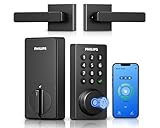
I remember the first time I fumbled with a key in the pouring rain, soaked to the bone, trying to get into my own house. That was the moment I swore I was done with traditional locks. I jumped headfirst into the world of passcode door locks, convinced they were the future. Some delivered, others… well, let’s just say my wallet remembers them fondly. So, are passcode door locks safe? It’s not a simple yes or no, and anyone telling you otherwise is either naive or trying to sell you something.
The truth is, they can be safe, but it depends on a bunch of factors you can’t just ignore. My journey has been a series of ‘aha!’ moments and a few ‘oops, I shouldn’t have bought that’ regrets. I’ve learned what makes a good one tick and what’s just a fancy paperweight with a battery.
Do Passcode Locks Actually Keep People Out?
Let’s cut to the chase: when you ask ‘are passcode door locks safe,’ the real question is about security. Can someone just guess your code? Can they hack it from afar?
The answer is, it depends heavily on the type of lock and how you use it. Early electronic locks, the ones that just had a keypad and a motor, were… let’s say, less sophisticated. I once had a rental unit with one of these older models, and honestly, I felt more secure with my old deadbolt.
The keypad was cheap plastic, and I’d heard stories from maintenance guys about them getting stuck or just plain breaking after a few years of use in harsh weather. The electronic components weren’t exactly top-tier.
Modern smart locks, the ones that connect to Wi-Fi or Bluetooth, add another layer of complexity. On one hand, they offer features like remote locking/opening, activity logs, and temporary access codes for guests or deliveries. This can actually increase your security in some ways. For instance, if you’re on vacation and get a notification that a package was delivered, you can grant temporary access to a neighbor to bring it inside.
That’s a win. But this connectivity also opens up potential vulnerabilities.
Hackers are a persistent bunch, and while most smart locks have encryption, not all encryption is created equal. I spent a good chunk of time researching different brands after a minor scare with a lock that seemed a bit too easy to interact with via Bluetooth – almost like it was broadcasting its presence too loudly.
The biggest vulnerability for most passcode locks, though, isn’t some shadowy hacker in a basement. It’s usually human error or a poorly chosen code. Think about it: people pick birthdays, anniversaries, or simple sequences like 1234.
If someone knows you, they might guess your code. That’s why choosing a strong, random-feeling passcode is most important.
It sounds obvious, but you’d be shocked how many people stick with the default or something incredibly simple. My first smart lock had a default code that was something like 0000. I changed it immediately, but it made me wonder about the security standards of the manufacturer. It’s a good indicator of how much thought they put into the overall security design if they leave such an obvious backdoor.
Another thing to consider is the physical build of the lock itself. Is it made of cheap plastic that can be pried off easily? Does the keypad wear down, making it obvious which numbers are used most often?
I’ve seen some locks that look like they’d succumb to a strong kick. For a passcode lock to be truly safe, it needs to be both electronically secure and physically solid. You’re trusting it with your home’s entry, after all. A flimsy exterior means all the complex encryption in the world is useless.
I once saw a demonstration where someone could physically jam a tool into the mechanism of a cheaper smart lock and bypass the electronic lock entirely. That’s not something you want happening at 2 AM.
What to Look for When Buying a Passcode Lock
Alright, so you’re convinced you want one of these things, but you’re staring at a wall of options and wondering what makes one worth your hard-earned cash. Let me tell you, I’ve been there. My first smart lock purchase was based purely on looks. It was sleek, modern, and promised the world. It lasted about 18 months before the battery died mysteriously and the company’s app was so clunky I couldn’t even force a reset. Lesson learned: looks aren’t everything. (See Also: Are Sesame Seeds Kosher For Passoveris Pollock Kosher )
First off, think about the connectivity. Do you need Wi-Fi, Bluetooth, or both? Wi-Fi means you can control it from anywhere, which is great if you often forget if you locked the door or if you need to grant access remotely. Bluetooth is generally more secure and uses less battery, but you need to be within range. For me, a combination is ideal, but if I had to choose, solid Bluetooth security is more important than being able to fiddle with it from the grocery store. The fear of remote hacking, even if it’s often overblown for well-designed locks, still makes me lean towards physical proximity for core functions.
Encryption is your friend. Look for locks that use AES 256-bit encryption. This is the gold standard and what most major companies use. It’s the same level of encryption used by banks and governments. If a manufacturer is vague about their encryption, consider that a red flag. I dug into the specs of a few brands, and some just said ‘encrypted,’ which is like saying a car is ‘fast’ – it tells you nothing useful. When I saw the AES 256-bit detail clearly stated, I felt a lot more confident. This is a factual detail where you shouldn’t be shy about asking for specifics or checking their documentation.
Physical build quality matters more than you might think. I’m talking about the materials used. Is it solid metal or cheap plastic?
Can it withstand a bit of weather and tampering? Most decent locks will have a sturdy metal exterior.
Try to avoid anything that feels hollow or flimsy. I remember picking up one lock at a store, and it felt so light, I was worried a determined squirrel could yank it off. The weight and feel of the materials can tell you a lot about its durability. Consider the keypad too; some are capacitive, others are physical buttons.
Physical buttons can wear down, but they might be easier to use with gloves in winter. Capacitive screens look slick but can be less responsive in wet conditions.
Here’s a quick rundown of what I look for, with my personal spin:
| Feature | My Verdict |
|---|---|
| Connectivity | Wi-Fi + Bluetooth (ideal) but strong Bluetooth is key. |
| Encryption | AES 256-bit is a must. No exceptions. |
| Material | Solid metal exterior. No cheap plastic. |
| Battery Life | User-replaceable batteries (AA, not proprietary) with decent quoted life (6+ months). |
| App/Software | Intuitive, reliable, and receives regular updates. No buggy interfaces. |
| Physical Tamper Resistance | Look for mentions of auto-lock, tamper alerts, and a sturdy deadbolt mechanism. |
Don’t just buy the prettiest one. Read reviews specifically about security and reliability. Many people focus on how cool the app is, but I’m more interested in whether it actually keeps my door locked and doesn’t drain its battery in three weeks.
Common Passcode Lock Mistakes (and How to Avoid Them)
I’ve made my fair share of blunders in the world of smart home tech, and passcode door locks are no exception. One of the most common pitfalls is choosing a passcode that’s too easy to guess. Seriously, I’ve seen people use ‘1234’ or their birth year.
It defeats the whole purpose. When I got my first passcode lock, I was tempted to use my birthday. My roommate, who’s way more security-conscious than I am, slapped my hand away. He made me pick a random sequence of numbers that had no discernible pattern.
It took me a few tries to memorize it, but it felt so much more secure. The rule of thumb I follow now is: if you can remember it without writing it down, it’s probably too simple.
Another mistake is not changing the default passcode. Many smart locks come with a factory-set code, and some people just leave it. This is like leaving your front door wide open with a sign saying ‘Welcome, hackers!’ Always, always change the default code immediately. This is one of those basic security hygiene points that gets overlooked. Think of it as the digital equivalent of changing the locks when you move into a new house. It’s a must.
Over-reliance on the app is another trap. While the app is convenient for managing codes and checking activity, it shouldn’t be your only way to get into your house. What happens if your phone battery dies, or the Wi-Fi goes down, or the app server crashes?
Most good smart locks have a physical key backup or a way to enter a code manually. Make sure you know where your backup key is and that the manual code entry works flawlessly. (See Also: Are Sliding Door Locks Common )
I learned this the hard way when my phone decided to update at the most inconvenient time, bricking my phone’s Bluetooth for a good hour. Thankfully, I had a backup key hidden nearby, but it was a stressful half-hour realizing I couldn’t get in without it. This taught me that redundancy is key.
Battery management is also a big one. Smart locks are electronic, and electronics need power.
Running out of battery can leave you stranded outside. Most locks give you a low-battery warning, but don’t ignore it. I recommend keeping a spare set of the correct batteries on hand, or at least noting down the battery type so you can grab them quickly.
Some locks are better than others in terms of battery life, but they all need juice. A friend of mine got locked out of his house because his smart lock died while he was out for a long hike, and he hadn’t checked the low-battery notification. He ended up having to call a locksmith, which was an expensive and embarrassing lesson.
Finally, improper installation can compromise security. If the lock isn’t mounted securely, or if the door isn’t aligned correctly, it can be easier to tamper with. Make sure you follow the installation instructions precisely or hire someone who knows what they’re doing. A loose lock is a vulnerable lock, no matter how fancy the electronics are. The physical integrity of the installation is just as important as the digital security.
People Also Ask:
What is the most secure type of door lock?
For Maximum Security, Deadbolts Are Still King. When Paired with a Solid Smart Lock Mechanism That Offers Strong Encryption and Tamper Resistance, They Provide Excellent Protection. However, the ‘most Secure’ Also Depends on Factors Like Installation Quality and How You Use the Lock. A Poorly Installed Deadbolt Can Be Less Secure Than a Well-Fitted Smart Lock.
Can smart locks be hacked?
Yes, Smart Locks Can Be Hacked, but the Likelihood Depends on the Lock’s Security Features and the Hacker’s Sophistication. Locks with Strong Encryption (like Aes 256-Bit), Regular Software Updates, and Secure Wi-Fi or Bluetooth Protocols Are Much Harder to Hack Than Older or Poorly Designed Models. Most Common Hacks Exploit User Errors Like Weak Passcodes or Phishing Scams Rather Than Direct System Breaches.
Are keyless entry systems safe?
Keyless Entry Systems, Including Passcode Door Locks, Can Be Safe If They Are Well-Designed, Properly Installed, and Used Correctly. They Offer Convenience and Can Enhance Security Through Features Like Activity Logging and Temporary Access. However, Like Any Electronic Device, They Have Potential Vulnerabilities That Require User Awareness and Adherence to Best Practices to Mitigate Risks.
Real-World Use: My Passcode Lock Diary
I’ve been living with various passcode door locks for about five years now, through different apartments and my current house. The experience has been… varied.
My first foray was with a budget-friendly model that was supposed to be Wi-Fi enabled. The app was a nightmare. It crashed constantly, and I swear it drained my phone battery faster than a video game.
The lock itself was okay for a while, but the Wi-Fi connection was so unreliable that I ended up using it as a glorified Bluetooth lock, which defeated the whole ‘remote access’ selling point. I remember one time I was out grocery shopping, and my wife called saying she’d forgotten her keys. I tried to open the door from the parking lot, and the app just spun and spun.
I had to tell her to wait until I got home, which was about 20 minutes later. Not ideal.
Then I moved to a slightly more premium brand that focused heavily on Bluetooth. This one was much better.
The app was cleaner, more responsive, and the Bluetooth connection was solid. I could grant access to friends when I wasn’t home, and it felt secure. The battery lasted a good nine months, which was a huge improvement. (See Also: Are The Rams Locked Into The 6th Seed )
However, I still felt a twinge of anxiety whenever I was out of town for an extended period. While I had a trusted neighbor with a spare key, the idea of someone trying to brute-force the passcode while I was miles away did cross my mind.
I’d check the activity log religiously, looking for any suspicious attempts. It’s that constant low hum of vigilance that comes with smart home tech.
My current setup involves a lock that offers both Wi-Fi and Bluetooth, and this has been the sweet spot for me. The Wi-Fi is stable, the app is decent (though no app is perfect), and the battery life is excellent – I’m getting over a year on a single set of AAs. I’ve even integrated it with my smart home assistant, which is handy for voice commands (though I still prefer typing my code for actual entry). What I really appreciate now is the ability to generate temporary passcodes for service people.
I had a plumber come to the house last week; I gave him a code valid for just two hours. When the time expired, the code was automatically deactivated.
That’s peace of mind you just don’t get with a physical key. It’s one of those features that makes you feel like you’re living in the future, but in a practical, useful way.
The one surprise I had with my current lock was during a power outage. I assumed that since it was electronic, it would just stop working. But it kept functioning perfectly. The internal battery and the way it operates meant the outage had zero impact on its core function. This was a pleasant shock, as I hadn’t even considered that scenario. It reminded me that sometimes, the simplest solutions (like solid internal batteries) are the most effective when it comes to keeping things working.
I also had a moment where I thought I’d been targeted. I got a notification on my phone saying there were multiple failed entry attempts. My heart immediately sank. I raced home, ready to change everything. Turns out, it was a delivery driver who was trying to deliver a package to the wrong address and kept punching in numbers randomly, thinking it was an apartment building entry system. Still, the alert system caught it, and I knew what was happening. That’s the kind of protection that makes these locks feel genuinely useful. It’s not just about convenience; it’s about being informed about what’s happening at your front door.
Are Passcode Door Locks Safe? The Final Word
So, after years of fiddling, testing, and a few close calls, are passcode door locks safe? My honest opinion is that they absolutely can be, but it’s not a given. They are not inherently more or less safe than a good old-fashioned deadbolt; they simply shift the security mechanism from a physical key to a digital code and, often, remote access. The safety of your home hinges on the quality of the lock, the strength of your passcode, and how diligently you maintain the system.
The biggest misconception is that simply installing a smart lock makes your home impenetrable. That’s a fallacy. A cheap, poorly built smart lock with weak encryption and an easily guessable code is a liability, not an asset. Conversely, a well-made lock with solid encryption, a strong, unique passcode, and regular software updates offers a level of convenience and control that traditional locks can’t match. The ability to grant temporary access, monitor entry logs, and receive alerts about suspicious activity provides a layer of situational awareness that is invaluable.
I’ve learned that the ‘hackability’ of these devices is often less about sophisticated cyberattacks and more about exploiting human behavior. People are more likely to use weak passcodes, fail to update firmware, or fall for phishing scams than to have their lock’s encryption cracked by a master hacker. This is where user education and good practices become most important. Treat your passcode like you would your bank PIN – never share it, never write it down in an obvious place, and change it periodically. Secure your Wi-Fi network, as many smart locks rely on it for their connectivity.
Ultimately, whether a passcode door lock is safe is a question that depends on you, the user, and the manufacturer. Do your research. Invest in a reputable brand known for its security features and reliable software. Understand the risks and take steps to mitigate them. If you do that, you’ll find that a passcode door lock can be a very safe and incredibly convenient addition to your home security. It’s about being smart with your technology, not just buying it.
Verdict
My verdict on passcode door locks is this: they aren’t a magic bullet for home security, but they’re far from being insecure booby traps. They require a bit of intelligence and diligence on your part. The convenience they offer is undeniable, and when you choose a quality product and follow basic security practices – like creating a strong, unique passcode and keeping the firmware updated – they can be a very safe and effective way to secure your home.
If you’re still on the fence, think about your own habits. Are you the type to remember a complex code? Do you keep your phone’s software up to date? Are you willing to invest in a brand that prioritizes security? If the answer to these is a resounding yes, then embracing a passcode door lock is likely a smart move for you. If not, sticking with a tried-and-true deadbolt might be the better option.
Ultimately, the question ‘are passcode door locks safe’ boils down to how well you manage the technology. Treat it with respect, be informed, and you’ll likely find them to be a valuable upgrade. Don’t let the fear of the unknown stop you from enjoying the benefits, but don’t be complacent either. Be smart, and your door will be too.