I was staring at the garage door, wrestling with it as it groaned and scraped its way open. Honestly, I’ve spent more time fighting with things that are supposed to make life easier than I care to admit. Like the time I bought those fancy, self-lubricating drawer slides that seized up faster than a cheap padlock in a sandstorm. It got me thinking about the basics, the stuff that just works, and whether we overcomplicate things.
It’s a question that pops up when you’re deep in a DIY project or just tinkering: are hinges a type of wheel? It sounds a bit daft, maybe, but bear with me. We’re talking about fundamental mechanics here, the kind of stuff that keeps the world, and your car doors, moving.
Let’s cut to the chase: hinges and wheels, fundamentally, serve a similar purpose: helping movement. But are they the same thing? Not by a long shot, but the thinking behind them shares common ground.
Wheels vs. Hinges: What’s the Difference, Really?
Look, I’m going to be blunt. The question ‘are hinges a type of wheel’ is a bit of a philosophical playground, but in practical terms, the answer is a resounding ‘no, they are not.’ Yet, if you dig into why we ask that, you find something interesting. Both are mechanical components designed to allow motion, but they achieve it in fundamentally different ways. A wheel’s magic is in its ability to roll. It reduces friction by allowing a surface to rotate around an axle, moving mass with relative ease. Think of a car tire, a skateboard wheel, or even a simple caster on a chair. The key is continuous rotation and minimal resistance.
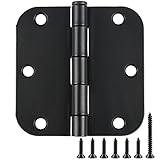
A hinge, on the other hand, is all about pivot. It connects two solid objects and allows them to swing relative to each other around a fixed point, the pin or barrel. Your car doors, cabinet doors, gates – they all use hinges.
They don’t roll; they swing. The friction is there, certainly, and it’s something you often have to manage with lubrication.
While a wheel aims to minimize friction for translation (moving from point A to point B), a hinge aims to control rotation around a fixed axis. I once tried to make a rudimentary rotating platform for my workbench using a bunch of small drawer slides, thinking it would be like a giant, flat wheel.
What a mess. It was clunky, noisy, and absolutely hated any sideways load. A proper lazy susan bearing, which uses ball bearings (basically tiny wheels), would have worked a treat. That experience hammered home the distinct roles of rolling and pivoting.
The misconception might stem from the fact that some hinges have components that do rotate, or that both are key for movement in countless applications. For instance, a heavy gate might use hinges, but the wheels attached to the bottom of the gate are what actually allow it to roll open easily. The hinge controls the swing, and the wheel handles the translation across the ground. It’s a partnership, not an identity. So, while they both help movement, the type of movement and the mechanism are worlds apart. One rolls, the other swings. Simple as that, for practical purposes.
The Mechanics of Movement: Rolling vs. Pivoting in Detail
Let’s get down to brass tacks on how these things actually work. The core principle behind a wheel is its circumference. When you apply force, the wheel rotates, and a point on the circumference moves forward. The magic here is that this point is constantly changing.
Instead of one spot dragging across a surface, you have a continuous cycle of a tiny section of the wheel meeting the ground, lifting off, and moving to the top. This drastically reduces the friction compared to dragging a flat surface.
Imagine dragging a brick versus rolling it – same principle, scaled up. The effectiveness of a wheel is also tied to its diameter.
Larger wheels generally roll over obstacles and uneven surfaces more easily than smaller ones. This is why you see those big, chunky tires on off-road vehicles.
A hinge, however, operates on a different set of physical laws. It’s a joint that allows controlled rotation. (See Also: A Box Without Hinges Key )
At its heart is a pivot point. In a basic door hinge, you have two plates (or leaves) attached to the two objects being joined, and a pin that passes through aligned barrels or knuckles. When you open or close the door, the leaves pivot around this pin. The friction is largely a result of the surfaces of the pin and barrels rubbing against each other.
This is why lubrication is so important. Without it, the metal-on-metal contact creates significant resistance and wear. I once tried to fix a squeaky kitchen cabinet hinge by just banging on it, thinking I could somehow ‘reseat’ it.
Turns out, it was bone dry. A quick squirt of WD-40 and it was silent. It highlighted just how much friction matters in a hinge’s operation. The pin itself is basically a stationary axle for the rotating barrels.
The design of hinges can get more complex, of course. You have continuous hinges, ball-bearing hinges, strap hinges, butt hinges, and even those fancy concealed hinges that look like magic. But at their core, they all rely on a pivot point. Some might incorporate bearings to reduce friction, and these bearings themselves often use small rolling elements, bringing us back to the wheel concept in a supporting role. But the hinge itself is not a wheel. It defines an axis of rotation. Think about a bicycle. It has wheels that roll to move forward, and it has hinges (or pivot points) in the handlebars and pedals that allow for controlled rotation. They are distinct systems.
Common Misconceptions and When to Lubricate
Here’s where things get fuzzy for some people, and it’s easy to see why. The most common misconception, I reckon, is that if something moves, it must be related to a wheel. It’s a simplification that doesn’t hold up under scrutiny. People might see a heavy gate with wheels at the bottom and hinges at the top and think the hinges are somehow ‘helping’ the wheels, or vice versa, in a way that blurs their individual functions. The reality is, the wheels are for rolling resistance, and the hinges are for stability and controlling the swing arc. They perform entirely different jobs.
Another area where confusion might arise is with specific types of hardware. For example, some swivel mechanisms or rotating platforms might use a ring of ball bearings. While these bearings are technically small wheels, the entire assembly is often referred to by a functional name that doesn’t explicitly say ‘wheel.’
If someone isn’t familiar with the underlying mechanics, they might see the rotational aspect and draw parallels to hinges. I once tried to jury-rig a rotating display stand for some model cars. I used a few old skateboard wheels mounted in a frame, thinking it would be easy.
It was a disaster. The wheels kept wanting to go their own direction, not a controlled rotation. What I should have used was a proper swivel bearing, which uses ball bearings to allow 360-degree rotation smoothly.
That bearing, with its rolling elements, is closer to a ‘wheel system’ than a hinge.
Now, about lubrication. This is a must for hinges.
If your hinges are squeaking, sticking, or just generally being difficult, the first thing you do is lubricate them. And I don’t mean just a quick spray of whatever’s handy. For most general-purpose door hinges, a good quality penetrating oil or a light grease works wonders. For cabinet hinges, especially those that need to be smooth and silent, a silicone-based lubricant or even a bit of petroleum jelly can be effective.
I’ve seen people use cooking oil. Don’t do that. It attracts dust and gunk, making the problem worse in the long run.
A good rule of thumb: if it squeaks, it needs lube. My uncle, a retired mechanic, always said, ‘A little bit of grease saves a whole lot of grief.’ He was usually right. (See Also: Are Integrated Washing Machine Door Hinges Standard )
When to Lubricate Hinges: A Quick Guide
| Symptom | Likely Cause | Recommended Action |
|---|---|---|
| Squeaking/Groaning | Dryness, dirt buildup | Clean and lubricate |
| Sticking/Binding | Lack of lubrication, bent pin, debris | Lubricate, check pin alignment, clean |
| Rust | Exposure to moisture | Clean, lubricate, and consider rust inhibitor |
| Loose/Wobbly | Worn pin or barrels | Replace hinge or pin if possible |
My verdict on this table? Lubrication is your first and best friend for hinge maintenance. Don’t wait for it to get bad.
Hinges in the Automotive World: More Than Just Doors
When we talk about cars, the most obvious application for hinges is the doors. You know, the things that let you get in and out.
But the automotive world uses hinges in a surprising number of places. Think about the hood (bonnet). It’s hinged to open up so you can get to that engine. Trunk lids (boots) have hinges.
Even some glove compartments and center console lids use them. The principle is the same: allow controlled rotation around a fixed point.
These automotive-grade hinges are built tough, often designed to withstand significant weight and weather exposure. They might have built-in stops to prevent over-extension or dampers to control the speed of opening and closing, like on modern car trunks that don’t slam shut.
I remember helping a buddy replace the hood hinges on his old pickup truck. They were so rusted and seized that opening the hood felt like I was trying to rip the truck in half. We ended up having to soak them in penetrating oil for days, and even then, it was a struggle.
When we finally got them off, the metal was pitted and worn. We replaced them with new ones, and the hood opened like a dream. It was a revelation.
Those hinges were important for functionality, and when they failed, it made a simple task into a major hassle. This is where understanding the role of a hinge becomes important; it’s not just a simple pivot, it’s a load-bearing component that needs to perform reliably.
Beyond the obvious, you might find hinges in less visible places. Some older vehicles had hinged fuel tank filler flaps.
Even the mirrors, while adjustable, often have a pivot mechanism that functions similarly to a hinge. The complexity can vary greatly.
A simple door hinge is one thing, but a multi-axis hinge designed for a complex folding roof on a convertible is another beast entirely. Yet, the fundamental concept of controlled rotation remains. People sometimes ask if there are bearings in car door hinges. Yes, often there are.
These are typically simple bushings or, in higher-end vehicles, small ball bearings designed to reduce friction and wear. So, while the hinge assembly isn’t a wheel, it often employs principles or components related to rolling motion to do its job better. But the hinge structure itself? (See Also: Are Hinges Wheeels )
Still a pivot.
Are Hinges a Type of Wheel? The People Also Ask Angle
So, let’s tackle some of those burning questions that people are asking online. It seems the confusion about hinges and wheels is more common than I thought. First up: ‘What is the purpose of a hinge?’ Well, as we’ve hammered home, its primary purpose is to connect two objects while allowing them to swing relative to each other around a fixed axis. Think of it as creating a controlled pivot point. It’s what allows a door to open and close, a lid to lift, or a gate to swing. Without hinges, these movements would be impossible or at best, very clumsy.
Then there’s: ‘What are the different types of hinges?’ You’ve got your basic butt hinge, which is what you see on most interior doors. Strap hinges are long and decorative, often used on gates or barns. Continuous hinges, also called piano hinges, run the entire length of the object and are great for lightweight lids or covers. Ball-bearing hinges have bearings to reduce friction, making them smoother for heavier doors. Concealed hinges, like those found on kitchen cabinets, are hidden from view when the door is closed, offering a clean aesthetic. There are many more, each designed for specific applications and weight loads. It’s a whole world of metalwork!
Another question: ‘How does a hinge work mechanically?’ At its most basic, a hinge has two parts that are joined by a pin. Each part attaches to one of the objects you want to connect. When one object moves, the other moves with it, pivoting around the pin. The pin acts as the axle, and the parts of the hinge rotate around it. For heavier applications, there are often bearings involved to make the rotation smoother and reduce wear. It’s really about creating a controlled rotational joint. This is a fundamental mechanical principle that’s been around for centuries.
Finally, we often hear: ‘Can hinges be used instead of wheels?’ Generally, no, not directly. Hinges help swinging motion, while wheels help rolling motion. You wouldn’t use hinges on a car to make it move forward, and you wouldn’t use wheels to make a door swing open. However, in some complex mechanisms, you might find both working together. For example, a retractable ramp might use hinges for its folding action and wheels for its movement along a track. So, while they serve different primary purposes, they can coexist in a larger system.
Practical Tips for Hinges: Maintenance and Upgrades
Let’s talk about keeping your hinges in good shape and when it might be worth upgrading. First off, maintenance. We’ve covered lubrication, but it’s worth reiterating: clean your hinges regularly. Dust, grime, and old lubricant can build up, causing stiffness and squeaking. A wire brush can help clean off surface rust or gunk before you apply fresh lubricant. For exterior hinges, especially, consider using a lubricant with rust inhibitors. I learned this the hard way when the hinges on my shed door rusted through after only two years because I used the wrong stuff. A good marine-grade grease or a specific exterior lubricant would have saved me the trouble.
Check the pins. Are they bent? Are they loose? Sometimes, a bent pin is the culprit behind a sticking hinge. You can often straighten a slightly bent pin with a hammer and a block of wood, or replace it if it’s severely damaged. If the barrels themselves (the part the pin goes through) are worn, you might be looking at replacing the entire hinge. Don’t try to force a bad hinge; it’s just going to cause more damage. I once spent an hour trying to force a warped door back into its frame, only to realize the hinge barrels were so worn the door was practically hanging crooked. Replacing them took ten minutes and solved the problem.
When it comes to upgrades, think about your needs. If you have heavy doors, especially exterior ones, upgrading to ball-bearing hinges can make a huge difference. They distribute the weight better and significantly reduce the effort needed to open and close the door. For interior doors, especially in high-traffic areas, upgrading to self-closing hinges or soft-close hinges can add a touch of convenience and prevent slamming. I put soft-close hinges on my kitchen cabinets about five years ago, and it’s one of those small upgrades I’d never go without now. No more kids banging cupboard doors!
Consider the material and finish too. Brass hinges can be beautiful and are naturally corrosion-resistant, though more expensive. Stainless steel is excellent for areas prone to moisture. Nickel-plated or powder-coated hinges offer durability and a specific aesthetic. Don’t just grab the cheapest option; think about the environment the hinge will be in and the look you’re going for. For a basic interior door, standard steel hinges are fine, but for a garden gate or a boat hatch, you need something more solid. My rule of thumb: if it’s exposed to the elements or needs to last, spend a little extra on quality materials.
Conclusion
So, to circle back to our original query: are hinges a type of wheel? No, they are not. A wheel rolls, helping translation. A hinge pivots, controlling rotation around a fixed axis. They are distinct mechanical components with distinct jobs. However, their existence and function are often intertwined, and the principles of reducing friction are common to both, with hinges sometimes incorporating rolling elements within their bearings.
Understanding this difference is key, whether you’re fixing a wobbly gate, installing new kitchen cabinets, or just trying to quiet a squeaky door. Don’t let the mechanics confuse you; focus on the function. A hinge swings, a wheel rolls. Simple, but important.
Next time you’re dealing with a sticking door or a creaky gate, remember the basic principles. A little maintenance goes a long way, and sometimes, a simple upgrade can make a world of difference in your daily life. Keep an eye on those moving parts; they’re what make everything work.