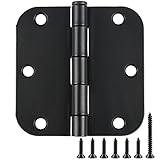
I remember the first time I tried to replace a wobbly gate hinge. It seemed simple enough – grab some hinges, slap ’em on, done. But the darn thing still sagged. Turns out, I’d bought hinges that looked the part but were about as useful as a screen door on a submarine. The real kicker? Some of those fancy, expensive ones were worse than the cheap ones. It made me wonder, are hinges weels in the first place? Like, are they even supposed to roll or slide smoothly, or is that just wishful thinking? This whole hinge situation can be a real pain if you don’t know what you’re doing.
It’s a question that pops up more than you’d think, especially when you’re dealing with gates, heavy doors, or anything that needs to swing without a fight. We’re talking about those metal bits that let things move, but often they get stuck, squeak, or just plain fail. So, let’s cut through the BS and figure out what makes a hinge actually work, and if the idea of ‘weels’ in hinges is even a thing.
What the Heck Are We Supposed to Expect From Hinges?
Look, most of the time, when we talk about hinges, we’re not talking about actual wheels like on a shopping cart. That’s the first bit of confusion. The term ‘hinges weels’ isn’t a standard industry term. What people usually mean, I think, is a hinge that allows for smooth, effortless movement, almost like it’s rolling on something.
It’s more about the action of the hinge being fluid and free from friction, rather than it literally having wheels attached to it. Think about a well-oiled door hinge in a fancy hotel lobby versus the squeaky, stiff one on your garden shed. The hotel hinge feels like it has weels, even though it’s just two plates connected by a pin, with a bit of grease doing the heavy lifting.
The fundamental job of any hinge is to connect two objects while allowing them to pivot relative to each other. This could be a door to a frame, a lid to a box, or even a cabinet door to its cabinet.
The materials are usually metal – steel, brass, stainless steel, aluminum. The construction involves two leaves (the flat parts that attach to the surfaces) and a barrel or knuckle that houses a pin. The pin allows the two leaves to rotate. The quality of the metal, the precision of the manufacturing, and the finish all play a massive role in how well that hinge performs over time.
A cheap, thin piece of stamped metal will bend and bind easily, making it feel like you’re dragging something through concrete. A thicker, well-machined hinge, even without any ‘weels’, will feel significantly smoother and last longer.
I once bought a set of decorative antique-style hinges for a reclaimed wood chest. They looked absolutely stunning, all ornate swirls and dark iron. But when I tried to attach the lid, it was a nightmare. The barrel was slightly oval, and the pin was rough.
It required a serious amount of elbow grease and a whole can of WD-40 just to get the lid to open without screeching like a banshee. After about a week, the screeching returned, worse than before. I ended up replacing them with a simple, plain-looking stainless steel hinge that cost a third of the price.
The chest still looks great, and now the lid opens and closes like a dream. So, the appearance can be deceiving. Functionality is king, and sometimes, the simplest designs are the most effective, even if they don’t look like they have hidden ‘weels’.
What to Actually Look for When Buying Hinges
Forget the fancy marketing for a second. When you’re out there trying to find hinges that won’t drive you mad, here’s what I actually pay attention to. First off, material and gauge.
Are you looking at flimsy, thin sheet metal, or something with a bit of heft? For anything that’s going to get regular use or bear any real weight – like a gate, a heavy interior door, or a workbench lid – you want thicker steel. Stainless steel is great for outdoor use or humid environments because it won’t rust into oblivion. Brass looks nice, especially for furniture or decorative applications, but it can be softer and more expensive.
For most general purposes, a good quality steel hinge with a decent coating (like zinc-plated or powder-coated) will do the job. I’ve found that steel hinges that are at least 1.5mm thick are a good baseline for durability. (See Also: A Box Without Hinges Key )
Next up: the pin. Is it a loose pin, a non-removable pin, or a security pin?
For basic gates or doors, a standard fixed pin or a loose pin that can be easily removed (useful for maintenance or security if you’re replacing it with a security screw) is fine. If it’s a security pin, that’s usually for exterior doors where you want to prevent the door from being lifted off its hinges if someone removes the pin. Some hinges have a ball bearing or a nylon washer incorporated into the knuckle.
These are the ones that start to hint at that smooth, ‘weels-like’ action. The ball bearings, in particular, reduce friction significantly. They’re not literal wheels, but they act like them, allowing for much smoother, quieter operation. I paid an extra $10 a pair for some ball-bearing hinges on my workshop door, and it was money well spent.
The door swings with almost no effort, and the sound is a gentle whisper, not a groan.
The size and screw holes matter too. Measure your existing hinge mortises (the cutouts in the door and frame) and the door thickness. Make sure the new hinge dimensions match. For screw holes, check if they’re countersunk or not.
Countersunk holes mean the screw heads will sit flush with the hinge surface, giving a cleaner look. If you’re replacing old hinges, try to match the screw hole pattern if possible to avoid filling old holes and drilling new ones. I made the mistake of buying hinges that looked right but had a slightly different screw hole pattern.
It meant filling about six holes per hinge and drilling new ones, which added a good hour to a job that should have taken fifteen minutes. Lesson learned: measure twice, buy once. Here’s a quick rundown of what I look for:
| Feature | My Verdict | Why |
|---|---|---|
| Material (Steel, Stainless, Brass) | Steel (coated) or Stainless Steel for most general use | Durability, rust resistance, and cost-effectiveness. Stainless is best for outdoors. |
| Gauge/Thickness | 1.5mm or thicker | Prevents bending and makes sure longevity, especially for heavier doors/gates. |
| Pin Type | Standard fixed or loose pin; Ball-bearing for high-use/heavy doors | Ease of use and maintenance. Ball bearings offer superior smooth action. |
| Bearing Type (if applicable) | Ball Bearings | Significantly reduces friction, leading to quieter, smoother operation – the closest to ‘weels’ you get. |
| Screw Hole Type | Countersunk (if appearance matters) | For a clean, flush finish. |
Common Mistakes People Make with Hinges (and How to Avoid Them)
The biggest mistake, hands down, is treating all hinges as identical. People see a hinge, they think ‘hinge,’ and they grab the cheapest or the prettiest one without considering the actual job it needs to do. This is where the ‘are hinges weels’ confusion really kicks in. You buy a flimsy, decorative hinge for a 200-pound gate, and it’s going to fail.
It’s not that the hinge should have had wheels; it’s that it was the wrong tool for the job. The weight of the gate will bend the leaves, the pin will wear down rapidly, and the whole thing will sag and bind. You end up spending more money replacing it down the line than if you’d bought a proper heavy-duty hinge in the first place.
Another common screw-up is ignoring the orientation. Some hinges are designed to swing in a specific direction, especially if they have a slight camming action or are part of a specialized system. While most basic butt hinges are reversible, if you’re buying something more complex, pay attention to the manufacturer’s instructions. For example, I once tried to install self-closing hinges on a cabinet, and I got them backward. The door would slam shut with surprising force instead of gently closing. It took me a good ten minutes of fiddling to realize I’d put them in upside down. Not a catastrophic error, but a frustrating one.
Then there’s the ‘good enough’ approach to installation. People will sometimes force screws, strip the holes, or not use enough screws. A hinge needs to be securely fastened to both surfaces. If the screws aren’t biting properly, or if they’re too short, the hinge won’t be stable. This leads to door sag, uneven closing, and premature wear. I’ve seen people use drywall screws in wood frames, which is a recipe for disaster. Always use appropriate wood screws of the correct length and diameter. For heavier applications, using longer screws or even inserting pilot holes and using lag screws can make a huge difference in stability. Don’t underestimate the power of a well-installed hinge; it’s the foundation of smooth operation.
What If My Door Is Sagging?
A sagging door is almost always a hinge issue, or a frame issue, or both. First, check the hinges. Are they loose? (See Also: Are Integrated Washing Machine Door Hinges Standard )
Are the screws tight? If the screws are stripped, you might need to use slightly larger screws or fill the holes with wood glue and toothpicks (or dowels for a more solid fix) before re-inserting the screws. If the hinges themselves are bent or worn, they need to be replaced. For a quick fix on a slightly sagging door, you can sometimes insert a shim behind one of the hinge leaves to push the door back into alignment.
This isn’t a permanent solution for a severely sagging door, but it can help in minor cases. Make sure the door is properly supported before attempting any adjustments or replacements.
Real-World Use: Where Do ‘hinge Weels’ Actually Matter?
So, where does this idea of smooth, rolling-like action – what some might metaphorically call ‘hinge weels’ – really make a difference? It’s primarily in applications where smooth, quiet, and effortless movement is not just desirable, but necessary. Think about high-traffic areas. In a busy restaurant kitchen, doors between the cooking line and the dining area need to swing open and shut quickly and quietly thousands of times a day. Using ball-bearing hinges here means less noise pollution, less wear and tear on the door and frame, and easier operation for staff who are often carrying hot plates or trays. The slight added cost of these hinges is recouped in reduced maintenance and improved workflow.
Another area is large, heavy doors or gates. A massive barn door, a heavy garden gate, or even a substantial internal door like one leading to a garage can be incredibly difficult to operate if fitted with standard, low-quality hinges. When you upgrade to heavy-duty, possibly ball-bearing or roller-bearing hinges, the weight is distributed much more effectively. This makes them feel lighter and easier to swing.
The ‘weels’ aspect here isn’t about literal wheels but about a mechanism that dramatically reduces the resistance caused by sheer weight. I installed some industrial-grade roller-bearing hinges on a custom-built, 150-pound oak garden gate. Before, it was a two-handed effort and a serious strain. After, my five-year-old niece could push it open with one finger.
That’s the kind of difference these advanced hinge mechanisms make.
Even in residential settings, the difference can be huge. Consider a nursery door that needs to be opened quietly at night without waking a baby. Or a closet door that’s constantly being used by kids. A well-made, possibly nylon-bushed or ball-bearing hinge will operate so much more smoothly and quietly than a basic, dry, metal-on-metal hinge. It’s the difference between a gentle swing and a loud squeak or groan. It’s not about reinventing the wheel, but about optimizing the existing mechanism. The technology exists in the form of bearings and precision engineering to make hinges perform with an ease that feels almost like they have ‘weels’.
What’s the Difference Between Ball Bearing and Plain Bearing Hinges?
Plain bearing hinges rely on metal-on-metal contact, often lubricated with grease or oil. The pin rotates within the knuckles. They can be smooth, but they are prone to wear and can become noisy over time as the lubrication dries up or dirt gets in. Ball bearing hinges, on the other hand, incorporate ball bearings between the knuckles. These bearings allow the hinge to pivot on rolling elements, drastically reducing friction and wear. This makes them much smoother, quieter, and longer-lasting, especially under heavy loads or in high-frequency use. They are the closest you get to a ‘rolling’ action within a hinge mechanism.
The Diyer’s Dilemma: When to Splurge and When to Save
Honestly, most DIYers get hung up on price. They see a $3 hinge and a $20 hinge and think, ‘Why pay more for something that basically does the same thing?’ My rule of thumb is this: if the item is going to be subjected to significant weight, constant use, or harsh environmental conditions, splurge.
If it’s a small, lightweight cabinet door that gets opened maybe twice a day, you can probably get away with saving money. For example, I needed hinges for a small, decorative wooden box I made for my wife. Cheap, basic zinc-plated hinges from the hardware store were perfectly adequate. They looked fine, did the job, and cost me about $2 each.
No need for ball bearings or fancy alloys there.
However, when I built my outdoor deck gate, which is a solid cedar beast that weighs a ton, I didn’t even consider cheap hinges. I went straight for heavy-duty, stainless steel, ball-bearing hinges. They cost me about $45 per pair, which felt like a lot at the time, but the gate swings open so smoothly, even after three years of rain, sun, and snow, that I haven’t had to touch them once. Compare that to my neighbor’s gate, which uses basic hinges, and is already starting to sag and squeak after just one year. (See Also: Are Hinges Wheeels )
He’s going to end up spending more money than I did to fix his problem eventually. So, the question of ‘are hinges weels’ in terms of performance is really about matching the hinge’s capability to the job it needs to do.
Think about interior doors. Standard hollow-core doors can usually function fine with regular, inexpensive butt hinges. But if you’ve got solid wood doors, especially heavier ones, upgrading to ball-bearing hinges can make a noticeable difference in how they feel. They open and close with less effort and less noise. It’s one of those subtle upgrades that enhances the overall feel of a home. I did this on a few interior doors in my house that were always a bit stiff, and the improvement was immediate. It’s not a flashy upgrade, but it’s one that you appreciate every single time you use the door. For me, it’s worth the extra $10-$20 per door for that smooth, quiet operation.
Faq: Your Burning Hinge Questions Answered
Do Hinges Need Lubrication?
Yes, most hinges benefit from lubrication, especially if they are used frequently or are made of metal. For standard hinges, a light application of WD-40 or a silicone-based lubricant can reduce squeaking and improve movement. For heavy-duty or ball-bearing hinges, a heavier grease might be recommended by the manufacturer. Regular lubrication helps prevent wear and corrosion, extending the life of the hinge and maintaining that smooth, ‘weels-like’ action.
Can I Use Any Hinge for an Exterior Door?
No, you generally cannot use any hinge for an exterior door. Exterior hinges need to be made of corrosion-resistant materials like stainless steel or coated steel to withstand the elements. They may also require specific features like non-removable pins for security or heavier duty construction to handle the weight and constant exposure to weather. Always choose hinges specifically designed for exterior use.
What Does a 5-Knuckle Hinge Mean?
A 5-knuckle hinge refers to the number of knuckles (the cylindrical sections that make up the barrel of the hinge) that the pin passes through. Most standard butt hinges have 3 or 4 knuckles. A hinge with more knuckles, like a 5-knuckle hinge, generally means a longer barrel. This longer barrel provides greater strength and stability, distributing the weight more evenly and allowing for smoother operation, especially on heavier doors.
How Do I Know If My Hinge Has Bearings?
You can usually tell if a hinge has bearings by looking at the barrel. Ball-bearing hinges will often have visible ball bearings housed between the knuckles, or there might be a cap on the end of the barrel where the bearings are loaded. Some manufacturers will clearly label them as ‘ball-bearing hinges’ on the product packaging or description. If in doubt, check the product specifications or manufacturer’s website. The feel of the hinge is also a big clue – if it swings incredibly smoothly and quietly with minimal effort, it likely has some form of bearing.
What Is the Difference Between a Butt Hinge and a Strap Hinge?
A butt hinge is the most common type, with two leaves that are mortised into the door and frame. The barrel is typically in the center. A strap hinge, on the other hand, has one leaf that is mortised into the edge of the door, while the other leaf is a long strap that attaches to the surface of the frame or gate. Strap hinges are often used for heavier applications like gates, barn doors, or garage doors where they can provide extra support and use.
Are Hinges Weels? The Honest Truth
So, to circle back to the original question: are hinges weels? The technical answer is no. Hinges don’t have literal wheels attached to them in the way a car or a piece of luggage does. However, the concept of ‘weels’ – smooth, effortless, low-friction movement – is absolutely what you’re chasing when you look for a good quality hinge. Hinges with integrated ball bearings, high-quality pins, and precise manufacturing come darn close to that ideal. They reduce resistance so dramatically that the action feels almost frictionless, hence the metaphorical ‘weels’.
My personal experience has taught me that skimping on hinges is a false economy. You might save a few bucks upfront, but you’ll likely end up with sagging doors, squeaky movements, and the need for premature replacement. Whether you’re building a shed, hanging a gate, or just replacing a squeaky door hinge in your house, investing in the right type of hinge for the job is important. Look for quality materials, appropriate construction, and features like bearings if smooth operation is most important.
When you’re next at the hardware store, or browsing online, take a moment to feel the weight of the hinge, check the thickness of the metal, and if possible, try swinging it. Does it feel solid? Does it move with a satisfying lack of resistance? That’s the sign of a hinge that’s done its job right. It might not have actual wheels, but it’ll sure feel like it does when you’re using it.
Final Verdict
Ultimately, the idea of ‘hinges weels’ is more about the desired outcome than a literal feature. You want that smooth, almost frictionless swing, and well-designed hinges with quality components deliver that. Don’t fall for the trap of thinking all hinges are created equal; they’re not. A cheap hinge for a heavy job is a recipe for frustration and eventual replacement.
So, next time you’re tackling a project involving hinges, take a little extra time to choose wisely. Consider the weight, frequency of use, and environmental conditions. Opting for ball-bearing hinges, even on standard interior doors, can be a small upgrade that pays dividends in quiet, effortless operation. It’s the difference between a door that groans its way open and one that glides like it’s on hidden wheels.
Stop wasting money on flimsy hinges that fail. Research your options, prioritize quality over lowest price for important applications, and you’ll achieve that smooth, satisfying operation you’re looking for. Your doors, gates, and your sanity will thank you for it.