I remember the first time I tried to hang a new interior door. I just grabbed a couple of hinges from the hardware store, figuring hinges were hinges, right? Wrong. Very, very wrong. That door sagged like a sad old man after a week, and I spent more time fiddling with it than I care to admit. It really hammered home for me that, yes, when you’re dealing with doors, there absolutely are sizes to door hinges, and getting them wrong is a pain in the backside.
It’s not just about the door itself, either. The weight, the swing, the frame – all of it plays a part. Overlooking this simple fact is a surefire way to end up with a door that doesn’t close right, binds on the frame, or worse, starts to pull away entirely.
Why Door Hinge Size Actually Matters (more Than You Think)
Look, nobody buys a door hinge thinking, “This is going to be a complex decision.” It’s usually an afterthought, something you grab on the way out of the store. But the reality is, the size and type of hinge you choose directly impact how your door functions, how long it lasts, and how much of a headache the installation is. I learned this the hard way.
I was putting up a solid wood interior door – a nice, heavy one. I grabbed standard, run-of-the-mill hinges, the kind that look like they came with every door ever made. Within a month, that door started to drag on the carpet on one side.
Then it got sticky. Then it wouldn’t quite latch. Turns out, those generic hinges weren’t beefy enough for the weight of that solid core door. It was a classic case of being penny-wise and pound-foolish.
I ended up having to buy stronger, larger hinges and reinstall them, which was far more effort than getting it right the first time.
The primary factors that dictate hinge size are the door’s weight and its dimensions (height and width). A lightweight hollow-core interior door requires far less solid hardware than a heavy exterior solid wood door or a fire-rated door. Think of it like this: you wouldn’t use the same screws to hang a framed photo as you would to mount a heavy television. The same principle applies to door hinges. The hinge needs to be strong enough to support the door’s entire weight distributed across its narrow edge, while also allowing for smooth, unimpeded movement.
Beyond just the physical size, the ‘knuckle’ count and pin thickness also contribute to a hinge’s strength and stability. More knuckles generally mean more surface area for support and a smoother pivot action. A thicker pin handles more stress. But most people just see ‘door hinge’ and assume any old hinge will do.
That’s the trap. The common advice often boils down to “get hinges that match the old ones” or “buy hinges that fit the pre-drilled holes.” While that’s a starting point, it often fails to account for the actual load the hinge will bear. For instance, if you’re replacing an old, worn-out hinge on a heavy door, just matching the dimensions might not be enough if the original hinge was already under-spec’d or the door has warped slightly, putting more strain on the hardware.
The material also plays a role. Steel hinges are generally stronger than brass or aluminum ones of the same size, though they can also be heavier. For most interior doors, you’ll see hinges made of steel, often plated with various finishes like brass, nickel, or oil-rubbed bronze for aesthetics. Exterior doors, especially those exposed to the elements, typically require heavier-duty steel or even stainless steel hinges to resist corrosion and the increased forces they endure from wind and weather.
Understanding Hinge Anatomy: The Bits That Actually Do the Work
When you look at a door hinge, it seems simple enough: two plates, a pin, and some screw holes. But there are a few key measurements and features that make all the difference in whether that hinge will perform well or become a squeaky, sagging nuisance. (See Also: A Box Without Hinges Key )
The first thing to get right is the standard dimensions. Most residential door hinges are 3.5 inches tall. This is the most common size for interior doors. Exterior doors, especially heavier ones, might need 4-inch hinges, or even larger for very substantial entry doors.
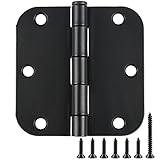
The width of the leaf (the flat part that attaches to the door and frame) also varies. A standard 3.5-inch hinge typically has leaves about 3.5 inches long and 1.5 inches wide (when the door is closed and the hinge is flat). The thickness of the metal is another indicator of strength; thicker leaves mean a more solid hinge.
The ‘knuckle’ is the part of the hinge that surrounds the pin. The number of knuckles can vary, but typically, a standard hinge has three knuckles. More knuckles can provide a more stable pivot point. Then there’s the pin itself – the rod that holds the two leaves together and allows them to pivot. The thickness and material of the pin are important for load-bearing. Some pins are fixed, while others can be removed, which is handy for taking the door off its frame without removing the hinges entirely. For security, you might look for hinges with non-removable pins or security studs that prevent the door from being lifted off its track.
Another important aspect, often overlooked, is the ‘corner radius’. When hinges are manufactured, the corners of the leaves are either squared off or rounded. Most doors come with pre-routed mortises (the rectangular cutouts in the door and frame where the hinge leaves sit) that are designed for specific corner radii.
If you have a door with square-edged hinges and your frame has round-edged mortises (or vice versa), it won’t sit flush and will likely cause binding. So, you need to match the corner radius of the hinge to the mortise in your door and frame. Most interior doors use standard 1/4-inch radius hinges, but some older homes or custom doors might have different specifications. Always check what’s already there or what the door manufacturer recommends.
The ‘door thickness’ is also a factor, though less so for standard interior doors. For very thick doors, you might need special hinges or longer leaf extensions. The weight rating of a hinge is also important. While not always explicitly stated on residential hardware, manufacturers do test their hinges. A standard residential hinge is generally rated for doors up to about 50-75 pounds, but this can vary. If you’re installing a solid core door that’s on the heavier side, you might need to look for heavy-duty hinges, often rated for 100 pounds or more. Consulting the door manufacturer’s specifications is always a good idea here.
Common Mistakes People Make (and How to Avoid Them)
The biggest mistake, hands down, is not measuring or understanding the existing hinge. People see a hinge that looks “about right” and grab it. This leads to doors that don’t close properly, sag over time, or even bind so badly they’re difficult to open. I once had a friend who replaced all the hinges on his exterior storm door, thinking they were all the same. He ended up with one door that swung freely but sagged, and another that barely opened because the hinge plates were too thick and interfered with the frame. He’d bought hinges that looked identical but had subtle differences in leaf thickness and knuckle depth.
Another common blunder is ignoring the door’s weight. A hollow-core door weighs next to nothing. A solid wood or metal door can weigh 50, 80, or even over 100 pounds. Using standard hinges on a heavy door is asking for trouble. The hinges will bend, the door will sag, and the screws will eventually pull out of the wood frame. I’ve seen this happen more times than I can count. My own first door sagging incident? Purely because I underestimated the weight of a solid core interior door.
People also often forget about the corner radius. If your door frame has rounded mortises, you need hinges with rounded corners.
If it has square mortises, you need square-cornered hinges. Trying to force a square-cornered hinge into a round mortise will leave gaps, prevent the hinge from seating properly, and lead to a door that binds or doesn’t swing smoothly. (See Also: Are Integrated Washing Machine Door Hinges Standard )
This was a lesson I learned when I bought a set of beautiful antique-style hinges for a project. They looked perfect, but the mortises in the old door frame were cut for rounded corners. The gap was noticeable, and the door rubbed against the frame. I had to go back and find hinges that matched the radius, which was a pain.
Finally, there’s the issue of the door swing direction. While most hinges are reversible, some specialized hinges are not. If you’re dealing with a unique door or frame setup, make sure the hinge you choose will allow the door to swing in the intended direction without obstruction. For standard interior doors, this is rarely an issue, but it’s worth keeping in mind for exterior or specialty applications.
The material finish can also be a trap if you’re not careful. A cheap plated finish on a steel hinge will wear off much faster, especially on an exterior door, leaving you with a rusty hinge and an unsightly mess.
Opting for solid brass, stainless steel, or at least a high-quality plated finish for exterior applications is a good idea.
A Practical Guide: What to Look for When Buying Hinges
When you’re heading to the store or browsing online, here’s your checklist. First, measure your existing hinge. If you’re replacing hinges, this is your primary guide. Measure the height (usually 3.5 inches for interior doors, 4 inches for some exterior).
Measure the width of the leaf when the hinge is flat. More importantly, check the corner radius. Hold a corner of the hinge leaf against a coin.
If it matches the curve of a quarter, it’s likely a 1/4-inch radius. If it fits snugly against a dime, it’s a 1/8-inch radius. If it’s sharp, it’s a square corner. You need to match this to your door and frame mortises.
If you don’t have an old hinge to measure, check the door manufacturer’s specifications or measure the cutout in the frame itself. Most doors will specify if they require square or radius corners.
Next, consider the door’s weight and material. Hollow core? Standard hinges are fine. Solid core interior? Look for heavier-duty 3.5-inch hinges, perhaps those with thicker leaves or a stated higher weight rating. Exterior door? You’ll want 4-inch hinges, likely made of heavier gauge steel or even stainless steel, especially if you live in a humid or coastal environment. Don’t be afraid to ask for recommendations at a good hardware store; experienced staff can often point you towards the right heavy-duty options.
The number of hinges is also important. Standard interior doors typically use two hinges. For heavier doors or doors that see a lot of use, three hinges are often recommended. This distributes the weight more evenly and adds stability. Three hinges on a heavy door are a good investment to prevent sagging over time. For very tall or heavy doors, you might even consider four hinges, though this is less common for standard residential use. The spacing of the hinges also matters; they should be positioned at the top and bottom of the door, with the third hinge centered between them. (See Also: Are Hinges Wheeels )
Finally, think about the finish. For interior doors, this is mostly aesthetic. Common finishes include polished brass, satin nickel, oil-rubbed bronze, and matte black. Choose something that complements your door hardware and overall decor. For exterior doors, prioritize function over form. Stainless steel is excellent for durability and rust resistance. If you opt for plated finishes on exterior hinges, make sure it’s a high-quality, thick plating designed for outdoor use. I once bought cheap brass-plated hinges for my front door, and within a year, the plating flaked off, revealing rust underneath. I ended up replacing them with solid stainless steel hinges, which, while more expensive upfront, have held up perfectly for the last five years.
| Hinge Size (Height) | Typical Application | Weight Consideration | Corner Radius | Opinion/Verdict |
|---|---|---|---|---|
| 3.5 inches | Most interior doors (hollow and solid core) | Standard: up to 50 lbs. Heavy-duty versions available for up to 100+ lbs. | 1/4″ radius (most common), 1/8″ radius, Square | The workhorse for most interior doors. Get heavy-duty if door feels substantial. |
| 4 inches | Exterior doors, heavier interior doors, sometimes commercial doors | Generally rated for 75-150+ lbs. | 1/4″ radius, Square (check door/frame) | Recommended for exterior doors for strength and stability. Key for heavier interior doors. |
| 4.5 inches and larger | Very heavy exterior doors, commercial doors, specialty applications | Often rated for 150-300+ lbs. | Square, Radius (highly variable) | Overkill for most homes, but necessary for truly massive or high-traffic doors. |
Faq: Clearing Up Door Hinge Confusion
Do I Need Special Hinges for a Solid Wood Door?
Yes, often you do. Solid wood doors are significantly heavier than hollow-core doors. While a standard 3.5-inch hinge might suffice for a lightweight interior solid wood door, heavier exterior solid wood doors or very large interior solid wood doors will require heavier-duty hinges. Look for hinges made of thicker gauge steel or those specifically rated for higher weight capacities (e.g., 100-150 pounds per hinge pair). Using undersized hinges will lead to sagging, binding, and premature wear.
Can I Mix and Match Door Hinges?
You absolutely should not mix and match different types or sizes of hinges on the same door. All hinges on a single door should be identical in size, weight rating, and corner radius. Mixing hinges can lead to uneven weight distribution, causing the door to sag on one side or bind against the frame. It compromises the structural integrity and smooth operation of the door. Stick to a matching set for consistent performance.
What Is the Standard Door Hinge Size?
The most common standard size for residential interior door hinges is 3.5 inches in height. For exterior doors, 4 inches is a very common size. However, this refers to the height of the hinge leaf. The width of the leaves, the thickness of the metal, the knuckle design, and the corner radius can all vary even within these standard heights. Always measure your existing hinges or check your door specifications to confirm dimensions beyond just height.
How Do I Know If I Need a Square or Radius Corner Hinge?
You determine this by looking at the cutouts (mortises) in your door jamb and the edge of your door where the hinge leaves sit. If the corners of these cutouts are sharp and 90 degrees, you need square-corner hinges. If the corners are rounded, you need radius-corner hinges. Most standard interior doors have 1/4-inch radius corners, but older homes or custom doors might have different specifications, including 1/8-inch radius or square corners. The easiest way to check is to remove an existing hinge and see what shape its corners are, or to look at the shape of the mortise itself.
When to Consider Different Hinge Types (beyond Just Size)
While size is a primary concern, sometimes you need more than just a standard hinge, regardless of dimensions. For instance, if you have a door that needs to open a full 180 degrees, you’ll need specialty hinges like continuous or piano hinges. A continuous hinge, also known as a piano hinge, runs the entire length of the door and is excellent for distributing weight evenly and providing a very secure pivot. These are often used on cabinets, utility boxes, or even some very lightweight doors. They come in various lengths and widths, but their primary advantage is consistent support along the entire edge, eliminating the sagging issues you can get with individual hinges.
Another type to consider is a ball-bearing hinge. These are basically heavy-duty hinges with ball bearings integrated into the knuckles. They reduce friction significantly, making it much easier to swing heavy doors and helping to prevent squeaking over time. These are common on exterior doors, especially those that are frequently used or are quite heavy, and they are a worthwhile upgrade if you’re tired of struggling with stiff or noisy hinges. I put ball-bearing hinges on my garage entry door, and the difference in how smoothly it swings is night and day compared to the old, standard ones.
Security hinges are also a thing, and frankly, they’re a good idea for any exterior door, or even interior doors in certain situations. These hinges have a non-removable pin or a security stud. When the door is closed, the stud fits into a recess in the frame, making it impossible to lift the door off its hinges even if the pin is removed. This is a simple but effective way to bolster your home’s security without adding extra locks. It might seem like overkill for an interior bedroom door, but for the main entry door, it’s a smart move.
Finally, for doors that need to be held open at specific angles or close automatically, there are specialized hinge types like hold-open hinges or self-closing hinges (often integrated into the frame or door closer mechanisms). While these are more about function than just size, they represent the next level of hinge consideration when standard operation isn’t enough. For example, a self-closing hinge is great for a pantry door or a workshop door that you want to make sure stays shut without someone having to push it closed manually. They often have a spring mechanism built into the hinge barrel.
Verdict
So, to get back to the original question: are there sizes to door hinges? The answer is a resounding yes, and ignoring it is a recipe for frustration. It’s not just about one number; it’s about matching the hinge’s strength, dimensions, and features to the specific door and its intended use. Don’t just grab the cheapest ones or the ones that look similar to what you’re replacing.
Take the time to measure, consider the door’s weight, check the corner radius, and think about the environment the door is in. A little bit of attention to detail upfront saves a whole lot of aggravation down the line. Trust me, I’ve been there, and a properly fitted and sized hinge makes all the difference in the world for how a door performs.
If you’re unsure, don’t hesitate to ask for help at your local hardware store. They’ve seen it all and can usually point you in the right direction. Getting the right size door hinge is a small step, but it’s a foundational one for a well-functioning door.