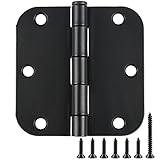
I remember staring at a pile of shiny new hinges, a whole box of them, trying to figure out which way they were supposed to go. It was my first time replacing a door, and the sheer simplicity of the task felt like a trap. Surely, it couldn’t be as easy as just screwing them on? I spent way too long second-guessing myself, convinced I was missing some obscure technicality. Then it hit me: are there left and right door hinges? The answer, as it turns out, is both yes and no, depending on how you look at it, and understanding this makes installing them a breeze.
Most people just grab what looks right, and for good reason. But if you’ve ever found yourself puzzling over why a door swings the wrong way or binds up, a little knowledge about hinge orientation can save you a headache. It’s not about some fancy, high-tech distinction; it’s about how the parts physically interact.
The Myth of the Mirrored Hinge
Let’s get this straight right out of the gate: for the vast majority of standard door hinges, the ones you’ll find in any hardware store for your interior doors, there are no specific ‘left’ and ‘right’ hinges. This is the part that trips people up.
You buy a pair, or a box of three for a heavier door, and you just… use them. The magic of the standard hinge is that it’s symmetrical in its core function. Each leaf has holes drilled to accept screws, and the barrel that holds the pin is designed to be universal. You can literally take a hinge, flip it over, and it will still work.
I learned this the hard way, trying to find a ‘handed’ hinge for a closet door I was hanging in my old apartment. I swear I spent an hour at the hardware store before a patient employee just handed me a standard butt hinge and said, ‘Just screw it in, pal.’ I felt like an idiot, but also relieved.
The confusion often comes from the visual appearance when the door is closed or when you’re looking at the door from a specific side. People might associate the thicker, rounded edge of the hinge barrel on one side with a ‘left’ or ‘right’ orientation.
However, this is purely aesthetic and doesn’t dictate the hinge’s function. The pin is what allows the door to pivot, and the pin is usually removable, allowing you to install the hinge leaves separately onto the door and the frame.
Once the pin is in place, the hinge operates the same regardless of which side it’s on. So, if you’re replacing hinges on a standard interior door, don’t stress about finding a ‘left’ or ‘right’ specific hinge. Just grab a standard set and install them. The only time you might need to think about orientation is with specialized hinges, but for 99% of home use, it’s a non-issue.
The common advice you’ll hear is that you just buy hinges, and they work. I disagree with the framing that makes it sound like a complex decision. It’s not that the advice is wrong, but people get hung up on the idea that there must be a left and right, like shoes. For standard butt hinges, there isn’t.
The pin is the key, and it’s usually removable. You can swap the hinge around, and it still functions.
The confusion arises because when a door is installed, the hinge barrel is visible from one side, and its appearance might seem directional. But functionally, it’s a two-way street.
The leaves attach to the door and frame, and the pin connects them. Flip it, and the same leaves and pin still do the job. This is the beauty of simple, effective design. It avoids unnecessary complexity.
So, when you’re at the store, don’t waste time searching for a ‘left’ or ‘right’ hinge for your bedroom door unless you have a very specific, fancy type of hardware.
When Orientation Actually Matters: Specialty Hinges
Okay, so I might have glossed over the fact that sometimes hinge orientation does matter. But let’s be crystal clear: this is rare for your average homeowner dealing with interior doors.
We’re talking about specific applications where a hinge is designed to have a particular swing direction or a concealed appearance. For example, pivot hinges, often used for very large, heavy doors or modern minimalist designs, can be handed. These hinges mount to the top and bottom of the door and the floor/header, allowing the door to swing either inwards or outwards from a single point.
The mechanism itself is directional, so you absolutely have to pick the right one for the intended swing. I once installed a set of pivot hinges for a client’s oversized pantry door, and if I’d mixed up the top and bottom pieces, the door wouldn’t have swung freely, or worse, it would have sagged immediately.
It was a $300 set of hinges, and I was sweating bullets until they were perfectly aligned.
Another area where handedness comes into play is with security hinges or hinges designed for outward-opening exterior doors. These often have non-removable pins or security studs that engage with the frame when the door is closed. These features are inherently directional. If you install an outward-swinging exterior door hinge backwards, it wouldn’t provide the security it’s designed for. (See Also: A Box Without Hinges Key )
Similarly, some very high-end European-style concealed hinges, like certain Soss hinges or specific European cabinet hinges, have a specific orientation. They are designed to operate in a particular way to achieve a flush look.
While they might look similar, the internal workings or the way they mount can be specific to a left or right installation. These are usually clearly marked or come in left/right pairs in the packaging.
So, if you’re not dealing with a standard interior door or a simple closet door, take a closer look at the packaging and the hinge itself.
The key takeaway here is that for the vast majority of residential interior doors, you do not need to worry about left or right hinges. The standard butt hinge is designed for universal application. The confusion arises because people see the rounded barrel and think it has to face a certain way.
But the pin is removable, and the leaves are interchangeable. You can install them in either orientation, and the door will function. However, if you’re dealing with specialized hardware like pivot hinges, security hinges for exterior doors, or high-end concealed hinges, then yes, orientation can be important.
Always check the product description or packaging for these types of hinges to make sure you’re getting the correct ones for your intended swing and security needs. It’s about understanding the mechanism of the specific hinge you’re holding, not making assumptions based on standard hardware.
Anatomy of a Hinge: What Makes It (potentially) Handed
So, what exactly makes a hinge ‘handed’ or not? It all boils down to the design and the mechanism. A standard interior door hinge, the kind you’ve probably seen a million times, is called a ‘butt hinge.’ It consists of two flat metal plates, called leaves, joined by a barrel.
The barrel has a pin that runs through it, holding the two leaves together. This pin is usually removable. The important point is that the barrel is typically designed to be symmetrical around the pin’s axis. This means that no matter which way you orient the hinge leaves on the door and frame, the barrel will accept the pin and allow the door to pivot.
The screw holes on each leaf are just for attachment; they don’t dictate the swing direction.
Now, consider a pivot hinge. Instead of two leaves that attach to the edge of the door and the frame, a pivot hinge has a pin that extends from a plate at the top and bottom of the door. One part attaches to the floor, and the other to the header. The door then swings around this vertical axis.
These are inherently directional because the pivot point is fixed. You can’t just flip them around. If you have a door that’s meant to swing inward, you need the pivot point set up for that. Trying to use an outward-swinging pivot hinge for an inward swing would mean the door wouldn’t open correctly, or it might bind against the frame.
I remember a DIYer friend who tried to save a buck by buying a single pivot hinge for a heavy decorative screen. He ended up with a door that scraped the floor and wouldn’t open more than 45 degrees because he grabbed the wrong ‘handed’ version. It was a costly mistake that ended up needing professional correction.
Security hinges, like those often used on exterior doors that open outwards, also have directional elements. Many have a ‘security stud’ or a non-removable pin.
This stud fits into a receiver on the frame when the door is closed, preventing the door from being kicked in or removed from its hinges even if the pin were somehow compromised. This stud is located on one side of the hinge barrel. If you installed it on the wrong side, the security feature wouldn’t engage. It’s a simple mechanical difference, but it’s vital for the hinge’s intended purpose.
So, while the common butt hinge is a marvel of simple, ambidextrous design, be aware that more specialized hinges can absolutely have a specific ‘left’ or ‘right’ orientation based on their function.
Installation: A Practical Look at Hinges
Let’s walk through installing a standard interior door hinge, the kind where orientation doesn’t matter. First, you’ll need your hinge, a screwdriver (or a drill with the right bit), and possibly some shims if your door frame isn’t perfectly plumb.
Lay out your door and the frame. Identify where the hinges will go on the door edge. You’ll typically place the top hinge about 7 inches from the top of the door and the bottom hinge about 11 inches from the bottom. (See Also: Are Integrated Washing Machine Door Hinges Standard )
A third hinge, if needed for a heavy door, goes in the middle. Now, here’s the trick: you can attach the hinge leaves to either the door or the frame first. I usually attach one leaf to the door, then position the door in the frame and attach the other leaf to the frame.
Some people prefer to mortise (cut a recess) for the hinge leaves on both the door and frame first, then attach the hinges.
The key is to make sure the hinge leaves are flush with the door edge and frame. For standard hinges, you can place the leaves on either side of the barrel.
If you’re using a new door and frame, you’ll likely need to chisel out a slight recess, called a mortise, so the hinge leaf sits flush. This looks much cleaner and prevents the door from binding.
If you’re replacing old hinges, you might be able to use the existing mortises, provided they match the new hinge size. Once both leaves are screwed in, you’ll insert the pin. For standard hinges, the pin usually just drops in from the top and you might need to tap it gently with a hammer.
Make sure the hinge is fully closed before inserting the pin. If the pin is stubborn, a tiny bit of lubricant can help. You can then test the door swing. If it binds or swings unevenly, you might need to adjust the mortise depth or add/remove shims behind the hinge leaves where they attach to the frame.
What about the hinges that do have an orientation? Let’s say you’re installing an outward-swinging exterior security hinge. The packaging will clearly indicate which hinge is for the left side of the door opening and which is for the right. You’ll see which leaf attaches to the door and which attaches to the frame, and importantly, which side the security stud faces.
The mortising might also be slightly different to accommodate the stud. For pivot hinges, you’ll have a top and bottom component. The bottom one screws to the floor and the top one to the header. The door itself will have corresponding mounting points.
You have to make sure the pivot mechanism is aligned vertically. If you get this wrong, the door won’t hang plumb, and it will be incredibly difficult to operate, if it operates at all.
I’ve seen doors installed with pivot hinges that swing wildly or not at all because the installer didn’t pay attention to the ‘handed’ nature of the hardware. It’s not rocket science, but it requires careful reading of the instructions and visual confirmation of the parts.
| Hinge Type | Left/Right Specific? | Opinion/Verdict |
|---|---|---|
| Standard Interior Butt Hinge | No | Foolproof for most home use. Don’t overthink it. |
| Exterior Security Hinge (Outward Swing) | Yes | Important for security. Get the correct handed pair. |
| Pivot Hinge | Yes | Key for proper swing and weight distribution. |
| Concealed Cabinet Hinge (e.g., European style) | Often Yes | Check packaging; specific mechanisms require correct orientation. |
Common Mistakes and How to Avoid Them
The biggest mistake people make, hands down, is overthinking standard hinges. They stare at a pile of identical-looking hinges and convince themselves there must be a left and a right, wasting time and potentially buying the wrong thing.
This is especially true if they’re replacing a single hinge and think the new one needs to match the ‘direction’ of the old one. For standard butt hinges, this is almost never the case. Just grab a pair of standard hinges, and they’ll work.
The only exception is if the old hinge is physically damaged or worn out in a way that affects its functionality, but the orientation itself isn’t the issue. I saw a guy spend an extra $50 on ‘special’ hinges for his bathroom door because he was convinced the worn-out old ones were ‘left-handed’ and he needed ‘right-handed’ replacements.
He ended up with hinges that were functionally identical but looked slightly different when closed. What a waste of money.
Another common blunder is with the installation itself, which is often where people think hinge orientation matters. Forgetting to mortise the hinge leaves flush with the door and frame is a huge one. This leads to doors that bind, don’t close properly, or look sloppy.
Even if you have the ‘right’ hinge, if it’s not installed correctly, it’s useless. Always take the time to mark out and cut a clean mortise for the hinge leaves. If you’re installing a new door, this is a must for a professional finish.
Another mistake is overtightening screws, especially into softer wood like pine. This can strip the hole, making it impossible to secure the hinge properly, leading to a sagging door. Use the right size screwdriver, and stop when the screw is snug, not when you feel like you’re going to break the screw head off. If a screw hole is stripped, use a longer screw or fill the hole with wood glue and toothpicks (or a specialized wood filler) before re-drilling. (See Also: Are Hinges Wheeels )
For those specialized hinges where orientation does matter, the primary mistake is not reading the instructions. They are often marked, and the installation process is specific. For example, with security hinges, failing to make sure the security stud is on the correct side can negate the entire purpose of the hinge. With pivot hinges, installing them out of plumb or mixing up the top and bottom components will result in a door that either won’t swing or will hang crookedly.
I once had to redo a whole entryway installation because the contractor mixed up the left and right pivot hardware on a massive pivot door. The door wouldn’t even close. It cost him an extra day’s labor and a lot of embarrassment.
Always, always check the markings and follow the manufacturer’s guide for any hinge that isn’t a standard butt hinge. It’s usually quite obvious if it’s handed, often indicated by an L or R stamp, or the shape of the mounting plate or stud.
When in Doubt: Check the Source and the Swing
If you’re staring at a hinge and genuinely unsure if it’s handed, there are a couple of simple ways to figure it out. For a standard butt hinge, simply hold it up. If the barrel looks the same on both sides, and the pin can be removed and reinserted from either end, congratulations, it’s not handed.
You can install it either way. The only thing that matters is that the leaves are attached securely to the door and frame. If you’re looking at a more specialized hinge, like a pivot or security hinge, the manufacturer’s packaging is your best friend. Look for labels like ‘Left Hand,’ ‘Right Hand,’ ‘Inward Swing,’ or ‘Outward Swing.’
Often, there will be diagrams showing the correct orientation. Don’t ignore these. The hinge itself might also have markings. For example, a security hinge might have a raised stud on one side of the barrel; this is usually the side that engages with the frame.
The other key factor is the intended swing of the door. Doors are described by the side on which the hinges are located when you pull the door towards you.
A ‘left-handed’ door has hinges on the left when you pull it towards you. A ‘right-handed’ door has hinges on the right. Similarly, doors swing either ‘inward’ or ‘outward.’ This is important for exterior doors, where building codes often dictate outward swings for fire safety.
If you’re installing a door that opens outwards, and it uses specialized hinges, those hinges will need to be configured for an outward swing. This is where handedness becomes important.
For example, a concealed hinge designed for an outward-swinging door will have its mechanism oriented to allow for that specific movement without binding. A friend of mine was renovating his shed and decided to install a beautiful, heavy wooden door that swung outwards. He bought a set of what he thought were standard hinges, but they were actually designed for inward-swinging doors.
The door wouldn’t close properly, and when he finally figured it out, he had to order a new, correctly oriented set of hinges, costing him time and extra shipping fees. Always consider the door’s swing direction first.
So, to reiterate, are there left and right door hinges? Yes, for some types, especially specialized ones. No, for the vast majority of standard interior door hinges. The best advice is to first identify the type of hinge you have or need. If it’s a simple butt hinge, don’t sweat the orientation. If it’s something more complex, like a pivot, security, or specialized cabinet hinge, then pay close attention to the labeling and the intended swing of the door. When in doubt, check the manufacturer’s instructions or consult a knowledgeable hardware professional. It’s better to ask a dumb question at the store than to install a door that doesn’t work correctly.
Faq: Do I Need Left and Right Door Hinges?
For standard interior doors, you almost never need specific ‘left’ or ‘right’ door hinges. The common butt hinge is designed to be universal. You can install it on either side, and the door will function properly as long as the leaves are securely attached. The confusion often comes from the visual appearance of the hinge barrel, but its function is the same regardless of orientation.
Are All Door Hinges Universal?
No, not all door hinges are universal. While standard interior butt hinges are designed for universal application, specialized hinges such as pivot hinges, security hinges for exterior doors, and some concealed cabinet hinges are often handed and must be installed in the correct orientation for proper function and safety.
How Can I Tell If a Door Hinge Is Left or Right?
For standard butt hinges, there is no left or right designation; they are universal. For specialized hinges, look for markings on the packaging or the hinge itself, such as ‘L’ for left or ‘R’ for right, or instructions indicating the correct orientation for inward or outward swings. The manufacturer’s documentation is the most reliable source.
What Happens If I Install a Handed Hinge Incorrectly?
If you install a handed hinge incorrectly, the door may not swing properly, it could bind against the frame, sag, or in the case of security hinges, the safety features might not engage. For pivot hinges, incorrect installation can lead to the door not opening at all or scraping the floor. It’s important to follow manufacturer instructions for handed hinges.
Final Verdict
So, the short answer to ‘are there left and right door hinges?’ is yes, but for most of us just dealing with interior doors, the answer is no. The humble butt hinge is a testament to brilliant, simple design that just works, no matter which way you spin it. I’ve definitely learned to stop overthinking it for standard jobs and save my brainpower for when I’m actually dealing with those specialized pivot or security hinges where orientation is key.
The real takeaway is to understand what you’re working with. Don’t go hunting for a ‘left-handed’ hinge for your closet door; just grab a standard set. But if you’re fitting an external security door or a grand pivot entrance, then yes, pay attention to the details. A few minutes checking labels or instructions can save you hours of frustration and costly mistakes down the line.
Next time you’re hanging a door, take a moment to identify your hinge type. It’s a small step, but it makes a big difference in getting the job done right.