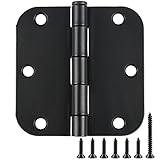
I remember standing in the hardware store, staring at a wall of hinges. Brass, steel, antique, residential, commercial – it was overwhelming. And then, a thought popped into my head, probably from some obscure forum I’d scrolled through years ago: are there wherls in hinges? It sounds like a silly question, right? Like asking if there are wheels on a doorknob. But sometimes, the most obvious things have hidden complexities, or maybe I was just looking for an excuse to buy a ridiculously expensive, ornate hinge. I’ve learned the hard way that not all hinges are created equal, and understanding what makes them tick, or rather, swing, is more important than you might think.
What Exactly is a Hinge, Anyway?
Let’s cut to the chase. When you ask ‘are there wherls in hinges,’ you’re probably not thinking about tiny, literal wheels spinning inside. You’re likely wondering if there’s some kind of internal mechanism, some hidden component that allows them to do their thing – to pivot, to swing, to hold a door or lid open or closed.
The honest answer is no, not in the way you’d imagine a wheel working. Hinges don’t have bearings made of tiny spinning circles like a skateboard wheel. They rely on a much simpler, but equally effective, principle: a pin and a barrel.
Think of it like your arm. Your shoulder joint lets your arm move freely because of the way the bones connect and allow for rotation. A hinge works similarly, but mechanically.
It’s basically two or more plates (leaves) joined by a barrel, with a pin running through the center of that barrel. This pin acts as the axis of rotation. The leaves are attached to the two surfaces that need to move relative to each other – like a door and its frame, or a cabinet door and its cabinet.
The barrel is the hollow tube that encases the pin, and it’s the point where the two leaves connect. When you open or close a door, the pin inside the barrel allows the leaves to pivot around it.
It’s pure mechanical advantage, designed for smooth, controlled movement. No ‘wherls’ needed, just good old-fashioned engineering.
I’ve seen people get tripped up trying to overcomplicate this. They’ll buy fancy, expensive hinges thinking they offer some secret advantage, only to find they perform exactly the same as a basic, well-made steel hinge.
It’s the same story with almost any product, really. People want to believe there’s a magic bullet, a secret ingredient.
With hinges, the magic is in their simplicity and the quality of the materials and manufacturing. A well-machined barrel and a smooth pin will give you a better swing than a poorly made, more expensive, ‘designer’ hinge any day of the week.
I once spent $80 on a single, ornate brass hinge for an antique cabinet. It looked great, sure, but it bound up after a month because the pin wasn’t seated perfectly. A $5 steel hinge I replaced it with worked flawlessly for years. Lesson learned: don’t chase perceived complexity where none exists. (See Also: A Box Without Hinges Key )
The Anatomy of a Swing: Pin, Barrel, and Leaves
Let’s break down the actual components. You’ve got your leaves – these are the flat parts that get screwed into your door and your frame (or whatever two things you’re connecting).
Most hinges have two leaves, but some heavy-duty ones might have more. Then there’s the barrel, which is basically the cylindrical housing that connects the leaves. This is where the pin lives.
The pin is the central rod that goes through the barrel. It’s what allows the hinge to pivot. The key here is the fit.
A good hinge will have a snug but not too tight fit between the pin and the barrel. This prevents wobble and makes sure smooth operation. If the pin is too loose, you get that annoying sag and squeak. If it’s too tight, it’s hard to move.
The materials also matter a lot. Steel is common for its strength and durability, especially for exterior doors or high-traffic areas.
Brass offers a nice aesthetic and good corrosion resistance, but it can be softer. Stainless steel is excellent for marine environments or kitchens where moisture is a concern. You’ll also see aluminum, which is lighter but less strong.
One of the most common types you’ll encounter is the butt hinge. This is the standard door hinge, with two leaves that are usually the same size. When the door is closed, the leaves butt up against each other.
Then there are strap hinges, which have one leaf that’s much longer than the other, often used on gates or heavier doors where you need more support. T-hinges are similar to strap hinges but have a T-shaped mounting plate. The variety exists to meet different needs, not because there are secret ‘wherls’ making them work differently.
It’s all about how the leaves are shaped, how the barrel is integrated, and the quality of the pin. I’ve tried to repair some really old, seized-up hinges, and usually, the problem is rust or wear on the pin or in the barrel. Sometimes, you can clean them up and lubricate them, but often, especially if the metal is pitted, it’s just easier and cheaper to replace the whole thing.
Trying to ‘fix’ a worn-out pin with some makeshift shim is a recipe for disaster. (See Also: Are Integrated Washing Machine Door Hinges Standard )
Common Mistakes People Make When Buying Hinges
The biggest mistake? Buying based on looks alone.
I’ve seen people pick out these ornate, almost sculptural hinges for their interior doors, only to find out they’re made of a cheap alloy that will corrode or bend within a year. They look pretty in the package, but they’re functionally garbage. Another huge error is not considering the weight and swing of the door. A lightweight interior door might be fine with a standard residential hinge, but a solid oak entry door?
You’ll need something much more solid. If you put the wrong hinges on, you’ll end up with sagging doors, doors that don’t close properly, and hinges that bend or break.
This is why understanding load capacity is so important. You need to match the hinge’s strength to the door’s weight and the frequency of its use. I learned this the hard way when I replaced the hinges on my garage door with something that looked similar but was rated for lighter use. Within six months, one of the hinges was visibly sagging, and the door was a nightmare to operate.
It cost me more in the long run to replace those cheap ones with proper heavy-duty hinges. Always check the specifications, even if it feels like overkill. It’s better to be over-engineered than under-engineered when it comes to hinges.
| Hinge Type | Typical Use | Pros | Cons | My Verdict |
|---|---|---|---|---|
| Butt Hinge | Interior/Exterior Doors | Common, easy to find, versatile | Can sag if undersized | Reliable workhorse for most jobs. |
| Strap Hinge | Gates, Shed Doors, Barn Doors | Excellent for heavy or wide doors, good support | Can be visually obtrusive | Great for rustic or heavy applications. |
| Continuous Hinge (Piano Hinge) | Cabinets, Chests, Long Doors | Distributes weight evenly, very strong | Can be tricky to cut to length | Perfect for things that need to open a full 180 degrees. |
| Ball Bearing Hinge | Heavy Doors, High-Traffic Areas | Smooth operation, reduced friction, durable | More expensive | Worth the splurge for heavy doors. |
Real-World Applications and Why It Matters
The reason ‘are there wherls in hinges’ is even a question is that we expect things to work smoothly and without fuss. When a hinge fails, it’s not just an inconvenience; it can be a real problem. Think about fire doors. They have specific hinge requirements to make sure they can close properly in an emergency.
Or consider a heavy, solid wood cabinet door in your kitchen. If the hinges aren’t up to the task, that door will sag, the gaps will be uneven, and eventually, the screws will pull out of the wood. It’s not just about aesthetics; it’s about function and safety. I recently helped a friend install a new pantry door.
We used some inexpensive, generic hinges. Within a couple of weeks, the door started sticking, and the frame looked like it was warping. Turns out, the door was heavier than we’d anticipated, and the hinges were just not built for it.
We ended up swapping them out for ball-bearing hinges, and the difference was night and day. The door swings silently and stays perfectly aligned.
It reinforced my belief that you shouldn’t skimp on hinges, especially for doors that get a lot of use or carry significant weight. It’s one of those things where getting it right the first time saves you a lot of headaches and potentially more expensive repairs down the line. Good hinges are like the unsung heroes of your home or project; you don’t notice them when they’re working, but boy, do you notice when they’re not. (See Also: Are Hinges Wheeels )
Lubrication, Maintenance, and Longevity
Even the best hinges need a little love now and then. The most common issue people run into, besides choosing the wrong hinge in the first place, is squeaking. Ninety-nine percent of the time, a squeaky hinge just needs lubrication. You don’t need fancy lubricants.
A dab of petroleum jelly, some WD-40 (though this can attract dust over time), or even a bit of cooking oil can work in a pinch. For a more long-term solution, a silicone-based spray or a lithium grease is better. The trick is to get the lubricant into the barrel and around the pin. Sometimes, you can lift the pin slightly or remove it entirely, apply the lubricant, and then reinsert it.
If you’ve got a hinge that’s really seized up with rust, you might need something more aggressive, like a penetrating oil, and a bit of elbow grease with a wire brush. I had an old shed door that was practically welded shut by rust on its hinges.
I spent an entire afternoon with penetrating oil, a wire brush, and a hammer (gently tapping the pin to loosen it). Eventually, I got the pin out, cleaned it up, greased everything, and it swung like new.
It’s amazing what a little maintenance can do to extend the life of your hardware. Don’t just assume a hinge is ‘bad’ when it starts to creak; try a little lubrication first. It’s cheap, easy, and often solves the problem instantly. Think of it like oiling your bike chain; it’s basic maintenance that makes a huge difference in performance and lifespan.
People Also Ask (faq)
Can Hinges Be Repaired?
Yes, hinges can often be repaired, especially if the issue is minor wear, rust, or lubrication problems. You can clean them, lubricate them with products like WD-40 or silicone spray, and sometimes even replace a worn pin. However, if the hinge leaves are bent, cracked, or the barrel is significantly damaged, replacement is usually the more practical and effective solution.
How Do I Know What Size Hinge to Buy?
Sizing involves considering the door’s weight, height, and width, as well as the desired swing. For standard interior doors, 3-3.5 inch hinges are common. Heavy doors require larger, thicker hinges, often with ball bearings. Always check the manufacturer’s specifications for weight ratings. It’s better to go slightly larger than undersized to make sure durability and proper function.
Are All Hinges Made of Metal?
While the vast majority of functional hinges are made of metal like steel, brass, or stainless steel due to their strength and durability, some decorative or specialized applications might use other materials. However, for any application involving significant movement or load-bearing, metal remains the standard choice for its reliability.
What Is the Difference Between a Residential and Commercial Hinge?
Commercial hinges are typically heavier-duty, built to withstand more frequent use and greater stress than residential hinges. They often have features like reinforced pins, thicker leaves, and higher weight ratings. Residential hinges are designed for lighter use in homes, while commercial hinges are engineered for the demands of public buildings and high-traffic areas.
Conclusion
So, to circle back to the original question: are there wherls in hinges? No, not in the way you might imagine tiny wheels. It’s all about the elegant simplicity of the pin and barrel system. But that simplicity is what makes them work, and understanding that basic mechanism is key to choosing the right ones. Don’t get fooled by fancy packaging or outrageous prices. Focus on the quality of the materials, the precision of the machining, and whether the hinge is rated for the job you need it to do. I’ve wasted enough money on flimsy hinges to know that a good hinge is worth its weight in gold, even if it doesn’t have any actual ‘wherls’ inside.
Next time you’re faced with a wall of hinges, remember this: strength, smooth operation, and durability are what matter. Whether you’re hanging a shed door or a cabinet, the right hinge will perform without a fuss. And if you’re hearing a squeak, grab some lubricant before you even think about replacing it. Sometimes, the simplest fix is the best one, and that’s definitely true for hinges.