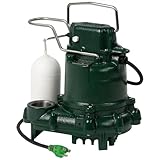
You’re standing in your basement, water creeping in. The panic sets in. Your mind races: do I have a pump? Is it any good? Will it actually work when I need it most? This is exactly where I found myself last spring after a freak storm dumped six inches of rain in four hours. My old, cheap sump pump sputtered and died, leaving me ankle-deep in murky water and regretting every dollar I’d ever saved by buying the ‘bargain’ option. So, are Harbor Freight sump pumps any good? It’s a question I’ve wrestled with, and I’m here to give you the unvarnished truth, based on years of tinkering and actual, messy basement water incidents.
Forget the slick marketing. Forget the inflated promises. When it comes to keeping your home dry, you need something that works, not just something that claims to. We’re talking about protecting your belongings, your foundation, and your sanity. This isn’t a place to skimp carelessly, but that doesn’t mean you have to break the bank either.
The Siren Song of the Low Price Tag
Let’s cut to the chase. Harbor Freight is famous for its low prices. You walk in, and suddenly you can afford tools you’d never dream of buying at a big-box hardware store. It’s a beautiful, dangerous thing.
When my last sump pump died a watery death, my first thought, after the initial curse words, was ‘Harbor Freight.’ Their Central Pneumatic or Titanium brand pumps often sit on the shelves, looking… well, like sump pumps.
They promise decent GPH (gallons per hour) ratings for a fraction of the cost of a name brand. It’s tempting, I’ll admit.
I’ve bought plenty of ‘good enough’ tools from HF over the years – impact drivers that lasted a decent while, grinders that get the job done without fuss. So, the question of whether their sump pumps are any good is a natural one.
My own experience, and that of a few buddies who’ve taken the plunge, leans towards a hesitant ‘it depends.’ For a truly emergency situation, a temporary fix, or a place you don’t mind risking a little water damage, maybe. For your primary, always-on, important basement dewatering? I’d be very, very cautious.
The build quality can be… inconsistent. Sometimes you get a pump that works flawlessly for a year or two, quietly doing its job. Other times, you get one that sounds like a dying badger after three months, or worse, fails to kick on when the water level hits its trigger point. I once bought one of their submersible models, the kind with the float switch built-in.
It looked solid enough, all plastic casing and a beefy-looking impeller. Plugged it in, tested it with a bucket of water, and it whirred to life, spitting water out with surprising gusto. Great, I thought.
Then, about six months later, during a moderate rain, I noticed the tell-tale dampness creeping up the basement wall. The pump was running, but it sounded… strained. A quick inspection showed the impeller was clogged with some kind of slimy debris, and it was barely moving any water. I yanked it out, cleaned it, and it worked okay for a bit, but it never felt quite right again.
That was the moment I started to understand that ‘cheap’ can sometimes mean ‘expensive in the long run’ when it comes to important home systems.
The materials are often the first giveaway. While some higher-end pumps use cast iron for durability, Harbor Freight often sticks to plastic casings. This isn’t inherently bad, but it can mean less resistance to cracks from freezing, impact, or just age.
The seals can also be a weak point. Water intrusion into the motor housing is the death knell for any submersible pump.
I’ve seen enough of their tools where the gasket fit isn’t quite perfect, and I worry about that same lack of precision in their pumps. It’s the difference between a finely tuned machine and something that just… exists. The motors themselves, from what I’ve heard and experienced, might not have the same thermal protection or duty cycle ratings as more expensive units. Running them for extended periods, especially if there’s any obstruction or the water level drops too low, can overheat and burn them out prematurely.
This is a real concern if you have a persistent water problem or a long discharge pipe run, which puts more strain on the motor.
What to Actually Look for (and What Hf Often Lacks)
Alright, so you’re convinced you need a sump pump, and you’re wondering what makes one actually good, regardless of where you buy it. It boils down to a few key things: the motor, the impeller, the housing, and the switch. For the motor, you want something reliable. (See Also: Are Pumpkin Seed Husks Edible )
Submersible pumps have the motor sealed within the unit, so if that seal fails, you’re toast. Look for pumps with thermally protected motors – this means if it gets too hot, it shuts itself off instead of frying.
This is a feature that seems hit-or-miss on the cheaper end of the spectrum. The impeller is the heart of the pump, the part that actually throws the water. It’s usually made of thermoplastic or metal.
Metal impellers are generally more durable, but plastic ones can be lighter and less prone to rust. The design matters, too; some are better at handling debris without clogging. For Harbor Freight pumps, you’ll often find plastic impellers, which isn’t a dealbreaker, but you might want to check reviews specifically for clogging issues if you have gritty water.
The housing protects the motor and guides the water. As I mentioned, cast iron is the gold standard for durability and weight (it stays put).
Many Harbor Freight submersible pumps use thermoplastic. While this can be lighter and more resistant to corrosion, it can also be more brittle. A good housing should also have a stable base to prevent it from tipping over.
The switch is arguably the most important component for automatic operation. You’ll find float switches (vertical or tethered) or electronic switches. Tethered float switches are common and generally reliable, but their range of motion can be limited by the discharge pipe or other basement obstructions. Vertical float switches offer a more consistent activation point.
Electronic switches are more compact but can be sensitive to debris. For Harbor Freight, the float switch is often the first thing to go. I’ve had tethered switches get stuck in the ‘off’ position because they snagged on something, or the tether itself frayed and broke.
The mechanism is often simpler, less solid, and therefore more prone to failure under consistent use or in a challenging environment. So, when you’re looking at a Harbor Freight pump, pay extra attention to reviews that mention switch reliability.
Here’s a quick look at what you might find and my general take:
| Pump Type/Feature | Harbor Freight Likely Offering | My Verdict |
|---|---|---|
| Submersible (Plastic Housing) | Common. Basic design, often lower price. | Okay for light use or as a backup. Prone to clogging and less durable. |
| Submersible (Cast Iron Housing) | Rare or non-existent in their typical lineup. | Would be a huge upgrade if they offered it reliably. |
| Pedestal Pump | Sometimes available. Motor is above water. | Good for dirty water as intake is lower. Less common at HF, potentially less reliable motor. |
| Float Switch (Tethered) | Standard. Can be finicky. | Needs clear path, can get stuck. Check it often. |
| Float Switch (Vertical) | Less common, but seen. | More consistent, but takes up more vertical space. |
| GPH Rating | Varies. Often inflated or optimistic. | Always assume it’s less than advertised, especially with lift. |
| Warranty | Usually limited, short duration. | Check the fine print. Often a hassle to use. |
One thing you won’t typically find with Harbor Freight sump pumps is a lot of detail on the motor’s duty cycle or thermal overload protection. This information is vital for understanding how long the pump can run continuously without overheating. If they don’t provide it, or if it’s vague, assume the worst. It’s like buying a car without knowing its fuel efficiency – you just hope for the best, which isn’t a strategy when your basement is flooding.
Common Mistakes and How to Avoid Them
The biggest mistake people make with any sump pump, but especially with a budget option like those from Harbor Freight, is treating it like a set-it-and-forget-it device. You install it, plug it in, and assume your basement is safe forever. Wrong. Terribly, expensively wrong. The second biggest mistake is buying the cheapest one available without considering your specific needs. A pump that’s perfect for a lightly damp crawl space is going to be useless in a basement that’s prone to significant flooding. You need to match the pump’s GPH rating to the potential water volume and consider the ‘head,’ which is how high it needs to push the water.
Another common pitfall is improper installation. If the pump is tilted, the float switch can get stuck. If the discharge pipe is too long or has too many bends, it puts undue strain on the motor.
For Harbor Freight pumps, which might have less solid construction, these installation errors are magnified. I’ve seen people just shove the pump into a corner of the pit, thinking it’ll be fine.
It won’t be. The pit itself needs to be properly sized and clear of debris.
I learned this the hard way after my first pump clogged because the pit was full of silt and random bits of concrete from an old repair. The pump was fine, but the pit was a disaster. Cleaning out the sump pit should be a regular part of your maintenance routine, regardless of pump brand. (See Also: Are Pumpkin Seed Acid Or Alkaline )
A third, and frankly infuriating, mistake is believing the advertised GPH ratings without question. These numbers are almost always measured under ideal conditions – zero lift, short discharge pipe. As soon as you need to lift water a few feet or push it through a long pipe, the actual GPH drops significantly.
Harbor Freight pumps are notorious for this. The advertised 3000 GPH might translate to 1500 GPH in a real-world scenario with moderate lift. If you’re trying to dewater a large area, you need to factor in this reduction. Many people who buy these pumps and are disappointed underestimate the importance of the head pressure.
If your discharge pipe goes up 10 feet, that’s a significant head pressure that the pump has to overcome. A pump that’s borderline adequate at zero head might be completely useless at 10 feet. So, always err on the side of a higher GPH rating than you think you need, and always, always check if the manufacturer provides performance curves that show GPH at different head levels.
If Harbor Freight doesn’t provide this, it’s another red flag. My advice? If you’re unsure, look for a pump with a GPH rating at least 50% higher than your estimated need, just to be safe.
It’s better to have a pump that cycles off quickly than one that struggles to keep up.
Sump Pump Maintenance Checklist
- Clear the Sump Pit: Remove any debris, silt, or standing water that could clog the intake or interfere with the float switch. Do this at least twice a year, more often if you have a lot of sediment.
- Test the Float Switch: Manually lift the float switch to make sure the pump turns on and off smoothly. Listen for any unusual noises.
- Check Discharge Line: Make sure the discharge pipe is clear and not blocked. Run the pump briefly to confirm water is flowing freely and that there are no leaks.
- Inspect Power Cord: Look for any signs of damage, fraying, or wear on the power cord and plug. Make sure connections are dry and secure.
- Listen for Unusual Noises: Grinding, rattling, or straining sounds often indicate a problem with the motor or impeller.
Skipping these simple steps is like driving your car without ever changing the oil – eventually, something’s going to break, and you’ll be left with a much bigger, more expensive problem. The reality is, a sump pump is a lifeline for your home’s foundation, and treating it with the respect it deserves, regardless of price, is most important.
Real-World Performance: The Good, the Bad, and the Ugly
So, are Harbor Freight sump pumps any good? The answer, as with most things in life, is complicated. I’ve heard from folks who’ve had them work for years without a hitch. These are often people with minor water issues, or those who use them as a secondary pump in a very large basement, or even for temporary jobs like draining a flooded kiddie pool. For those light-duty applications, a Harbor Freight pump can be a perfectly adequate, even cost-effective, solution. They’re readily available, and the price makes them an easy impulse buy when you’re already in the store for something else.
But then there’s the other side of the coin. I’ve also talked to people who bought one hoping to save money, only to have it fail catastrophically during a heavy rainstorm. I remember one guy, a neighbor, who swore by his HF pump.
He’d had it for about a year, and it seemed to be doing its job. Then, a derecho blew through, and his basement started filling up fast. He went to check on the pump, and it was just sitting there, silent and useless.
The motor had seized. He ended up with about three feet of water in his finished basement, costing him thousands in repairs. He blamed the pump, of course, and swore he’d never buy another tool from Harbor Freight that wasn’t a hand tool.
That story always sticks with me because it highlights the gamble. You’re not just buying a pump; you’re buying peace of mind. And with a cheap pump, that peace of mind can be incredibly fragile.
The quality control is where I think the biggest issue lies. When a company pumps out thousands of units at a rock-bottom price, there’s bound to be variation. Some will be gems, some will be duds. You might get lucky.
You might not. The key is understanding that you’re rolling the dice. For something as important as basement waterproofing, I personally prefer to minimize the element of chance. I’d rather spend a bit more upfront for a brand that has a reputation for reliability and better customer support.
I’ve seen too many stories of pumps failing during the worst possible moments—like when you’re on vacation and a pipe bursts. A few hundred extra dollars for a pump from a reputable manufacturer is cheap insurance against tens of thousands in water damage and mold remediation. The materials used, the motor quality, the seal integrity – these are things that reputable brands invest in. Harbor Freight, by its nature, prioritizes cost reduction above almost all else.
One area where I’ve seen them perform surprisingly okay is in their battery-powered or water-powered backup pumps. These are often for secondary protection. A battery backup is good to have regardless, and if the HF version works when you need it, great. But again, the battery itself is a huge factor, and that’s a separate purchase and concern. The core submersible or utility pumps are where the biggest risks lie for continuous, primary duty. (See Also: Are Organic Pumpkin Seeds From China Bad )
When a Harbor Freight Pump Might Actually Make Sense
Okay, so I’ve been pretty hard on them, and for good reason. But is there ever a scenario where a Harbor Freight sump pump is actually a decent idea? Yes, I think so. If you have a very mild, intermittent water problem – think a slightly damp crawl space that gets a bit of surface water after a heavy rain, but never anything close to flooding – one of their basic submersible pumps might do the trick. The key here is ‘mild’ and ‘intermittent.’ These aren’t pumps designed for continuous duty or for handling a true emergency. They’re more for managing minor nuisances.
Another situation is if you need a pump for a short-term project. Draining a large water heater, emptying a decorative pond for cleaning, or dewatering a small area for a DIY project. For these tasks, where failure isn’t going to result in catastrophic damage, a cheap pump from Harbor Freight can be a lifesaver.
I bought one of their utility pumps, not technically a sump pump, to drain my water heater when it sprang a leak. It worked fine for the hour or so it took.
If it had died halfway through, it would have been annoying, but not a disaster. The same applies if you’re using it as a temporary backup while you’re waiting for a better pump to arrive or be repaired.
It’s a stop-gap measure, not a permanent solution.
I’ve also heard from folks who use them in their RVs for grey or black water tanks when the built-in pump fails. Again, this is usually a situation where they’re trying to make a trip work until they can get a proper repair, and the cost is a major factor. The environment is different, and the consequences of failure are generally less severe than a flooded basement.
So, while I wouldn’t install one as my primary basement sump pump to protect my home’s foundation, I can see the appeal and occasional utility for less important, short-term, or light-duty applications where the risk of failure is acceptable. The key is managing your expectations and understanding what you’re buying.
It’s a tool, and like any tool, it has its intended purpose and limitations. For a important, long-term job like keeping a basement dry, those limitations can become very, very apparent, very quickly.
Frequently Asked Questions About Harbor Freight Sump Pumps
Are Harbor Freight Sump Pumps Reliable?
Reliability is a mixed bag. Some users report good performance for years, while others experience failure within months. This inconsistency is a common characteristic of budget-brand tools. For important applications like protecting your basement, it’s a gamble you might not want to take.
How Long Do Harbor Freight Sump Pumps Typically Last?
There’s no set lifespan. Depending on the model, usage, and maintenance, they could last anywhere from a few months to a few years. However, many users report shorter lifespans compared to higher-priced, name-brand pumps, especially under heavy or continuous use.
What Is the Biggest Downside to Harbor Freight Sump Pumps?
The biggest downside is the inconsistent quality control and potentially lower-grade materials and motor components. This can lead to premature failure, especially during a heavy-duty task or an emergency, which is exactly when you need them most.
Are There Any Good Alternatives to Harbor Freight Sump Pumps?
Yes, absolutely. Brands like Wayne, Zoeller, Little Giant, and Basement Watchdog are highly regarded for their durability and reliability. While they cost more upfront, they often provide better long-term value and peace of mind for important applications.
Can I Use a Harbor Freight Utility Pump as a Sump Pump?
You can use a utility pump for temporary dewatering or very minor dampness issues, but they are generally not designed for the continuous operation and specific pit installation of a dedicated sump pump. They might clog more easily and lack the features of a true sump pump, like a reliable float switch.
Final Thoughts
So, to circle back to the burning question: are Harbor Freight sump pumps any good? My honest opinion, after years of wrestling with basement water and various pumps, is that they’re a gamble. For a true emergency, a primary defense against flooding, or for a finished basement where water damage means thousands in repairs, I’d strongly advise looking elsewhere. The potential for a cheap pump to fail when you need it most is just too high, and the cost of failure far outweighs the upfront savings.
However, if you have a minor nuisance, a temporary dewatering need, or a situation where failure won’t lead to disaster, a Harbor Freight pump might serve its purpose. Just be prepared for the possibility that it might not last as long or perform as reliably as a more expensive, reputable alternative. Always check reviews, understand the GPH and head requirements for your specific situation, and never, ever forget regular maintenance. That’s the real key to keeping water out, no matter what pump you’re using.
Ultimately, protecting your home is about making informed decisions. For important systems like sump pumps, sometimes ‘good enough’ just isn’t. I learned that lesson the hard way, and I don’t want you to have to.