
I’ve spent more time than I care to admit wrestling with tiny screws, especially on watches. You know the kind – the ones that seem designed to vanish the moment they escape your tweezers. For ages, I just accepted them as a necessary evil, part of the intricate dance of watchmaking. But then I started digging into how it’s made wrist watch screws, and frankly, it’s a lot more involved than you might think for something so small.
It’s easy to dismiss them as just little bits of metal, but these screws are workhorses. They hold together components that dictate the accuracy and longevity of a timepiece. So, next time you’re admiring a watch, give a nod to those minuscule fasteners. They’re more important than you probably realize.
The Unseen Foundation: Why These Tiny Screws Actually Matter
Look, I’ve been there. You’re trying to swap a battery in an old Timex or maybe even tackle a minor repair on a more expensive piece. You grab your tiny screwdriver, and then it happens. The screw is just… gone. Vanished into the ether. It’s infuriating, and it makes you wonder how something so small can cause so much hassle. But here’s the deal: how it’s made wrist watch screws are a masterclass in micro-engineering. They aren’t just random bits of metal. They’re designed, manufactured, and selected with incredible precision, and frankly, that’s why they can be so hard to deal with when you lose one.
Think about the forces these little guys contend with. They’re holding plates, bridges, and gears in place, often under tension. They’re subjected to vibrations from daily wear, temperature changes, and sometimes even shocks. If they weren’t made with specific tolerances and materials, a watch could literally fall apart. I remember one time I was trying to reassemble a vintage chronograph I’d picked up cheap. I used a screw from my ‘miscellaneous tiny screw’ jar – big mistake. It stripped almost instantly, and the whole movement started to feel loose. That was my wake-up call. These aren’t generic fasteners. They need to be the right fasteners.
The sheer number of screws in a mechanical watch can be staggering. A simple three-hand watch might have around 20-30 screws, while a complex chronograph or perpetual calendar can easily exceed 100. Each one has a specific job. Some are for securing the mainplate to the case, others hold down the movement bridges, and some are for attaching tiny levers and springs in the escapement.
The different sizes, thread pitches, and even head types are all dictated by the specific component they’re meant to secure. It’s not just about holding things together; it’s about holding them together with the right amount of force, in the right place, for decades. The materials used are also important, often stainless steel alloys designed to resist corrosion and fatigue.
Some high-end watches even use gold or titanium for specific aesthetic or performance reasons, though steel is the workhorse for most.
From Bar Stock to Micro-Masters: The Manufacturing Process
So, how do they actually make these minuscule marvels? It’s not like they’re just hacking away at a giant metal rod with a tiny file. The process for how it’s made wrist watch screws is a fascinating blend of traditional machining and modern automation. It starts with high-quality raw materials, typically specific grades of stainless steel alloys like 316L, chosen for their corrosion resistance and durability. These alloys are often selected because they can be machined to very fine tolerances without becoming brittle. Some manufacturers might also use brass for certain applications, especially in older or more decorative pieces, though steel is far more common for structural components due to its strength.
The primary method for creating the screw blanks is called ‘cold heading’ or ‘upsetting’. In this process, a piece of wire (the raw material) is fed into a machine. A die shapes the head of the screw, and a punch forms the shank. It’s done at room temperature, which strengthens the metal – hence ‘cold heading’.
For watch screws, this process has to be incredibly precise, as even minute variations can affect how the screw fits and performs. Following the heading, the threads are typically cut. This is usually done using a threading die or a thread rolling process, depending on the size and type of screw. Thread rolling is generally preferred for smaller screws as it creates a stronger, more durable thread by displacing the metal rather than cutting it away.
This also helps improve the surface finish.
After threading, the heads are finished. This might involve slotting them for a flathead screwdriver, creating a cross-head (Phillips-style) recess, or a more specialized drive like a Torx or even a proprietary design.
The precision of these slots or recesses is most important. A poorly cut slot will make driving the screw incredibly difficult and increases the risk of damaging the head or the surrounding watch component. Many watch screws, especially for higher-end movements, also undergo additional finishing processes. This can include polishing to remove any machining marks and improve aesthetics, or even specialized coatings for enhanced durability or specific friction properties.
Some very high-end or specialized watches might use screws made from precious metals like gold or platinum, or even exotic materials like titanium. These require even more specialized manufacturing techniques, as these materials behave differently under machining than standard steel alloys.
| Screw Type | Common Material | Primary Function | My Verdict |
|---|---|---|---|
| Movement Screws (e.g., bridge screws) | Stainless Steel Alloy (316L) | Securing bridges, plates, and cocks within the movement. | The backbone. Needs to be precise, strong, and corrosion-resistant. If these are bad, the watch won’t run. |
| Case Screws (e.g., case back screws) | Stainless Steel Alloy | Attaching the case back or securing parts of the case assembly. | More about seal and secure fit. Less stress than movement screws, but still needs to look decent and not strip. |
| Dial Screws | Often Brass or Smaller Steel | Securing the dial to the movement or dial feet. | These can be surprisingly delicate. Often brass for ease of machining and to avoid damaging the dial or movement if overtightened. |
| Jewel Screws (less common now, often bushings) | Historically often Brass | Securing jewel bearings in some older or specific movement designs. | Niche. Usually replaced by press-fit bushings. If you see these, it’s likely an older watch. |
The Hidden Specs: What Actually Makes a Good Watch Screw
Here’s where things get hairy for the DIYer, and why just grabbing any old tiny screw is a recipe for disaster. When we talk about how it’s made wrist watch screws, the specs are king. It’s not just about the length and the thread. You’ve got to consider the material, the thread pitch, the head type, and the overall finish.
For instance, movement screws, the ones holding the intricate bits of the watch together, are typically made from high-grade stainless steel alloys like 316L. This steel is chosen for its excellent corrosion resistance, which is vital in a device that’s worn against skin and exposed to varying humidity. It also offers a good balance of strength and machinability, allowing for the incredibly tight tolerances needed in watchmaking. (See Also: How To Fix Eyeglasses Arm Without Screw )
The thread pitch is another important factor. Watch screws often have very fine threads – meaning there are many threads per unit of length.
This allows for precise adjustment and secures components without needing to exert excessive force, which could damage delicate parts. A coarser thread might strip easily or not provide the fine-tuning needed for a watch movement.
Then there’s the head. While we see Phillips and flathead most often, specialized tools are often required. A poorly formed slot or recess on the screw head can lead to the screwdriver slipping, which can scratch the surrounding metal or even damage the delicate parts of the movement. I once tried to fix a friend’s watch with a set of ‘precision’ screwdrivers that were anything but.
The Phillips bits were too shallow, and I ended up camming out, scratching the dial and stripping the head of a perfectly good movement screw. Cost me more in polish and replacement than the initial repair was worth.
Contrarian opinion time: Everyone talks about the mainspring or the balance wheel being the heart of the watch. I’d argue the screws are the skeleton and nervous system. Without the right screws, properly seated, even the best mainspring and balance wheel are useless. The common advice is to be gentle.
I say, be precise. Gentleness is for feather dusting; precision is for watchmaking. You need the right tool for the right screw, applied with the right torque.
That means understanding the screw itself – its material, its thread, its head – before you even pick up a screwdriver. High-end watchmakers will often heat-treat their screws to give them a specific blue or even gold hue, which isn’t just for looks; it can also indicate a specific material property or intended use within the movement. These aren’t just functional; they’re art, albeit microscopic art.
What to Look for in Quality Watch Screws
When you’re dealing with actual watch parts, whether for repair or replacement, quality matters immensely. First, material: look for high-grade stainless steel alloys, especially for movement components. They should feel substantial and resist magnetic fields (though not all stainless steels are non-magnetic).
Second, thread consistency: the threads should be clean, sharp, and uniform. Run a known good screw of the same size next to it; the quality difference will be visually apparent. Third, head integrity: the slot or drive recess should be cleanly cut, with no burrs or deformities. It should fit your correct screwdriver bit snugly, with minimal play.
Finally, size and pitch: this is where sourcing the right part is important. A screw that’s even a fraction of a millimeter too long can interfere with other parts, and an incorrect thread pitch can strip or refuse to seat properly. Always, always verify the exact specifications.
Common Mistakes When Dealing with Watch Screws
Let’s be blunt: most people screw up watch screws. And I’m not just talking about home DIYers. Even some people who dabble in watch repair make basic errors. The most common, hands-down, is using the wrong screwdriver. You might have a set of ‘precision’ screwdrivers, but if the tip isn’t the exact right size and type for the screw head, you’re asking for trouble. You’ll strip the head, scratch the surrounding metal, or even push the screw into a place it shouldn’t be. I’ve seen people use eyeglass repair kits on a chronograph – it’s a joke. The metal in those cheap screwdrivers is often too soft, and the tips are poorly formed.
Another massive mistake is overtightening. These screws are tiny, and they’re holding delicate components. You don’t need Hulk strength. A gentle, snug fit is all that’s usually required. Overtightening can strip the threads (either in the screw or the hole it’s going into), crack a jewel setting, or warp a movement bridge. I learned this the hard way trying to fix a friend’s cheap fashion watch. I cranked down on a case back screw, and suddenly the plastic casing around it cracked. It was a $50 watch, but still, I felt like an idiot. The proper torque is often measured in grams-force-centimeters, not foot-pounds. It’s minuscule.
People also frequently lose them. This isn’t a mistake in the making of the screw, but it’s a massive mistake in handling them. They are incredibly small, easily fall into carpets, get swept away, or bounce into oblivion.
A magnetic mat, a clean workspace with a lip, and good lighting are a must for anyone working with these. I keep a small, shallow plastic tray with a grid pattern specifically for holding screws when I’m working.
It’s saved me countless headaches. Finally, using the wrong material is another pitfall. For instance, using a magnetized steel screw where a non-magnetic one is specified could interfere with the watch’s accuracy, especially if it’s near the balance spring. (See Also: How Measure Metric Computer Screws )
Always try to match the original material if possible, or at least understand the implications of using a substitute.
Why You Should Never Use a Magnetized Screwdriver on Watch Screws
This one is super important and often overlooked. Most standard screwdrivers you buy for electronics or general use are magnetized. While this is handy for picking up screws, it’s a disaster for watch movements.
The balance spring, which is the heart of a mechanical watch’s timekeeping, is often made of a very fine, delicate metal alloy that can be easily magnetized. If a magnetized screwdriver accidentally touches this spring, or if a magnetized screw gets too close to it, it can become magnetized itself. This causes the coils of the spring to stick together, making the watch run erratically – usually too fast, but sometimes stopping altogether.
It’s a common and frustrating problem that requires specialized demagnetizing tools to fix, and sometimes the spring needs to be replaced.
Real-World Use and Practical Tips for Watch Screws
When you’re actually using watch screws, whether you’re a seasoned watchmaker or just trying to fix something yourself, the principles are the same: precision and patience. The first thing to remember is that the screws that hold the movement together are usually made of specific stainless steel alloys that are non-magnetic or only weakly magnetic. This is important because the balance spring, the tiny hairspring that regulates time, is extremely sensitive to magnetism. If you use a magnetized screwdriver or a screw that’s too magnetic near the balance spring, you can cause the watch to run wildly fast or stop altogether.
I learned this the hard way when I was replacing a cracked crystal on a vintage diver. I thought I was being clever by using a magnetic screwdriver to hold the tiny case screws.
Big mistake. The watch started gaining minutes an hour. Took me ages to figure out the issue and had to get it demagnetized.
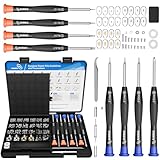
So, what’s the practical advice? First, invest in a good set of watchmaking screwdrivers. These aren’t just small versions of regular screwdrivers. They have hardened steel tips, precisely ground to fit specific screw head slots.
They are often color-coded or come with a stand. Look for brands that specialize in watchmaking tools, not just generic “precision” sets.
Second, always work on a clean, well-lit surface. A magnetic mat or a tray with compartments is your best friend for preventing lost screws. Seriously, these things are like tiny escape artists. I’ve heard of people using a dab of grease on the tip of their screwdriver to hold the screw, but that can leave residue.
A good screwdriver tip that fits perfectly is the best way.
Third, understand torque. You’re not tightening lug nuts on a car. For most movement screws, a gentle snug is all you need.
If the screw feels like it’s binding, stop. Back it out, check for cross-threading or debris.
For case screws, you might need a bit more, but again, don’t go overboard. If you’re unsure, err on the side of too loose rather than too tight. Fourth, when in doubt, source the correct part.
If you’ve lost a screw or damaged one, don’t just grab a random one from an old VCR. Websites specializing in watch parts or reputable watchmakers can often supply the correct screw for your specific watch model. It might cost a bit more, but it’s cheaper than damaging your movement or case. (See Also: How To Adjust Eyeglass Screw )
How to Safely Remove a Stripped Watch Screw Head
Dealing with a stripped watch screw is frustrating, but not impossible. First, try a screw extractor kit designed for micro-screws. These tiny extractors have a reverse thread that bites into the damaged head.
If that doesn’t work, you might need to carefully create a new slot. Sometimes, a very fine jeweler’s saw or a Dremel with a thin cutting wheel (used with extreme caution and magnification) can be used to cut a new slot across the damaged head, allowing a flathead screwdriver to engage. For extremely stubborn or tiny screws where the head is completely rounded off, a last resort might involve carefully drilling out the screw, but this is incredibly risky and best left to professionals with specialized equipment.
Always protect the surrounding components from any metal shavings or slips.
The Future of Watch Screws: Beyond Traditional Metal
As we look at how it’s made wrist watch screws, it’s interesting to consider where things are heading. While traditional steel screws are likely to remain the dominant force due to their proven reliability, cost-effectiveness, and material properties, the watch industry is always pushing boundaries. We’re seeing more advanced alloys being explored, not just for corrosion resistance but for specific magnetic properties or even lighter weight. For instance, some ultra-high-end watches might experiment with titanium or even ceramic screws in specific applications, though these come with their own manufacturing challenges and cost implications. Ceramic screws, while incredibly hard and corrosion-resistant, are also brittle, making them unsuitable for high-stress applications.
There’s also a continuous drive towards miniaturization and precision. As watch movements get smaller and more complex, the screws need to become even more precisely manufactured. This means advancements in CNC machining, laser cutting, and even additive manufacturing (3D printing) techniques for micro-components are on the horizon. While 3D printing complex metal screws with the required thread precision and material integrity is still largely experimental, it holds potential for custom or highly specialized components in the future.
Think about it: a screw designed with internal channels for lubrication or a unique head shape optimized for a specific tool. The focus will remain on accuracy, durability, and minimizing the potential for magnetic interference, especially as watches become more integrated with electronics or smart features.
The aesthetic aspect also plays a role. While function is most important, especially in mechanical movements, the visual appeal of screws is not ignored. The traditional blued steel screws are a classic example, where heat treatment imparts a beautiful blue color and can also alter the material’s properties. Future developments might see new heat treatment techniques or surface finishes that offer novel colors and enhanced durability without compromising the screw’s performance. The fundamental challenge will always be balancing extreme precision with mass production capabilities, making sure that these tiny but vital components continue to hold our timepieces together reliably for generations to come. It’s a testament to human ingenuity that something so small can be so technologically advanced.
Faq: Your Burning Questions About Watch Screws Answered
Are All Watch Screws Made of Stainless Steel?
No, not all watch screws are made of stainless steel, although it’s the most common material for functional components due to its durability and corrosion resistance. Some dial screws or decorative elements might be made of brass. In very high-end or specialized watches, you might find screws made from gold, titanium, or even other exotic alloys, each chosen for specific properties or aesthetic reasons. However, for the screws holding the movement together, stainless steel alloys are almost universally preferred.
Can Watch Screws Rust?
High-quality stainless steel watch screws, especially those made from alloys like 316L, are highly resistant to rust and corrosion. However, no metal is entirely immune. If exposed to corrosive substances, saltwater, or harsh chemicals for extended periods, even stainless steel can eventually show signs of degradation. Lower-quality steel or brass screws are more susceptible to rust and tarnish over time, especially in humid environments. Proper care and cleaning of your watch can help prevent this.
What Is the Smallest Screw Used in a Watch?
The smallest screws used in a watch are typically found in the escapement or balance bridge assemblies of highly complicated mechanical movements. These screws can be incredibly tiny, with diameters of less than a millimeter and thread pitches measured in fractions of a millimeter. Their manufacturing requires extreme precision, often involving specialized machines and optical magnification. These are far beyond what you’d find in a typical quartz watch or even a simple automatic.
How Can I Tell If My Watch Screws Are Magnetized?
The most obvious sign that your watch screws (or other internal components) might be magnetized is if your mechanical watch starts running significantly fast or erratically, or stops altogether, especially after being exposed to strong magnetic fields. You can also test for magnetism using a small compass placed near the watch; if the needle deflects noticeably, magnetism is likely present. Professional watchmakers have specialized demagnetizing tools to test and correct this issue.
Final Thoughts
So, there you have it. Those tiny screws holding your watch together are a lot more than just fasteners. They’re the result of meticulous design and manufacturing, playing a important role in keeping time accurate and a timepiece functional. Understanding how it’s made wrist watch screws gives you a newfound appreciation for the engineering packed into even the smallest parts of a watch.
Next time you find yourself fumbling with a tiny screw, take a deep breath. Grab the right tool, work in good light, and remember that patience is key. It’s easy to mess things up with these minuscule components, but with a little care and the right knowledge, you can avoid common pitfalls.
If you’re planning any work on a watch, especially a valuable one, consider investing in a quality set of watchmaking tools. It’s a small price to pay for avoiding costly mistakes and making sure your watch runs smoothly for years to come.
![AXTH 25-in-1 Small Precision Screwdriver Set, Professional Magnetic Mini Repair Tool Kit for Phone, Computer, Watch, Laptop, Macbook, Ring Doorbell, Eyeglass, Electronic, [Bearing Steel] Screw Driver](https://m.media-amazon.com/images/I/518YlLmPTcL._SL160_.jpg)
