
Look, I’ve had my fair share of expensive gadgets, and let me tell you, the shiny new iPhone is always tempting. But before you drop a grand and a half on the latest model, let’s get down to the nitty-gritty.
We’re talking about the tiny things that hold it all together. You might be wondering, ‘how many screws inside iPhone 17 pro max?’ It’s a question that might seem obscure, but it’s actually a peek into the engineering marvel that is your pocket computer.
It tells you something about how they’re built and, importantly, how easy (or impossible) they are to fix when things go wrong. I’ve been down the rabbit hole of DIY repairs, and trust me, knowing the screw count is just the first step.
It’s not just about the number; it’s about the variety, the sizes, and where they’re placed. These aren’t your dad’s Phillips head screws holding together a VCR. Apple uses a whole ecosystem of proprietary fasteners designed to make your life… well, difficult, if you’re not Apple.
The Tiny Terrors: Understanding iPhone Screw Geometry
Let’s cut to the chase. The question of ‘how many screws inside iPhone 17 pro max’ isn’t as straightforward as counting peas in a pod.
Apple doesn’t exactly plaster a ‘screw inventory’ on their spec sheets. But if you’ve ever had the misfortune of needing to open one up – say, for a battery replacement that’s no longer covered by warranty, or, like me, you just had to see what was inside – you’d know it’s a surprisingly high number for such a sleek device. For recent Pro Max models, we’re generally looking at somewhere in the ballpark of 15-20 easily accessible screws on the exterior and internal frame. This is a rough estimate, of course, as the exact count can subtly shift between generations, with minor design tweaks.
But the principle remains: it’s a lot.
These aren’t uniform little soldiers either. You’ll find pentalobe screws on the outside, a proprietary Apple invention that’s a nightmare if you don’t have the specific driver bit. Then, once you’re inside, you’re greeted by a dazzling array of Torx screws, often in different sizes. Some are minuscule, barely larger than a speck of dust, while others might be a fraction longer.
The placement is also meticulously engineered. They’re strategically located to secure components like the logic board, battery connectors, display cables, cameras, and charging ports. Each screw has a purpose, and misplacing one, or using the wrong size in the wrong spot, can lead to disaster. (See Also: How To Fix Eyeglasses Arm Without Screw )
I once tried to fix a friend’s older iPhone without a proper screw organizer, and I ended up with a spare screw and a phone that wouldn’t boot. Lesson learned the hard way: organization is key, and having the right tools is a must.
The sheer number and variety of screws serve a dual purpose. From Apple’s perspective, it’s about creating a tightly integrated, sealed unit that’s difficult to tamper with. This is great for security and water resistance, but terrible for independent repairability. For us consumers, it means that even a seemingly simple repair can become a complex, multi-step process requiring specialized tools and a significant amount of patience. It also explains why third-party repair shops often charge a premium; their technicians are basically performing micro-surgery with a tiny screwdriver.
The Internal Maze: What Those Screws Actually Hold
So, what exactly are all these screws holding captive inside your iPhone 17 Pro Max? It’s a meticulously organized internal landscape. The first few screws you encounter, usually on the bottom edge near the charging port, are typically the pentalobe screws that secure the display assembly to the main body. Once those are out, the display can be carefully lifted, revealing the intricate web of internal components. Here, you’ll start seeing the Torx screws.
There are screws holding down metal shields that protect delicate ribbon cables. These cables connect the display, the front-facing camera and sensor array, the rear cameras, the charging port assembly, and various other sensors to the logic board. Removing these shields requires precision; they’re often held down by just one or two tiny screws, and you need to keep track of which shield came from where, as they can sometimes be subtly different.
The battery itself is usually secured with a combination of adhesive and sometimes a bracket held down by a couple of screws. Removing the battery is a common repair, and again, the screws are tiny and specific.
The logic board, the ‘brain’ of the iPhone, is perhaps the most heavily secured component. It’s often anchored by several screws, some of which might be in rather awkward, hard-to-reach spots. These screws are important for maintaining proper contact and alignment of the board with the chassis.
Even a slightly loose logic board can cause intermittent connectivity issues or prevent the phone from booting up at all. It’s a testament to the miniaturization that Apple achieves, but it also means that if you’re doing a repair, you’re basically dismantling a tiny, complex machine piece by piece, and each piece is secured by at least one, often more, minuscule screw.
A Personal Screw-Up Story
I remember the first time I attempted to replace a cracked screen on an older iPhone model – let’s call it the ‘iPhone X-ish’. I was cocky, armed with a cheap toolkit I bought online. I watched a couple of YouTube videos, thought, ‘How hard can it be?’ Famous last words. (See Also: How Measure Metric Computer Screws )
I managed to get the pentalobe screws out, pried the screen off, and then… the internal chaos. I got to the shield covering the battery connector, and there it was: a tiny Torx screw.
I tried to unscrew it, and the driver bit just slipped. I fiddled, I pushed, I swore under my breath. Finally, I thought I had it, but when I reassembled the phone, the screen wouldn’t light up.
Turns out, I’d stripped the head of that tiny Torx screw, and worse, I’d managed to nudge the display connector just enough to break the connection. The phone was dead, and I’d learned that ‘close enough’ isn’t good enough when dealing with dozens of microscopic fasteners.
The Anatomy of an iPhone Screw: More Than Just Metal
It’s easy to dismiss iPhone screws as just tiny bits of metal, but they’re actually engineered components. They’re not just about holding things together; they’re about precision, weight, and even the feel of the repair process. The pentalobe screws, for instance, are designed with a unique star-shaped head. This isn’t just for show; it’s a proprietary design that requires specific tools, making it harder for the average person to open their phone without the right equipment. This is a deliberate choice by Apple to control the repair ecosystem and encourage users to go through official channels or authorized repair providers.
Inside, the Torx screws (often called Torx Security or Torx Tamper-Resistant, though Apple’s internal ones aren’t always the TR variant) are also chosen for their grip. The six-pointed star shape distributes torque more evenly than a Phillips head, reducing the chance of cam-out (the driver slipping out of the screw head). However, because they are so small and made of relatively soft metal, the heads can still be easily stripped if the wrong driver is used or if too much force is applied. This is why having a high-quality driver set with perfectly fitting bits is absolutely key. It’s not a place to cut corners; a cheap driver can ruin a screw head and make a repair infinitely more difficult, if not impossible.
Beyond the head type, the screw shafts themselves are precision-machined. They have specific thread pitches and lengths. Mixing them up, even by a millimeter, can be catastrophic. A screw that’s too long can pierce components on the other side of a circuit board, causing short circuits. A screw that’s too short won’t provide adequate holding force, leading to loose connections and potential hardware failures. The sheer number of unique screw types and lengths within a single iPhone model is astonishing, a testament to the relentless pursuit of miniaturization and density. It’s a complex puzzle where every piece, down to the smallest screw, has its designated place.
Repairability and the Screw Count: Why It Matters
The number of screws inside an iPhone 17 Pro Max, and their specific types, is a direct indicator of its repairability – or lack thereof. Apple’s design philosophy prioritizes thinness, water resistance, and a smooth aesthetic. This often translates to a device that’s glued together as much as it is screwed. While screws hold major components in place, many other parts are secured with adhesive, making disassembly a delicate dance of heat guns and prying tools.
For consumers, this means that repairs that might have been simple on older devices – like a battery swap or a screen replacement – can become expensive and time-consuming. If you’re out of warranty and need a repair, you’re often faced with a choice: pay Apple’s premium price, go to a third-party repair shop (which carries its own risks regarding part quality and warranty), or attempt a DIY repair. The DIY route is where the screw count becomes a very real factor. You need the right tools, a clear guide, and an organized workspace. A botched DIY repair, often stemming from a simple mistake with a screw, can turn a minor issue into a bricked device. (See Also: How To Adjust Eyeglass Screw )
This is why groups advocating for ‘right to repair’ often point to the complexity of modern electronics, exemplified by the intricate screw systems within phones like the iPhone. They argue that manufacturers should design devices that are easier to disassemble and repair, using standardized parts and fewer proprietary fasteners. While Apple has made some minor concessions in recent years, like providing more repair documentation, the fundamental design of their flagship devices remains focused on a tightly integrated, difficult-to-access interior. So, while you might not personally be counting every screw, their presence and variety are a constant reminder of the engineering trade-offs involved in creating these powerful pocket-sized devices.
My Controversial Take on iPhone Repairs
Here’s the hot take: most people shouldn’t be trying to fix their own iPhones, especially newer models. Everyone sees those YouTube videos of people swapping screens and batteries with incredible speed. They make it look easy.
It’s not. They’re professionals, often using thousands of dollars worth of specialized equipment, and even they make mistakes. The sheer number of tiny, fragile components, connected by ribbon cables thinner than a human hair, and held together by an army of microscopic screws of varying lengths and types… it’s just asking for trouble for the average Joe. You’re more likely to cause more damage than you fix.
That $20 toolkit from Amazon? It’s probably going to strip a screw head within the first few minutes. Unless you have a genuine passion for electronics repair, a meticulous nature, and a budget for replacement parts when you inevitably break something else, just pay the professionals. It’s cheaper than buying a new phone because you lost a screw inside the logic board housing.
| Component | Typical Screw Type(s) | Approx. Number | My Verdict on Repair Difficulty |
|---|---|---|---|
| Display Assembly | Pentalobe (external), Torx (internal brackets) | 4-6 | Moderate – requires careful handling of cables. |
| Battery | Torx | 2-4 | Moderate – often secured with adhesive too. |
| Logic Board | Torx (various sizes) | 5-8 | High – extremely delicate, easy to damage other components. |
| Charging Port/Speaker Module | Torx | 2-3 | Moderate – requires removing other internal parts. |
| Cameras | Torx | 1-2 per module | High – very sensitive, easy to misalign. |
| Other Internal Brackets/Shields | Torx | Variable | Moderate to High – depends on location. |
The Future of iPhone Screws (and What It Means for You)
As we look towards future iPhone iterations, like the hypothetical iPhone 17 Pro Max, the trend isn’t likely to reverse. Apple’s drive for thinner, more integrated devices means the screw count might even increase, or at least become more specialized. We might see smaller, more specialized screws, or even attempts to replace screws with even more advanced adhesive technologies, making repairs even more challenging. The push for increased water and dust resistance also means tighter seals, often achieved through more complex internal structures that rely on precise fastening.
There’s a counter-movement, of course, driven by the ‘right to repair’ initiatives gaining traction globally. This could force manufacturers to adopt more repair-friendly designs. However, historically, Apple has been slow to adapt its core product design to satisfy these demands. They often make incremental changes that appear to address concerns without fundamentally altering their integrated hardware approach. For the average user, this means that the question of ‘how many screws inside iPhone 17 pro max’ is likely to remain relevant for anyone considering a repair. The complexity implied by that screw count will continue to be a barrier to easy, user-initiated fixes.
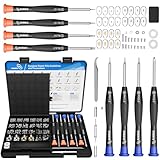
What this means for you is a continued need for caution. If you’re buying an iPhone, understand that out-of-warranty repairs will likely be costly. Invest in a good case and screen protector. If you do decide to venture into DIY repairs, invest in a high-quality toolkit specifically designed for iPhones. Don’t skimp. The cost of a good toolkit is a fraction of the cost of a new phone, and it might just save you from the frustration of a stripped screw head or a damaged component. Keep an organized workspace, label everything, and take your time. The fewer screws you have left over, the better your chances of success.
Final Thoughts
So, to wrap it up, while there isn’t an official, publicly stated number for ‘how many screws inside iPhone 17 pro max’, the reality is that it’s a significant number, and they are not all the same. They are a testament to Apple’s engineering prowess, but also a major hurdle for anyone hoping for easy DIY repairs. It’s a complex ecosystem of fasteners, each with a specific role, in a device built for density and integration.
The key takeaway is this: approach any repair with respect for the engineering involved. Don’t underestimate the tiny screws. They are the guardians of your expensive device’s internal components, and treating them with care, using the right tools, and understanding their placement is most important if you ever find yourself needing to open it up.
If your iPhone 17 Pro Max ever needs attention, seriously consider the cost-benefit of a professional repair versus the risk of a DIY attempt. Sometimes, the best tool you have is knowing when to hand it over to someone who does this every single day.
![AXTH 25-in-1 Small Precision Screwdriver Set, Professional Magnetic Mini Repair Tool Kit for Phone, Computer, Watch, Laptop, Macbook, Ring Doorbell, Eyeglass, Electronic, [Bearing Steel] Screw Driver](https://m.media-amazon.com/images/I/518YlLmPTcL._SL160_.jpg)
