
You’ve got that sleek Daniel Wellington watch on your wrist, looking sharp. Then, bam. The second hand just stops. Annoying, right? You start thinking about getting the battery changed, but then you remember all those tiny screws on the back. Makes you wonder if there’s a way to tackle how to change battery in daniel wellington watch without screws, especially if you’re not exactly a watchmaker.
Look, I’ve been there. Fiddling with minuscule screws is a pain in the backside, and frankly, most of us don’t have the right tools or the steady hands for it. So, let’s cut to the chase: is it actually possible to get that battery swapped without wrestling with those microscopic fasteners? I’ve spent enough time and money on this stuff to know what’s a realistic fix and what’s just wishful thinking.
The Truth About Dw Casebacks: Screws or Not?
Let’s get this straight from the get-go: most Daniel Wellington watches, the classic ones you see everywhere, are NOT designed to be opened without screws. Their signature look relies on a smooth, unblemished caseback, which means they’re typically held shut with a ‘snap-off’ or ‘press-on’ style caseback. This isn’t a screw-back like you’d find on some rugged dive watches or older models. The confusion often comes from the fact that there are sometimes very small, non-functional indentations or markings around the edge of the caseback that look like they might be for screws, or perhaps tiny notches for a tool.
This is where a lot of people get tripped up. They see those little marks and think, ‘Ah, there must be screws somewhere!’
But nope. Those are usually just part of the manufacturing process or aesthetic design.
The mechanism for opening these is usually a thin lip or ridge around the edge of the caseback. You need something thin and strong, but also something that won’t damage the metal. Think of it like prying open a tin of paint, but on a much, much smaller and more delicate scale.
This is why attempting this yourself without the right tools can be a gamble. You can easily scratch the case, bend the caseback, or even damage the internal movement if you apply pressure incorrectly.
I once tried to pop one open with a butter knife because I was impatient. Bad idea. Left a nasty gouge on the polished steel that I’m still annoyed about.
It wasn’t even that hard to get the battery out after that, but the scar remained.
So, when people ask how to change battery in daniel wellington watch without screws, they’re usually looking for a ‘trick’ or a ‘hack’ because they’re trying to avoid the hassle of tiny screws. The reality is, the ‘without screws’ part is already built into the design of most DW watches – they don’t have screws to begin with! The challenge isn’t avoiding screws, it’s accessing the caseback without the proper watchmaking tools and potentially damaging your watch in the process. The battery itself is a standard type, usually a CR2016 or CR2032, but getting to it is the main hurdle.
What You’ll Actually Need (and Why You Might Still Need Help)
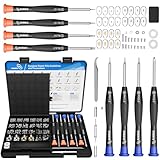
Okay, so if your DW doesn’t have screws, what do you need to get that battery out? The most important tool is a case knife or a case opener. These are thin, wedge-shaped metal tools designed specifically for prying open snap-on casebacks. They have a very fine edge that can get under the lip of the caseback without causing too much damage, provided you use them carefully. You’ll also want a pair of fine-tipped tweezers for handling the tiny battery and any rubber gaskets that might be in place. A soft cloth or a watch mat is key to protect your watch face and the surface you’re working on.
Now, here’s the rub: even with the right tools, it’s not always easy. Some snap-on casebacks can be incredibly tight. They’re designed to create a good seal against dust and moisture, which is great for the watch’s longevity, but a nightmare for DIY battery changes. (See Also: How To Fix Eyeglasses Arm Without Screw )
You might find yourself needing to apply a fair bit of steady pressure. This is where many people get nervous. You’re basically prying at a piece of precision equipment. One slip, and you could be looking at a scratched case, a bent caseback that won’t reseal properly, or worse, damage to the watch’s water resistance.
I’ve seen people try to use anything from credit cards to screwdrivers, and the results are almost always ugly. A credit card is too soft and will likely just bend or break, while a screwdriver is too blunt and will definitely mar the metal.
For a Daniel Wellington, I’d strongly recommend at least trying to acquire a proper case knife. They’re not expensive, usually costing around $10-$20 online. You’ll also want to make sure you have a good light source. Those tiny components and edges are hard to see.
And if you’re not comfortable with delicate work, or if the caseback feels exceptionally stubborn after a few tries, it’s probably time to call it quits and take it to a professional. A local jeweler or a dedicated watch repair shop can often change a battery for $10-$30, and they have the specialized tools and experience to do it without any damage.
That’s often worth the peace of mind, especially for a watch that’s more than just a time-telling device.
The Process: A Step-by-Step (if You Dare)
Alright, if you’re feeling brave and you’ve got the tools, here’s the general rundown on how to change battery in daniel wellington watch without screws, assuming you’ve confirmed yours is a snap-back model. First, gather your supplies: a case knife, fine-tipped tweezers, a soft cloth, and the correct replacement battery (usually a CR2016 or CR2032 – check your watch manual or the old battery). Find a clean, well-lit, and stable surface. Lay down your soft cloth to protect the watch.
Step 1: Locate the Caseback Opening. Look closely at the edge of the caseback. You’re searching for a tiny notch or a slight lip. Sometimes it’s almost invisible, other times it’s more pronounced. If you can’t find one, you might have a different type of caseback, or it’s just that well-integrated. Don’t force it if you don’t see an obvious spot.
Step 2: Insert the Case Knife. Gently insert the thin, flat end of your case knife into the notch or under the lip. You want to get it as far under the edge as possible without gouging the metal. Apply steady, even pressure. Think of it as gently levering the caseback up.
Step 3: Pry the Caseback Off. Once the knife is positioned, carefully twist or use it. You might hear a faint pop or click as the seal breaks. If it’s not budging, try moving the knife to a slightly different spot around the edge. Work your way around, applying gentle pressure. Do not use excessive force. If it feels like you’re about to break something, stop. You might need to work with a professional.
Step 4: Remove the Old Battery. Once the caseback is off, you’ll see the movement and the battery. There might be a small plastic or metal clip holding the battery in place. Use your tweezers or a small, non-metallic tool (like a plastic toothpick) to gently disengage this clip. Then, carefully lift the old battery out with your tweezers. Pay attention to the orientation of the battery – the positive (+) side is usually facing up.
Step 5: Insert the New Battery. Using your tweezers, pick up the new battery and carefully place it into the compartment, making sure it’s in the correct orientation. Make sure it sits flat and securely. Re-engage any retaining clip. (See Also: How Measure Metric Computer Screws )
Step 6: Replace the Caseback. This is often trickier than taking it off. You need to align the caseback precisely with the watch case. There’s usually a small notch on the caseback that needs to align with something on the case (often a crown guard or a specific point).
Once aligned, place the caseback down and apply firm, even pressure with your thumbs, working your way around the edge. You should feel and hear it snap back into place. If it doesn’t seem to seat properly, remove it and try again.
Don’t force it. If it’s still not closing, there might be a tiny piece of debris, a misaligned gasket, or the caseback itself might be slightly deformed. This is another point where seeking professional help is wise, as a proper case press tool makes this step much easier and safer.
| Tool | My Verdict | Why |
|---|---|---|
| Case Knife/Opener | Key | Designed for the job. Minimizes risk of scratching or bending compared to improvised tools. |
| Fine-Tipped Tweezers | Key | For safely handling the tiny battery and any retaining clips without damaging them. |
| Plastic Watch Mat | Highly Recommended | Protects your watch and provides a non-slip surface. Prevents scratches. |
| Magnifying Glass/Loupe | Recommended | Helps you see the tiny components clearly, especially the alignment notches and battery clip. |
| Small Screwdriver (for clip) | Use with Caution | Only if the battery clip is stiff. A plastic tool is safer if available. Risk of scratching the movement. |
| Credit Card/Knife (improvised) | Avoid! | Too soft (credit card) or too blunt (kitchen knife), guarantees damage to the case or caseback. |
Common Pitfalls and What Not to Do
Let’s talk about the mistakes I’ve seen, and honestly, some I’ve made myself. The biggest one, as I mentioned, is trying to use the wrong tools. A butter knife, a kitchen knife, a flathead screwdriver – these are all terrible choices. They are too thick, too blunt, and will almost certainly scratch the polished stainless steel of your Daniel Wellington case or caseback. You’ll end up with a visible scar that screams ‘amateur hour,’ and it’s permanent. I still cringe thinking about that butter knife incident. The caseback looked like it had been attacked by a badger.
Another common mistake is applying pressure in the wrong place or with too much force. Snap-on casebacks need to be levered open gently at the seam. If you try to force it on a flat surface or twist the case itself, you risk bending the case or damaging the delicate movement inside. You might pop the battery out, but you could also dislodge a tiny gear or spring, rendering your watch useless. I once accidentally nudged a delicate lever when prying, and the watch stopped working entirely. It was a cheap eBay find, so I didn’t mind too much, but if it were a nice DW, I’d have been devastated.
People also often forget about the gasket. Most watches have a thin rubber or plastic gasket that sits between the case and the caseback to provide water resistance. When you pry it open, this gasket can get stretched, torn, or dislodged. If you don’t reseat it properly before closing the caseback, your watch will lose its water resistance, or worse, dust and moisture can get inside and damage the movement. Always check that the gasket is in place, clean, and not damaged. If it looks old or brittle, it’s probably best to replace it. This is another reason why a professional is often better – they’ll have spare gaskets and know how to install them correctly.
Finally, don’t assume the battery compartment is simple. Some have tiny clips that are incredibly fiddly. Trying to force these clips can break them. Use fine-tipped tweezers and be patient. If a clip is stuck, a very gentle nudge with a plastic tool might help, but never force it. The goal is to replace the battery, not to break your watch in the process. The entire premise of how to change battery in daniel wellington watch without screws usually boils down to people trying to avoid these fiddly, potentially damaging steps, but skipping them entirely often leads to worse problems.
The ‘no-Screw’ Dw: Is It Really a Good Idea for DIY?
So, we’ve established that Daniel Wellington watches typically don’t use screws for their casebacks, which is why the question ‘how to change battery in daniel wellington watch without screws’ is a bit of a misnomer. The challenge isn’t avoiding screws, but rather the delicate process of opening a snap-on caseback. Now, the million-dollar question: should you do it yourself? My honest opinion, based on years of messing with tools and gadgets, is that it depends heavily on your comfort level and the tools you have.
If you’re someone who’s naturally good with small, intricate tasks, has a steady hand, and is willing to invest in a few proper watchmaking tools (like a case knife and decent tweezers), then yes, you can probably manage it. It might take you a bit longer than a professional, and there’s always a small risk of cosmetic damage if you’re not careful. But for the cost savings and the satisfaction of doing it yourself, it can be a rewarding little project. I find the tactile feedback of a caseback snapping shut correctly is quite satisfying. It’s a small victory.
However, if you’re someone who struggles with small tasks, gets frustrated easily, or doesn’t want to buy specialized tools for what might be a one-off job, then I’d strongly advise against it. The cost of a professional battery change at a local jeweler or watch shop is usually quite reasonable, often in the $10-$30 range. For that price, you get the job done quickly, safely, and with the assurance that your watch’s integrity (including water resistance) is maintained. I’ve learned the hard way that sometimes paying a bit more for expertise and the right equipment saves you a lot of headaches and potential repair costs down the line. A scratched watch face or a permanently compromised seal is a much more expensive problem to fix than a battery replacement.
Consider the value of your watch. While Daniel Wellington watches are stylish and popular, they aren’t typically heirloom pieces that require ultra-specialized care. However, they are still precision instruments. If you damage the movement or the case, the repair costs could easily exceed the price of a few professional battery changes over the watch’s lifetime. So, weigh the DIY satisfaction against the potential for costly mistakes. For me, I usually opt for DIY on things I’m very familiar with, but for delicate watch work, I’m increasingly leaning towards letting the pros handle it unless it’s a very old, beat-up beater watch. (See Also: How To Adjust Eyeglass Screw )
My Own Dw Battery Fiasco and a Warning
I remember about three years ago, I got a Daniel Wellington watch as a gift. It was one of their popular minimalist models, all rose gold and white. Looked great. Wore it for about a year, then one morning, it just stopped. My first thought was, ‘Okay, easy battery change.’ I started looking at the back, expecting little screws. Nothing. Just a smooth, polished surface. I vaguely recalled them being ‘snap-off’ but hadn’t really paid attention.
So, armed with nothing but misplaced confidence and a small flathead screwdriver from my eyeglasses repair kit, I decided to tackle how to change battery in daniel wellington watch without screws myself. I found what I thought was a tiny seam near the 4 o’clock position. I jammed the screwdriver in and started to pry. It slipped. Instantly. Right across the shiny rose gold plating. A deep scratch, right there for the world to see. I swore out loud. It looked terrible. I eventually managed to get the case off, changed the battery (which was a CR2016, by the way), and wrestled the case back on. It took a solid 20 minutes of pushing and jiggling.
The watch worked, but that scratch was a constant reminder of my impatience and lack of proper tools. It wasn’t a catastrophic failure, but it definitely diminished the aesthetic appeal. The common advice is often ‘DIY it to save money,’ and while that’s true for some things, for delicate watch maintenance, it’s often a false economy. That scratch cost me way more in annoyance than a $20 battery change would have cost at a jeweler. So, my advice: if you don’t have the right tools and the patience, just pay the professional. Your watch will thank you, and your wallet might too in the long run, avoiding costly mistakes.
Faq: Daniel Wellington Watch Battery Changes
Do All Daniel Wellington Watches Have Snap-Off Casebacks?
Most standard Daniel Wellington watches, especially their popular minimalist collections, feature snap-off or press-on casebacks. These are designed for a sleek look without visible screws. However, it’s always best to visually inspect the back of your specific watch model to confirm. If you see tiny screw heads, it’s not a snap-off. If the back is smooth with a very thin edge or a tiny notch, it’s likely a snap-off type.
Can I Use a Pocket Knife to Open My Daniel Wellington Watch?
No, you absolutely should not use a pocket knife or any sharp, non-precision tool like a kitchen knife or standard screwdriver. These tools are too blunt and have edges that are too aggressive. They will almost certainly scratch and mar the metal case or caseback of your watch, leading to permanent cosmetic damage. A proper case knife has a thin, precisely angled blade designed for this specific task.
How Do I Know If I’ve Damaged the Water Resistance After Changing the Battery?
If the watch has been exposed to water after a DIY battery change and starts to fog up internally, or if moisture is visible on the dial or hands, then the water resistance has likely been compromised. This is usually due to the gasket not being properly seated, being damaged, or the caseback not being properly sealed. For important water resistance, it’s best to have a professional pressure test the watch after the battery is changed.
What Is the Most Common Battery Type for Daniel Wellington Watches?
The most common battery types you’ll find in Daniel Wellington watches are the CR2016 and CR2032 lithium coin cell batteries. The exact type can vary slightly by model, so it’s always a good idea to identify the number printed on the old battery before purchasing a replacement, or to check your watch’s manual.
Final Thoughts
So there you have it. The mystery of how to change battery in daniel wellington watch without screws is mostly about understanding that your watch likely doesn’t have screws to begin with. The real challenge lies in opening that snap-on caseback without causing damage. I’ve learned that my initial rush to DIY can often lead to more problems and costs than doing it right the first time.
My advice? If you’ve got the tools, the steady hands, and a willingness to potentially accept a minor scratch or two, give it a shot. But if you’re like me and your patience wears thin quickly when dealing with tiny, fiddly bits, save yourself the headache. A few bucks at a local watch shop or jeweler is a small price to pay for a professional job that keeps your watch looking sharp and functioning correctly, without any ugly scars.
Next time your Daniel Wellington battery dies, take a deep breath, assess your tools and your patience level, and make the smart choice for your watch. Sometimes, the best tool is knowing when to walk away and let someone else handle it.
![AXTH 25-in-1 Small Precision Screwdriver Set, Professional Magnetic Mini Repair Tool Kit for Phone, Computer, Watch, Laptop, Macbook, Ring Doorbell, Eyeglass, Electronic, [Bearing Steel] Screw Driver](https://m.media-amazon.com/images/I/518YlLmPTcL._SL160_.jpg)
