
You know that feeling. You put on your favorite pair of glasses, and one side feels just a little too snug. It’s not quite painful, but it’s annoying enough that you can’t stop thinking about it. Over the years, I’ve wrestled with my fair share of frames that felt like they were actively trying to rearrange my skull. Learning how to adjust screws in glasses that are tight is one of those simple, yet incredibly satisfying DIY skills.
It’s not about needing a whole new pair or trekking to the optometrist for something that takes literally seconds. It’s about reclaiming comfort and making sure your specs sit just right, without pinching or digging in. This isn’t rocket science; it’s just common sense applied to tiny metal bits.
Why Your Glasses Feel Like a Vice Grip
Look, nobody buys glasses expecting them to pinch. But it happens. Sometimes it’s right out of the box, and other times it’s after a minor tumble or just… well, just because.
The little screws that hold your frames together are tiny marvels of engineering, but they can also be the source of a lot of discomfort if they’re not just right. When a screw is too tight, it’s not just about the physical pressure; it can actually warp the frame itself. I remember a pair of titanium frames that I thought were just ‘snug’ for the first week. Turns out, the right temple arm was screwed in so tightly it was putting a constant, low-grade pressure on my head.
It wasn’t noticeable until I took them off and felt the relief, which made me realize how much I’d been tolerating.
The problem is, most people don’t even think about the screws. They think about the frames, the lenses, the style. But the screws are the unsung heroes (or villains) of eyewear comfort.
Too loose, and your glasses slide down your nose. Too tight, and you get that awful headache or a red mark on your ear. It’s a delicate balance, and sometimes, Mother Nature or the factory worker forgot that balance when they tightened things up.
You might also find that over time, your glasses might have shifted slightly, causing a screw to appear tighter on one side than the other, even if it wasn’t initially. This can happen from heat exposure, like leaving them in a hot car, or simply from wear and tear. The material of the frame can expand or contract, subtly changing the tension on the screws. So, if your glasses are suddenly feeling tight after months or years of comfortable wear, it’s likely due to these subtle environmental or usage-related shifts, rather than an initial manufacturing defect.
Understanding this is the first step to fixing it. It’s not magic, and it doesn’t require a degree in optometry. It just requires a bit of patience and the right tools. The goal is to loosen that screw just enough to relieve the pressure without making the arm floppy. It’s a fine art, but a learnable one. Think of it like tuning an instrument; you’re just making a tiny adjustment to get everything in harmony.
The Tiny Tools You Actually Need
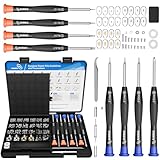
Alright, let’s talk tools. Forget those giant pliers or wrenches you might use for, I don’t know, building a shed. For glasses, you need precision. The absolute best thing you can have is a proper eyeglass repair kit. Don’t cheap out on this. I once bought a $5 kit from a drugstore, and the screwdriver bits were so soft they stripped themselves after the second screw. Total waste of money. I ended up spending about $30 on a decent kit a few months later, which came with multiple sizes of tiny screwdrivers, replacement nose pads, and even little tweezers. That kit has paid for itself about a hundred times over.
The key component is the screwdriver. You’re looking for what’s called a ‘precision screwdriver’ or a ‘jeweler’s screwdriver’.
These have very small, often magnetized tips. For glasses, you’ll typically need one with a flathead tip and one with a Phillips head tip, though the flathead is far more common for the tiny screws used in most frames. The size you need is usually labeled as 1.0mm, 1.2mm, 1.4mm, or 1.6mm.
Most kits will have a couple of these. If you’re unsure, look at the screw head on your glasses. If it has a little cross, you need a Phillips. (See Also: How To Fix Eyeglasses Arm Without Screw )
If it’s a single line, you need a flathead. My advice?
Get a kit that has both and a few sizes of each, just in case.
Beyond the screwdriver, a small pair of needle-nose pliers can be handy, but use them with extreme caution. They’re good for holding the screw in place if it’s being stubborn, or for gently bending a nose pad arm if that’s part of the tightness issue (though that’s a separate beast). Again, these need to be delicate. Think of them as surgical instruments, not construction tools. Some kits also come with a little magnifying glass, which is a godsend when you’re dealing with these minuscule parts. Honestly, the first few times you do this, you’ll be squinting like a mole.
| Tool | Why You Need It | My Verdict |
|---|---|---|
| Precision Screwdriver Set (Eyeglass Specific) | For turning the tiny screws that hold the frame together. | Must-have. Get a kit with multiple sizes and both flathead and Phillips tips. Avoid the super-cheap ones. |
| Needle-Nose Pliers | To gently hold screws or make minor adjustments to nose pad arms. | Useful, but use with caution. Only if you’re comfortable with delicate work. |
| Magnifying Glass | To see the tiny screws clearly. | Highly recommended. Especially if your eyesight isn’t what it used to be. |
| Soft Cloth | To wipe lenses and frame, and to protect surfaces. | Key. To avoid scratches. |
The Actual Process: Loosening Up
Okay, you’ve got your tools. Now, let’s get to how to adjust screw in glasses that’s tight. First, find a well-lit area. Seriously, natural light near a window is your best friend. Turn your glasses over so you can see the hinge mechanism clearly. You’ll see a tiny screw. It’s usually on the side where the arm (temple) connects to the front of the frame.
Take your chosen precision screwdriver – the one that fits the screw head snugly – and place it into the slot of the screw. You want a perfect fit. If it’s too small or too big, you risk stripping the screw, which is a whole other headache you don’t want. Now, the key is to turn it counter-clockwise. This is the universal ‘loosen’ direction. But here’s the trick: you only need to turn it a tiny, tiny bit. Like, a sixteenth of a turn. No more. You’re not trying to unscrew the whole thing; you’re just trying to relieve the pressure.
After that minuscule turn, put the glasses on. Feel the difference. Is it better?
If it’s still too tight, turn it another tiny bit counter-clockwise. Repeat this process, testing the fit after each micro-adjustment.
I cannot stress enough how small these adjustments need to be. It’s like seasoning food; you add a pinch at a time. If you go too far, you’ll have loose arms, and then you’ll need to tighten them back up, which is a different process (and often, you need the tiny pliers to hold the nut on the other side).
I made this mistake once on a pair of expensive sunglasses and ended up having to buy a little nut replacement pack because I spun the screw so much it came right out.
So, small turns, frequent checks. It might take you three or four tiny turns, or maybe just one. The goal is to find that sweet spot where the pressure is gone, but the arm still feels secure and doesn’t wobble. If you’ve turned it a few times and it’s still tight, or now it’s too loose, you might need to go back the other way and tighten it slightly (clockwise) until it feels secure again, and then repeat the loosening process. Patience is your greatest asset here.
When the Screw Isn’t the Only Culprit
Sometimes, the tightness you feel isn’t solely because of a jammed screw. This is where people often get confused. They’ll fiddle with the screw, but the pinching sensation persists. This is usually because the tightness is coming from the nose pads or the temple arms themselves being bent inwards. The screws might be perfectly fine, but the overall shape of the glasses has been distorted, leading to pressure points. I learned this the hard way with a pair of Ray-Bans that I’d accidentally sat on. The screw on one side seemed fine, but the arm was bent inward, pressing hard against my head. My initial instinct was to fiddle with the screw, which did nothing.
The nose pads are another common culprit. They’re usually attached to little metal arms that extend from the frame. If these arms get bent inwards, they can cause the glasses to sit too high on your nose and angle downwards, putting pressure on the sides of your nose or the top of your cheeks. (See Also: How Measure Metric Computer Screws )
You can often identify this by looking at your glasses from the front. If the nose pads look like they’re angled inward, that’s your problem. Adjusting these usually involves a very gentle bending of the metal arm. Again, needle-nose pliers are useful here, but you must be incredibly delicate.
Think about the slight curve of your nose; you want the pads to follow that curve without digging in. A small, controlled bend inward on the arm can widen the stance of the nose pads, relieving pressure.
Similarly, the temple arms themselves can get bent. This is especially true for plastic frames, but metal ones can get out of whack too. If the arm is bent too far inward, it will press against your head. If it’s bent too far outward, the glasses will feel loose.
For plastic frames, gentle heat from a hairdryer (on a low setting, from a distance!) can make the plastic pliable enough to reshape.
Be EXTREMELY careful not to overheat or melt the plastic. Metal frames can often be gently bent back into place with your hands or those delicate pliers. The key here is that the screw adjustment is only one part of the equation. If the overall structure of the glasses is off, you’ll need to address those structural issues first.
Common Mistakes to Avoid
When you’re trying to fix something yourself, especially something as delicate as eyeglasses, it’s easy to make mistakes. The biggest one, hands down, is using the wrong tools. I’ve seen people try to use a butter knife or a coin to turn eyeglass screws.
It’s a recipe for disaster. You’ll strip the screw head, making it impossible to adjust later, or you’ll scratch your lenses or frame.
Stick to the proper precision screwdrivers. Another massive mistake is over-tightening.
When you’re trying to fix a loose arm, you might think ‘more tension equals more stability.’ Wrong. Over-tightening a screw can strip the threads in the frame or the screw itself, rendering it useless.
It can also crack the frame material around the hinge. Remember: gentle and incremental adjustments are key.
Related to over-tightening is the ‘gorilla grip’ approach. You’re not trying to perform surgery with power tools. You’re making tiny, delicate movements. If you feel like you’re putting a lot of force into it, you’re probably doing it wrong.
I once had a friend who, when trying to tighten a loose arm, managed to snap the hinge clean off because they were forcing the screw. It was a $400 pair of glasses, and it was game over. (See Also: How To Adjust Eyeglass Screw )
This leads to another common error: not understanding when to stop. If you’ve made several tiny adjustments and the glasses are still not sitting right, or if you feel like you’re pushing your luck, it’s time to step away.
Continuing to force it will likely cause more damage than good.
Finally, people often forget to clean their glasses before and during the adjustment process. Dirt and grime can get into the hinge mechanism, making it harder to turn the screw and potentially causing damage. It’s also good practice to wipe down your lenses and frame after you’re done.
One other point I’ve seen people get wrong is trying to adjust screws on plastic frames as if they were metal. Plastic can be more brittle and can crack easily. For plastic frames, sometimes the screw isn’t the issue, but the plastic hinge itself is worn or broken. In those cases, a tiny bit of super glue might be a temporary fix, but often it’s a sign that the frame is nearing the end of its life or needs professional attention.
Always assess the material of your frames before you start fiddling.
Faq: Your Burning Eyeglass Questions Answered
How Do I Know If My Glasses Are Too Tight?
The most obvious sign is discomfort. You might feel a pinching sensation on the sides of your head, behind your ears, or on the bridge of your nose. Headaches that seem to originate from wearing your glasses are also a big clue. You might also notice red marks or indentations on your skin after wearing them for a while. If one side feels noticeably tighter than the other, that’s also a tell-tale sign.
Can I Use Nail Polish Remover to Loosen a Stuck Screw?
Absolutely not! Nail polish remover (acetone) is a harsh solvent that can damage or melt many types of frame materials, especially plastic and acetate. It can also damage lens coatings. Stick to proper lubrication if a screw is truly stuck, like a tiny drop of eyeglass-specific lubricant, and even then, proceed with extreme caution. Usually, a well-fitting screwdriver is all you need.
What If the Screw Head Is Stripped?
A stripped screw head is a pain. If it’s only slightly stripped, you might get lucky with a screwdriver that has a slightly larger or more aggressive grip. Sometimes, a thin rubber band placed between the screwdriver and the screw head can provide enough grip. If it’s severely stripped, you’ll likely need a specialized screw extractor tool for very small screws, or you may have to take them to an optician. This is why avoiding the mistake of using the wrong screwdriver in the first place is so important.
Should I Tighten or Loosen a Screw If My Glasses Are Sliding Down My Nose?
If your glasses are sliding down your nose, it usually means the arms are too loose or the angle is off. You’ll typically want to tighten the screws slightly (clockwise) at the hinge to make the arms more snug against your temples. However, if they are sliding down because the nose pads are too wide apart, you might need to gently bend the nose pad arms inwards. It’s a combination of hinge tightness and frame angle.
How Often Should I Get My Glasses Professionally Adjusted?
It’s a good idea to have your glasses professionally adjusted by an optician at least once a year, or whenever you notice them feeling uncomfortable or misshapen. They have specialized tools and expertise to make adjustments without damaging your frames. While DIY adjustments are great for minor tweaks, professional checks make sure the longevity and optimal fit of your eyewear.
Verdict
So, there you have it. Learning how to adjust a screw in glasses that’s tight isn’t some dark art. It’s a practical skill that saves you time, money, and a whole lot of discomfort. Remember the key principles: use the right tiny tools, make minuscule adjustments, and check the fit frequently. Don’t force anything, and always be mindful of the material your glasses are made from.
The temptation to just yank or twist harder is strong when you’re frustrated, but that’s where most DIY eyeglass repairs go wrong. Be patient. If you’ve tried a few tiny turns and it’s still not right, or if you feel you’re getting close to stripping that screw or breaking the hinge, there’s absolutely no shame in taking them to an optician. They deal with this stuff all day and can probably fix it in under a minute.
But for those minor, annoying pinch points, this skill is a lifesaver. Give it a go the next time one of your glasses feels like it’s trying to become a permanent fixture on your face. A little bit of careful fiddling can make a world of difference to your comfort and how you see the world.
![AXTH 25-in-1 Small Precision Screwdriver Set, Professional Magnetic Mini Repair Tool Kit for Phone, Computer, Watch, Laptop, Macbook, Ring Doorbell, Eyeglass, Electronic, [Bearing Steel] Screw Driver](https://m.media-amazon.com/images/I/518YlLmPTcL._SL160_.jpg)
