
You know that feeling? You’re fiddling with your glasses, maybe trying to tighten a loose screw, and suddenly… nothing. The screw just spins. You’ve stripped the thread in the tiny hole on your frames. Great. Just when you thought you were done with the fiddly bits of life, your favorite pair of specs becomes a casualty of tiny, infuriating hardware failure. This isn’t the end of the world, but it sure feels like it when you can’t see straight.
I’ve been there. More times than I care to admit, usually when I’m in a hurry or miles from anywhere that sells a decent pair of glasses. It’s moments like these that teach you a thing or two about quick fixes, and how to fix damaged thread glasses screw without needing a miniature machine shop.
Forget the fancy jargon. We’re talking about getting those glasses back on your face, pronto.
When the Tiny Screw Hole Goes Kaput
Eyeglass screws are ridiculously small. They’re usually made of brass or a similar soft metal, designed to thread into a slightly larger metal or plastic hole in the frame. The problem arises when either the screw threads get worn down, or, more commonly, the threads inside the frame hole get stripped. This usually happens from overtightening, repeatedly taking them in and out, or just general wear and tear. When the threads are gone, the screw has nothing to grip, so it just spins endlessly. It’s like trying to screw a bolt into a hole with no threads – it just keeps going, but nothing ever tightens.
My first real encounter with this was with a pair of Ray-Bans I loved. One of the screws holding the arm on started to feel loose.
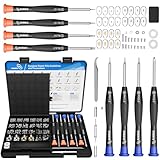
I grabbed the tiny eyeglass screwdriver kit I kept in my junk drawer – you know, the one with about fifty different bits you’ll never use, except for the one you need. I gave it a little turn, expecting it to snug up. Instead, it just kept turning. Panic.
I tried a different screw, same result. I was convinced I’d broken them permanently.
That was a stupid assumption. Turns out, the hole itself had been damaged, likely from years of being jostled in my backpack. I remember feeling utterly defeated, staring at these otherwise perfectly good glasses that were now useless. This is where learning how to fix damaged thread glasses screw becomes a handy skill.
The common advice you’ll find online often jumps straight to professional repair or expensive kits. While those are options, they aren’t always practical or immediate. Sometimes you just need a quick fix to get you through the week. Understanding the materials involved – typically metal frames with small metal screws, or plastic frames with metal thread inserts – helps you figure out what kind of repair might actually work. It’s not about brute force; it’s about finding a way to create new grip where the old grip has vanished.
The ‘can I Just Glue It?’ Debate (spoiler: Usually Not)
Let’s address the elephant in the room: super glue. Everyone’s first thought, right? Especially when dealing with tiny, fiddly parts. I’ve definitely been tempted.
The idea is simple: put a tiny dab of super glue in the stripped hole, thread the screw in, and let it set. In theory, the glue fills the gaps in the stripped threads and binds the screw in place. In practice? It’s a gamble, and usually a losing one for eyeglasses.
Super glue is brittle. When you put your glasses on and take them off, there’s a lot of torque and pressure applied to those arms.
That tiny, glued connection is highly likely to snap under that stress. You end up with a mess of dried glue and a still-loose screw, often making the problem worse.
I tried this on a cheap pair of reading glasses once, out of sheer desperation. I used a toothpick to apply the smallest possible amount of cyanoacrylate. It seemed to work for about an hour. (See Also: Does Iphone Logic Board Need Screws )
Then, I took them off my head, and the arm just flopped down. The glue had cracked.
Not only was the screw still loose, but now there was a little hardened blob of glue around the screw hole, making any other repair attempt ten times harder. It was a classic case of ‘trying to save a buck and ending up with a bigger problem.’ The common advice is often to avoid glue, and for good reason. For eyeglass screws, you need something with a bit of flex and strength that can withstand repeated movement.
If you absolutely must use a temporary adhesive, a tiny bit of epoxy might offer slightly more durability, but it’s still a risky move and can permanently bond parts you might need to access later.
When Is Glue Not a Complete Disaster?
Honestly, very rarely for eyeglass screws that need to move. If the screw is purely decorative or holds something that never gets touched, maybe. But for functional screws on hinges and arms? I’d steer clear. The risk of making the problem worse or creating a brittle, failed repair is too high.
Enter the Thread-Repair Kits (are They Worth It?)
This is where things get interesting. There are specific kits out there designed for repairing stripped threads, but for something as minuscule as eyeglass screws, most of them are overkill or just plain wrong. You’ll find kits with taps and dies designed for larger bolts and nuts. Trying to use a standard tap and die set on eyeglass frames is like trying to hammer a nail with a sledgehammer – you’re guaranteed to cause more damage than you fix. However, there are smaller, more specialized kits, sometimes called ‘screw thread repair kits’ or ‘miniature thread chasers,’ that might be relevant.
The concept behind a thread chaser (or mini-tap) is to basically recut or clean up the damaged threads in the hole. You’d insert the tool and carefully twist it, allowing the cutting edges to shave away the burrs or damaged material, creating a smoother surface for the screw to engage with. The trick is finding a chaser that’s the exact right size for your eyeglass screw. This is where it gets tricky. Eyeglass screws are often metric, but the exact size and thread pitch can vary wildly between brands and frame types. If you buy a generic kit, you might end up with tools that are too large or the wrong pitch, rendering them useless or destructive.
I bought a ‘precision thread repair kit’ online once for about $30. It had tiny little tools, and I thought, ‘This is it!
This is the solution.’ It came with about six different chasers. None of them were quite the right fit for my glasses.
One was too big, just spinning uselessly. Another felt like it was biting too aggressively and I was terrified of cracking the frame. I ended up just making the stripped hole slightly larger and more mangled.
It was a frustrating experience that reinforced my belief that sometimes, the specialized tools aren’t the answer if you can’t get the exact right one. It’s a bit of a crapshoot unless you know the precise thread size of your screw, which is rarely published by eyeglass manufacturers.
The LSI keyword ‘precision screwdriver set’ is often associated with this, but for thread repair, it’s a different ballgame entirely.
The DIY Fixes That Actually Work (sometimes)
Okay, so glue is a bad idea, and most standard kits are overkill. What’s left? This is where the real-world, hands-on experience comes in. I’ve found a few methods that, while not permanent, are surprisingly effective for getting your glasses functional again. These rely on creating a new ‘grip’ or reinforcing the existing damaged threads without damaging the frame further.
One method involves using a tiny amount of a flexible, strong filler. Think of it as a very mild version of a thread locker, but applied to the stripped hole itself. Some people have had success with specialized modeling putty or even a tiny bit of Sugru – that moldable glue that cures into rubber. The idea is to fill the stripped hole with a small amount of this material, then carefully and gently re-insert the screw. (See Also: Do All Laptops Use The Same Screwa )
You let the filler cure around the screw. The Sugru, for example, cures into a flexible, slightly rubbery material that can sometimes provide enough grip and cushion to hold the screw. It’s not ideal for screws that are constantly under heavy strain, but for spectacle screws that just need to keep the arms attached, it can work. You have to be patient, use a tiny amount, and make sure the screw is perfectly aligned.
Another trick I learned from an old watchmaker is using a very fine gauge wire – like single-strand copper wire from an old electrical cord. You take a tiny wisp of this wire, twist it around the screw threads, and then screw the screw back into the hole.
The wire acts as a sort of shim, filling the gaps created by the stripped threads and giving the screw something to bite into. You have to be careful not to use too much wire, or you won’t be able to get the screw in at all. It’s a delicate balancing act. This has worked wonders for me on metal frames where the screw hole is a small threaded insert.
It’s a classic mechanical workaround, relying on creating a slight interference fit.
My Sugru Eyeglass Screw Saga
I had a pair of prescription sunglasses where one of the screws holding the nose pad arm stripped out. It wasn’t important for holding the arm on, but it made the whole nose pad wobble.
I tried the wire trick, but it just wouldn’t catch. So, I remembered Sugru.
I took a piece about the size of a grain of rice, kneaded it until it was pliable, and carefully pressed it into the tiny threaded hole. Then, I used a clean screw (I had a spare from another pair) and gently screwed it in. I let it cure for 24 hours.
When I tested it, the wobble was gone. It’s held firm for about six months now, and that’s with daily use, sweat, and occasional cleaning. It’s not a perfect aesthetic fix, but it works, and that’s what counts when you’re dealing with a functional repair.
The ‘professional’ Options (when DIY Fails)
Sometimes, you just can’t be bothered with the DIY route, or the DIY fixes just don’t hold. That’s when you look to the pros.
For eyeglasses, ‘the pros’ usually means your local optician or an optical repair shop. They have specialized tools and a lot more experience with the various frame materials and screw types than the average DIYer. They can often replace the screw, and if the hole is stripped, they have methods to repair it. One common method they use is called ‘re-threading’ or ‘tapping’ the hole, which is similar to what those miniature thread chasers do, but with the correct tools and expertise.
They might also use a tiny screw or pin to effectively bridge the gap if the original threads are completely gone.
Another, more involved, repair might involve replacing the threaded insert in a metal frame if that’s where the damage is. This is a more permanent fix but requires specialized equipment and skills. For plastic frames, they might use a technique that involves melting a bit of plastic to fill the stripped hole and then re-drilling and tapping it, or sometimes they’ll drill out the old threaded insert and press in a new one.
The cost of these professional repairs varies wildly. A simple screw replacement might be free or cost a few dollars. (See Also: Do Asus Laptop Ssd Need To Be Screwed Down )
A more complex thread repair could set you back anywhere from $20 to $50, depending on the shop and the severity of the damage. It’s usually worth getting a quote before committing.
I once paid $25 to have a stripped hinge screw repaired on a fairly expensive pair of frames, and it was well worth it for the peace of mind and the longevity of the repair.
Eyeglass Repair Table: Professional vs. DIY
Here’s a quick rundown of what to expect when you can’t quite figure out how to fix damaged thread glasses screw yourself.
| Method | Pros | Cons | Verdict |
|---|---|---|---|
| DIY (Wire/Sugru) | Cheap, quick for minor issues, accessible. | Temporary, can be messy, requires patience, may not hold under stress. | Good for a quick fix or as a stopgap. Not a permanent solution. |
| Optician Repair | Professional tools & expertise, more durable fix, often fast turnaround. | Costs money ($20-$50+), requires visiting a shop, might not be possible for severe damage. | Recommended for most durable repairs, especially on higher-value frames. |
| Eyeglass Screw Thread Repair Kits | Designed for the task, potentially permanent fix. | Can be expensive ($30-$60+), finding the EXACT right size is difficult, risk of further damage if used incorrectly. | Risky for the average person. Best left to professionals unless you’re very experienced. |
When to Just Buy New (the Harsh Truth)
Look, I’m all for fixing things. I’ve spent hours painstakingly repairing old tools and electronics.
But there comes a point with eyeglasses where the cost and effort of repair just don’t make sense anymore. If your frames are cheap, cracked in multiple places, or if the screw hole damage is so extensive that even a professional repair would look jury-rigged and potentially fail quickly, it’s time to cut your losses. The cost of a good optician repair for a severely stripped screw could easily be a significant percentage of the cost of a new, decent pair of frames.
Especially if you’re someone who tends to break glasses regularly, investing in a truly permanent, high-end repair might not be the most economical choice in the long run. Consider your frame material too; a metal frame with a stripped screw hole might be repairable, but a cheap plastic frame with a stripped hinge point is often a lost cause.
I had a pair of prescription sunglasses that I’d owned for about five years. They were decent, but not high-end.
One of the hinge screws got stripped, and the arm was flopping. I took them to my optician. They quoted me $40 for the repair, saying it would involve drilling out the old insert and putting in a new one.
For $40, I could get a brand-new pair of basic prescription glasses online or a decent pair of sunglasses. I thanked them, but I decided to just live with the wobbly arm for a while, and eventually, I just replaced them with a new pair that fit better anyway.
It was a pragmatic decision. Sometimes, the best fix is a new pair.
How to Prevent Stripped Screws
Prevention is always better than cure, right? For eyeglass screws, this means being gentle. Don’t overtighten screws when you first get them or when you’re tightening them yourself. A gentle snug is all that’s needed. If a screw keeps loosening, it might be a sign of bigger issues with the frame or the screw itself. Avoid tossing your glasses carelessly into bags or pockets where they can be knocked around. Using a sturdy case is probably the single best thing you can do to prevent damage to your spectacles, including stripped screw holes. Regular cleaning with a microfiber cloth and a gentle cleaner also helps maintain the integrity of the frame material around the screw holes.
Verdict
So, you’ve got a stripped screw hole in your glasses. It’s annoying, but thankfully, not usually a death sentence for your favorite eyewear. While professional repair is often the most durable solution for how to fix damaged thread glasses screw, there are DIY tricks that can get you by in a pinch. Remember, the wire shim or a tiny bit of Sugru can often provide just enough grip to get those arms reattached.
Don’t rush into using super glue unless you want a brittle mess. And those generic thread repair kits? Unless you’re a seasoned pro, you’re probably better off avoiding them. Focus on gentle, precise methods that don’t add stress to already fragile components.
Ultimately, assess the value of the glasses versus the cost and potential success of a repair. Sometimes, a good pair of glasses is worth the investment in a professional fix. Other times, it’s just time to look for a replacement. But for now, give those little DIY tricks a shot.
![AXTH 25-in-1 Small Precision Screwdriver Set, Professional Magnetic Mini Repair Tool Kit for Phone, Computer, Watch, Laptop, Macbook, Ring Doorbell, Eyeglass, Electronic, [Bearing Steel] Screw Driver](https://m.media-amazon.com/images/I/518YlLmPTcL._SL160_.jpg)
