
You know that moment? The one where your phone slips from your hand, you brace for impact, and then it lands face down?
Heart in your throat, you pick it up, praying for a miracle. If it’s miraculously intact, your next thought might be, ‘How on Earth did that hold together?’ For me, it was after dropping my ancient iPhone 4 for what felt like the hundredth time.
I was convinced it would shatter into a million pieces, but it just had a tiny scratch. That got me thinking about the actual engineering packed inside, and specifically, how big is a screw in an iPhone? It’s a question that seems trivial, but these microscopic fasteners are the unsung heroes of our pocket-sized computers.
These aren’t your average hardware store screws. They’re machined to tolerances you wouldn’t believe, designed to fit into impossibly thin casings without compromising structural integrity or allowing dust and water to sneak in. It’s mind-boggling, really, when you consider the sheer density of technology crammed into something that fits in your palm.
The Microscopic World of iPhone Fasteners
Let’s get down to brass tacks, or rather, microscopic threads. When you ask how big is a screw in an iPhone, the answer is almost universally ‘incredibly small.’ We’re talking about screws measured in millimeters, often just a fraction of a millimeter in diameter. Apple, in their infinite pursuit of thinness and compactness, has pushed the boundaries of fastener technology. These aren’t screws you can just grab with a regular pair of tweezers; you need specialized micro-screwdrivers designed for electronics repair.
Think of them less like traditional screws and more like miniature engineering marvels. The common Pentalobe (five-point star) screws that hold the bottom of most iPhones are about 1.2mm in diameter. Then there are the Phillips head screws inside, often even smaller, sometimes down to 0.8mm or 1mm. It sounds ridiculously small, and it is.
I remember my first attempt at replacing an iPhone battery – I spent more time trying not to sneeze and dislodge one of these tiny screws into the abyss of my carpet than actually doing the repair. It’s a testament to Apple’s design that they manage to hold everything together so securely.
The precision involved is astonishing. Each screw has a specific length and thread pitch, meticulously chosen to fit its designated spot. They’re not interchangeable. Trying to force a screw that’s even a hair too long can cause irreparable damage to the internal components, like cracking a logic board or puncturing a battery.
It’s a delicate dance of tiny parts. You also have different types of screws inside. You’ll find Phillips head screws, which are common, but also Tri-point (Y-type) screws on some models, particularly around the display and camera modules. These require specialized bits, and trying to use a Phillips driver on a Tri-point screw is a recipe for stripped heads and frustration.
I once tried to improvise with a slightly too-large Phillips bit on a Tri-point screw, and it basically chewed up the head. I had to carefully drill it out, which is NOT something you want to do if you value your phone.
The materials are also important. They’re typically made of high-strength steel alloys, often coated to prevent corrosion and improve durability. Despite their size, they have to withstand significant forces, especially in a device that’s constantly being handled, put in pockets, and subjected to bumps and jolts. Apple even patents new screw designs and manufacturing processes to maintain their advantage in miniaturization and reliability. It’s a war on bulk, and these tiny screws are on the front lines.
Why So Many Different Tiny Screws?
The diversity in screw types and sizes within a single iPhone isn’t just for show; it’s a carefully engineered solution to complex design challenges. Each screw serves a specific purpose and is selected based on the materials it’s fastening, the structural load it needs to bear, and the space available. For example, the Pentalobe screws at the bottom are often longer and have a different thread profile than the tiny Phillips or Tri-point screws used internally to secure components like the battery, logic board, or camera modules. This makes sure that components are held firmly in place without exerting undue pressure on delicate internal parts. The internal screws are often much smaller, sometimes as little as 0.8mm in diameter, and have a shallower thread depth to accommodate the extremely thin internal chassis.
Different screw types also provide different levels of security and ease of assembly/disassembly. The Pentalobe screws, for instance, are deliberately less common in standard toolkits, making it harder for casual users to open the device, which Apple likely prefers.
Internally, the Phillips and Tri-point screws offer a good balance of secure fastening and reasonable ease of removal for authorized repair technicians. The Tri-point screws, in particular, are interesting. They were introduced by Apple on newer iPhone models to prevent the use of incorrect screwdrivers and to provide a more secure fit in certain applications, especially where components might be subject to vibration. (See Also: How To Fix Eyeglasses Arm Without Screw )
Trying to use a standard Phillips screwdriver on a Tri-point screw is nearly impossible without damaging the screw head, which is a built-in deterrent against DIY repairs with the wrong tools.
When I first started tinkering with electronics, I thought all screws were pretty much the same. That idea went out the window the first time I opened an iPhone. It’s like a Lego set designed by a Swiss watchmaker. Each piece has its place, and if you try to force a square peg into a round hole, you’ll end up with a broken peg and a very unhappy phone.
I learned this the hard way when I tried to reuse a slightly longer screw in a spot meant for a shorter one on an old iPhone 7. It poked through the other side and damaged the display connector. Lesson learned: every screw matters. The sheer variety makes sure that components are secured without creating stress points that could lead to failure over time, especially in a device that’s subjected to daily wear and tear.
This meticulous approach to fastening is a hallmark of Apple’s design philosophy, prioritizing both longevity and a sleek, smooth exterior.
Internal Screw Sizes (approximate Ranges)
| Screw Type | Approximate Diameter | Common Locations | Opinion/Verdict |
|---|---|---|---|
| Pentalobe (Bottom) | 1.2mm | External (bottom edge) | Secure but annoying for DIY. Keeps casual users out, but requires a specific tool. |
| Phillips (Internal) | 0.8mm – 1.5mm | Logic board, battery, speakers | Standard and effective. The workhorse of internal fastening. |
| Tri-Point (Y-Type) | 0.8mm – 1.5mm | Display, camera, Taptic Engine | Introduced for security. Prevents accidental damage from wrong screwdrivers. |
The ‘why’ Behind the Tiny Screws: A Technical Peek
The reason these screws are so incredibly small and precisely engineered is a direct consequence of Apple’s relentless pursuit of a slim, unibody design. Think about it: you want to pack a high-resolution screen, a powerful processor, a decent battery, cameras, speakers, antennas, and all the other electronic wizardry into a device that’s thinner than a pencil. This leaves precious little space for anything, let alone bulky fasteners. The tiny screws are a important part of achieving this density. They allow for secure attachment of internal components without requiring large screw heads or deep anchor points, which would eat up valuable internal real estate.
Furthermore, the materials science and manufacturing precision behind these screws are significant. They are made from hardened steel alloys, often with special coatings, to make sure they are strong enough to withstand the forces of assembly and everyday use.
The threads are cut with extreme precision to make sure a snug fit, preventing vibration from loosening them over time. This attention to detail is why you often see a different screw length or type used for almost every component. For example, a screw holding down a metal shield might be slightly longer than one securing a delicate flex cable.
Putting the wrong screw in the wrong place is a classic DIY repair pitfall. I recall a botched repair on an older iPad where I mixed up two very similar-looking screws. One was maybe half a millimeter longer, and it caused a hairline fracture in the screen when reassembled.
It wasn’t immediately obvious, but a few weeks later, a spiderweb of cracks appeared. That taught me to meticulously organize screws during disassembly, usually with a magnetic mat or a labeled container system.
The internal environment of an iPhone is also a consideration. These screws need to be resistant to corrosion, as the device can be exposed to moisture or humidity. The coatings also help with the torque needed to drive them. Too much torque, and you strip the head or damage the component; too little, and it might not be secure. This is why using the correct, high-quality micro-screwdrivers is a must for anyone attempting a repair. Generic sets often have slightly off-spec bits that can damage these delicate fasteners. It’s a whole ecosystem of tiny, specialized parts working in harmony to keep your phone functional and intact.
Common Mistakes When Dealing with iPhone Screws
Okay, let’s talk about where people mess up. The biggest mistake, hands down, is not using the right tools. People see a tiny screw and think, ‘Ah, I’ve got a mini-screwdriver set somewhere.’
More often than not, those cheap sets have bits that are slightly the wrong size or have poorly machined tips. This leads to stripping the screw head, which is a nightmare. I’ve seen people try to pry stripped screws out with pliers, knife blades, or even by drilling them, all of which are terrible ideas that usually result in more damage. Stick to reputable brands like iFixit, Wiha, or Wera for your micro-screwdriver needs.
They’re an investment, but they save you a world of pain and expensive mistakes. (See Also: How To Buy A Used Smartphone Without Getting Screwed )
Another common blunder is mixing up screws. As I mentioned earlier, iPhones use many different types and lengths of screws, even ones that look almost identical.
They might differ by a millimeter in length or have a slightly different thread pitch. Putting a screw that’s too long into a blind hole can puncture the logic board, battery, or a flex cable, rendering the phone useless.
This is why having a magnetic project mat with grid lines or a labeled screw organizer is an absolute must. When you take a phone apart, lay out the screws in the exact order you remove them, or immediately place them back into their original holes if the casing allows.
This sounds tedious, but it’s infinitely less tedious than trying to diagnose a dead phone because you used the wrong screw.
Forcing screws is another big no-no. If a screw isn’t turning easily, don’t jam it. There might be a bit of debris in the threads, or you might be cross-threading it.
Try backing it out a little, cleaning the threads, and then trying again gently. Over-tightening is also an issue. You want the screw snug, but not so tight that you feel like you’re going to crush the component.
Over-tightening can strip the threads in the casing or damage the component underneath. I’ve seen people crank down on screws like they’re building a bridge, and it’s just not necessary. The delicate nature of these components means a gentle touch is far more effective than brute force.
Remember, you’re dealing with something that’s designed to be precise and delicate; treat it as such.
Real-World Applications and Repair Tips
Beyond just the sheer engineering marvel, understanding how big is a screw in an iPhone and how they’re used has practical implications, especially for repairs. If you’re going to attempt any DIY fixes, you absolutely need the right tools.
This means a dedicated iPhone repair kit with the correct Pentalobe, Phillips, and Tri-point bits. Don’t skimp on this. A cheap kit might cost $10, but a damaged phone will cost you hundreds.
I learned this the hard way when I tried to save a few bucks on a battery replacement kit for an old iPhone 5. The screwdriver was so poorly made that it rounded off the Pentalobe screws within minutes.
I ended up having to buy a better kit anyway, and spent hours trying to salvage the damaged screws.
When disassembling, always use a magnetic project mat. These mats have grids and compartments that help you keep track of all the different screws. (See Also: How Measure Metric Computer Screws )
Labeling is key. Even better, take photos as you go, documenting where each screw came from. This might seem like overkill, but when you’re dealing with a dozen or more tiny screws, each with a specific length and purpose, it’s invaluable. For instance, on a newer iPhone, the screws holding the bracket for the charging port are different lengths.
If you swap them, the longer screw can puncture the battery, leading to a potentially dangerous situation. Apple itself uses very specific screw placement and types to make sure component integrity and prevent accidental damage during assembly or repair.
If a screw head is stripped, don’t panic. There are methods to remove them, but they require care. Sometimes, you can use a small rubber band between the screwdriver tip and the screw head to get a better grip. For truly stubborn screws, specialized screw extractor tools exist, but use them with extreme caution. Heat can also sometimes help loosen a stubborn screw, but this should only be done with electronics if you know exactly what you’re doing, as excessive heat can damage internal components. Ultimately, the best tip is prevention: use the right tools, be organized, and be patient. These tiny screws are a testament to miniaturization, and respecting their delicate nature is the first step to successful repair.
iPhone Screw Size Faq
What Is the Smallest Screw in an iPhone?
The smallest screws found inside iPhones are typically Phillips or Tri-point head screws, often measuring around 0.8mm in diameter. These minuscule fasteners are used in highly sensitive areas to secure delicate components like logic board connectors or camera modules, where space is extremely limited and precision is most important.
Are iPhone Screws Magnetic?
The screws themselves are usually made of steel alloys and are therefore magnetic. However, Apple often uses a coating on the screws, which can slightly reduce their magnetic pull. This magnetism is why magnetic project mats are so useful for keeping track of them during repairs, but you can also use a magnetized screwdriver tip, though be careful not to magnetize other components unintentionally.
Can I Use a Regular Screwdriver on an iPhone?
No, absolutely not. Regular screwdrivers are far too large and have the wrong head types for iPhone screws. Attempting to use one will almost certainly strip the screw head, damage the internal components, or both. You need specialized micro-screwdrivers designed specifically for electronics repair, such as Pentalobe, Phillips, and Tri-point bits.
Do All Iphones Use the Same Size Screws?
No, different iPhone models and even different components within the same iPhone model use a variety of screw sizes and types. While Pentalobe screws are common for external case assembly on many models, the internal screws vary significantly in length and head type (Phillips, Tri-point) depending on the component they are securing and the specific iPhone generation.
How Do I Know Which Screw Goes Where?
The best way to keep track of screw placement is to be meticulous during disassembly. Use a magnetic project mat with a grid, take photos, or draw a diagram of where each screw came from. It’s important to match the exact screw length and type to its original location, as using the wrong screw can cause significant damage to internal components or the casing.
The Surprisingly Complex World of Tiny Fasteners
It’s easy to dismiss the screws inside our phones as mere bits of metal, but the reality is far more complex and fascinating. The question ‘how big is a screw in an iPhone?’ quickly leads down a rabbit hole of precision engineering, material science, and meticulous design. These tiny components are not just holding your phone together; they are enabling its incredibly dense and compact form factor. From the 1.2mm Pentalobe screws on the exterior to the sub-millimeter Phillips and Tri-point screws inside, each one is a testament to miniaturization. They are designed to be strong yet unobtrusive, secure yet removable with the right tools.
The common advice you’ll find online about DIY repairs often glosses over the sheer importance of these tiny fasteners. It’s not just about having a screwdriver; it’s about having the correct screwdriver bit, the correct screw, and the patience to place it exactly where it belongs. I’ve spent hours painstakingly sorting screws for a single repair, and believe me, it feels ridiculous at the time, but the alternative – a bricked phone – is far worse. The evolution of iPhone screws mirrors the evolution of the devices themselves, with Apple constantly innovating to make them smaller, stronger, and more integrated into the overall design. It’s a micro-engineering feat that we often take for granted until something goes wrong.
So, the next time you handle your iPhone, spare a thought for these unsung heroes. They are a testament to human ingenuity and the relentless drive to pack more power into smaller spaces. They are the miniature backbone of our digital lives, and while they might be small, their importance is anything but. Understanding their intricacies, their sizes, and their specific roles is key to appreciating the complex machinery we carry in our pockets every day.
Verdict
So, to recap the world of iPhone screws: they are tiny, incredibly precise, and come in various types and sizes depending on the model and their specific job. The common Pentalobe screws are around 1.2mm, while internal Phillips and Tri-point screws can be as small as 0.8mm. These aren’t your grandpa’s nuts and bolts; they are precision components that require specialized tools and a meticulous approach when dealing with them. Trying to wing it with the wrong screwdriver or mixing up screws is a fast track to a very expensive paperweight.
If you’re ever brave or foolish enough to open up an iPhone yourself, remember the cardinal rules: the right tools, meticulous organization, and a healthy dose of patience. It’s not just about knowing how big is a screw in an iPhone, but understanding its important role in the device’s overall integrity. For most people, though, the best advice is to leave the internal repairs to the professionals. The risk of damaging these minuscule, yet vital, components is simply too high for the average user.
Ultimately, the engineering behind these tiny fasteners is a marvel. It’s what allows for the sleek, solid devices we rely on. Next time your phone takes a tumble, and miraculously stays intact, you’ll have a better appreciation for the minuscule screws holding its complex innards together.
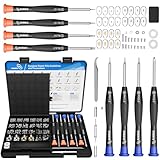
![AXTH 25-in-1 Small Precision Screwdriver Set, Professional Magnetic Mini Repair Tool Kit for Phone, Computer, Watch, Laptop, Macbook, Ring Doorbell, Eyeglass, Electronic, [Bearing Steel] Screw Driver](https://m.media-amazon.com/images/I/518YlLmPTcL._SL160_.jpg)
