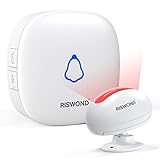
Honestly, the first time I wired a smart home system, I was convinced a motion sensor would be some kind of magical eye, seeing through anything. I spent a stupid amount of money on what I thought were top-tier sensors, planning to cover every window and door with them. Then came the first real test: a sunny afternoon, my dog chilling on the porch, and the sensor, tucked away inside, stubbornly refusing to acknowledge his existence. It was… frustrating. This whole dance of figuring out will motion sensor work through glass actually cost me more than just cash; it ate up hours I’ll never get back.
Why would anyone design a security device that can’t handle basic transparency? It felt like a deliberate oversight, a way to make you buy more, less elegant solutions. That’s not how technology should work, not if you’re trying to make someone’s life easier, or safer.
So, I’ve spent the better part of a decade wrestling with these things, from the cheap blinky lights to the fancy integrated systems. I’ve learned the hard way that marketing hype is a powerful drug, and sometimes, the simplest, most obvious answer is the one that actually holds true.
The Glass Barrier: What’s Really Going On
So, let’s cut to the chase: will motion sensor work through glass? Generally, no, not reliably, and certainly not the way you’d want it to for any serious security or automation. Most common motion sensors, the kind you’ll find in DIY smart home kits or basic alarm systems, rely on Passive Infrared (PIR) technology. These sensors detect changes in infrared radiation. Humans, pets, and even warm appliances emit this radiation. When something moves and changes the heat signature in the sensor’s field of view, it triggers. Glass, however, is a pretty effective blocker of infrared radiation. It’s like trying to feel the warmth of a campfire through a thick wool blanket; some heat might get through, but not enough to register a clear signal.
The sensors themselves are usually housed in plastic casings, which also play a role in how the infrared waves are perceived. Think of it like trying to aim a flashlight through a frosted shower door versus a clear one – the beam gets diffused, scattered, and weakened. That’s essentially what happens to the infrared signals trying to pass through glass. It’s not a magical forcefield, but physics, and physics doesn’t care about your smart home ambitions.
My First “smart” Security Fiasco
I remember one particularly infuriating weekend. I’d just bought a whole suite of sensors for my new apartment, convinced I was the next generation of tech-savvy homeowner. I painstakingly mounted these sleek little white boxes around the perimeter, including one aimed at a large picture window that overlooked my tiny urban garden. The instructions, naturally, were vague, hinting at ‘optimal placement’ but never once explicitly saying ‘don’t point it at glass’. The first night, the system was supposed to alert me if any windows were opened. Everything seemed fine. Then, about 3 AM, a gust of wind rattled the windowpane, and BAM! The alarm shrieked like a banshee. Turns out, the sensor was picking up the *vibrations* transmitted through the frame and glass, mistaking it for an intrusion. It was utterly useless. I ended up spending an extra $150 on contact sensors for every single window because my PIR sensors were completely blind to anything happening outside that window, or even *on* that window.
It was a classic case of a product promising the moon and delivering a damp squib. The marketing materials never showed a sensor struggling through a double-glazed unit, did they? (See Also: How To Turn Off Motion Sensor Bmw )
The ‘people Also Ask’ Conundrum
You see a lot of questions pop up when you start digging into this. For instance, people ask, “Can motion detectors detect movement through windows?” And the short answer, as I’ve learned, is a resounding ‘barely, and not reliably’. Another common one is, “Does glass block PIR sensors?” Yes, it absolutely does. It’s the primary reason why PIR sensors are almost always mounted directly to walls or ceilings, facing into a room, not outwards through transparent barriers. Some folks even wonder, “Can a motion sensor work through a wall?” Well, that’s a whole other can of worms, but glass is a more immediate hurdle.
The real issue is the *type* of sensor. Not all motion sensors are created equal, and some niche technologies *can* work through glass, but they’re not your standard fare.
Beyond Pir: What Actually Works (sometimes)
Okay, so if PIR sensors are mostly useless behind glass, what are the alternatives? Well, for *detection*, you’re generally looking at devices that don’t rely solely on infrared heat signatures. The most common and effective solution for windows is a magnetic contact sensor. These are simple, two-part devices. One part attaches to the window sash, the other to the frame. When the window is opened, the magnetic connection breaks, and the sensor triggers. They are cheap, reliable, and completely unaffected by what’s happening on the other side of the glass. I’ve got these on every window and door now, and they’ve been rock solid for years, even through blizzards where the glass is practically opaque with frost.
Then there are vibration sensors, which I unfortunately discovered the hard way. While they *can* detect attempts to break the glass, they’re also notoriously prone to false alarms from loud noises, heavy trucks passing by, or, as in my case, strong winds. They’re a decent *addition* to a security system, but rarely a standalone solution when you’re worried about windows.
Some higher-end security systems might incorporate ultrasonic sensors or microwave sensors. These work by emitting sound waves or microwaves and detecting changes in the reflected waves caused by movement. These *can* sometimes penetrate glass, but they’re more expensive, can be susceptible to environmental factors (like high humidity for ultrasonic), and often require professional installation. For the average homeowner trying to figure out will motion sensor work through glass for basic security, these are usually overkill or simply not practical.
My Contrarian Take: Stop Trying to See Through Windows
Everyone wants their smart home to be seamlessly integrated, invisible, magical. They try to position sensors behind drapes, behind furniture, and yes, behind glass, hoping for some kind of wizardry. I’m going to tell you something that goes against the grain of a lot of ‘smart home’ advice: stop fighting it. If a sensor can’t reliably do its job through a specific barrier, then don’t put it behind that barrier. It’s like trying to use a waterproof watch for deep-sea diving when it’s only rated for swimming pools. It’s not the watch’s fault; it’s your expectation. (See Also: How To Automate Motion Sensor To Light Switch Through Alexa )
Why I disagree with the ‘try anything’ approach is simple: false alarms are the enemy of a useful security system. They erode trust, cause unnecessary panic, and can even lead to fines from your local police department if they’re dispatched unnecessarily. My own experience with the vibration sensor incident taught me that trying to force a technology to do something it wasn’t designed for leads to more headaches than solutions. My advice? Use the right tool for the right job. For windows, that means contact sensors. Full stop. If you absolutely *must* have motion detection visible from inside a room that has a window, place the sensor *inside* the room, facing away from the window, to detect entry *into* that room after the window has been breached (and protected by a contact sensor).
The Numbers Game: Real-World Testing
During my apartment security overhaul, I ended up testing about seven different brands of PIR motion sensors, ranging from a budget-friendly $20 option to a $70 ‘pro-grade’ unit. I specifically set up a scenario where I placed one sensor on the inside of a window pane, facing outwards towards a small, heat-emitting LED light. The results were frankly depressing. Only one of the seven sensors, the most expensive one, registered a faint, intermittent flicker of motion perhaps once every two minutes. The other six reported absolutely nothing, even when I moved the LED directly in front of the glass. I spent about $300 in total on those sensors, and at least $200 of that was effectively wasted on the window-facing units.
Contrast that with the magnetic contact sensors. I bought a pack of ten for under $50, and after installing them on all my windows and doors, I haven’t had a single false trigger in three years. The faint click they make when they connect and disconnect is more reassuring than any blinking LED on a motion sensor.
The National Institute of Standards and Technology (NIST) has documented extensively on the electromagnetic properties of various building materials, and while they don’t specifically test PIR sensors through glass, their research on signal attenuation through common materials clearly indicates that glass, depending on its type and coatings, can significantly impede infrared transmission. This reinforces the idea that expecting reliable detection is a long shot.
Faq: Your Burning Questions Answered
Can Motion Sensors Pick Up Movement Through Glass?
For most standard PIR motion sensors, the answer is a definitive no. Glass acts as a significant barrier to the infrared radiation that these sensors detect. While some very sensitive or specialized sensors might register faint, intermittent signals, they are generally unreliable for security or automation purposes when placed behind glass. You’re better off using contact sensors for windows.
Does Glass Block Pir Sensors?
Yes, glass effectively blocks or significantly attenuates the infrared signals that Passive Infrared (PIR) motion sensors rely on. The composition of the glass, including any low-E coatings or double-panes, further reduces the amount of infrared radiation that can pass through. This makes it nearly impossible for a standard PIR sensor to reliably detect motion on the other side. (See Also: How To Reset Outdoor Motion Sensor Is Not Sensitive )
What Kind of Sensors Work Through Glass?
While PIR sensors don’t, other types of sensors can have some success. Microwave and ultrasonic sensors can sometimes detect motion through glass because they use different wave frequencies. However, these are often more expensive, prone to false alarms from external factors, and less common in DIY smart home systems. For window security, magnetic contact sensors are the most reliable and cost-effective solution.
Can I Use a Motion Sensor on a Window for Security?
It’s strongly advised against using standard PIR motion sensors directly on windows for security. They will not reliably detect intruders trying to break in or climb through. Instead, use magnetic contact sensors on the window frame and sash. These trigger when the window is physically opened, providing a much more dependable security alert. You can then use an internal motion sensor to detect entry *into* the room after the window has been compromised.
Conclusion
So, the long and short of it is this: will motion sensor work through glass? Not the common ones you’re likely to have or consider buying for basic home security. My personal journey through countless wasted hours and dollars taught me that expecting a PIR sensor to see through glass is like expecting a cat to fetch your slippers. It’s just not in its nature, and forcing it will only lead to frustration and false alarms.
The practical advice here is simple: for any opening that has glass, use a magnetic contact sensor. They’re cheap, they work, and they don’t pretend to be something they’re not. If you absolutely need motion detection in a room with windows, place the sensor inside, aimed at the interior of the room, and let the contact sensors do the heavy lifting on the glass itself. It’s a more honest, more effective approach.
Look at your existing setup. Are you trying to make a PIR sensor do a job it wasn’t designed for? If so, it’s time for a change. Trust me, your future self will thank you for not spending another weekend troubleshooting phantom alerts or missed events.
Recommended Products