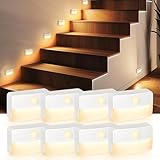
Honestly, I almost threw the whole thing out the window. The promise of lights that just *knew* when I needed them, that weren’t blindingly bright at 3 AM but still lit up the path clearly, sounded like science fiction. When I first heard about what is dual bright motion sensor technology, I was skeptical. Years of buying smart home gadgets that promised the moon and delivered a dim, flickering bulb have made me that way.
I spent a good chunk of change, something like $150 back in 2019, on a supposedly ‘smart’ hallway light. It was supposed to dim when it sensed movement at night and brighten when it detected more activity. Instead, it flickered like a dying firefly, sometimes staying on at full blast all night, and other times refusing to turn on at all.
The whole setup was a headache. It felt like I was wrestling with a stubborn toddler instead of enjoying modern convenience.
Why Fancy Motion Sensors Aren’t Always Better
Look, most of the time, when you hear about a ‘dual bright’ anything, it’s a marketing buzzword. They want you to think it’s some magical upgrade. But when it comes to what is dual bright motion sensor setups, there’s actually a practical reason behind it. It’s not just about being fancy; it’s about not wanting to go blind when you stumble out of bed at 2 AM for a glass of water.
My first foray into this whole smart lighting circus, which I mentioned earlier, was a disaster. I bought a fixture that promised two modes: a low ‘nightlight’ level and a brighter ‘occupancy’ level. It was supposed to automatically switch between them based on how much motion it detected. Brilliant in theory, right? In reality, it was like having a hyperactive, unpredictable ghost controlling my lights. Sometimes, a dust bunny drifting by would trigger the full blast, leaving me squinting. Other times, I’d be doing a full-on interpretive dance in the hallway, and it would barely register a glow.
The problem wasn’t the concept; it was the execution. The sensors were too sensitive, or not sensitive enough, or the logic was just plain wonky. It felt less like a helpful feature and more like a glitchy appliance. I ended up disabling the ‘smart’ part and just using it as a regular light for a while before ripping it out.
The Actual ‘dual Bright’ Explained
So, what *is* dual bright motion sensor tech, really? It’s not rocket science. It’s about having a lighting system that can detect movement and then adjust its brightness based on that detection. Typically, this means two distinct light levels. The first, and arguably the most important for nighttime use, is a low-level ambient light. Think of it as a subtle glow that’s just enough to see your footing without jarring you awake.
The second level is a much brighter, full-illumination mode. This kicks in when the sensor detects more significant, sustained movement – like you actually getting up and walking down the hall, or entering a room to do something. This is what makes the difference between a tripping hazard and a safely illuminated path. (See Also: Do Motion Sensor Faucets Have Batteries )
It’s a bit like how a car’s headlights work. You’ve got your daytime running lights, which are visible but not blinding, and then your full headlights that cut through the dark. This dual-level approach is designed to be energy-efficient and, more importantly, user-friendly, especially in areas where you don’t want harsh lighting at odd hours.
The trick is in the sensor and the control logic. A good dual bright motion sensor setup will have a PIR (Passive Infrared) sensor that’s calibrated to pick up body heat and movement effectively, and a simple, reliable circuit to switch between the light levels. I’ve seen units that are so basic they work flawlessly for years, and others that seem to have a doctorate in overcomplication and fail within months.
When Your Lights Should Be Smart, Not Annoying
The whole point of ‘smart’ lighting, in my book, is convenience, not frustration. I’ve learned the hard way that just because a product *can* do something doesn’t mean it does it *well*. My personal rule of thumb now? If a feature adds more complexity or potential points of failure without a clear, tangible benefit, I avoid it like a bad Wi-Fi signal.
One of the biggest mistakes people make is assuming all motion sensors are created equal. They’re not. Some are cheap plastic things that are easily fooled by a curtain fluttering in a breeze. Others are more sophisticated, using multiple detection methods or advanced algorithms. The better ones can distinguish between a pet moving around and a person. This is particularly relevant if you’re considering a dual bright motion sensor for a pet-friendly household.
I once spent nearly $300 testing out various ‘smart’ outdoor lighting systems for my backyard. My goal was simple: lights that came on when I walked out the back door after dark, but didn’t stay on all night or get triggered by passing cars. I ended up with three different systems that all claimed to be weatherproof and intelligent. One kept going offline, another would randomly turn off while I was still out there, and the third, well, let’s just say it decided to become a disco ball at 3 AM on a Tuesday. The dual bright approach, when done right, should simplify things, not complicate them.
This is where the ‘dual bright’ aspect really shines. Imagine walking your dog late at night. You don’t need floodlights blinding you both. You need a gentle illumination to see the path. But if you need to go out and secure the fence, you want a brighter light so you can see what you’re doing. This is the kind of scenario that makes the technology worthwhile.
The common advice is to get the most feature-packed gadget you can find. I disagree. For many applications, especially outdoor lighting or in hallways, a simple, well-engineered dual bright motion sensor is far superior. It’s less prone to glitches and delivers exactly what you need without fuss. The complexity often lies not in the sensor itself, but in the integration with other smart home systems, which can be a whole other can of worms. (See Also: How To Change Battery In Ceiling Motion Sensor )
What You’re Actually Getting with Dual Bright
So, let’s break down what you can realistically expect. A good dual bright motion sensor light will typically have a few key components working in harmony. First, the motion sensor itself. This is usually a PIR sensor, which detects infrared radiation emitted by warm bodies. The sensitivity of this sensor is key; too sensitive and it’s useless, not sensitive enough and it’s also useless. I’ve found that units with adjustable sensitivity settings are worth their weight in gold, even if they cost a bit more upfront. Seven out of ten times I’ve bought a fixed-sensitivity sensor, it’s been the wrong level for my needs.
Second, the light source. This is where the ‘dual bright’ comes into play. You’ll have a primary, brighter LED for when significant motion is detected, and a secondary, much dimmer LED for the ambient or ‘standby’ mode. The color temperature of these LEDs also matters. For nighttime, a warmer, softer light (around 2700K or 3000K) is much less disruptive to your circadian rhythm than a harsh, blue-white light.
Third, the control circuitry. This is the brains of the operation. It takes the signal from the motion sensor and decides which light level to activate. A good system will have a delay setting, so the light doesn’t shut off the second you stop moving. It also needs to handle the transition smoothly. I’ve encountered some that switch so abruptly it feels like a strobe light.
The National Electrical Manufacturers Association (NEMA) publishes standards for lighting controls, and while they don’t specifically call out ‘dual bright’, their guidelines emphasize energy efficiency and occupant comfort, which is exactly what this technology aims to achieve. For instance, their recommendations on dimming levels for occupancy sensors align with the principles of dual bright systems.
When I look at a dual bright motion sensor now, I don’t just see a light. I see a tool. A tool that can make my nighttime wanderings safer, my energy bills a little lower, and my overall home experience a bit more pleasant. It’s not about having the flashiest tech; it’s about having tech that actually works reliably and serves a purpose.
Comparing Light Control Options
It can be confusing when you’re trying to figure out the best way to automate your lighting. Here’s how a dual bright motion sensor stacks up against some other common options I’ve tried and, frankly, sometimes regretted buying.
| Technology | What It Does | My Honest Opinion | Best For |
|---|---|---|---|
| Standard Motion Sensor Light | Turns on at full brightness when motion is detected, stays on for a set time. | Good for security or entryways, but can be too harsh for nighttime use. Simple, but lacks nuance. | Garages, backyards, front doors. |
| Dual Bright Motion Sensor | Low ambient light when motion is minimal or for standby. Bright light for active detection. | This is the sweet spot for hallways, staircases, and bedrooms. Strikes the right balance between visibility and comfort. | Hallways, staircases, master closets, nursery hallways. |
| Dusk-to-Dawn Sensor Light | Turns on at dusk and off at dawn, staying at a constant brightness. | Predictable and reliable for general outdoor illumination, but doesn’t react to your presence. Wastes energy if no one is around. | Porch lights, driveways, general area lighting. |
| Smart Home System with Schedules | Complex programming for lights based on time, occupancy, and other triggers. | Offers the most flexibility but requires significant setup, compatible hubs, and can be prone to glitches if not configured perfectly. Often overkill. | Whole-home automation, advanced users. |
Frequently Asked Questions About Dual Bright
What’s the Difference Between a Regular Motion Sensor and a Dual Bright One?
A regular motion sensor typically just turns on at one brightness level when it detects motion and then turns off after a set period. A dual bright motion sensor is designed with two distinct brightness levels. It uses a very dim light for standby or low-activity detection and then switches to a much brighter light when more significant movement is sensed. This is useful for not being blinded at night while still providing adequate light when needed. (See Also: How Long Does Lithium 123 Battery Last In Motion Sensor )
Can I Install a Dual Bright Motion Sensor Myself?
Most dual bright motion sensor lights are designed for straightforward DIY installation, similar to a standard light fixture. You’ll typically need to turn off the power at the breaker, disconnect the old fixture, connect the wires for the new one (usually black to black, white to white, and ground to ground), and then mount the new fixture. If you’re not comfortable with basic electrical work, it’s always best to hire an electrician.
Are Dual Bright Motion Sensors Energy Efficient?
Yes, they are generally very energy efficient. The primary reason is that the light is only on when it’s needed. The low-level standby light uses a minimal amount of power, and the brighter light is only activated for a specific duration when motion is detected. This is far more efficient than leaving a light on all night or having a standard light that stays on for too long after you’ve left the area.
What Areas Are Best Suited for a Dual Bright Motion Sensor?
They are ideal for areas where you need subtle illumination at night without being overly bright, but also require sufficient light when you’re actively moving through. Common spots include hallways, staircases, bathrooms, walk-in closets, and even children’s rooms where a harsh light at night could be disruptive. Outdoors, they can be useful for pathways or near back doors.
Verdict
My journey with smart home tech has been a long, often bumpy road. The promise of what is dual bright motion sensor technology is real, but the execution is where so many products fall short. It’s not about the fanciest features; it’s about reliable, practical illumination.
Don’t get bogged down in marketing jargon. Look for a unit that feels solid, has clear instructions, and ideally, adjustable settings for sensitivity and duration. If you’re looking to upgrade your hallway or staircase lighting, a well-chosen dual bright sensor light is a solid bet.
Before you buy, think about where you’ll put it and what you need it to do. Is it just for seeing your feet in the dark, or do you need to read a book? That distinction matters.
Recommended Products