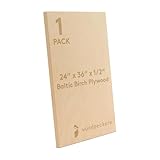
I remember the first time I splurged on what I thought was the ‘best’ plywood. Spent a small fortune on a sheet that promised the moon. Turns out, it was barely better than the cheap stuff. That’s why, when we talk about a 1 grade plywood, I approach it with a healthy dose of skepticism. It’s supposed to be the top dog, the crème de la crème of plywood sheets. But does it actually deliver on that promise for the average DIYer or even a seasoned woodworker? Let’s cut through the marketing fluff and get down to brass tacks.
I’ve seen way too many projects go south because people were chasing a grade they didn’t actually need, or worse, got sold a bill of goods. So, let’s talk about what ‘A-1 grade’ really means in the real world, not just on paper.
What Does ‘a-1 Grade’ Even Mean for Plywood?
Alright, let’s get this straight: the grading system for plywood can be a bit of a maze, and honestly, it’s not always perfectly clear-cut. When you see ‘A-A’ or ‘A-1’ (sometimes they use slightly different designations, but the principle is similar), it’s talking about the quality of the veneer on the face and the back of the panel. Think of it as a report card for how pretty and smooth the outer layers are.
‘A’ is the top grade, meaning it’s practically flawless – smooth, sanded, and usually free of knots, patches, or any of that unsightly stuff. So, a 1 grade plywood is basically saying both the front and the back are supposed to be top-tier. This is the stuff you see used when appearance is most important, like in fine furniture, cabinetry, or high-end decorative paneling where you’re not covering it up with paint or veneer.
The ‘1’ in ‘A-1’ is often used interchangeably with ‘A’, emphasizing that it’s the best of the best. You’re looking at a face veneer that’s basically perfect, with maybe a few tiny, almost invisible repairs if any at all.
The back veneer is also supposed to be a solid ‘A’, meaning it’s clean and smooth, though sometimes the back might be graded slightly lower, like ‘A-B’, if it’s not going to be seen. But for true ‘A-1’ or ‘A-A’, both sides are meant to be gallery-worthy. This is why it commands a higher price tag. You’re paying for that visual perfection, the absence of defects that would require filling or sanding before finishing.
I once bought a sheet of what was advertised as ‘premium veneer plywood’ for a custom bookshelf. It looked gorgeous in the store, perfectly smooth, uniform color. But when I got it home and started cutting, I realized the core beneath was riddled with voids and delaminations that were a total nightmare to work with, even though the face was pristine.
That taught me a hard lesson about what the ‘face grade’ actually tells you about the whole panel.
When you’re shopping, pay attention to the specific grading system the manufacturer or lumberyard uses. Some might use a simple A, B, C, D system, while others have more complex codes. For the purposes of what most people mean by ‘a 1 grade plywood’, you’re generally looking for the highest face and back veneer grade possible.
This means minimal to no knots, no pitch pockets (those dark, sticky resin spots), no splits, and very smooth surfaces. It’s the ‘show’ side, and it’s meant to be smooth enough to take a clear coat or light stain without any prep beyond a light sanding. It’s important to distinguish this from structural grades, which are focused more on strength and performance than looks. You wouldn’t use a structural grade for a visible furniture piece, and you’d be wasting money using an ‘A-1’ grade for something hidden behind drywall.
What to Actually Look for (beyond the ‘a’ Grade)
Okay, so you’ve decided you need the smooth face of a 1 grade plywood. Great. But here’s where my real-world experience kicks in, and where a lot of people get burned: the ‘A’ grade is only about the skin deep. The internal structure, the core, is just as, if not more, important depending on your project.
A beautiful face veneer glued to a sloppy core is still a sloppy panel, just with a pretty face. What you really need to investigate is the construction of the plywood itself. This refers to the number of plies (the layers of wood veneer), the type of wood used for those plies, and how they are arranged.
More plies generally mean a stronger, more stable panel that’s less prone to warping or cracking. I’ve seen a lot of cheaper plywood with a good face but only 3 or 5 plies, and they tend to cup and twist like crazy once you cut them down. A higher quality panel, even if it’s not strictly ‘A-1’, might have 7 or even 9 plies, making it much more rigid and reliable.
Another thing to check is the type of glue used. Most interior plywood uses something called interior glue, which is fine for dry environments. But if there’s any chance of moisture – like in a workshop, garage, or even a well-used kitchen – you’ll want exterior glue or a waterproof adhesive. (See Also: Can A Cricut Cut 1 4 Plywood )
The ‘A-1’ designation doesn’t inherently tell you about the glue type, so you have to ask or look at the product specs. I once built some custom shelving for a client in a basement workshop.
The plywood looked fantastic, a beautiful birch face. Within six months, I got a call. The shelves were starting to sag, and some of the veneer was peeling away at the edges. Turns out, it was standard interior glue, and the constant humidity had done a number on it.
I had to replace the whole lot with exterior-grade plywood, which cost me a bundle in time and materials. So, even if it’s A-1 grade, make sure the glue matches the environment. The core itself can also be made from different woods. Common options include poplar, birch, pine, or fir.
Poplar is often used in higher grades because it’s relatively stable and takes glue well, but it can be a bit softer. Fir and pine are often used in construction-grade plywood and are stronger but can have more voids. Birch is a premium choice, known for its strength and smooth finish, which is why you often see birch veneer on A-1 plywood.
When you’re inspecting a sheet, try to look at the edges. Can you see consistent layers of wood? Are there large gaps or voids between the plies?
These are red flags. A good quality plywood will have tightly laminated plies with minimal voids.
Here’s a quick look at what you might find and what I think of it. Remember, ‘A-1’ is about the face, not necessarily the guts.
| Plywood Construction Aspect | What to Look For (for Best Results) | My Verdict/Opinion |
|---|---|---|
| Face/Back Veneer Grade | A-A (or equivalent highest grade) | This is the ‘A-1’ part. Key for visible surfaces, but doesn’t guarantee structural integrity. |
| Number of Plies | 7+ plies for larger sheets (e.g., 4×8′), 5+ for smaller | More plies = more stability and strength. Important for preventing warping. |
| Core Material | Poplar, Birch, or void-free hardwood | Poplar and Birch are generally good. Avoid excessive voids, regardless of wood type. |
| Glue Type | Exterior glue (WBP – Weather and Boil Proof) or similar waterproof rating | A must if there’s any chance of moisture. Interior glue is a ticking time bomb in damp areas. |
| Edge Construction | Tightly laminated, no large gaps | Look at the edge! This is where you see the quality of the internal structure. |
Common Mistakes When Buying ‘a-1 Grade’ Plywood
One of the biggest blunders people make is assuming that ‘A-1 grade’ means it’s automatically the best choice for any project. That’s just not true. If you’re building a shed, a subfloor, or anything that’s going to be painted, covered, or hidden away, you are absolutely wasting your money on A-1 grade plywood.
Seriously, it’s like buying a Ferrari to haul lumber. You need structural integrity and moisture resistance, not a flawless surface.
I’ve seen folks spend an extra $50-$100 per sheet on A-1 for something that would never be seen, all because they heard it was ‘the best.’ It’s the woody equivalent of buying designer underwear for a backyard barbecue – pointless and expensive. You’d be much better off spending that extra cash on better hardware, a higher-quality finish, or simply saving it. A good quality cabinet-grade ply, even if it’s B-C or B-B, might be perfectly suitable and significantly cheaper.
Another mistake is not inspecting the sheet thoroughly before buying. Even the best grades can have issues. Sometimes a sheet might have been stored improperly, leading to warping.
Or a manufacturing defect might have slipped through. I always try to stand a sheet up on its edge and look down the length of it to check for bows or twists.
I also run my hand over the surface to feel for any subtle bumps or depressions that might not be obvious at first glance. Sometimes the ‘A’ face has tiny veneer patches or repairs that are acceptable for the grade but might bother you if you’re going for an absolutely smooth look. (See Also: Can A 4x8 Plywood Fit In A Honda Pilot )
If you’re buying a whole stack for a big project, check a few different sheets to get a feel for consistency. Don’t just grab the top one off the pile. I once bought a bundle of birch plywood for a custom cabinet build, and half the sheets had significant edge delamination that I only discovered once I started cutting. The lumberyard just said, ‘That’s within tolerance for the grade.’
So, my ‘fancy’ plywood ended up costing me a lot more in wasted material and extra work to repair the damage. Remember, ‘A-1’ refers to the veneer quality, not necessarily the overall manufacturing precision or warp resistance, though higher grades tend to correlate with better construction.
A third common pitfall is neglecting the specific type of wood veneer. ‘A-1 grade’ can apply to many different species.
A birch A-1 is different from a mahogany A-1, not just in cost but in hardness, grain pattern, and how it takes finishes. If you’re painting, an A-1 poplar might be fine and less expensive than an A-1 hardwood like maple or oak.
If you’re staining, the grain of the wood is important. Always check what species the veneer is, and if you’re unsure, ask someone who knows. Don’t just assume ‘A-1’ means it’s universally good for your specific aesthetic goals. Many people also don’t consider the thickness of the veneer itself.
While the ‘A’ grade makes sure it’s smooth and free of defects, a very thin veneer can be easily sanded through during finishing, revealing the core layer underneath. This is a problem you absolutely want to avoid, especially if you’re using a clear coat or light stain.
Real-World Uses for a 1 Grade Plywood
So, if it’s not for everything, where does a 1 grade plywood truly shine? Its primary purpose is where appearance is the absolute star of the show. Think about high-end cabinetry where the doors and drawer fronts are visible and meant to be finished to a high standard. You want a surface so smooth and clean that you can apply a clear coat or a light stain and have it look like a solid piece of wood.
For furniture making, especially pieces that will be stained or clear-coated, like the visible sides of a built-in bookshelf, the face of a desk, or decorative panels on a wardrobe, this is where you’ll appreciate that flawless surface. The lack of knots and patches means a consistent look and no distracting imperfections that would pull the eye away from the craftsmanship.
Another area is in exhibition or display stands, where aesthetics are most important and the material might be seen from all angles. If you’re building a custom RV interior or a boat cabin where the wood paneling is the primary decorative element, then yes, a 1 grade plywood makes sense. It provides that smooth, consistent backdrop that lifts the overall look. I once helped a friend build a custom entertainment center that had large, exposed panels on the sides and back.
We opted for a beautiful cherry veneer, A-1 grade, and the final result was stunning. The clear coat brought out the natural grain without a single knot or blemish to get in the way.
It looked like a million bucks, and the plywood was a huge part of that. It’s also excellent for projects where you might be applying veneers yourself. Starting with a top-quality plywood substrate means your final product will be that much better. The smooth, stable surface of A-1 plywood provides an ideal foundation for adding custom veneers or decorative inlays.
It reduces the risk of the substrate’s imperfections showing through your carefully applied decorative layers.
Consider custom jigs or templates for woodworking where precision and a smooth surface are key to accurate cuts. While not always visible, the smooth, defect-free surface makes sure your tools glide cleanly and your templates remain accurate over time. It’s also used in certain architectural applications, like decorative wall paneling or ceiling treatments, where the goal is a smooth, high-quality finish. For instance, if you’re creating a modern, minimalist interior and want large, uninterrupted surfaces of natural wood grain, A-1 grade plywood is often the material of choice. The key takeaway is that its value is directly tied to its visual appeal and the absence of surface defects. If those characteristics are not important for your project, you’re likely overspending. (See Also: Can Bondo Be Applied To Plywood )
My Personal Take: When Is It Worth the Extra Dough?
Honestly, for most of my projects – building shop cabinets, shelving, jigs, even basic furniture that’s going to be painted – I rarely, if ever, reach for true A-1 grade plywood. It’s overkill. I’ve found that a good quality cabinet-grade plywood, maybe a B-B or B-C with a decent number of plies and a smooth face, is more than sufficient. I can usually get a really nice looking sheet for a good chunk less money, and any minor imperfections can be easily dealt with using a bit of wood filler and primer before painting.
My workshop is full of things made from plywood that cost me maybe $40 a sheet, and they look perfectly fine and function flawlessly. The idea of spending $100+ per sheet on something that’s just going to hold tools or lumber seems frankly absurd to me.
However, there are times when I’ve begrudgingly admitted that a 1 grade plywood is the right, or perhaps the only, choice. This typically involves custom furniture pieces where the client specifically wants a natural wood finish, and the visible surfaces are large and important to the aesthetic. For example, I did a project a few years back for a client who wanted a beautiful, clear-finished walnut desk. The top surface needed to be absolutely pristine, a smooth expanse of rich wood grain.
Using anything less than a top-grade veneer, like a walnut A-1, would have resulted in visible knots, patches, or inconsistent grain that would have ruined the entire piece. The cost was high, around $150 per 4×8 sheet, and I used three of them.
But the finished desk was a showstopper, and the client was thrilled. The smooth, flawless surface of the plywood was a significant contributor to that high-end look. So, if you’re building something where the plywood itself is the primary decorative element, and it will be finished with a clear coat or a light stain, then yes, the extra cost for a 1 grade plywood can be justified.
It’s about the visual impact and the absence of flaws, not structural strength in these cases.
My contrarian opinion? Most people who buy ‘A-1 grade plywood’ for their DIY projects don’t actually need it. They’re either being upsold by lumberyard staff, or they’ve fallen for the marketing hype that ‘higher grade equals better for everything.’ I’ve learned to assess the actual needs of my project: Is it visible? Does it need a flawless surface? Will it be painted? Will it be exposed to moisture? Answering those questions honestly saves a ton of money and headaches. Unless the project demands a perfect, unpainted, unstained wood surface, I’d look at other options first. The true value of a 1 grade plywood is in its beauty, and beauty often comes with a premium price tag that isn’t always necessary.
Faq: Your Burning Questions Answered
What Is the Difference Between a-a and a-B Plywood?
The main difference lies in the quality of the back veneer. A-A plywood has an ‘A’ grade veneer on both the front and the back, meaning both sides are smooth, sanded, and virtually free of defects like knots or patches. A-B plywood has an ‘A’ grade veneer on the front (the show side) but a ‘B’ grade veneer on the back. The ‘B’ grade is still good, but it may have more visible repairs, slight color variations, or small knots compared to an ‘A’ grade. For projects where only one side will be visible, A-B can be a more cost-effective option.
Can You Paint Over a 1 Grade Plywood?
Yes, you absolutely can paint over a 1 grade plywood. In fact, its smooth, defect-free surface makes it an excellent candidate for painting. You’ll likely need less primer and fewer coats of paint to achieve a smooth, professional finish compared to lower-grade plywood. However, painting it is often considered a waste of the premium veneer unless you have a specific design reason. If the goal is a painted finish, a less expensive cabinet-grade plywood is usually a better financial choice.
Is a 1 Grade Plywood Good for Furniture Making?
A 1 grade plywood is often excellent for furniture making, but only for specific applications. It’s ideal for furniture where the plywood itself is the primary visible surface and will be finished with a clear coat or stain to showcase the wood grain. Think of cabinet doors, drawer fronts, tabletops, or decorative panels. If the furniture will be painted or covered with laminate, a lower grade plywood that offers similar structural properties will be more economical. The key is whether the flawless surface of the A-1 grade is key for the final aesthetic.
How Do I Know If I’m Getting Good Quality Plywood?
Beyond the grade stamp, inspect the sheet closely. Look at the edges to see the number of plies and check for voids between them – more plies and fewer voids mean better quality. Run your hand over the surface to feel for smoothness and check for any subtle bumps or depressions. Inspect for any signs of warping by standing the sheet on its edge and looking down its length. Ask about the glue type to make sure it’s appropriate for your environment (interior vs. exterior). For A-1 grade, make sure the face is free from noticeable knots, patches, or pitch pockets, and that the grain is relatively consistent if that’s important for your project.
Conclusion
So, where does that leave us with a 1 grade plywood? It’s the show pony of the plywood world. It’s for when the surface itself is the statement, and you need it to be as perfect as possible. I’ve spent the money on it for high-end furniture and custom built-ins where a flawless, clear-finished wood surface was the entire point. And in those cases, it absolutely delivered.
But let’s be brutally honest: for 90% of DIY projects, you do not need it. You’re paying a hefty premium for a face that will likely be painted, hidden, or otherwise covered. My advice? Get real about your project’s needs. Assess if that perfect veneer is truly necessary for the outcome you desire. If it’s not, save your cash and put it towards better tools, hardware, or a superior finish. There are plenty of perfectly good, less expensive plywood options out there that will serve you just fine.
If you’re unsure, start with a good quality cabinet-grade plywood. See how it works for you. You might find that the extra cost of a 1 grade plywood just isn’t worth the minimal gain for your specific needs.