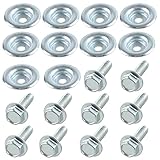
I remember the first time I got the dreaded P0300 code on my old Jetta. Misfire, cylinder not firing, the whole nine yards. I spent a weekend convinced it was something complex, something that would cost an arm and a leg. Turns out, it was just a dirty, borderline failed fuel injector. Specifically, I was dealing with what I’d later learn were variants of the 109 bolt style common in many older Volkswagens. This whole ordeal taught me a lot about what you actually need to know about these little metal bastards, not just what the internet forums are yelling about.
It’s easy to get lost in the sea of technical jargon and expensive part recommendations. But when you’re staring at a check engine light and your car’s running like a wounded duck, you need practical advice. You need to know what’s going to work, what’s a waste of your hard-earned cash, and how to avoid common pitfalls.
This isn’t about chasing the latest performance upgrade or justifying a thousand-dollar bill from a shady mechanic. It’s about getting your VW running smoothly again, often for far less than you think, by understanding a specific part: the a 109 bolt volkswagon fuel injector.
When That Check Engine Light Says ‘fuel Injector’
So, your Volkswagen decided to throw a fit, and the scanner spit out something about fuel delivery or misfires. Before you panic and start ordering the most expensive set of injectors you can find, let’s break down what’s usually going on. For a lot of older VW models, especially those around the late 90s and early 2000s, you’ll find injectors that are often referred to by their bolt pattern or mounting style, like the 109 bolt configuration. These aren’t just generic little spray nozzles; they’re precision instruments designed to deliver a very specific amount of fuel, atomized just right, into your engine’s combustion chamber at precisely the right moment.
When one of these starts to go south, it’s not usually a sudden catastrophic failure. It’s more of a slow, annoying decline.
You might notice rough idling, a bit of hesitation when you accelerate, or just a general feeling that your car isn’t running as smoothly as it used to. Sometimes, you’ll get a specific cylinder misfire code (like P0301 for cylinder 1), or a general misfire code (P0300) that makes you chase your tail. The common advice is to replace them all at once.
And sure, sometimes that’s the best long-term solution. But is it always necessary? Hell no. If you’re only getting a code for cylinder 3, and the others are performing fine, why throw money at all four?
That’s where experience comes in, and frankly, a bit of blunt honesty.
I’ve seen people replace perfectly good injectors because a forum guru said to do it. My first misfire situation, I ended up replacing one injector, cleaned the others, and it solved the problem for pennies on the dollar compared to a full set. It wasn’t until much later, when another car started having issues, that I did a full set replacement preemptively. It really depends on the mileage, the condition of the engine, and what the specific symptoms are. Don’t just assume you need all new ones without a bit of testing. And when you’re talking about a 109 bolt volkswagon fuel injector, understanding its specific role in your engine’s fuel management system is key.
Spotting a Bad Injector: Beyond the Obd-Ii Code
A code is just a symptom, not a diagnosis. Relying solely on a code is like a doctor prescribing medicine without asking you any questions. (See Also: Are All Honda Atv Bolt Patterns The Same )
Sure, the P0300 misfire code is a classic sign of injector trouble, but it can also point to vacuum leaks, ignition issues, or even low fuel pressure. So, what else can you look for? Listen to your car. Literally.
When an injector starts to fail, it can get noisy. You might hear a distinct ticking or clicking sound that’s different from the normal injector noise.
This is especially true if the pintle (the little needle that opens and closes) is sticking or the solenoid is acting up. I’d often pop the hood and use a mechanic’s stethoscope, or even just a long screwdriver held to my ear and the injector body, to listen for inconsistencies.
Another tell-tale sign is fuel smell. If you’re getting a strong whiff of gasoline around the engine bay, especially after it’s been sitting, it could mean an injector isn’t sealing properly and is leaking fuel. This is a serious fire hazard, and if you suspect this, you need to address it immediately. I once had a neighbor whose VW Passat was always smelling like gas. Turned out one of the injectors was barely hanging on, leaking fuel onto the hot engine block. Scary stuff.
But the real test, the one that separates guesswork from actual diagnosis, is flow testing. This is where you can either invest in some specialized tools or, more practically for most DIYers, take them to a shop that can professionally clean and test them. They’ll measure how much fuel each injector sprays, the spray pattern, and whether they’re leaking. This is way more informative than just looking at a code.
For a 109 bolt volkswagon fuel injector, having it tested is often cheaper than buying a new one, and you’ll know for sure if it’s the culprit. I’ve spent money on single injectors before, only to find out later the issue was a different one, making the whole process more expensive than if I’d just gotten them all tested initially.
Common Mistakes and Why They Cost You
Alright, let’s talk about the mistakes I, and many others, have made. The biggest one? Buying cheap, no-name aftermarket injectors online. You see a set of four for the price of one OEM part, and your brain screams “Bargain!” I did this once on a different car, not a VW, and the new injectors were junk. They either didn’t spray correctly, or they failed within months. The engine ran worse than it did before. It was a total waste of money and time. Stick to reputable brands or OEM parts if you can. For a 109 bolt volkswagon fuel injector, finding a good quality replacement that matches the flow rate and spray pattern is a must for engine health.
Another common mistake is not replacing the O-rings and seals. Every time you remove a fuel injector, you absolutely must replace the O-rings and seals that seal it to the fuel rail and the intake manifold. They get compressed, brittle, and lose their sealing ability over time. Reusing old ones is practically begging for a vacuum leak or, worse, a fuel leak. I learned this the hard way. I was in a hurry, reused an O-ring, and ended up with a persistent vacuum leak that took me another day to diagnose and fix. It’s a cheap part that can save you a massive headache.
Finally, people often get tunnel vision. They see the misfire code, jump to injectors, and forget about other potential causes. Ignition coils, spark plugs, fuel pump, fuel filter – all these can cause misfires. If your car has high mileage, a clogged fuel filter can restrict flow and make even healthy injectors struggle. Always consider the entire fuel and ignition system. Don’t just replace the a 109 bolt volkswagon fuel injector without ruling out the simpler, cheaper stuff first. My first car misfire issue? It turned out to be a cracked spark plug insulator, not the injectors at all. I spent $200 on an injector and an hour of labor before realizing the $5 spark plug was the issue. (See Also: Are Ak Bolts Interchangeable )
The Real-World Verdict: Clean, Rebuild, or Replace?
This is the million-dollar question, or rather, the hundred-dollar question. When you’re staring down the barrel of injector replacement, you have options. The absolute cheapest way is to try cleaning them yourself. There are kits available that hook up to shop air and a battery, forcing a cleaning solution through the injector. I’ve had mixed results. Sometimes it brings a struggling injector back to life. Other times, it’s a total waste of time and cleaner. It’s a gamble, and for a important component like a 109 bolt volkswagon fuel injector, you don’t want to be gambling on engine health.
The next step up is professional cleaning and flow testing. Most automotive machine shops or specialized fuel injector services offer this. They’ll disassemble, clean, test, and sometimes even rebuild injectors. This is often a really good compromise. You get injectors that are tested to perform like new, usually for a fraction of the cost of brand-new OEM units. I’ve had sets cleaned and tested for around $150-$200 for four, and they performed flawlessly. This is my go-to for older cars where the cost of new OEM parts is astronomical.
Finally, there’s buying new. If you’re going for maximum reliability, especially on a newer or higher-performance vehicle, new is the way to go. But be prepared for the sticker shock. For a 109 bolt volkswagon fuel injector, the price can vary wildly depending on the supplier and whether you’re getting genuine VW or a quality aftermarket equivalent. Here’s a quick rundown of what I’ve seen and experienced:
| Option | Pros | Cons | My Verdict (for a 109 bolt VW injector) |
|---|---|---|---|
| DIY Cleaning Kit | Cheapest possible | Hit or miss results, can damage injectors if done wrong | Only if you have nothing to lose and a spare set |
| Professional Cleaning/Testing | Cost-effective, tested performance, reliable | Still a chance of failure if internal damage is severe | Often the best bang for your buck, especially for older cars |
| New OEM | Guaranteed fit and performance, highest reliability | Most expensive option | Ideal for important applications or if budget isn’t an issue |
| New Aftermarket (Reputable Brand) | Good balance of price and performance | Need to research brand quality carefully | A solid option if OEM is too pricey, but do your homework |
For a typical DIYer working on an older VW, professional cleaning and testing of the existing a 109 bolt volkswagon fuel injector set is usually the sweet spot. It balances cost with reliability.
Installation Tips and What to Expect
Alright, you’ve got your cleaned or new injectors, the new O-rings, and you’re ready to get your hands dirty. First things first: disconnect the battery. Safety first, always. Then, you’ll need to relieve fuel pressure. There’s usually a Schrader valve on the fuel rail, or you might have to disconnect the fuel pump relay and crank the engine for a few seconds. Again, have rags ready; fuel will spray. Carefully remove the fuel rail, which holds the injectors. They might be a bit stuck, so a gentle wiggle or pry might be needed. Don’t force them too hard. Once the rail is off, you can pull the injectors out.
Now, the important part: the O-rings. Make sure you’ve got the correct ones for your specific a 109 bolt volkswagon fuel injector. Lubricate the new O-rings with a bit of clean engine oil or silicone grease. This helps them slide in without tearing and makes sure a good seal. Install the injectors into the fuel rail, then carefully position the rail back onto the intake manifold, making sure each injector seats properly. Bolt the fuel rail down, but don’t overtighten. Reconnect everything – fuel lines, electrical connectors for the injectors, vacuum lines, etc. Reconnect the battery.
Prime the fuel system. Turn the ignition key to the ‘on’ position (without starting the engine) for a few seconds, then turn it off. Do this a couple of times.
This builds fuel pressure. Then, start the engine.
It might take a little longer to crank than usual as the system fully pressurizes. Listen for any fuel leaks. Once it’s running, check for smooth idle and any new codes. The difference is usually night and day. (See Also: Are All Bolt Patterns The Same )
The engine should pull stronger, idle smoother, and you should feel that satisfying loss of the check engine light. If you used a 109 bolt volkswagon fuel injector set, you should notice a significant improvement in driveability. I typically notice a smoother throttle response and a more consistent idle speed after a good injector job.
People Also Ask
What Does a P0300 Code Mean for a Volkswagen?
A P0300 code on a Volkswagen indicates a random or multiple cylinder misfire. This means the engine’s computer has detected that one or more cylinders are not firing correctly or are missing combustion events. While it often points to fuel delivery issues like a faulty fuel injector, it can also be caused by problems with the ignition system (spark plugs, coils), vacuum leaks, or issues with the fuel pump or filter.
How Do I Test a Vw Fuel Injector?
Testing a VW fuel injector typically involves a few methods. The most basic is listening for a consistent clicking sound with a stethoscope while the engine is running, indicating it’s pulsing. More advanced methods include using an OBD-II scanner to check for specific cylinder misfires, performing a fuel pressure test, or a flow test where the injectors are removed and measured for fuel output volume and spray pattern accuracy. Professional shops have specialized equipment for accurate testing.
Can You Clean Volkswagen Fuel Injectors?
Yes, you can clean Volkswagen fuel injectors. There are DIY cleaning kits that use a pressurized canister to force a cleaning solution through the injector. However, the most effective and reliable method is professional cleaning and flow testing. Specialized services use ultrasonic cleaners and precise testing equipment to restore injectors to optimal performance and make sure they meet factory specifications.
How Much Does It Cost to Replace Fuel Injectors on a Vw?
The cost to replace fuel injectors on a VW can vary significantly. For a set of four aftermarket injectors, you might spend $200-$500. OEM (original equipment manufacturer) injectors can range from $100-$300 each, bringing the total for a set to $400-$1200 or more. Labor costs typically add another $200-$600, depending on the complexity of the job for your specific VW model. Professional cleaning and testing of your existing injectors is often a more budget-friendly option, costing around $150-$300 for a set.
Conclusion
So, there you have it. Dealing with a problematic a 109 bolt volkswagon fuel injector doesn’t have to be a wallet-drainer if you approach it smartly. Don’t just blindly replace parts based on a code. Listen to your car, do a bit of digging, and consider the options – professional cleaning and testing can often give you like-new performance for a fraction of the cost of new OEM parts. Remember to always replace those O-rings, though; that’s one shortcut you absolutely cannot afford to take.
My own experiences, from the cheap aftermarket disaster to the surprisingly effective injector cleaning, have taught me that a little knowledge and a methodical approach go a long way. It’s about understanding what’s actually happening under the hood, not just what the internet tells you. Save your money for the things that truly matter, like quality tools or that next road trip your VW is begging to take.
Before you order anything, double-check your symptoms, consider the age and mileage of your car, and weigh the pros and cons of cleaning versus replacement. A healthy engine depends on a properly functioning fuel system, and those little injectors are a big part of that equation.